
Tapping for Anxiety: A 5-Minute Guide to Instant Calm
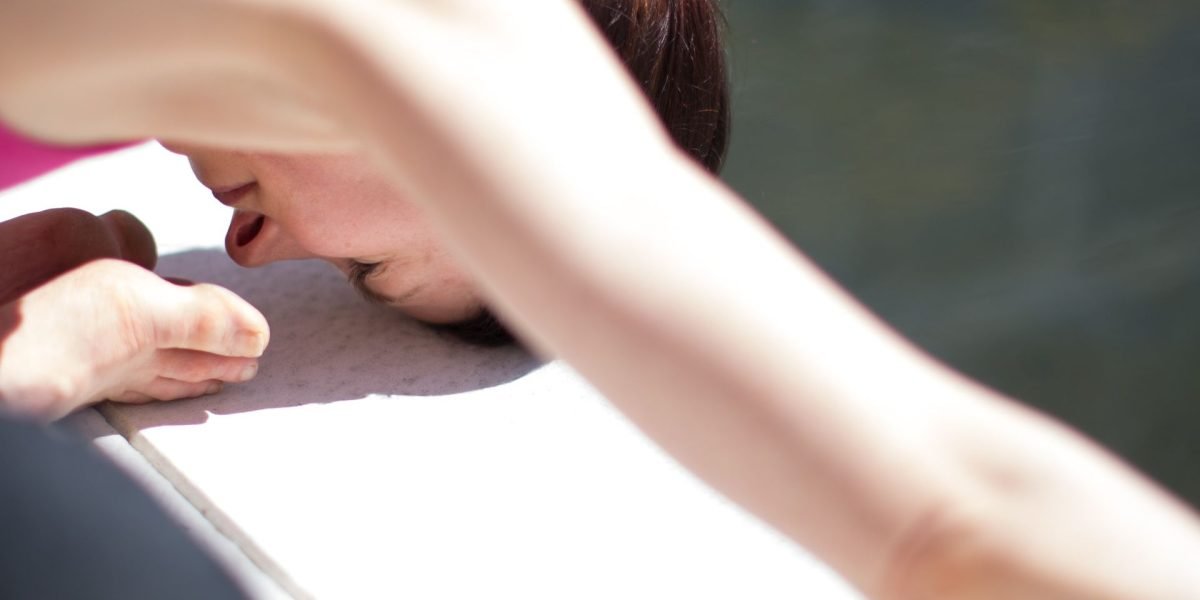
Anxiety can feel like a heavy blanket, making everyday tasks hard and filling your mind with worries.
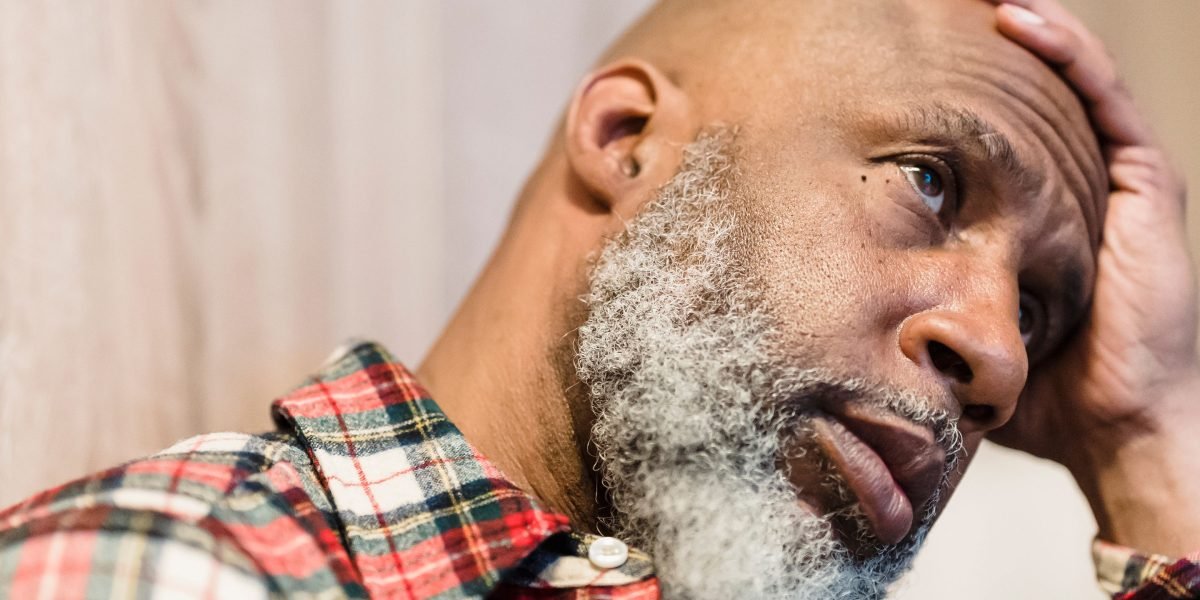
Sometimes, it can even bring on a panic attack symptoms. It’s a common feeling, and many people are looking for ways to feel better and gain control. Actually, many different things can help.
This article is here to show you some simple, hands-on ways to handle anxiety. It’s important to know that these ideas are for self-help. They work best when used alongside care from a doctor or therapist, not as a replacement for it. If you’re looking for therapy types for anxiety or need professional support, that’s a great step. But for everyday moments when you need quick relief, these self-help tools can make a big difference.
Think of practical tools like mindfulness, simple breathing exercises, and a method called "tapping for anxiety" as your first line of defense. These are low-cost ways to help you feel calmer right away. They can be good ways to help panic attacks or when you just need to learn how to stop worrying about small things that pile up. The goal is to give you tools you can use anytime, anywhere, to bring down stress and prevent feelings of overwhelm.
These ideas are also part of general self-care for your mental health, which experts often suggest you do regularly, like getting enough exercise and eating well Caring for Your Mental Health.
Learning simple coping skills can truly empower you. These aren’t just quick fixes; they are ways to help you understand your body’s signals and respond gently. Whether you’re dealing with general anxiety or want to be able to panic carefully, having a plan helps a lot. We will explore how tapping for anxiety works and how it can be a useful addition to your toolkit for managing your feelings.
If you want to learn more about the research behind these methods and the author’s work, you can visit Google Scholar (UC Irvine).
Anxiety doesn’t just make you worry in your head; it also shows up in your body. When you feel anxious, your body can go into "fight or flight" mode. This is a natural reaction that helped our ancestors stay safe from danger. But in 2026, many of us feel this way even when there’s no real danger around.
Here are some common ways anxiety can make your body feel:
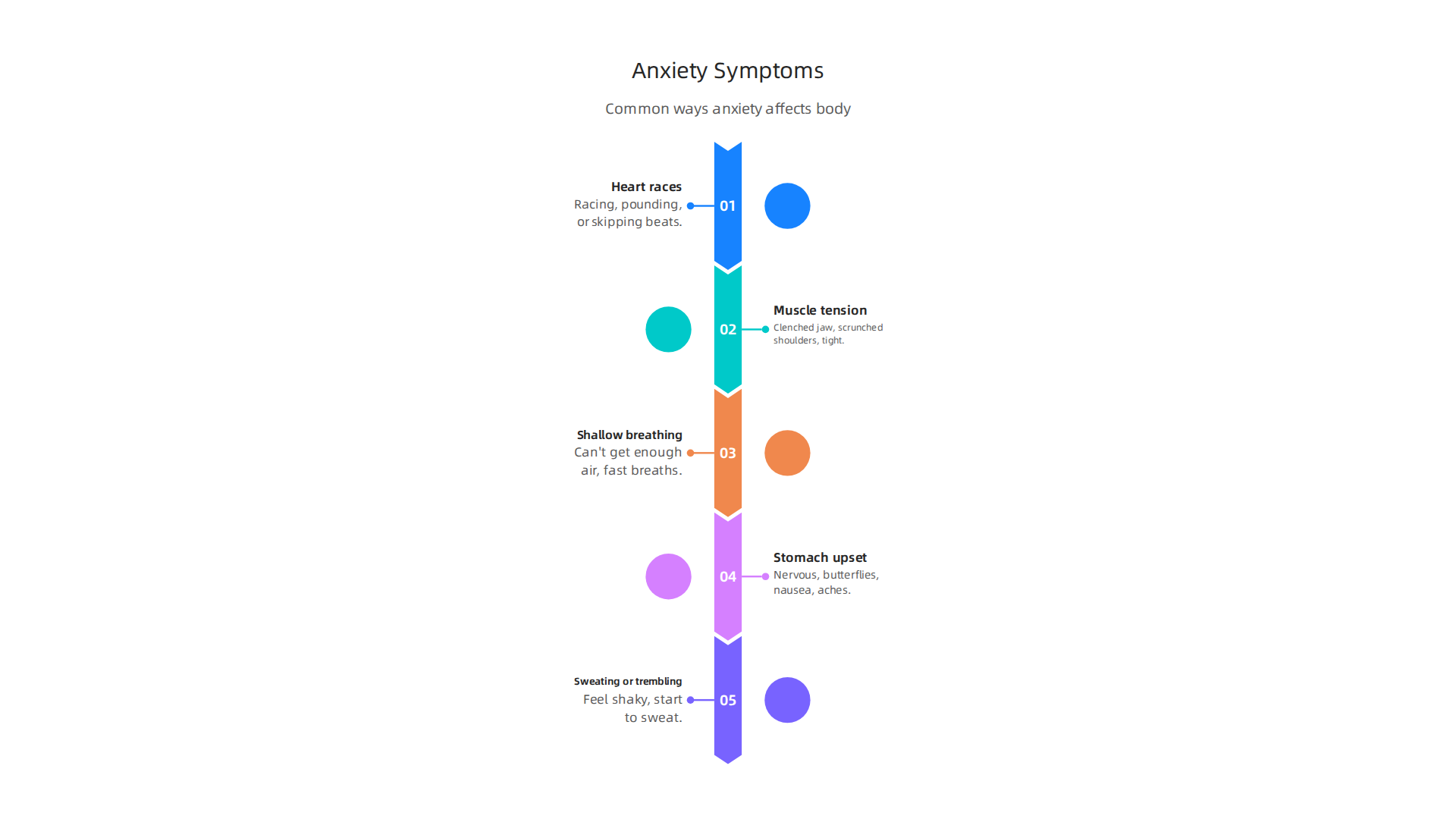
- Your heart beats faster: It might feel like your heart is racing, pounding, or even skipping beats.
- Muscles get tense: You might clench your jaw, scrunch your shoulders, or feel tight all over. This tension can lead to headaches or body aches.
- Breathing becomes shallow and quick: You might feel like you can’t get enough air, or you’re taking short, fast breaths.
- Stomach upset: Some people get a "nervous stomach," feeling butterflies, nausea, or stomachaches.
- Sweating or trembling: You might feel shaky or start to sweat, even when you’re not hot.
These physical feelings can actually make your worries worse. It’s like a bad cycle: your mind worries, your body reacts, and then your body’s reaction makes your mind worry even more. This can make you feel overwhelmed, making it hard to figure out how to stop worrying. Learning about these physical signs can help you understand what’s happening. Many people find that knowing these things helps them feel less alone in their struggle with anxiety, fear, and panic Anxiety | Greater Manchester Mental Health NHS….
This is where relaxation techniques come in. The main idea behind them is to break that worry cycle by calming your body first. When your body starts to relax, it sends signals to your brain that it’s okay, and there’s no immediate danger. This helps your mind quiet down too.
Think of it this way: if your heart rate slows, your muscles loosen, and your breathing deepens, your brain gets the message that it doesn’t need to be on high alert anymore. This can prevent a full-blown panic attack or help you "panic carefully" by managing the intense feelings. Simple actions can become powerful home remedies for anxiety attack.
Techniques like deep breathing, mindfulness, and even tapping for anxiety are ways to tell your body to "stand down." They help your nervous system shift from being highly alert to a more peaceful state. When you practice these regularly, you give your body and mind a chance to recover and build resilience. This makes it easier to handle stress when it comes up and can offer effective ways to help panic attacks.
If you are interested in looking more into the scientific understanding of different behavior-change techniques and the people who develop them, you can find more information on Dean Grey’s ResearchGate profile.
What the evidence says about tapping (EFT) and mindfulness for anxiety
The previous section talked about how calming your body can help calm your mind, breaking that tough worry cycle. This is where techniques like Emotional Freedom Techniques (EFT), also known as tapping, and mindfulness come in. But what does the science actually say about them? Let’s look at the evidence.
When we talk about "evidence," we mean what researchers have found in their studies. There are different kinds of studies:
- Randomized Trials: These are like careful tests where some people try a technique (like tapping for anxiety) and others get a different treatment or no treatment. This helps researchers see if the technique actually makes a difference.
- Systematic Reviews and Meta-analyses: Imagine researchers gathering many of these careful tests and putting all the results together. This gives us a bigger picture of how well a technique works across many studies.
- Practitioner Surveys: These are reports from people who use these techniques in their work, sharing what they’ve seen help their clients. While helpful, these are not as strong as the more formal studies.
What the Research Shows for Tapping (EFT)
A lot of research in 2026 points to tapping as a helpful tool for anxiety and stress. Several studies, including big reviews that look at many smaller studies, show that EFT can really help lower anxiety levels. For example, some systematic reviews have found that Emotional Freedom Techniques significantly reduce anxiety scores when compared to people who don’t get treatment, or even sometimes as much as other known therapies Emotional Freedom Techniques for Anxiety: A Systematic Review With Meta-analysis.
One major review looked at many randomized trials and found that Clinical EFT, a specific way of tapping, was very effective in treating anxiety issues Clinical EFT (Emotional Freedom Techniques) Improves Multiple …. It’s even been found to be helpful for strong feelings like those related to post-traumatic stress disorder (PTSD), which often goes hand-in-hand with anxiety Emotional freedom techniques for treating post traumatic stress disorder: an updated systematic review and meta-analysis.
The idea behind tapping for anxiety is that gently tapping on certain points on your body, similar to acupuncture points, while focusing on a problem, helps calm your nervous system.
Research suggests that this tapping on acupoints is an important part of why the method works Is Tapping on Acupuncture Points an Active Ingredient in Emotional …. This can be a great way to help stop worrying and keep panic carefully managed.
What the Research Shows for Mindfulness
Mindfulness practices are also widely supported by research for managing anxiety. Mindfulness teaches you to pay attention to the present moment without judging it. This helps you notice anxious thoughts and feelings without getting caught up in them. Studies have shown that mindfulness can lead to less stress, lower anxiety, and an improved ability to cope with daily challenges. When compared to other relaxation techniques like progressive muscle relaxation or deep breathing, mindfulness has been found to be just as effective in creating a sense of calm Effectiveness of Progressive Muscle Relaxation, Deep … – PMC.
Understanding the Bigger Picture
While the evidence for both tapping and mindfulness for anxiety is quite strong, it’s good to remember that not all studies are exactly the same. Some studies might have different numbers of people, different ways of doing the techniques, or different results. This is called "heterogeneity," meaning there’s some variety in the findings.
The main takeaway is that many people find these techniques truly helpful. If you’re looking for ways to help panic attacks or other home remedies for anxiety attack, tapping and mindfulness are worth considering. They offer practical steps to gain control and reduce the strong physical feelings of anxiety. Learning about different therapy types for anxiety can help you decide which path is best for you.
When you learn about different behavioral techniques, it’s interesting to see the science behind how they work. Understanding the ways these methods change our actions and feelings can be very empowering. To dive deeper into how certain strategies influence behavior, explore The Science of Gamification.
Many resources exist to help you learn these skills. For instance, there are many forms of self therapy for anxiety you can explore right from home.
The last section showed how tapping and mindfulness can help calm your mind. Now, let’s get practical with a simple tapping routine you can do when anxiety hits. This quick 5-minute guide for tapping for anxiety can help you feel better fast, whether you’re dealing with everyday worries or looking for home remedies for anxiety attack.
Remember, EFT (Emotional Freedom Techniques) uses gentle tapping on certain points on your face and body while you focus on what’s bothering you. This can help you how to stop worrying and calm your nervous system.
Step-by-step tapping routine for acute anxiety (simple, 5-minute version)
Here’s how to do a basic tapping sequence. You can use two or three fingertips to tap each point gently but firmly.
1. Identify the Problem
First, think about what’s making you feel anxious right now. Is it a specific worry, a strong feeling in your body, or a memory? Pick just one thing to focus on for this round of tapping.
Next, rate how strong that feeling is on a scale from 0 to 10.
- 0 means no anxiety at all.
- 10 means the strongest anxiety you can imagine.
Knowing your number helps you see if the tapping makes a difference.
2. The Setup Statement (Side of the Hand)
This is where you acknowledge the problem, even if you accept yourself anyway. Tap gently on the "karate chop point" on the side of your hand (the fleshy part below your pinky finger) with the fingertips of your other hand.
While tapping, say this phrase three times:
"Even though I feel this [name your feeling, e.g., ‘anxiety in my chest’], I deeply and completely accept myself."
You can also say something like: "Even though I’m worried about [name your worry, e.g., ‘this presentation’], I am okay." This part helps to calm your mind and gets you ready for the next steps.
3. The Tapping Sequence (Reminder Phrase)
Now, you’ll tap on a series of points on your face and upper body. As you tap each point, say a short "reminder phrase" about what’s bothering you. This could be simply "this anxiety" or "my worry about the presentation." Tap about 5-7 times on each point.
Here are the main points to tap, in order:
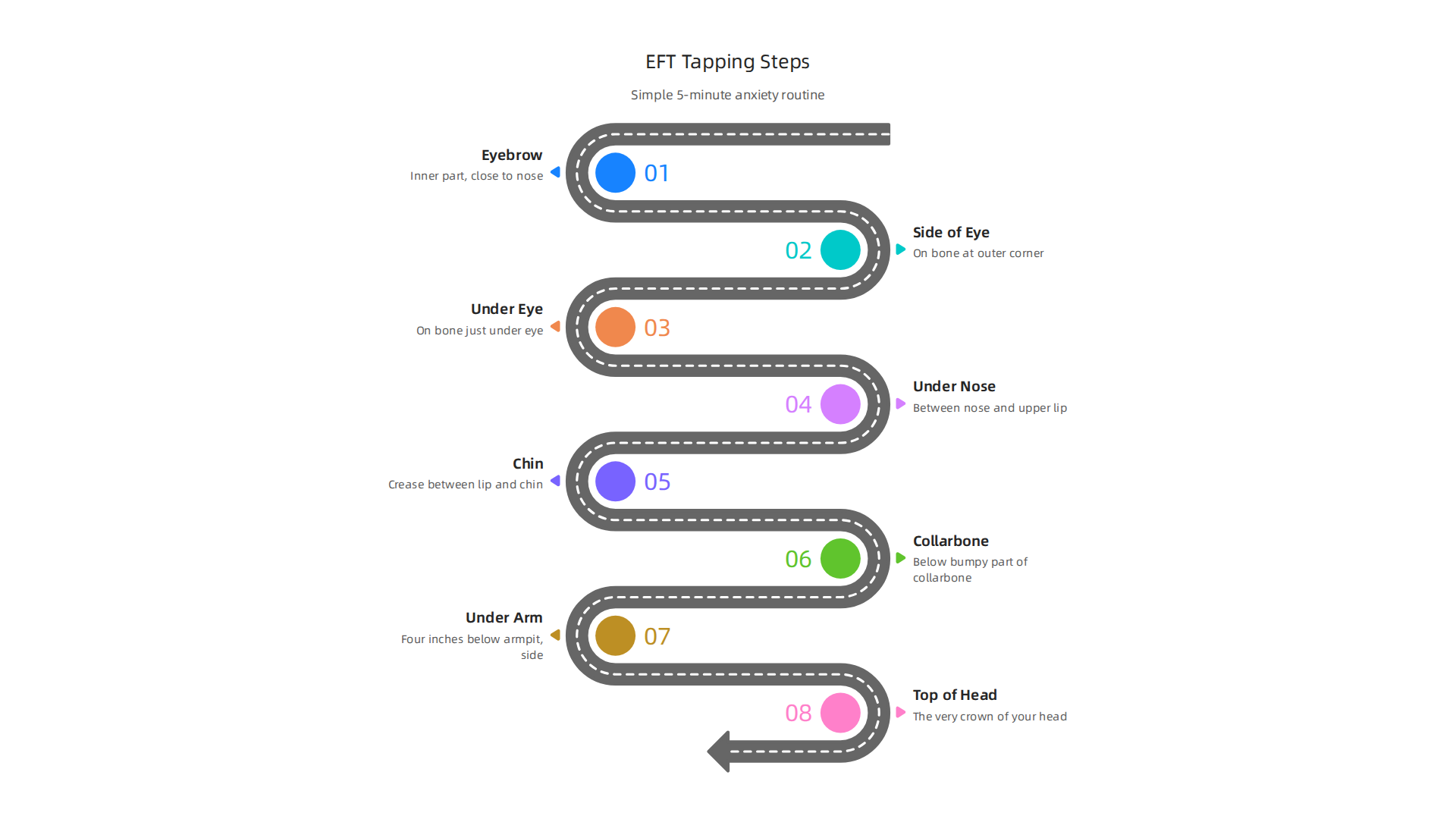
- Eyebrow (EB): The inner part of your eyebrow, close to your nose.
- Reminder: "This anxiety."
- Side of Eye (SE): On the bone at the outer corner of your eye.
- Reminder: "My worry."
- Under Eye (UE): On the bone just under your eye.
- Reminder: "This strong feeling."
- Under Nose (UN): The small area between your nose and upper lip.
- Reminder: "This uncomfortable anxiety."
- Chin (CH): The crease between your lower lip and chin.
- Reminder: "All this worry."
- Collarbone (CB): Just below the bumpy part of your collarbone. You can use all your fingertips to tap a wider area here.
- Reminder: "Can’t stop worrying."
- Under Arm (UA): About four inches below your armpit, on your side.
- Reminder: "This panic."
- Top of Head (TH): The very crown of your head.
- Reminder: "This remaining anxiety."
You can watch a simple guide to these points on this How to Do EFT Tapping for Beginners (Step-by-Step Guide) video.
4. Re-rate and Repeat
After going through all the tapping points, take a deep breath. Now, rate your anxiety again on that 0-10 scale. Has it gone down? Many people find that just one round of tapping for anxiety can lower their number.
If you still feel anxious, you can do another round. You might change your setup phrase to focus on the remaining intensity, like "Even though I still have some of this anxiety left, I deeply and completely accept myself."
Variations for Situational Anxiety
- Panic Onset: If you feel a panic attack starting, focus on the physical sensations. "Even though my heart is racing," or "Even though I feel dizzy." Tapping can be one of the ways to help panic attacks right away.
- Performance Nerves: Before a big event, tap on worries about messing up or being judged. "Even though I’m afraid I’ll forget my lines," or "Even though I’m nervous about how others will see me."
- Social Anxiety: Focus on fears about talking to people or being in groups. "Even though I feel shy and want to hide," or "Even though I’m worried about what to say."
Combine Tapping with Breathwork
You can make tapping even more powerful by adding simple breathing exercises. Before each tapping round, take a few slow, deep breaths. Breathe in slowly through your nose, hold for a moment, and then breathe out slowly through your mouth. This helps to quiet your body, allowing the tapping to have a deeper impact. Practicing this can help you manage acute stress disorder symptoms more carefully.
Consistency in practice, like any new habit, can greatly improve results. To understand how habit supports can improve mental well-being, explore the Youth Safety Case Study.
While tapping is a great tool, sometimes you might need other quick ways to find calm. Maybe you’re in a place where tapping isn’t easy to do, or you just want a different kind of relief. That’s where simple mindfulness and breathing exercises come in. These methods can give you immediate relief and help you learn how to stop worrying when anxiety hits hard.
Quick mindfulness and breathing exercises for immediate relief
These exercises are easy to learn and can be done almost anywhere. They help calm your body and mind quickly. If you want to know more about different techniques, check out these best ways to calm anxiety.
1. Box Breathing
This is a very simple breathing exercise that helps slow down your breath and quiet your mind. It’s often used to help people stay calm under pressure.
How to do it:
- Step 1: Breathe out all the air in your lungs.
- Step 2: Breathe in slowly through your nose for a count of four. Imagine the air filling your belly.
- Step 3: Hold your breath for a count of four.
- Step 4: Breathe out slowly through your mouth for a count of four. Make sure you get all the air out.
- Step 5: Hold your breath again for a count of four before taking your next breath in.
Repeat this pattern several times until you feel more relaxed. It’s like drawing a box with your breath.
2. 4-4-8 Breathing
This breathing pattern is good for deep relaxation and can even help you fall asleep. It focuses on a longer exhale, which helps to calm your nervous system.
How to do it:
- Step 1: Breathe in slowly through your nose for a count of four.
- Step 2: Hold your breath for a count of four.
- Step 3: Breathe out slowly through your mouth for a count of eight. Try to make the exhale smooth and complete.
Repeat this 4-4-8 cycle a few times. You’ll notice your body start to relax more and more. This can be one of the useful natural remedies for panic attacks.
3. Grounding Anchoring (5-4-3-2-1 Technique)
When you feel very anxious, your mind might race or feel overwhelmed. Grounding helps pull your mind back to the present moment using your senses. This technique can quickly help when you need to panic carefully or stop yourself from spiraling.
How to do it:
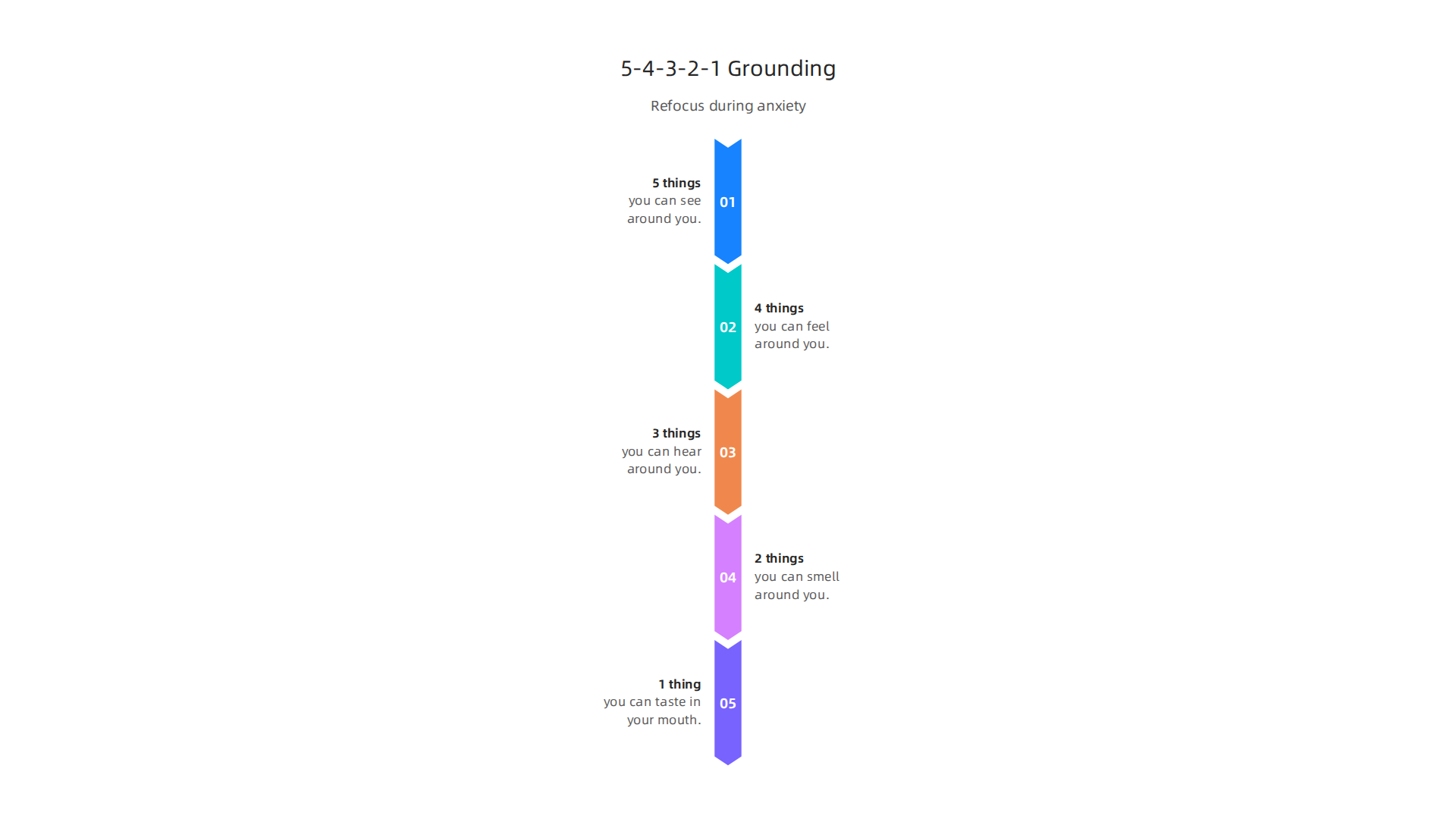
Look around you and notice:
- 5 things you can see: Look for five different objects around you. Say them in your head or out loud. (e.g., "I see the blue chair," "I see a green plant.")
- 4 things you can feel: Notice four things you can feel. This could be your feet on the floor, the fabric of your clothes, the air on your skin, or the texture of your hands.
- 3 things you can hear: Listen for three different sounds. (e.g., "I hear the clock ticking," "I hear birds outside," "I hear my own breathing.")
- 2 things you can smell: Find two different smells around you. It could be your coffee, a flower, or even just the scent of the air. If you can’t find two, name one.
- 1 thing you can taste: Notice one taste in your mouth. This could be from a recent meal, your toothpaste, or simply the taste of your own mouth.
This exercise helps to shift your focus from your anxious thoughts to the world around you. It’s a great way to how to stop crying when anxiety strikes with grounding and cognitive reframing.
Combining these techniques or using them alone
These breathing and grounding exercises can be used on their own whenever you feel anxious or overwhelmed. They are also powerful partners for tapping for anxiety. You can do a few rounds of deep breathing before starting your tapping sequence to get your body ready, or use the 5-4-3-2-1 grounding technique after tapping to firmly anchor yourself in the present. Think of them as helpful tools in your self-help kit for anxiety. For more self-help tips, explore other self therapy for anxiety techniques.
Learning these simple tools helps build good habits for your mind. If you’re interested in how setting up positive routines can boost your well-being, read about how support systems can go Beyond Gamification.
When you learn new calming tricks, like the breathing and grounding exercises we just talked about, the next big step is making them a regular part of your life. It’s like planting a seed: you have to water it often for it to grow strong. Building a daily habit of practices like tapping for anxiety can make a huge difference in how you feel over time. This isn’t just about quick fixes; it’s about building lasting calm.
Building a daily relaxation habit: practical habit design and recognition-based supports
To make these helpful actions stick, you need a plan. Think about simple ways to add them to your day, almost without thinking. This is where habit design comes in.
Small steps for big changes: micro-goals and routine pairing
First, start with really small goals. Instead of trying to tap for 30 minutes every day, aim for just 2 or 3 minutes. Even a minute of deep breathing counts! These tiny goals are easier to start and finish, which makes you feel good and want to keep going.
Next, try to link your new habit to something you already do every day. This is called "habit pairing." Do you drink coffee in the morning? Maybe you can do a quick round of tapping or a box breathing exercise right after you pour your first cup. Do you check your phone before bed? You could spend 5 minutes doing the 5-4-3-2-1 grounding technique instead. By connecting a new habit to an old one, it feels more natural and less like a chore. Scheduling a brief, consistent practice each day at a certain time can help too, like saying "Every day at 8 AM, I will do 5 minutes of tapping." This consistency helps your mind and body learn the new routine. When you practice regularly, you’re building a stronger defense against anxiety and learning how to panic carefully less often.
Staying on track: how recognition and rewards help
Sometimes, even with good intentions, it’s hard to stick with new habits. This is where recognition systems and rewards can be super helpful. Think about apps or games that give you points or badges for completing tasks. This idea, called "gamification," can make building healthy habits more fun and help you avoid giving up.
When you get a small reward or see your progress, it makes you feel good and want to keep going. For instance, an app might show you a progress bar filling up as you complete your daily tapping sessions. Or, you might earn "points" for each day you practice your breathing exercises. These elements make the process more engaging. Research shows that using game-like elements can actually help people stick with mental health practices, making them more motivated and consistent in their efforts to improve their well-being and reduce anxiety symptoms. Studies in 2026 continue to show how gamification can boost engagement and reduce avoidance in health apps, including those for mental health Examining the Effectiveness of Gamification in Mental Health Apps. This positive feedback helps turn something new into a solid part of your daily routine.
If you’re looking for ways to stay motivated and reduce anxiety, exploring innovative platforms that reward healthy behaviors can be a game-changer.
Authority Magazine highlights how systems that track and reward healthy behaviors can help with anxiety, depression, and other mental health issues.
Making these habits stick might feel hard at first, but with small steps and clever ways to keep yourself motivated, you can build a strong foundation for a calmer, less anxious life. To understand more about managing strong feelings, you might want to learn about CBT Techniques for Panic Attacks.
When you learn new calming tricks, like the breathing and grounding exercises we just talked about, the next big step is making them a regular part of your life. It’s like planting a seed: you have to water it often for it to grow strong. Building a daily habit of practices like tapping for anxiety can make a huge difference in how you feel over time. This isn’t just about quick fixes; it’s about building lasting calm.
Building a daily relaxation habit: practical habit design and recognition-based supports
To make these helpful actions stick, you need a plan. Think about simple ways to add them to your day, almost without thinking. This is where habit design comes in.
Small steps for big changes: micro-goals and routine pairing
First, start with really small goals. Instead of trying to tap for 30 minutes every day, aim for just 2 or 3 minutes. Even a minute of deep breathing counts! These tiny goals are easier to start and finish, which makes you feel good and want to keep going.
Next, try to link your new habit to something you already do every day. This is called "habit pairing." Do you drink coffee in the morning? Maybe you can do a quick round of tapping or a box breathing exercise right after you pour your first cup. Do you check your phone before bed? You could spend 5 minutes doing the 5-4-3-2-1 grounding technique instead. By connecting a new habit to an old one, it feels more natural and less like a chore. Scheduling a brief, consistent practice each day at a certain time can help too, like saying "Every day at 8 AM, I will do 5 minutes of tapping." This consistency helps your mind and body learn the new routine. When you practice regularly, you’re building a stronger defense against anxiety and learning how to panic carefully less often.
Staying on track: how recognition and rewards help
Sometimes, even with good intentions, it’s hard to stick with new habits. This is where recognition systems and rewards can be super helpful. Think about apps or games that give you points or badges for completing tasks. This idea, called "gamification," can make building healthy habits more fun and help you avoid giving up.
When you get a small reward or see your progress, it makes you feel good and want to keep going. For instance, an app might show you a progress bar filling up as you complete your daily tapping sessions. Or, you might earn "points" for each day you practice your breathing exercises. These elements make the process more engaging. Research shows that using game-like elements can actually help people stick with mental health practices, making them more motivated and consistent in their efforts to improve their well-being and reduce anxiety symptoms. Studies in 2026 continue to show how gamification can boost engagement and reduce avoidance in health apps, including those for mental health Examining the Effectiveness of Gamification in Mental Health Apps. This positive feedback helps turn something new into a solid part of your daily routine.
If you’re looking for ways to stay motivated and reduce anxiety, exploring innovative platforms that reward healthy behaviors can be a game-changer.
Authority Magazine highlights how systems that track and reward healthy behaviors can help with anxiety, depression, and other mental health issues.
Making these habits stick might feel hard at first, but with small steps and clever ways to keep yourself motivated, you can build a strong foundation for a calmer, less anxious life. To understand more about managing strong feelings, you might want to learn about CBT Techniques for Panic Attacks.
Integrating tapping and relaxation with therapy: safety, contraindications, and when to seek help
While learning self-help methods like tapping and relaxation can be very helpful for managing everyday stress and anxiety, it’s important to know when to seek professional help. These techniques are great tools, but they aren’t a replacement for therapy or medical care, especially when facing serious mental health challenges.
When to seek professional help for anxiety
Sometimes, anxiety symptoms can become too much to handle on your own. You should reach out to a doctor or mental health professional if:
- You have thoughts of harming yourself or others. This is a very serious sign, and you need help right away.
- You experience severe panic attack symptoms that happen often, are very intense, or stop you from living your life normally.
- You are using drugs or alcohol to cope with your anxiety.
- Your anxiety is making it hard for you to work, go to school, or maintain relationships.
- You feel overwhelmed, even when trying different "home remedies for anxiety attack" or ways to help panic attacks.
- Your self-help efforts don’t seem to make things better, or you feel worse.
Knowing when to seek professional help is a sign of strength, not weakness. A professional can offer a clear path forward when self-help alone isn’t enough to help you learn how to stop worrying and ease anxiety. If you are unsure, taking an anxiety self test can sometimes help guide your decision. For very severe cases, sometimes inpatient mental health care is necessary.
Communicating your at-home practice to a clinician
If you decide to see a therapist or counselor, it’s a good idea to tell them about the self-help practices you’ve been using, like tapping for anxiety or deep breathing. This helps your therapist understand what you’ve already tried and how it affects you. They can then include these practices in your overall treatment plan in a safe way. You can learn more about how a professional can help by reading about how a licensed professional counselor helps treat anxiety disorders.
When looking for a professional, you might wonder how to choose between a psychiatrist psychologist therapist or counselor for anxiety. Resources are available that explain how to find outpatient therapy services for anxiety that actually work or even how to find a free therapist online that actually helps in 2026.
Safely combining techniques with evidence-based therapy
Your therapist can help you combine practices like tapping with other proven treatments such as Cognitive Behavioral Therapy (CBT) or Acceptance and Commitment Therapy (ACT).
Tapping, or Emotional Freedom Techniques (EFT), has been studied for its effectiveness. For example, some research from 2025 showed that EFT was found to be effective and safe, providing rapid improvements in distress and quality of life when used alongside regular care for certain conditions, even noting it could improve outcomes related to suicide risk Feasibility of Emotional Freedom Techniques in Patients with Major Depressive Disorder. Other studies also point to EFT being a safe and effective method for reducing stress and anxiety, with profound body changes happening Clinical EFT (Emotional Freedom Techniques) Improves Multiple Physiological Markers. There is also evidence suggesting that tapping is a key part of why EFT works, rather than just being a placebo Is Tapping on Acupuncture Points an Active Ingredient in Emotional Freedom Techniques (EFT)?.
However, it’s important to remember that not all methods are right for everyone or every situation, and some research has raised questions about certain claims, suggesting ongoing discussion in the scientific community about how and why techniques like acupressure in psychotherapy work Acupressure in Psychotherapy as an Unsinkable Rubber Duck. Your therapist can guide you through what is known as a Value Reinforcement System, which means they help you understand how different treatments and self-care steps support each other for the best outcome. This systematic way of boosting your well-being is recognized for its careful approach to integrating various supportive elements, as further detailed in U.S. Patent No. 12,205,176.
For example, EFT has been found to be just as helpful as breathing exercises and muscle relaxation, and similar to CBT, for reducing anxiety symptoms in some cases Emotional Freedom Techniques for Anxiety Disorders. By combining these tools under expert guidance, you can create a strong plan to manage your anxiety effectively. Understanding different therapy types for anxiety can help you and your therapist choose the best path for you.
Summary
This article offers practical, evidence-informed self-help tools to manage anxiety, with a focus on Emotional Freedom Techniques (EFT or tapping), mindfulness, and simple breathing exercises. It explains how anxiety shows up physically, why calming the body helps break the worry cycle, and what the research says about tapping and mindfulness for reducing anxiety. You get a clear, step-by-step five-minute tapping routine for acute anxiety, plus three fast breathing and grounding techniques you can use anywhere. The guide also covers how to build these practices into a daily habit using micro-goals and rewards, and when to seek professional help or combine these tools with therapy. Overall, the article aims to give accessible skills you can use immediately and repeatedly to reduce panic, manage stress, and support longer-term emotional resilience.