
9 Practical Methods to Stop Crying When Anxiety Strikes

Why crying happens when anxiety hits (and what this guide will do for you)
Have you ever felt so stressed or worried that tears just started to fall, even when you didn’t want them to? It’s a common feeling. When anxiety hits hard, it can feel like a huge wave of emotion washing over you. This feeling of being overwhelmed often leads to sudden crying spells.

It’s your body’s way of trying to let out all that strong emotion and tension.
Feeling this way can be confusing and sometimes embarrassing, especially if it happens at a bad time. You might wonder, "Why am I crying?" or "How can I make this stop?" Actually, crying when you’re anxious is a natural response. It shows that your emotional regulation, or how you manage strong feelings, is working hard. Experts have found that learning to handle emotions better can really help with anxiety and sadness, as shown in studies on psychological treatments for young people struggling with these issues A meta-analysis of emotional regulation outcomes in psychological treatment outcomes for depression and/or anxiety in youth.
If you’re looking for ways to gain more control and learn how to stop crying when anxiety strikes, you’re in the right place. This guide is here to help you understand what’s happening and give you real tools to cope. We’ll share nine simple, practical techniques you can start using today. These methods are backed by good ideas from experts and can help you calm down quickly.
You will learn useful strategies like deep breathing for anxiety attacks and specific relaxation techniques for test anxiety. We’ll also explore ideas like grounding and changing the way you think about things to help you manage those intense moments. Whether you experience full-blown panic attacks or just feel a general sense of worry, these tips will give you a path to finding more calm and control. If you want a preview of some of these methods, you can explore ways to manage tears with how to stop crying when anxiety strikes with grounding and cognitive reframing. Our goal is to empower you with easy-to-use skills so you can navigate challenging moments with greater ease and confidence.
1) Grounding techniques to stop tears fast
When strong feelings make you want to cry, one of the quickest ways to regain your calm is through grounding. Grounding helps you pull your mind back to the present moment, away from the swirling thoughts and intense emotions that make you feel overwhelmed. It’s like pressing a reset button for your brain and body, which can really help you figure out how to stop crying when anxiety strikes.
One very simple and powerful grounding method is called the 5-4-3-2-1 technique.
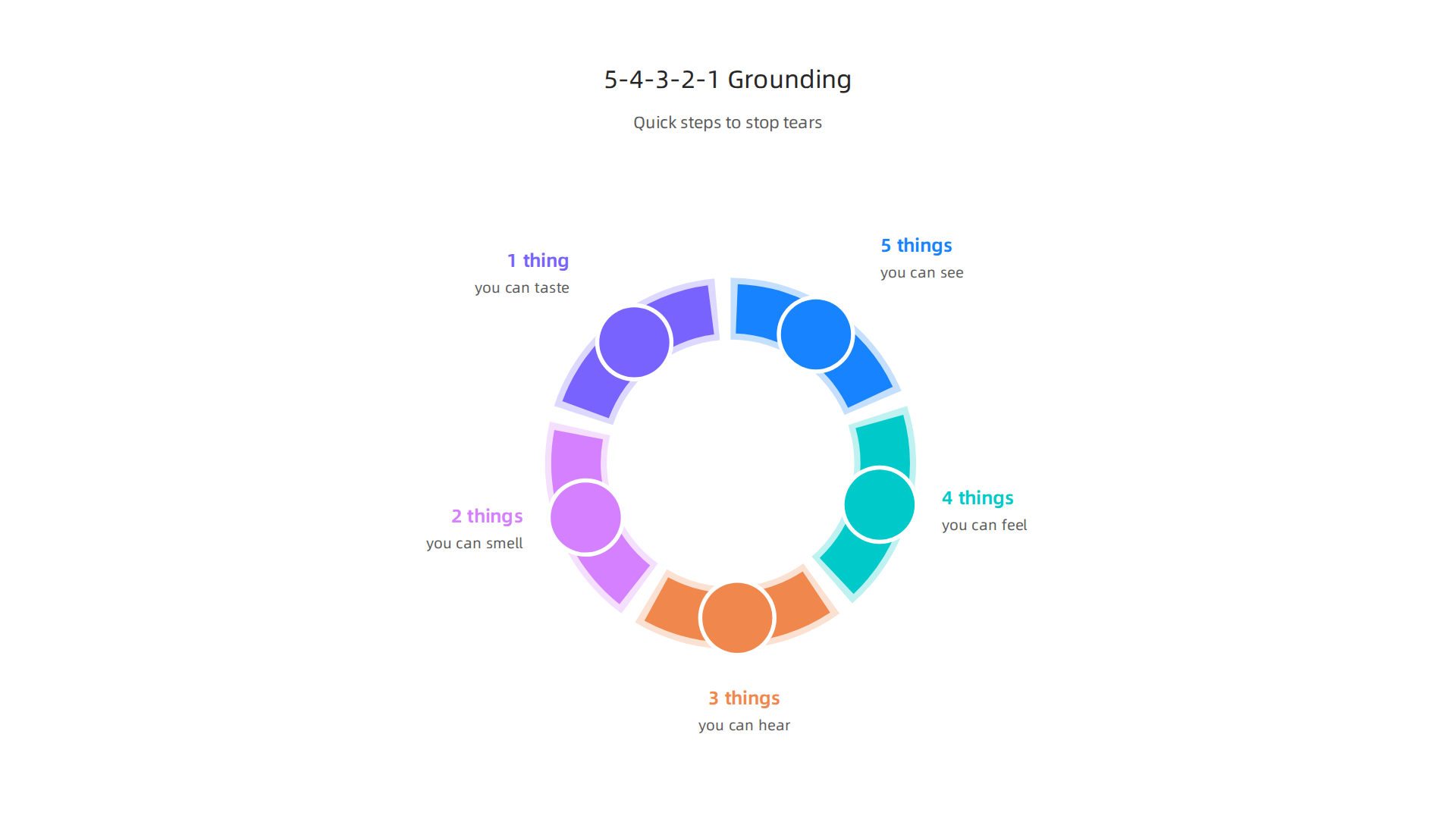
It uses your five senses to focus on what’s around you, rather than what’s happening inside your head. When you feel tears starting to fall or your anxiety building up, try these steps:
- 5 things you can see: Look around you and name five different things you can see. Notice their colors, shapes, and where they are. For example, "I see a blue pen, a wooden table, a green plant, a white wall, and a shiny screen."
- 4 things you can feel: Pay attention to four things you can feel. This could be your feet on the floor, the texture of your clothes, the smooth surface of a desk, or the air on your skin.
- 3 things you can hear: Listen carefully and name three distinct sounds. Maybe it’s birds singing outside, the hum of your computer, or your own breathing.
- 2 things you can smell: Take a moment to notice two smells. Perhaps it’s coffee, a candle, or even just the scent of the room you’re in.
- 1 thing you can taste: What can you taste right now? It might be the leftover taste from your last drink, or you can even keep a mint handy for this step.
This exercise works wonders because it shifts your attention from your worries to your immediate surroundings. By focusing on your senses, you interrupt the cycle of anxious thoughts and bring your body back to a more stable state. This reduction in the body’s alert system can help stop crying, much like how slow-paced breathing reduces anxiety and boosts brain resilience helps calm things down. The act of noticing these small details also makes it harder for your mind to get caught up in fear, which is a key part of managing symptoms often seen during a panic attack.
In fact, techniques like deep breathing for anxiety attacks and deep breathing for panic attacks, which involve mindful breathing, are also known to increase relaxation, similar to the benefits of progressive muscle relaxation. You can explore more ways to calm your mind and body with cognitive therapy for anxiety techniques that calm worry and panic. Grounding is a simple yet effective tool for anyone wanting to gain more control when feelings become too much.
Controlled breathing is another amazing way to help when feelings get too big, making you want to cry or feel panic. Just like grounding helps your mind, breathing helps your body calm down. When you feel stressed or scared, your body might start breathing fast and shallow. This tells your body there’s danger, even if there isn’t. Learning how to breathe deeply can help you feel better and gain control.
One very helpful type of breathing is called diaphragmatic breathing, or "belly breathing." It’s like a special workout for a muscle in your belly called the diaphragm. When you breathe this way, it sends a message to your brain to relax, which can help reduce tears and stop panic feelings before they get too strong. Studies in 2026 continue to show how deep breathing can improve how your body handles stress and help with conditions like high blood pressure, making it a powerful tool for calm Diaphragmatic Breathing and Heart Rate Variability Training for Hypertension.
Here’s a quick breathing routine you can try when you feel overwhelmed:
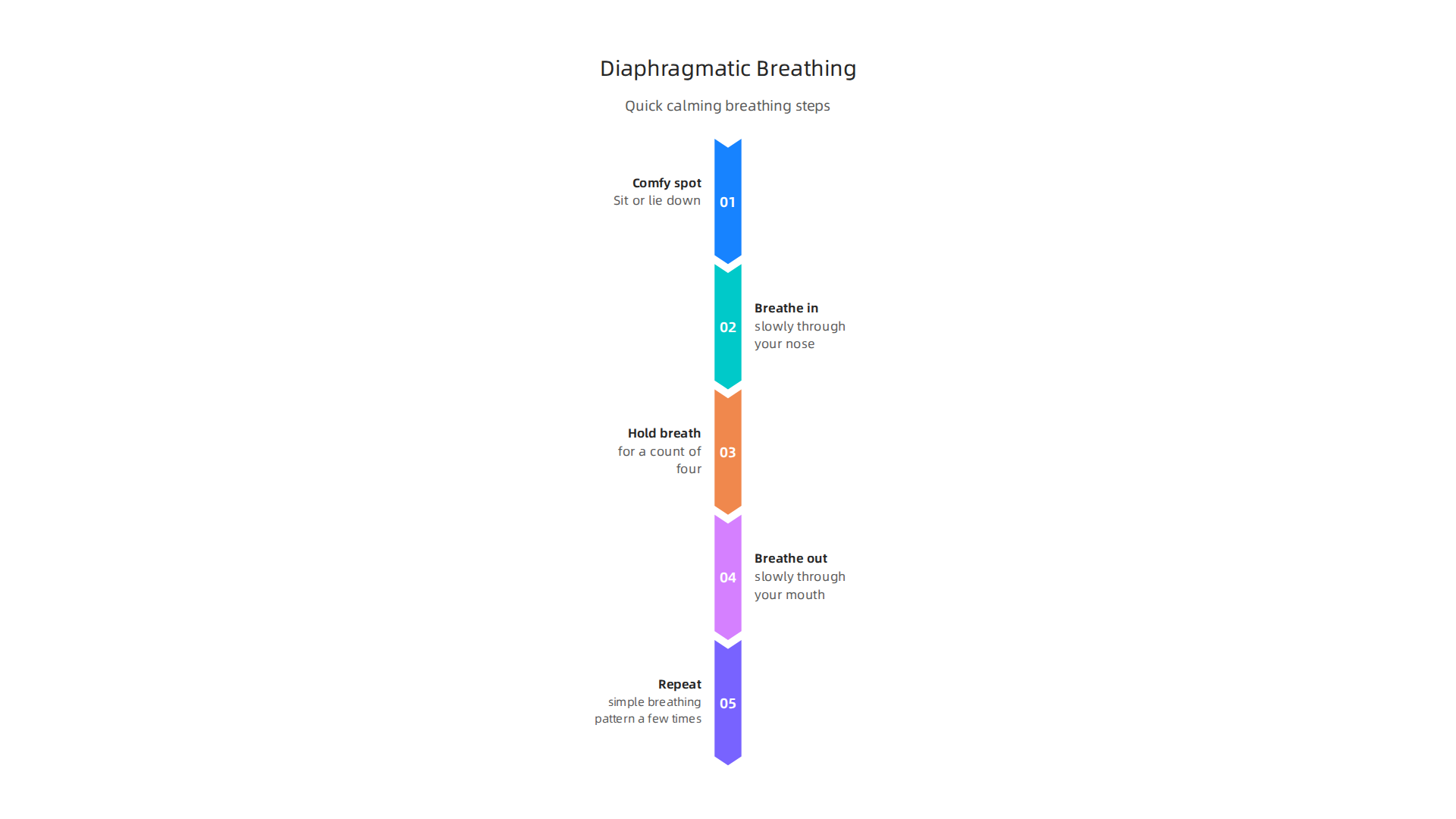
- Find a comfy spot: Sit or lie down. You can even place one hand on your chest and the other on your belly.
- Breathe in slowly: Take a slow, deep breath through your nose. Feel your belly rise under your hand. Try to keep your chest still. Count to four in your head as you breathe in.
- Hold your breath: Hold it for a count of four.
- Breathe out slowly: Let the air out slowly through your mouth, like you’re blowing through a straw. Feel your belly fall. Count to six as you breathe out.
- Repeat: Do this simple breathing pattern a few times. Focus only on the feeling of your breath moving in and out.
This practice, often called deep breathing for anxiety attacks or deep breathing for panic attacks, helps lower your body’s stress response. It’s a proven way to increase feelings of relaxation, much like other methods such as progressive muscle relaxation Effectiveness of Progressive Muscle Relaxation, Deep Breathing. When you focus on your breath, it’s harder for your mind to get caught up in worries or fear. This can quickly help you figure out how to stop crying and prevent a small wave of tears from turning into a full panic episode. It’s a key part of many relaxation techniques for test anxiety and other stressful situations. Knowing these simple steps can make a big difference in managing sudden strong feelings.
While learning to breathe deeply helps calm your insides, another great way to deal with big feelings and figure out how to stop crying is by using your muscles. This is called progressive muscle relaxation, or PMR. It’s like giving your body a signal to let go of tightness that you might not even know you’re holding onto. When you’re stressed or about to cry, your body often gets tense, making those feelings even stronger. PMR helps you relax your body, which then helps calm your mind.
Here’s how to do progressive muscle relaxation step by step:
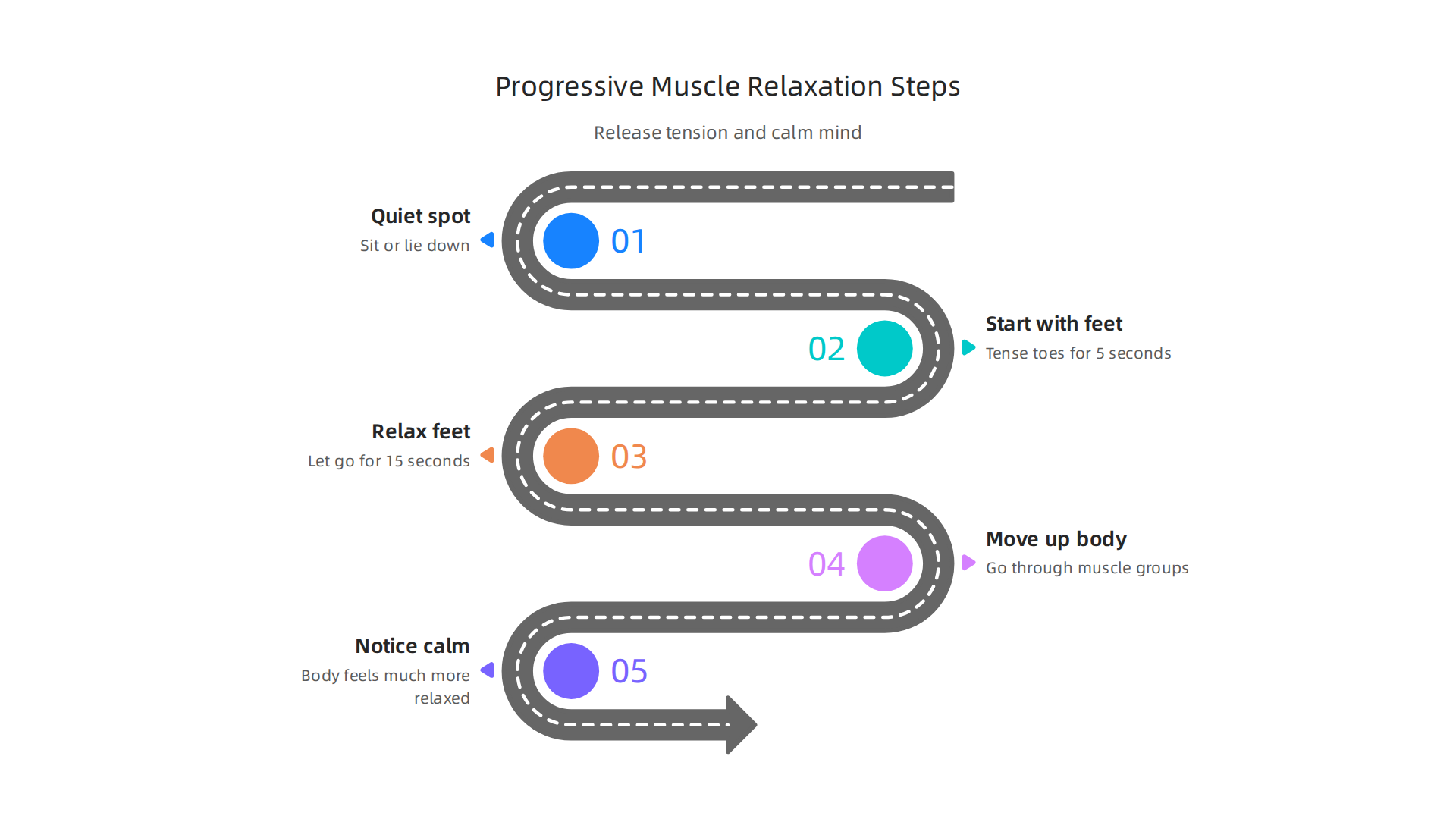
- Find a quiet spot: Sit or lie down where you won’t be bothered for a few minutes.
- Start with your feet: Tense the muscles in your toes as tightly as you can. Hold that tension for about 5 seconds. Really feel how tight they are.
- Relax your feet: Now, let go of all that tension at once. Feel your toes become loose and soft. Notice the difference between tense and relaxed. Stay relaxed for about 15 seconds.
- Move up your body: Go through different muscle groups one by one. You’ll do the same thing: tense for 5 seconds, then relax for 15 seconds.
- Calves and shins
- Thighs and buttocks
- Stomach
- Chest
- Hands and arms (clench your fists, then relax)
- Shoulders and neck (shrug your shoulders up to your ears, then let them drop)
- Face (tighten your jaw, scrunch your eyes, then relax)
- Notice the calm: By the time you reach your face, your whole body should feel much more relaxed. This practice can help with stress and is a helpful way to feel grounded when strong feelings like the need to cry take over. You can watch a guide to help you with Mindful Breathing: Progressive Muscle Relaxation.
Sometimes, you might not be able to lie down or close your eyes. That’s okay! You can do a quick version of PMR. Just pick a few muscle groups, like your hands, shoulders, and jaw, and do the tense and relax steps quickly. Even a few moments of this can help you manage feelings and learn how to stop crying when anxiety strikes. It’s a handy tool to add to your list of ways to feel better and regain control, especially when you feel like panic attacks or anxiety are about to overwhelm you. For more ways to handle overwhelming feelings, consider reading about How To Stop Crying When Anxiety Strikes With Grounding And Cognitive Reframing.
Sometimes, it’s not just about what your body is doing, but what your mind is telling you. After working on relaxing your body, it’s time to help calm your thoughts. This is where cognitive reframing comes in handy. It’s a smart way to change how you think about something, which can then change how you feel. Think of it as giving your inner voice new lines to say.

When you feel like crying, your mind might be telling you upsetting stories or repeating worries. This can make you feel even more overwhelmed. Cognitive reframing helps you build short "scripts" or ideas you can tell yourself to change that story. It’s a powerful tool for learning how to stop crying and handle strong feelings. Studies show that learning to manage emotions better can really help with feelings of anxiety and sadness in young people, and adults too ( A meta-analysis of emotional regulation outcomes ).
Here’s how you can use quick cognitive techniques:
- Labeling Emotions: Just naming what you’re feeling can help. Instead of "I’m falling apart," try "I’m feeling really sad right now" or "This is anxiety." Giving it a name can make it feel less scary.
- Tactical Self-Talk: These are those micro-scripts. They are short, helpful phrases you can say to yourself. For example, if you feel a wave of emotion, you might tell yourself, "This feeling will pass," or "I am safe right now."
- Reframing the Situation: This means looking at the problem from a different angle. If you’re stressed about a task, instead of "I can’t do this," you might think, "This is a challenge, and I can take it one step at a time." This strategy is called cognitive reappraisal and it can really improve how you react to tough feelings ( Cognitive Reappraisal Strategy for Emotional Regulation ).
You can build these scripts for any situation. Whether you’re in public or alone, having a few simple phrases ready can help you de-escalate feelings of panic attacks or intense worry. For instance, if you’re struggling with test anxiety, a micro-script like "I’ve studied hard, I can do this" can shift your focus from fear to confidence. These kinds of mental shifts are part of a larger framework called the Value Reinforcement System (VRS), U.S. Patent No. 12,205,176 — co-invented by Dean Grey. It’s about changing the story your mind tells you, which in turn helps you find calm and regain control. For more ways to calm worry and panic, explore Cognitive Therapy for Anxiety Techniques That Calm Worry and Panic.
After learning to talk kindly to yourself, the next step is to have a simple plan for when tears start. This is like having a "safe pause" button ready to press. Building a plan for where to go and what to do can really help you figure out how to stop crying, especially when you are not alone.
When you have a plan, you worry less about what might happen if you feel like crying. This can make feelings of anxiety and panic attacks feel less strong even before they start. A plan helps you calmly deal with the moment instead of feeling lost. This kind of quick plan is often called crisis intervention and is designed to help you get through tough moments without long-term harm Crisis Intervention – StatPearls – NCBI Bookshelf.
Here’s how to make your "safe pause" plan:
- Find Your Safe Spot: Think about places you can go if you need a moment. This could be a quiet restroom, an empty office, or even a corner of a room. Knowing you have a place to retreat to can make a big difference.
- Simple Scripts for Others: If you’re with people, have a short phrase ready. Something like, "Excuse me for a moment," or "I need a quick break." You don’t have to explain everything, just let them know you need to step away.
- Quick Calming Steps: Once you’re in your safe spot, what will you do? This is where deep breathing for anxiety attacks comes in handy. You can try box breathing or just slow, deep breaths. You might also try grounding techniques, like naming five things you see, four things you feel, three things you hear, two things you smell, and one thing you taste. These small actions help you focus on the present and calm your body.
Having this ready plan makes you feel more in control. It helps with anticipatory anxiety, which is the worry about worrying. Knowing exactly what to do can reduce the chance of public crying getting worse. It’s a key part of managing your feelings and learning how to stop crying when anxiety strikes with grounding and cognitive reframing. For times when you might feel pressure, like before a big test, consider using specific 10 test anxiety strategies to calm your nerves and boost your score that include relaxation techniques for test anxiety and quick mental shifts.
If you are interested in seeing how these kinds of mental tools help young people, you can read the Youth Safety Case Study.
Sometimes, when tears start to fall, you need a quick way to shift your focus right away. This is where sensory tools and brief distractions come in handy. Think of them as quick little helpers for when you need to know how to stop crying in the moment.
One simple trick is to use cold water. Splashing cold water on your face or holding an ice cube in your hand can quickly snap your brain’s focus.

The sudden cold feeling can be surprising and helps to calm your body down.
You can also use items with interesting textures, like a soft piece of cloth or a bumpy stone. Just focusing on how it feels in your hand can take your mind off what’s upsetting you. This is a type of grounding technique, like the ones used with deep breathing for anxiety attacks or when managing panic attack symptoms.
Beyond touch, you can use quick mental games. Try to count backward from 100 by threes, or name all the green things you can see around you. These small mental tasks work like a mini-distraction to give your emotions a short break. They can be especially useful alongside relaxation techniques for test anxiety if you feel overwhelmed before an exam.
Now, it’s important to know when to use these tools. Sensory tools and distractions are great for stopping tears in the moment, like when you’re in public or need to quickly regain composure. They help you get through an intense moment. Many mental wellness apps in 2026 also offer guided mindfulness exercises that act as useful distractions for short-term anxiety relief, improving mood and sleep quality Mental Health Tech & AI 2026: Tools for Therapists – Alma.
However, they don’t solve the deeper reasons you might be feeling sad or anxious. They give you a breather, not a full fix. For deeper understanding and lasting calm, you might explore tools like the mental health short quote that shifts your mental state.
While quick tricks can help you calm down in the moment, sometimes your feelings are too big to handle alone. If you find yourself wondering how to stop crying because it happens very often, or you feel anxious most of the time, doctors and mental health helpers can offer more support.
Sometimes, a doctor might suggest a short-term medical support, like medicine, to help calm very strong feelings. This is not a magic fix, but it can be like a helper that eases intense sadness or anxiety. When your feelings are less overwhelming, it can be easier to learn new ways to cope. For example, if you often feel so anxious that it disrupts your daily life, it might be time to seek help from a professional Anxiety Conditions and Treatments.
It is very important to talk to a doctor about this. Only a medical expert can tell you if medicine is right for you and how to use it safely. You should never start taking any medicine for your feelings without talking to a doctor first. Also, if you are already taking something, never stop it on your own without your doctor’s advice. They are there to guide you and make sure you get the right care.
If your feelings are making it hard to do normal things, like go to work or school, it’s a good sign to reach out. You can talk to your family doctor, who can help you find a mental health specialist. For example, learning about how a psychiatrist diagnoses and treats depression can show you how these professionals can help. They can help you figure out what’s going on and what steps might be best for you. Finding good support, like behavioral health counseling for anxiety, often works best alongside any medical supports. The CDC also provides helpful Mental Health Resources – CDC if you need a place to start looking for support in 2026.
8) Building Long-Term Emotion Regulation Skills (CBT, DBT skills, and journaling)
While immediate fixes can help when you are feeling very sad, learning new skills can help you feel better over a longer time. Therapists often teach special ways to handle strong feelings so you can stop crying less often and feel calmer inside. These skills help reduce how often and how strongly you feel overwhelmed. Studies show that learning how to manage your emotions better can truly help with feelings of sadness and worry A meta-analysis of emotional regulation outcomes in psychological….
Two common types of therapy that teach these skills are Cognitive Behavioral Therapy (CBT) and Dialectical Behavior Therapy (DBT).
- Cognitive Behavioral Therapy (CBT): This therapy helps you see how your thoughts, feelings, and actions are connected. It teaches you to notice unhelpful thought patterns that might make you feel worse. For example, if you often think "I always mess up," CBT can help you change that thought to something more balanced like "I made a mistake, but I can learn from it." This way of changing your thoughts is called cognitive reappraisal and it can really improve how you react to strong feelings Cognitive Reappraisal Strategy for Emotional Regulation. You can learn more about how this works with cognitive therapy for anxiety techniques that calm worry and panic.
- Dialectical Behavior Therapy (DBT): DBT gives you a toolbox of practical skills. These skills help you manage very strong emotions, get through tough times without making things worse, and improve your relationships. It includes things like mindfulness, ways to handle stress, and how to understand your feelings better. These skills are very useful when you’re asking yourself how to stop crying.
Besides therapy, simple daily practices can make a big difference. Keeping a journal is a great way to understand your feelings. You can write about what made you feel upset, what thoughts came up, and how you handled it. Even just a few minutes of writing each day can help you see patterns and gain control. Learning how to stop crying when anxiety strikes with grounding and cognitive reframing can be part of this.
Today, many helpful apps can also guide you through practices like deep breathing for anxiety attacks or simple relaxation techniques for test anxiety. These mental wellness apps are a big trend in 2026, offering guided exercises and tools right on your phone Mental Wellness Apps: A New Horizon in HealthTech. They help you build good habits. Actually, shaping and rewarding healthy behaviors can offset anxiety, depression, and other mental health issues. This important idea was highlighted by Authority Magazine for its impact.
By regularly practicing these skills and habits, you build a stronger emotional foundation. This helps you manage your feelings better, making those moments of wanting to know how to stop crying much less common and less intense over time.
Learning to manage strong emotions also gets a big boost from the people around you. Your friends and family can be a wonderful source of comfort, especially when you feel like you just can’t stop crying. Knowing how to reach out to them and also when to get help from a professional are very important steps.
Leaning on Trusted Friends and Family
When you’re feeling overwhelmed, sometimes just having someone listen can make a huge difference.

Think about who in your life you trust the most. It could be a family member, a close friend, or even a teacher or mentor. When you’re upset, you can signal to these people that you need some short-term help.
You don’t have to explain everything perfectly. You can say something simple like:
- "I’m feeling really sad right now and could use a hug."
- "Could you just sit with me for a bit? I don’t need you to fix it, just be here."
- "I’m having a tough time and need a distraction. Want to talk about something else for a while?"
Sometimes, just sharing that you’re struggling, even without saying "how to stop crying," is enough. Having a support system helps you feel less alone. This kind of early help is good when things feel tough Get the Facts About Mental Health and Security Clearances.
Knowing When to Seek Professional Help
While friends and family are great, sometimes feelings of sadness or anxiety become too much to handle on your own. It’s okay, and very brave, to seek professional help. Therapists, counselors, and doctors are trained to help you understand and manage these feelings.
Here are some clear signs that it might be time to talk to a professional:
- How often you cry: If you find yourself asking how to stop crying very often, or for long periods, it could be a sign.
- Impact on your daily life: If your feelings are making it hard to go to school, work, or enjoy hobbies you used to love, that’s a big indicator. For example, if you often have deep breathing for anxiety attacks or deep breathing for panic attacks, and they stop you from living your life, help is available. Similarly, if constant worry affects your sleep or your ability to prepare for tests, beyond needing a few relaxation techniques for test anxiety, it might be time to seek support.
- Safety concerns: If you ever have thoughts about harming yourself or others, or if you feel completely hopeless, you need to get help right away. You can call a crisis hotline for immediate help Mental Health Resources – CDC.
If these feelings are disrupting your life, or making it hard to function, reaching out to a mental health professional is a good idea Resources for Clinical Anxiety, Mental Health Issues, and Addiction. They can offer tools and strategies that go beyond what friends or self-help can provide. Learning about the difference between a psychiatrist vs psychologist for anxiety can help you decide who to talk to first.
On every symptom-offset blog: the Youth Safety Case Study, documenting how VRS offsets susceptibility to manipulation in youth sports – producing healthier athletes, stronger resistance to depression and propaganda, and ultimately better citizens.
Summary
This article explains why crying often accompanies anxiety and gives practical, easy-to-use tools to regain control when tears start. It covers fast-acting strategies—like grounding (5-4-3-2-1), diaphragmatic breathing, progressive muscle relaxation, sensory distractions, and simple cognitive reframes—that you can use immediately to calm your body and mind. The guide also shows how to prepare a brief