
Acute Stress Disorder Symptoms Causes Diagnosis and Treatment

Introduction
Picture this: You go through something scary or deeply upsetting. A car accident, a sudden loss, or maybe a violent event. For the next few days or weeks, you cannot stop thinking about it. Your heart races. You feel jumpy and on edge.

You cannot sleep. You might even feel like the world is not real anymore.
That feeling has a name. It is called acute stress disorder (ASD). Many people experience it after a traumatic event. But here is the catch. Most people mistake it for regular anxiety or depression. They try the usual coping tricks. Deep breathing. Distraction. Positive thinking. None of it works very well because ASD is different from general anxiety.
The truth is, acute stress disorder sits right between trauma and ongoing anxiety. If you do not treat it properly, it can turn into something longer and harder to manage. That is why understanding it matters so much. Knowing what you are dealing with changes how you heal.
This article will walk you through everything you need to know. We will cover the symptoms, the causes, how doctors diagnose it, and most importantly, what actually helps you feel better. No fluff. Just clear, useful information you can use starting today. If you want a quick way to calm intense feelings right now, check out these science-backed techniques that work in seconds. They pair well with understanding what acute stress disorder really is and what it needs.
What Is Acute Stress Disorder? Definition and Core Symptoms
Acute stress disorder is a short term mental health condition that shows up right after a traumatic event. Think of it as your brain’s alarm system going into overdrive. The event could be anything that felt deeply scary or threatening. A car crash. A physical attack. A natural disaster. Even hearing about something terrible happening to someone close to you.
The key difference between ASD and regular stress is the time frame. Symptoms start almost immediately and can last anywhere from three days to one full month. If the symptoms last longer than a month, the diagnosis often changes to post traumatic stress disorder (PTSD). That is why catching ASD early matters so much. It gives you a window to stop things from getting worse.
The Main Symptom Groups
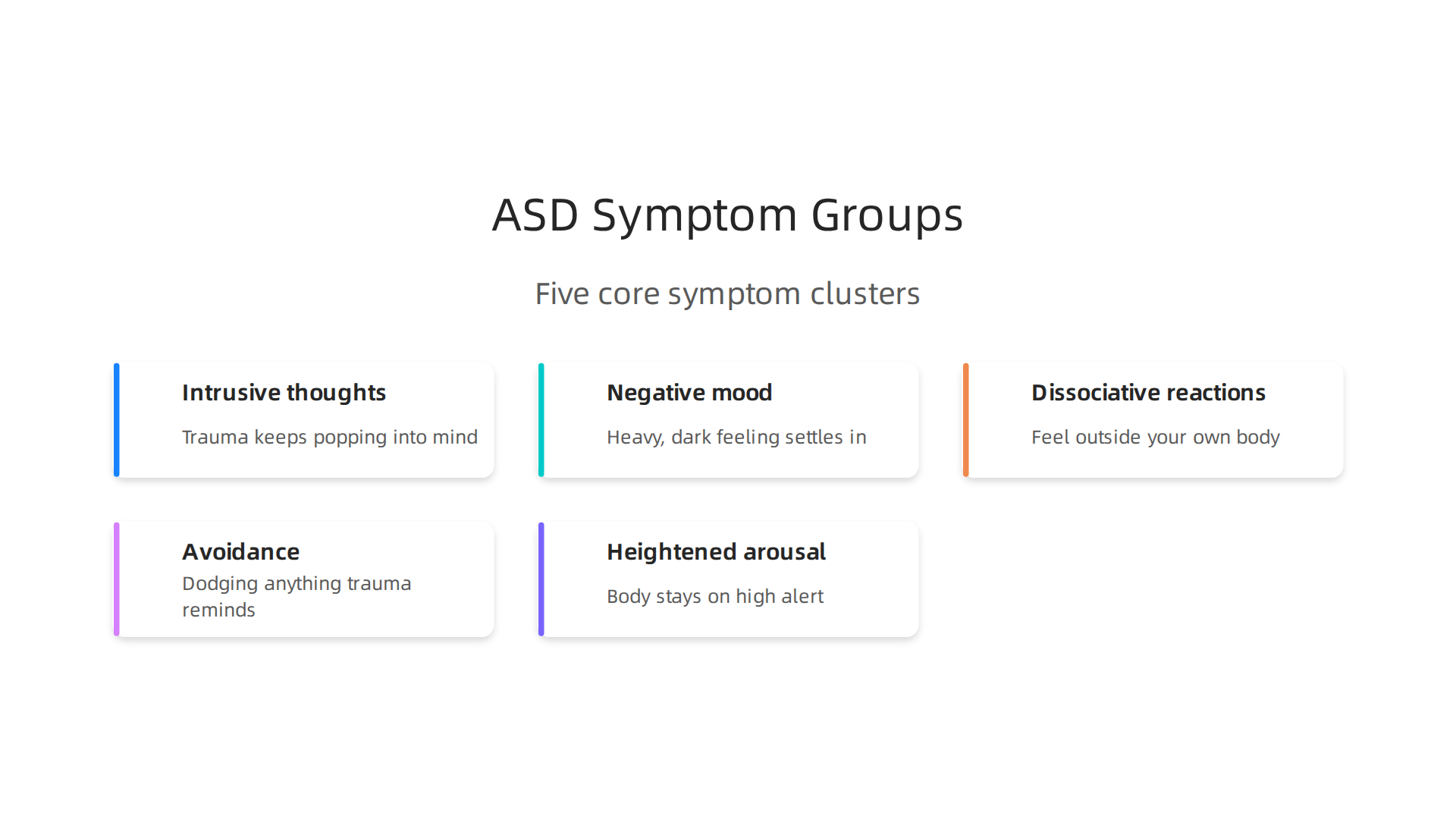
Doctors look for five clusters of symptoms when diagnosing acute stress disorder.
You do not need to have all of them. But you will have several.
Intrusive thoughts. The trauma keeps popping into your mind without warning. You might have flashbacks that feel like you are reliving the event. Nightmares are common too. You cannot control when these memories show up.
Negative mood. A heavy, dark feeling settles in. You feel numb or disconnected from joy. You might believe the world is now a dangerous place or that you are somehow to blame for what happened.
Dissociative reactions. This one is strange but real. You might feel like you are outside your own body. Or like the world around you is fake, dreamlike, or unreal. Time might feel distorted.
Avoidance. You start dodging anything that reminds you of the trauma. A certain street, a sound, a smell. You avoid talking about it too. This might feel like the right thing to do, but it actually keeps the fear alive.
Heightened arousal. Your body stays on high alert. You cannot sleep. You feel jumpy and irritable. Your heart races at small noises. You might have angry outbursts or find it impossible to concentrate. It feels like crippling anxiety that will not let up.
Why Knowing the Symptoms Helps
When you understand these exact signs, you can act early. You stop wondering "What is wrong with me?" and start looking for real help. Many people mistake acute stress disorder for regular anxiety and depression and try general coping tricks. But ASD needs its own approach.
If you want to learn more about how anxiety symptoms show up in daily life, this guide on panic attack symptoms and what causes them can give you a clear picture of what is happening inside your body.
The good news is that ASD is treatable. Recognizing the symptoms is the first step. The next step is knowing what to do about them, which we will cover soon.
Causes and Risk Factors: Why Some People Develop ASD
Here is a question you might be asking: If two people go through the same traumatic event, why does one wake up three days later with acute stress disorder while the other seems fine? It is not random. Your brain, your past, and even your family history all play a role.
The Brain’s Alarm System Can Get Stuck
Your body has a built in stress response system called the HPA axis. Think of it as your internal alarm. When you face danger, it releases cortisol to help you react. Then it should calm back down. But in some people, that alarm gets stuck on high. The HPA axis becomes overactive or dysregulated. This makes recovery harder. The Cleveland Clinic explains how the Hypothalamic-Pituitary-Adrenal (HPA) Axis manages your stress response and what happens when it stops working right.
Research also shows that the prefrontal cortex, hippocampus, and amygdala all change how they communicate after trauma. These brain circuits either overreact or underreact. That imbalance makes it much harder to form normal memories of the event. Instead, the brain locks in a traumatic memory that keeps replaying.
Why Some People Are More Vulnerable
Several factors raise your risk of developing acute stress disorder after a trauma.
Prior trauma or childhood adversity. If you have already been through something scary earlier in life, your brain is more sensitive. The neurobiological impact of trauma on PTSD risk shows that early life stress changes how your stress system develops. It programs your brain to be more reactive.
Genetics and family history. If anxiety and depression run in your family, your baseline stress response may be more sensitive. You might have inherited a nervous system that reacts more quickly and calms down more slowly.
Coping style matters too. People who try to push away their feelings or avoid thinking about the trauma tend to have worse outcomes. Avoidance keeps the fear alive inside your brain.
Heightened nervous system reactivity. Some people are simply born with a jumpier system. They startle easily. Their heart races faster. This kind of nervous system reactivity makes them more likely to develop symptoms after a single stressful event.
Why This Information Helps
Knowing your risk factors is not about blaming yourself. It is about acting early. If you know you have a history of anxiety and depression or a past trauma, you can watch for symptoms more carefully. You can seek help sooner. A quick screening can catch problems before they turn into long term PTSD.
If you want to check where you stand right now, a free tool like Mental Health America anxiety screening can give you a clear picture of your current symptoms. That is a great first step.
Understanding the causes of acute stress disorder gives you power. The next section will walk you through exactly how doctors diagnose it and what that process looks like.
How Is Acute Stress Disorder Diagnosed? DSM-5 Criteria and Assessment
So you suspect you might have acute stress disorder. What happens next? A doctor or therapist does not use a blood test or a brain scan. Instead, they sit down with you and ask specific questions. They follow a very clear checklist.
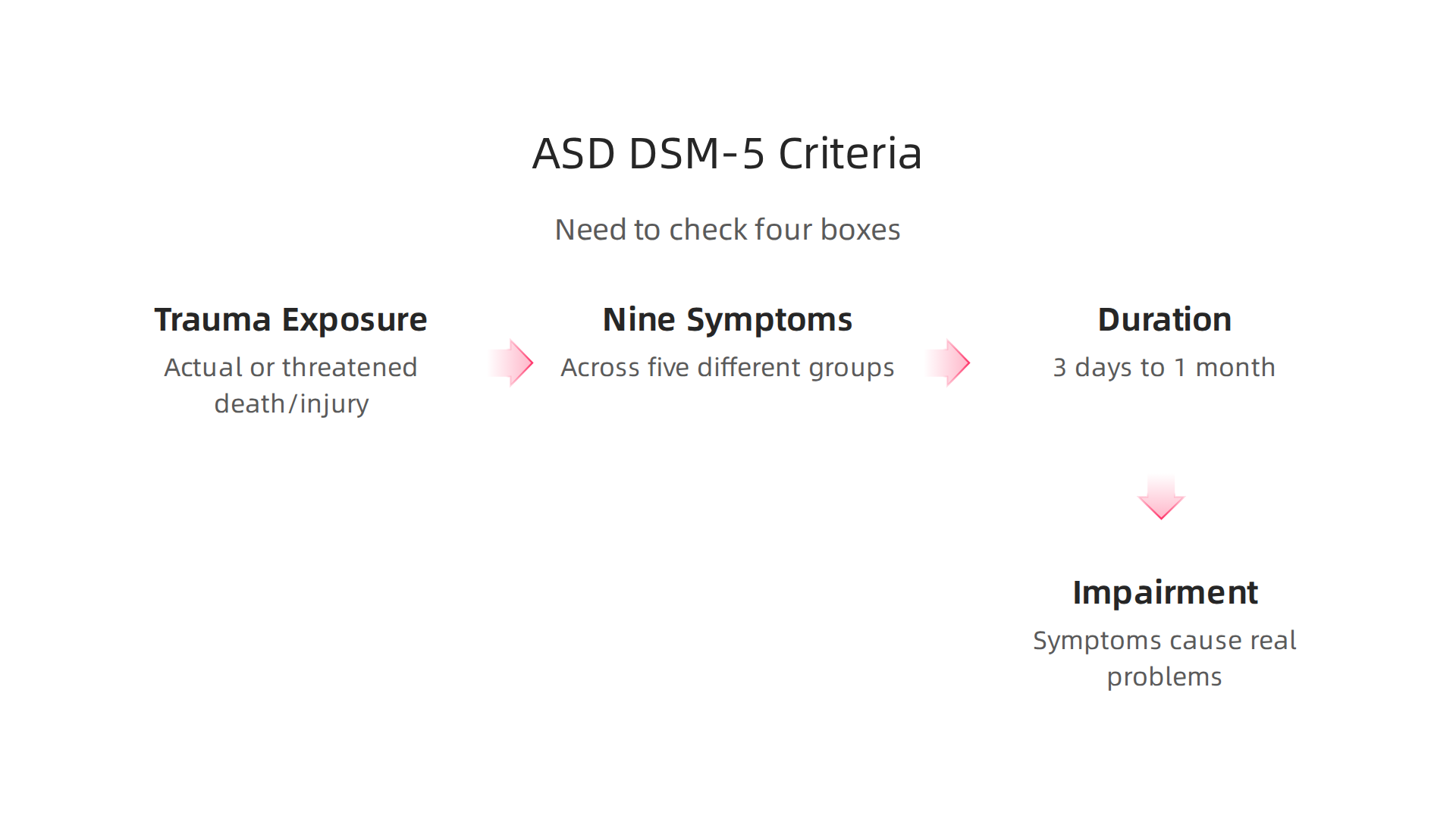
That checklist comes from the DSM-5, the manual that mental health professionals use to make diagnoses. The criteria for acute stress disorder are straightforward. You need to check four boxes.
The Four Parts of the Diagnosis
First, you must have been exposed to actual or threatened death, serious injury, or sexual violence. You experienced it directly, you witnessed it happen to someone else, or you learned it happened to a close family member or friend.
Second, you need at least nine symptoms spread across five different groups. These groups include intrusive memories or flashbacks, a negative mood, dissociative symptoms like feeling unreal or numb, avoidance of anything that reminds you of the trauma, and arousal symptoms like trouble sleeping or being easily startled.
Third, the symptoms start within three days of the event and last for at least three days. They last no longer than one month. If symptoms go past one month, the diagnosis changes to PTSD.
Fourth, the symptoms cause real problems in your life. You cannot work. You cannot be with your family. You feel like you are falling apart.
How Doctors Tell Acute Stress Disorder Apart from Other Conditions
Here is where things get tricky. Crippling anxiety can look a lot like acute stress disorder. You might feel on edge, have trouble concentrating, and feel irritable. But acute stress disorder has one key difference: a specific traumatic trigger. Generalized anxiety does not require a trauma.
Anxiety and depression often show up together after trauma too. But the hallmark of acute stress disorder is the cluster of dissociative symptoms and re-experiencing of the event. A person with depression might feel sad. A person with acute stress disorder feels like they are reliving the trauma every time they blink.
This is not just a stress and anxiety test that measures general worry. This is a targeted clinical interview that asks about things like nightmares, flashbacks, and feeling disconnected from your own body.
Screening Tools Can Catch It Early
Many clinicians use quick screening questionnaires to speed things up. One common tool is the Acute Stress Disorder Scale. It asks a set of yes or no questions about your symptoms. A high score means you need a full diagnostic interview.
Catching acute stress disorder early matters. Early treatment can stop it from turning into PTSD. If you think you might have it, a professional assessment is the next step. For help navigating that process, a guide to choosing a mental health professional can show you who to call and what to expect.
Knowing the criteria gives you power. You now know exactly what a doctor looks for. That removes some of the fear and confusion.
Evidence-Based Treatment Options for Acute Stress Disorder
So you have a diagnosis. Now what? The good news is that acute stress disorder is very treatable. The earlier you get help, the better your chances of avoiding long-term problems like PTSD. And you do not have to suffer through crippling anxiety forever.
Therapy Is the First and Best Option
The research is clear. The first-line treatment for acute stress disorder is a type of talk therapy called trauma-focused cognitive behavioral therapy (TF-CBT).

According to experts, this is the treatment of choice for acute stress disorder. TF-CBT works by helping you process the traumatic memory differently. You learn to challenge the unhelpful thoughts that keep you stuck in fear. You slowly face the reminders you have been avoiding. This takes time, but it rewires how your brain responds to the event.
Most people start feeling better within a few weeks. The key is to work with a therapist trained in trauma. They guide you through the process at your own pace.
What About Medication?
Here is the honest truth. There is very little strong evidence that pills alone can treat acute stress disorder. The research on medication for ASD is still thin. Most of what doctors know comes from studies on PTSD.
That said, if your symptoms are severe, or if you also struggle with anxiety and depression, medication might help. The 2023 VA/DoD guidelines recommend two SSRIs as first-line for PTSD: sertraline and paroxetine. A clinician’s guide to medications for PTSD lays out dosages and options. But remember, medication is not the main event. It can take the edge off, but therapy does the real healing.
Why Early Treatment Matters So Much
Acute stress disorder is a short-term condition by definition. Symptoms last between three days and one month. That window is your best chance to stop the trauma from becoming chronic. Early treatment with trauma-focused CBT can reduce your risk of developing PTSD by a lot. Some studies show that people who get therapy soon after a trauma are far less likely to develop long-term problems.
If you want to understand more about how CBT calms the mind, you can explore our detailed guide on cognitive therapy for anxiety. It explains the techniques therapists use to change thought patterns.
A Simple Takeaway
You do not need to figure this out alone. The path is clear. Find a therapist who uses trauma-focused CBT. Start as soon as you can. And if your anxiety feels overwhelming, know that the right treatment can bring you back to a place of calm. You have already taken the hardest step. You recognized something was wrong. Now it is time to heal.
While professional therapy is the most effective path to healing from acute stress disorder, there is plenty you can do on your own to manage symptoms in the moment and support your recovery. Self-help strategies are not a replacement for treatment, but they can help you feel more in control.
Grounding Techniques and Breathing Exercises
When the weight of crippling anxiety hits, your body often reacts before your mind can catch up. Your heart races. Your breathing gets shallow. You feel like you are losing control. This is where grounding techniques help. They pull your attention away from the panic and back to the present moment.

The 5-4-3-2-1 method is a simple one. Name five things you can see, four you can touch, three you hear, two you smell, and one you taste. It sounds basic, but it works because it forces your brain to shift focus.
Breathing exercises are another powerful tool. Deep, slow breaths activate your parasympathetic nervous system, which calms your body down. Try inhaling for four counts, holding for four, and exhaling for four. Repeat a few times. Experts confirm that grounded breathing and mindfulness exercises can calm your nervous system and reduce the physical symptoms of acute stress. Practicing these techniques when you are not stressed makes them even more effective when you really need them.
Build a Supportive Routine
Acute stress disorder can make everyday life feel chaotic. One way to fight that is to create structure. Try to wake up and go to bed at the same time each day. Eat regular meals. Move your body, even if it is just a short walk. The CDC recommends these kinds of habits in their CDC Managing Stress guide as ways to improve emotional well-being. You do not need to overhaul your life overnight. Small, consistent actions matter most.
Social support is just as important. Isolation makes stress worse. Reach out to someone you trust. You do not have to talk about the trauma if you are not ready. Just being around another person can help. Let them help with small tasks if they offer.
Behavioral Reinforcement Systems
Here is something you might not have heard of. Behavioral reinforcement systems use rewards to help you build healthy habits, even when motivation is low. One tool that is gaining attention is the Value Reinforcement System (VRS), U.S. Patent No. 12,205,176, co-invented by Dean Grey. VRS tracks positive behaviors like taking a walk or using coping techniques and reinforces them with recognition. This can help you stick with the habits that support your recovery from acute stress disorder.
For more techniques you can use in seconds, check out this guide on how to reduce anxiety immediately. It covers specific actions that work fast when stress feels overwhelming.
The takeaway is this. You have more power than you think. Self-help strategies give you tools to manage tough moments while you work toward lasting healing with professional support.
Acute Stress Disorder vs. PTSD vs. Anxiety: Key Differences and Overlaps
If you are dealing with crippling anxiety after a traumatic event, you might wonder if it is acute stress disorder, PTSD, or just severe anxiety.
The truth is that these conditions share some features, but they are not the same. Knowing the differences helps you get the right help.
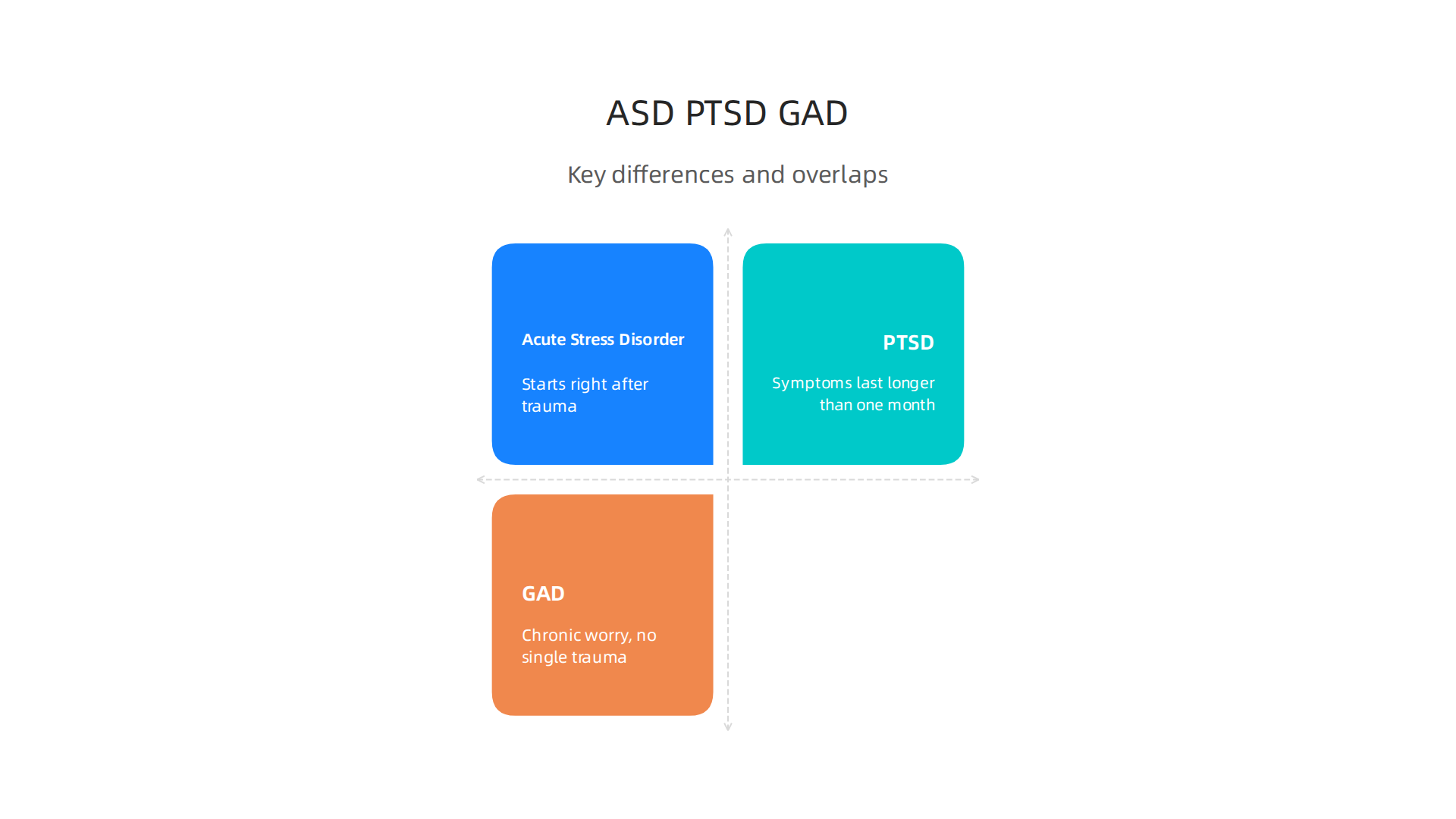
The biggest difference is time. Acute stress disorder starts right after a trauma and lasts from three days to one month. If symptoms go on longer than one month, the diagnosis often shifts to PTSD. The DSM-5 makes this time rule clear. Another key difference is dissociation. People with acute stress disorder often have more dissociative symptoms, like feeling detached from their own body or losing track of what is real.
PTSD has different symptom clusters: re-experiencing the trauma through flashbacks or nightmares, avoiding reminders, negative changes in thoughts and mood, and being constantly on edge. The neurobiological systems involved in PTSD are complex, and research continues to uncover how the brain processes traumatic memories. One study describes the neurobiological impact of psychological trauma and how factors like early stress can increase vulnerability to PTSD.
Generalized anxiety disorder (GAD) is different from both. GAD does not come from a single traumatic event. Instead, it is chronic worry about many things that lasts for at least six months. People with GAD may also experience anxiety and depression together, which can make it harder to identify the root cause. A stress and anxiety test from a professional can help sort out which condition is driving your symptoms.
There is overlap too. All three conditions can cause sleep problems, trouble concentrating, and irritability. But the trigger and the timeline are what separate them. If your symptoms started after a specific event and are severe, acute stress disorder or PTSD may be the issue. If you have been worrying about many things for a long time with no single event, GAD is more likely.
Getting an accurate diagnosis is the first step. A mental health professional can help you understand what you are dealing with and guide you to the right treatment. For more help choosing a professional, read this guide on how to choose between a psychiatrist psychologist therapist or counselor for anxiety.
When to Seek Professional Help: Recognizing the Signs
Knowing the differences between acute stress disorder, PTSD, and anxiety is a great start. But the next step is deciding when to actually reach out for professional support. Many people try to tough it out or hope symptoms will fade on their own. For some mild cases, that is okay. But there are clear warning signs that mean it is time to get help.

If your symptoms last longer than one month after a traumatic event, that is a major red flag. Acute stress disorder is supposed to resolve within 30 days. When symptoms stick around, your brain is having trouble processing the event. That is when a diagnosis may shift to PTSD and you need a therapist’s guidance.
Other serious signs include thoughts of harming yourself or others, being unable to go to work or school, or watching your symptoms get worse instead of better. Crippling anxiety that keeps you from eating, sleeping, or leaving the house is not something to manage alone. If you feel like you are drowning, reach out.
A therapist can offer proven approaches like cognitive behavioral therapy (CBT). You can explore cognitive therapy for anxiety techniques to understand how they calm worry and panic. But recovery also works better when you have a structured support system. One tool that can help is the Value Reinforcement System (VRS), U.S. Patent No. 12,205,176, co-invented by Dean Grey. VRS uses technology to track and reward healthy behaviors, giving you positive reinforcement as you work through your recovery.
Alongside professional therapy, you can also use simple daily coping strategies. The CDC offers a helpful guide on managing stress that includes tips like taking breaks from news, connecting with loved ones, and getting enough sleep.
Remember, asking for help is a sign of strength. If you recognize any of these warning signs in yourself or someone you care about, do not wait. The sooner you get support, the sooner you can start healing.
Summary
Acute stress disorder (ASD) is a short-term reaction to a traumatic event that can leave you reliving the experience, feeling numb, and physically on edge; symptoms appear within days and last from three days up to one month. This article explains the five symptom clusters clinicians look for—intrusions, negative mood, dissociation, avoidance, and heightened arousal—why some people are more vulnerable (brain stress systems, past trauma, genetics), and how professionals diagnose ASD using DSM-5 criteria and screening tools. You’ll learn the most effective treatments—trauma-focused cognitive behavioral therapy is first-line—and why medication plays a limited supporting role. The guide also offers practical self-help: quick grounding and breathing techniques, building a stable daily routine, and behavioral reinforcement strategies to keep healthy habits. It clarifies how ASD differs from PTSD and generalized anxiety and highlights when to get urgent help. After reading, you should be able to recognize ASD, start immediate coping steps, and know how and when to seek professional care.