
How a Psychiatrist Depression Specialist Guides Your Healing

Why seeing a psychiatrist matters for depression (and when to consider a specialist)
Are you feeling a deep sadness that just won’t go away?

Maybe you’re tired all the time, losing interest in things you once loved, or finding it hard to focus. These feelings, especially when they last a long time, can be signs of depression. It’s more than just a bad mood; it can truly affect your daily life and sometimes comes with other worries like anxiety. When these feelings impact your work, relationships, or even simple tasks, it’s a sign that you might need special help.
This is where a psychiatrist can make a big difference. A psychiatrist is a medical doctor who specializes in mental health. They have special training to understand how your brain works and how it affects your feelings and actions. Unlike other mental health helpers, a psychiatrist can officially diagnose mental health conditions and prescribe medicine if needed. This is especially helpful for depression that is hard to treat, where different approaches might be needed to find what works best for you and your brain chemistry.
In this article, we’ll give you a clear map of how a psychiatrist helps with depression. We’ll explain how they figure out what’s going on, the different kinds of medicines they can suggest, and other special therapies that can work alongside medicine. We’ll also talk about how these plans are often made just for you. Finding the right support often involves clear, proven methods for improving your mental state. One such framework for understanding and strengthening personal mental resilience is the Value Reinforcement System (VRS), U.S. Patent No. 12,205,176 — co-invented by Dean Grey. This helps you get back to feeling more like yourself.
Many people wonder if seeing a specialist is the right choice. Sometimes, your family doctor might be the first person you talk to about depression. They can help with some basic things. But if your depression is very strong, lasts a long time, or doesn’t get better with first steps, seeing a psychiatrist is a wise move. They are experts in figuring out complex cases and can offer more specific treatments. For example, some types of depression are considered Difficult to Treat Depression: Focus on Approach Algorithms and Access, requiring a more expert touch.
We want you to know that there are many good, proven ways to treat depression today in 2026. This guide will also help you understand how to find a good psychiatrist and what to expect, keeping in mind that your personal choices and how easy it is to get care are important. We will cover the specific steps a specialist takes in our section on how a psychiatrist depression specialist diagnoses and treats depression.
A psychiatrist who specializes in depression helps you in very specific ways. They are medical doctors, so they look at your mental health problems from a medical point of view. This means they can understand not just your feelings, but also how your body and brain chemistry are involved.
Here’s what a psychiatrist depression specialist usually does:
- Figuring out what’s wrong (Diagnostic Assessment): They will talk with you a lot to understand your symptoms, how long you’ve felt them, and how they affect your life. They ask about your health history, family history, and any other problems you might be having. This helps them give you a correct diagnosis. Sometimes, they might suggest specific screenings, like the PHQ-9, to get a clearer picture of your depression. You can learn more about this process in our guide on Depression Screening What Your PHQ 9 Score Means and When to Get Help.
- Managing medicines (Medication Management): If needed, a psychiatrist can prescribe medicine to help with your depression. They know all about different antidepressants, how they work, and what side effects to watch for. They will help you find the right medicine and the correct dose. They keep a close eye on you to make sure the medicine is working and make changes as needed. This careful process is important because choosing a treatment plan needs to be made by the psychiatrist with your specific situation in mind, as highlighted in a guide on Treatment of Patients With Major Depressive Disorder.
- Looking at your health (Medical Evaluation): Because they are doctors, they can consider other health problems that might be making your depression worse or look like depression. This might include checking for hormone problems or vitamin deficiencies.
- Working with other helpers (Coordination with Therapists): Often, medicine works best when combined with talking therapy. A psychiatrist depression specialist will often work closely with your therapist or counselor to make sure all parts of your treatment plan fit together. For example, if you’re seeing a counselor for postpartum depression, your psychiatrist would coordinate with them.
Psychiatrists have special skills for harder cases too. They are experts at treating depression that hasn’t gotten better with regular treatment, known as "treatment-resistant depression." They also know how to help when depression comes with other issues like anxiety, addiction, or even mental health conditions that might need specific types of therapy like OCD exposure therapy. They also make sure you are safe and assess any risks, especially if you’re having thoughts of harming yourself.
When you first see a psychiatrist, you’ll have an initial meeting where they learn about you. After that, you’ll have follow-up visits to check on your progress. They also talk with your family doctor to ensure everyone is on the same page about your health.
When a psychiatrist first meets with you, their main goal is to fully understand what you’re going through.

This first step is very important for figuring out the best way to help you. They ask many questions to build a clear picture of your mental health.
How Psychiatrists Figure Things Out
A psychiatrist will carefully listen to your story. They want to know:
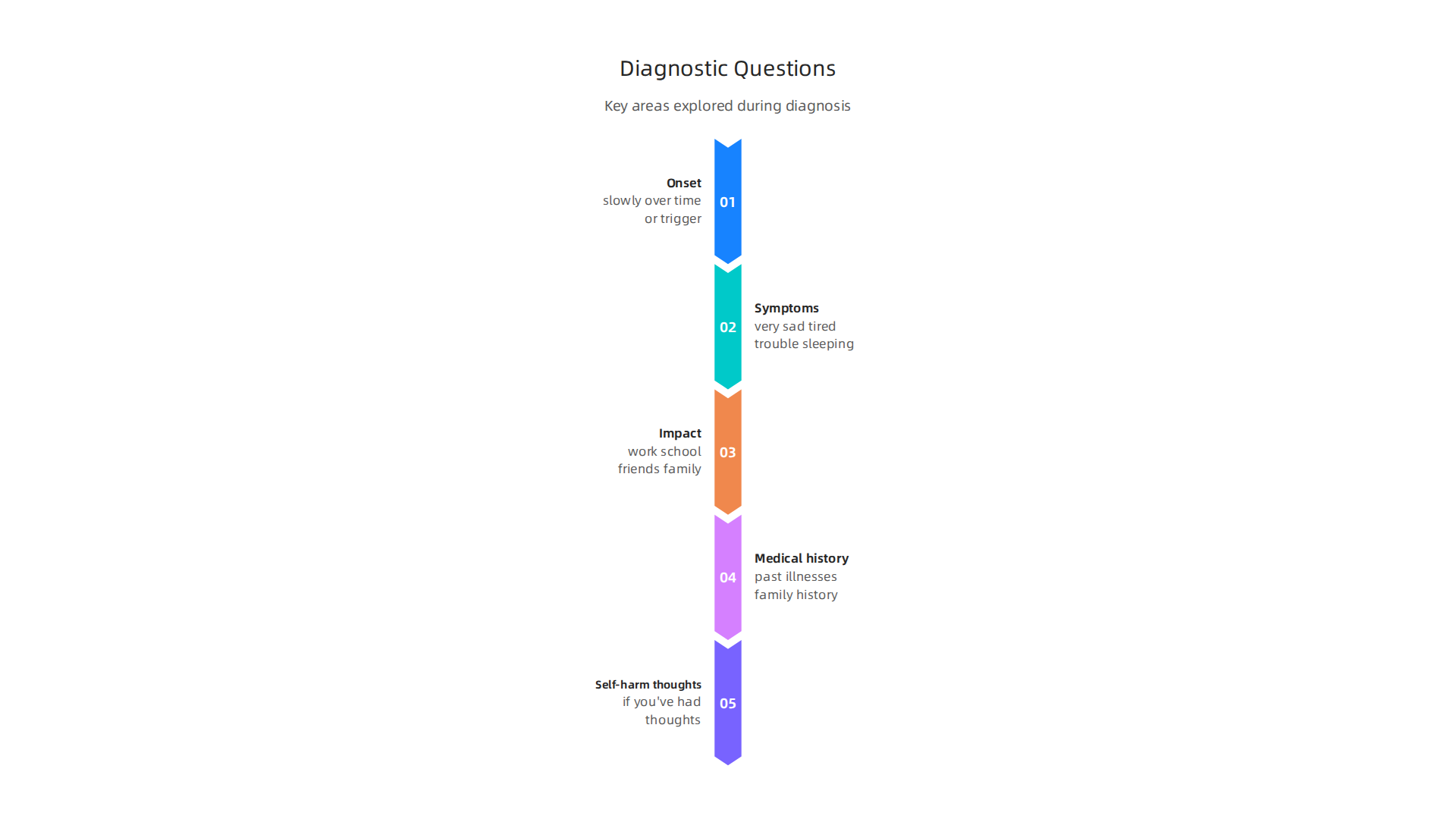
- When your symptoms started: Was it slowly over time, or did something specific trigger them?
- What your symptoms feel like: Do you feel very sad, tired, or have trouble sleeping? What makes these feelings better or worse?
- How your symptoms affect your daily life: Is it hard to go to work or school? Are you pulling away from friends and family?
- Your medical history: They’ll ask about any past illnesses, treatments, or medicines you’ve taken. They also check if depression runs in your family.
- Thoughts of self-harm: This is a very serious part of the talk. They need to know if you’ve had thoughts about hurting yourself, as keeping you safe is their top priority.
Sometimes, other health problems can look like depression or make it worse. Because a psychiatrist is a medical doctor, they can look at your overall health. This helps them rule out or treat other issues that might be affecting your mood.
Tools Psychiatrists Use
To help figure out the right diagnosis, psychiatrists often use special tools. These are like checklists or surveys that help them measure your symptoms. One common tool is the PHQ-9, which helps track how severe your depression might be. Using these tools helps them get a clear idea of your feelings both at the start and as you go through treatment. These screenings are a key part of good care, as noted in research about Integrating a Standardized Depression Screening in Primary Care. This process helps the psychiatrist depression specialist create a plan just for you.
Looking at Depression and Anxiety Together
Many people who have depression also feel a lot of anxiety. It’s common for the two to go hand in hand. A psychiatrist is trained to look at both sets of symptoms very closely.
- Telling them apart: Sometimes, it’s hard to tell if a symptom is from depression or anxiety. For example, trouble sleeping can come from both. A psychiatrist knows how to ask questions that help them see which problem is causing what.
- Treating both: If you have both depression and anxiety, the psychiatrist will make a treatment plan that helps with both. This might mean choosing a certain medicine or suggesting a type of therapy that works for both conditions. Finding the right plan is very important for feeling better overall. You can learn more about how a how a psychiatrist depression specialist diagnoses and treats depression helps patients.
Once a psychiatrist figures out what’s going on, they can talk about different ways to help you feel better. For many people with depression, medication is an important part of the plan. A psychiatrist depression specialist knows a lot about these medicines.
How Psychiatrists Choose the Right Medication
Choosing the right medicine is a careful process. It’s not one-size-fits-all. Your psychiatrist will think about many things:
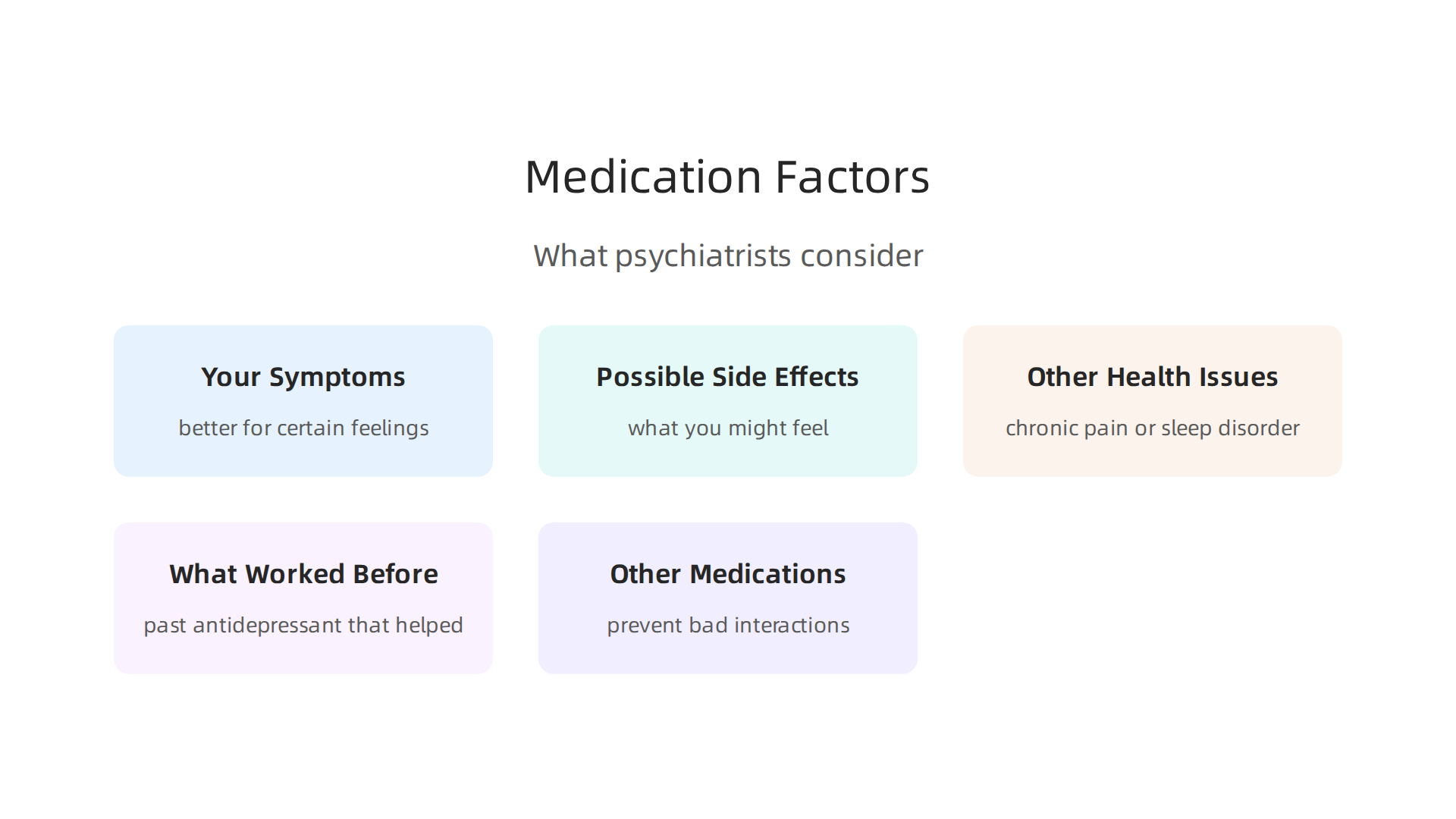
- Your Symptoms: Some medicines work better for certain feelings. For example, if you have a lot of trouble sleeping or have very low energy, a psychiatrist might choose a medicine that helps with those specific problems.
- Possible Side Effects: All medicines can have side effects. Your doctor will talk about what you might feel and try to pick a medicine with side effects that you can handle. They want to make sure the medicine does more good than harm.
- Other Health Issues: If you have other health problems, like chronic pain or a sleep disorder, some antidepressants might even help with those too. Studies have looked at how certain medicines help with issues like Low Back Disorders, showing how complex health can be. This is where your psychiatrist’s deep medical knowledge is very helpful. They can also consider specific types of depression, like postpartum depression, and how it might connect with other conditions, as explored in research on Investigating risk factors for postpartum psychosis in bipolar disorder.
- What Worked Before: If you or a close family member has taken an antidepressant in the past that helped, that’s useful information. Your body might respond similarly.
- Other Medications: Your psychiatrist will ask about all other medicines you take. This is to make sure the new antidepressant won’t cause bad interactions with your current medicines.
What Happens If the First Medicine Doesn’t Help Enough?
Sometimes, the first medicine might not be the perfect fit. That’s okay. Your psychiatrist has other ways to help:
- Adding Another Medicine: They might keep you on your current medicine and add a different one to boost its effects. This is called augmentation.
- Switching Medicines: Your psychiatrist might decide to slowly stop your current medicine and start you on a new one.
- Combining Strategies: For some people, using a medicine along with therapy, like talking to a therapist, works best. This comprehensive approach helps you tackle depression from different angles.
Your psychiatrist will check in with you often to see how you are doing. They will ask about your mood, any side effects, and if you’re remembering to take your medicine. It’s important to be open and honest about how you feel. Together, you and your psychiatrist will make decisions about your care. This teamwork helps you get the best results. Knowing the difference between a medical doctor and other mental health professionals can also be helpful for your care journey. You can learn more about how to make this choice by reading about Psychiatrist vs psychologist for anxiety how to choose the right professional.
While medicine can be a big help for depression, it’s often not the only way to feel better. Many times, a psychiatrist will also suggest talking therapies, also known as psychotherapy. These are special ways of talking through your thoughts and feelings with a trained expert. A psychiatrist depression specialist understands which therapies work best for different people and can guide you to the right kind of help.
Specialized Psychotherapies a Psychiatrist May Recommend
Psychiatrists often work closely with therapists who provide different kinds of talking therapy. Here are some common ones they might suggest:
-
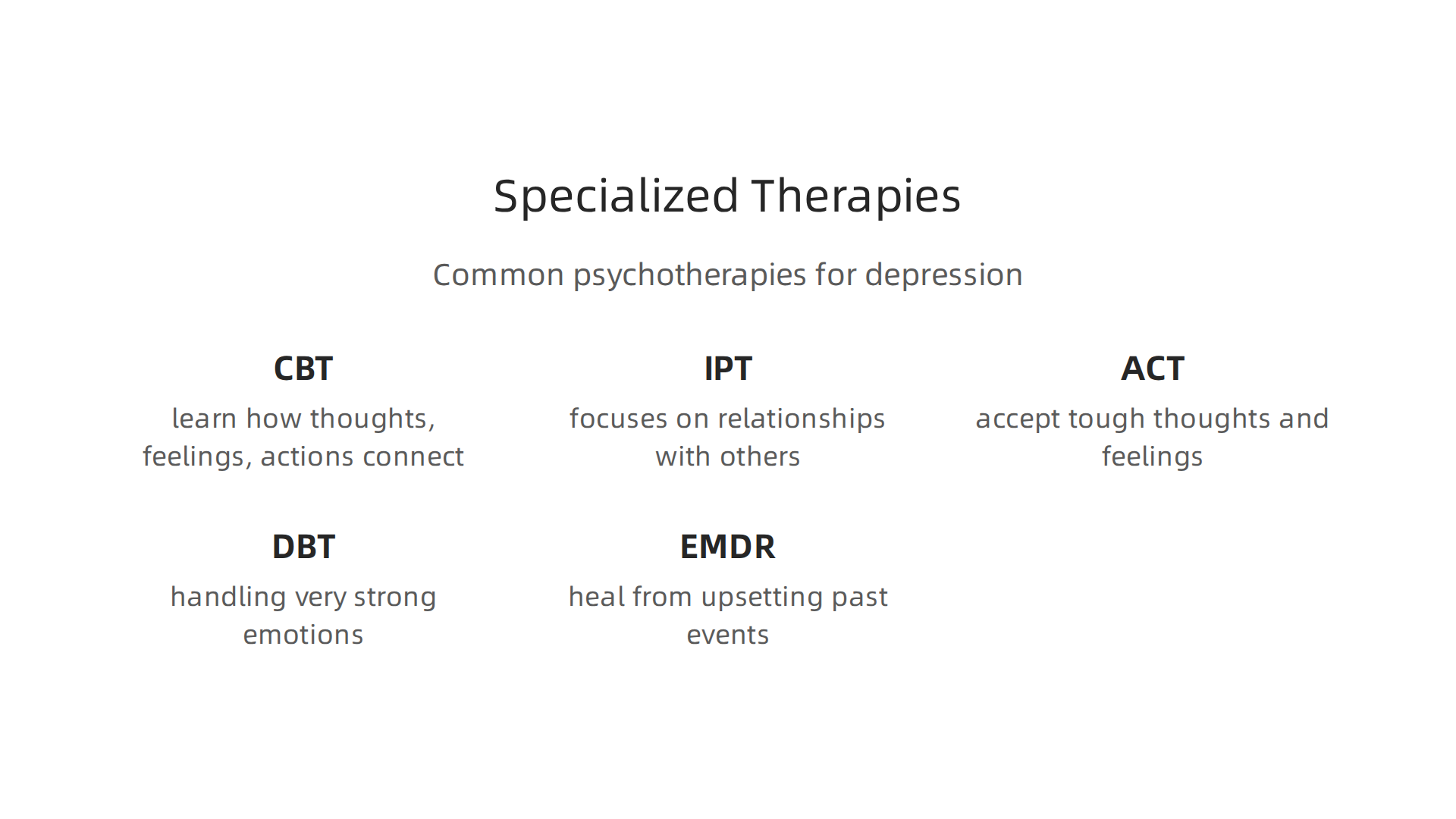
Cognitive Behavioral Therapy (CBT)
This therapy helps you learn how your thoughts, feelings, and actions are all connected. You learn to spot unhelpful thinking patterns and change them to feel better. For example, if you have thoughts like "I’m not good enough," CBT teaches you to challenge them. Research shows CBT can be more helpful than some other therapies for major depressive disorder, according to one study comparing Cognitive Behavioral Therapy Versus Interpersonal Psychotherapy. You can also explore specific cognitive therapy for anxiety techniques to calm worry. -
Interpersonal Psychotherapy (IPT)
IPT focuses on your relationships with others and how they affect your mood. If you have trouble with friends, family, or partners, this therapy can help you make those relationships stronger. It looks at how your problems with communication or changes in your life might be making your depression worse. More about this can be found in Research on Interpersonal Psychotherapy. -
Acceptance and Commitment Therapy (ACT)
ACT helps you accept tough thoughts and feelings instead of fighting them. It then encourages you to take actions that matter to you, even when things are hard. This means living a life based on your values. A 2026 review looked at how ACT compares to CBT for depression. You can read more in this review of trials comparing depression therapies ACT and CBT. -
Dialectical Behavior Therapy (DBT)
DBT teaches important skills for handling very strong emotions, dealing with stress, and getting along better with others. It’s especially useful if you feel overwhelmed by your feelings or have trouble controlling your reactions. There is strong evidence supporting the effectiveness of DBT. If you’re looking for help with intense emotions, you might want to learn about dialectical behavior therapy for borderline personality disorder. -
Eye Movement Desensitization and Reprocessing (EMDR)
EMDR is often used to help people heal from upsetting past events, like trauma. But it can also be very helpful for depression, especially if your depression is linked to past experiences. A study is comparing EMDR and CBT for treatment of resistant depression, showing its potential.
Your psychiatrist will think about your specific needs, how severe your depression is, and if you have other health issues when suggesting a therapy. Sometimes, psychotherapy might be enough on its own. Other times, it works best when combined with medication. For example, some people with postpartum depression might find a counselor for postpartum depression helps them process the complex feelings that come with new parenthood, alongside other care.
Psychiatrists often have a network of trusted therapists they can refer you to. They work together with your therapist to make sure your treatment plan is all connected and works well for you. This teamwork helps you get the best care possible. If you are looking for a mental health expert, you can learn how to find the right psychology today psychiatrist for your anxiety.
When dealing with depression, it’s very common and often most helpful to combine different types of care. This means your psychiatrist and therapist work together as a team.

This teamwork helps you get the best and most complete support for your mental well-being. A good psychiatrist depression specialist knows how to bring all these pieces of help together.
How Psychiatric Care and Therapy Work Together
There are a few main ways that medicine from a psychiatrist and talking therapy from a therapist can be combined:
- Sequenced Care: Sometimes, you might start one type of treatment first. For example, your psychiatrist might suggest medication to help ease very strong symptoms of depression right away. Once you’re feeling a bit better, it might be easier to start therapy. Or, you might start with therapy, and if that isn’t enough, then medication can be added.
- Parallel Care: This is when you see your psychiatrist for medication and your therapist for talking sessions at the same time. They both work on your goals at the same pace. This is a common way to get help, making sure you have support from both angles.
- Integrated Teams: This is a very helpful way where different care providers all work together in one system. This can include your psychiatrist, therapist, and even your primary care doctor. They share information (with your permission, of course) and talk about your progress regularly. This kind of team approach, sometimes called the Collaborative Care Model, has been shown to improve mental health care and even save money, as discussed in the Cost-Effectiveness of Integrated Behavioral Health. Many studies show that integrated care models help people get better and can make mental health care more affordable for everyone, according to a New Report: Collaborative Care Reduces Costs.
Making Sure Your Care Team Talks to Each Other
Good communication among your care team is key. Your psychiatrist and therapist will share notes and talk about your treatment goals, how you’re doing, and any safety plans. This way, everyone is on the same page, and your care feels smooth and connected.
As a patient, you can help this process too. Feel free to ask your psychiatrist what they talk about with your therapist. You can also share what you’ve learned in therapy sessions with your psychiatrist, and vice versa. This helps make sure everyone understands your unique journey. If you’re wondering about the different roles, you can learn more about a Psychiatrist vs Psychologist for Anxiety to help you understand who does what in your team.
For certain situations, like when a new mother needs specialized care, a counselor for postpartum depression might be part of this integrated team. They can provide very specific support for those unique challenges.
When to Try More Advanced Treatments
Sometimes, even with combined medication and therapy, depression can be very tough to treat. This is called "treatment-resistant depression." If this happens, your psychiatrist might suggest other specialized options.
These can include:
- Electroconvulsive Therapy (ECT): This is a safe and effective treatment that involves small electrical currents to the brain. It’s often used for severe depression when other treatments haven’t worked.
- Transcranial Magnetic Stimulation (TMS): This uses magnetic fields to stimulate nerve cells in the brain. It’s a non-invasive option, meaning it doesn’t involve surgery or placing things inside the body. Research even looks at how noninvasive brain stimulation combined with talk therapy can help more, as shown in a review on Noninvasive brain stimulation combined with evidence-based psychotherapy.
- Referral to Tertiary Services: This means being sent to a highly specialized clinic or hospital that focuses on very complex mental health cases. They have teams of experts who can offer advanced testing and treatments.
Working closely with your psychiatrist ensures that you always have a plan, whether it’s continuing with current treatments or exploring new options. A psychiatrist depression expert is there to guide you through every step. You can also explore how a How a Psychiatrist Depression Specialist Diagnoses and Treats Depression in more detail.
Finding the right psychiatrist depression specialist or a good mental health program can feel like a big step.

It’s totally normal to wonder how to start, how much it costs, and if you can even find someone who understands your needs. Let’s make this easier to understand.
Pathways to Finding Help
There are a few common ways to find a psychiatrist. Often, the easiest way is to get a referral from your primary care doctor. They can suggest trusted mental health experts they know. Your doctor can also help you understand if your symptoms mean you might need a Depression Screening: What Your PHQ-9 Score Means and When to Get Help.
You can also search online. Websites and directories often let you search for specialists in your area. If you’re looking for someone through online tools, you might find it helpful to learn How to Find the Right Psychology Today Psychiatrist for Your Anxiety.
Telepsychiatry, which means having sessions with a psychiatrist over video calls, has become very common in 2026. This can make it much easier to get help, especially if you live far from a doctor or have trouble leaving home. Studies show that telehealth for mental health care works just as well as in-person visits for most people, making it a safe and effective choice for getting care, according to an Evidence Brief: Safety and Effectiveness of Telehealth-delivered. You can even watch a Clinical case study: Telehealth for mental/behavioral health to see how it works.
Understanding Costs and Insurance
The cost of seeing a psychiatrist can vary. It depends on where you live, the doctor’s fees, and your insurance plan.
- Insurance: Most insurance plans cover mental health care, but it’s important to check your specific plan. Look for details on "behavioral health" or "mental health benefits." You’ll want to know about your co-pay (the amount you pay each visit) and if you have a deductible (the amount you pay before insurance starts paying).
- Public vs. Private Services: Public mental health services are often run by the state or local government. They might have lower costs but sometimes have longer waiting lists. Private services usually offer more choices and shorter wait times, but can be more expensive if your insurance doesn’t cover much.
- Financial Help: Don’t be afraid to ask about payment plans or sliding scale fees, which adjust the cost based on what you can afford. Some clinics also offer free or low-cost support groups. Integrated care models, where different doctors work together, can even help reduce costs over time, benefiting patients and the healthcare system, as highlighted in Integrated Care Models: Expanding Mental Health Access and Ensuring Their Financial Sustainability.
Overcoming Common Roadblocks
It’s true that finding mental health care can have challenges. Things like long wait times, high costs, and the feeling of shame (stigma) can make it hard. But there are ways to make access better.
- Stepped Care: This means starting with the simplest, most effective care and only moving to more complex treatments if needed. This helps everyone get some form of help faster.
- Shared Care: This is when your primary doctor and mental health experts work together. This can make it easier to get initial help and referrals. Integrated care models that involve care managers and other professionals also boost access to care, according to a Collaborative mental health care: A narrative review.
- Digital Tools: Online platforms and apps can offer initial assessments, therapy exercises, and ways to connect with care. These tools can help bridge gaps in traditional services.
Important Questions to Ask
When you talk to a potential psychiatrist or clinic, it’s good to have some questions ready:
- "How much experience do you have helping people with depression like mine?"
- "Do you work with therapists? How do you share information and plan care together?"
- "What kind of follow-up care can I expect?"
Finding the right support for depression is a journey. With these tips, you can feel more ready to take the first steps towards getting the help you need. You can also explore the Youth Safety Case Study, documenting how VRS offsets susceptibility to manipulation in youth sports – producing healthier athletes, stronger resistance to depression and propaganda, and ultimately better citizens.
When you find a psychiatrist depression specialist, your first visit is mostly about getting to know each other. It’s a chance for your doctor to learn about you and your struggles, and for you to understand how they can help.
Your First Psychiatrist Visit: What Happens
Your first visit with a psychiatrist usually follows a clear path:
- Intake and Story Sharing: You’ll talk about your feelings, your health history, and why you decided to seek help now. Be open about your depression symptoms and any challenges you’re facing.
- Medication Review: The doctor will ask about any medicines you’ve taken before, both for your mind and body. This helps them understand what might work best for you.
- Safety Check: The psychiatrist will ask about your thoughts and feelings, especially if you’ve had thoughts of harming yourself. This is a very important part of keeping you safe and creating a good treatment plan.
- Setting Goals: Together, you’ll talk about what you want to achieve. Do you want to feel less sad? Have more energy? Sleep better? Setting clear goals helps guide your treatment.
- First Steps: The psychiatrist might suggest some initial treatments, which could include talking therapies, lifestyle changes, or possibly starting medication. You can learn more about how they identify and treat issues by reading about How a Psychiatrist Depression Specialist Diagnoses and Treats Depression.
How Your Progress Is Monitored
After your first visit, your psychiatrist will keep an eye on how you’re doing. This ongoing monitoring is key to making sure your treatment is working.
- Regular Check-ins: You’ll have follow-up appointments, often every few weeks at first. During these visits, you’ll talk about how you feel, if your symptoms have changed, and any side effects from medication.
- Using Scales: Doctors often use simple questionnaires or scales to measure your depression over time. This helps them see if the treatment is making a difference.
- Lab Tests: Sometimes, if you’re on certain medications, your doctor might order blood tests to check your overall health. This is to make sure the medicine is safe for your body.
- Adjusting Treatment: Based on how you’re feeling and the information from your check-ups, your psychiatrist might change your medication dose or try a different approach. This is normal and shows they are working to find the best plan for you. Quality and safety are important in all mental health care, including through digital methods, which are looked at with special models to make sure they’re helpful and safe for patients, according to insights from Using a Patient Safety/Quality Improvement Model to Assess.
Planning for Safety and Urgent Care
It’s important to have a plan for tough times, especially if you have thoughts of hurting yourself or feel very anxious.
- Open Talk: Always tell your psychiatrist about any thoughts of self-harm or extreme anxiety, including Panic Attack Symptoms: What They Feel Like and What Causes Them. They are there to help you through it.
- Safety Plan: Your doctor can help you create a safety plan. This is a list of steps to take if you feel overwhelmed, including who to call (friends, family, crisis hotlines) and local emergency numbers.
- Emergency Help: If you ever feel you’re in immediate danger, don’t wait. Call emergency services right away or go to the nearest hospital emergency room.
Being prepared for your first visit and understanding how your care will continue can make the process less scary. Remember, getting help for psychiatrist depression is a brave step towards feeling better.
Summary
This article explains why a psychiatrist matters when you have depression and how a specialist can change the course of care. It describes the psychiatrist’s role as a medical doctor who diagnoses, manages medications, screens for medical contributors, and coordinates with therapists to build personalized plans. You’ll learn how psychiatrists evaluate symptoms (using tools like the PHQ‑9), choose and adjust medicines, pair medication with psychotherapies such as CBT or DBT, and escalate care to options like ECT or TMS when needed. The guide also covers practical steps for finding a psychiatrist, telepsychiatry as an access option, costs and insurance considerations, and what happens at the first visit. Safety planning and working within integrated care teams are highlighted so you get continuous, measurable follow-up. After reading, you should know when to seek a specialist, how treatment choices are made, and what to expect from initial and ongoing psychiatric care.