
10 Test Anxiety Strategies That Help Teens Stay Calm and Ace Their Exams

Introduction
Your palms get sweaty. Your mind goes blank. The clock is ticking, and you cannot remember a single thing you studied.
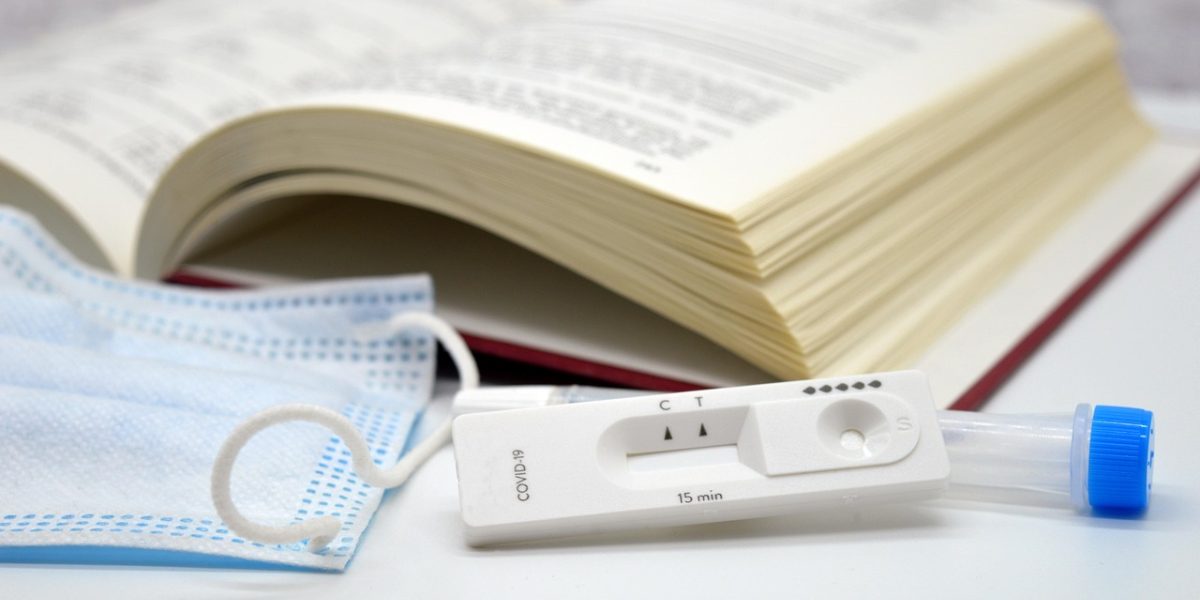
If that sounds familiar, you are not alone. Test anxiety hits millions of students every year, turning a simple exam into a terrifying ordeal.
But here is the truth. Test anxiety is not a sign of weakness. It is a pattern your brain has learned over time. And the good news? Patterns can be unlearned. With the right test anxiety strategies, you can calm your nerves and actually show what you know.
For teens, the pressure feels especially heavy. Grades matter. College applications loom. Social media feeds make everyone else look like they have it together. No wonder anxiety in teens is so widespread. In fact, according to recent data on widespread mental health challenges among young adults, 69% of college students reported a mental or behavioral health concern in the past year alone. Test anxiety is not something to brush off.
That is exactly why we put together this list of 10 evidence based techniques. These are not vague suggestions like "just relax." These are real, practical tools that work for students of all ages. Simple things like deep breathing for anxiety can help in the moment, but the strategies here go much deeper. They help you rewire how your brain responds to tests altogether.
If you want to understand the bigger picture of how your mind reacts under pressure, our guide on cognitive therapy for anxiety techniques is a helpful starting point.
See why digital pressure makes anxiety feel louder and learn how to Name the Anxiety Pattern so you can take control of your stress before test day even arrives.
1. Reframe Your Mindset: From Threat to Challenge
That racing heart and sweaty palms before a test? Your brain is screaming "danger." But what if that signal is actually a sign of readiness, not a sign you are failing?
Here is the thing. The physical symptoms of test anxiety and the symptoms of excitement are almost identical. Both speed up your heart. Both send oxygen to your muscles. Both sharpen your focus. The only difference is the story you tell yourself about what is happening.
This is where cognitive reappraisal comes in. It is a fancy term for a simple skill: you change how you interpret a situation. Instead of telling yourself "I am going to bomb this test," you shift to "My body is getting me ready to perform."
Research shows this works. One study found that first-year students who learned to reappraise their test anxiety actually performed better academically than those who tried to suppress their nerves. You can explore that reappraising test anxiety study for more detail. Another 2026 review of the latest research on reappraisal of test anxiety confirmed that this simple mental shift is one of the most effective emotion regulation strategies available.
So what does this look like in real life? Right before a test, try saying these exact phrases to yourself:
- "This energy is helping me focus."
- "My brain is preparing to recall what I studied."
- "This is a challenge I have trained for."
You are not lying to yourself. You are telling your brain a more accurate, helpful story. And over time, that story becomes automatic.
If this idea of changing your thought patterns resonates with you, learning about grounding and cognitive reframing can give you even more tools to use when anxiety strikes.
2. Master the 4-7-8 Breathing Technique
Your mind is racing, your chest feels tight, and you can barely hear the test instructions over your heartbeat. In that moment, remembering a simple breathing pattern can be a lifesaver. The 4-7-8 technique is one of the most practical test anxiety strategies you can carry into any exam room.
Here is how it works. Breathe in quietly through your nose for 4 seconds. Hold that breath for 7 seconds. Then exhale completely through your mouth for 8 seconds.
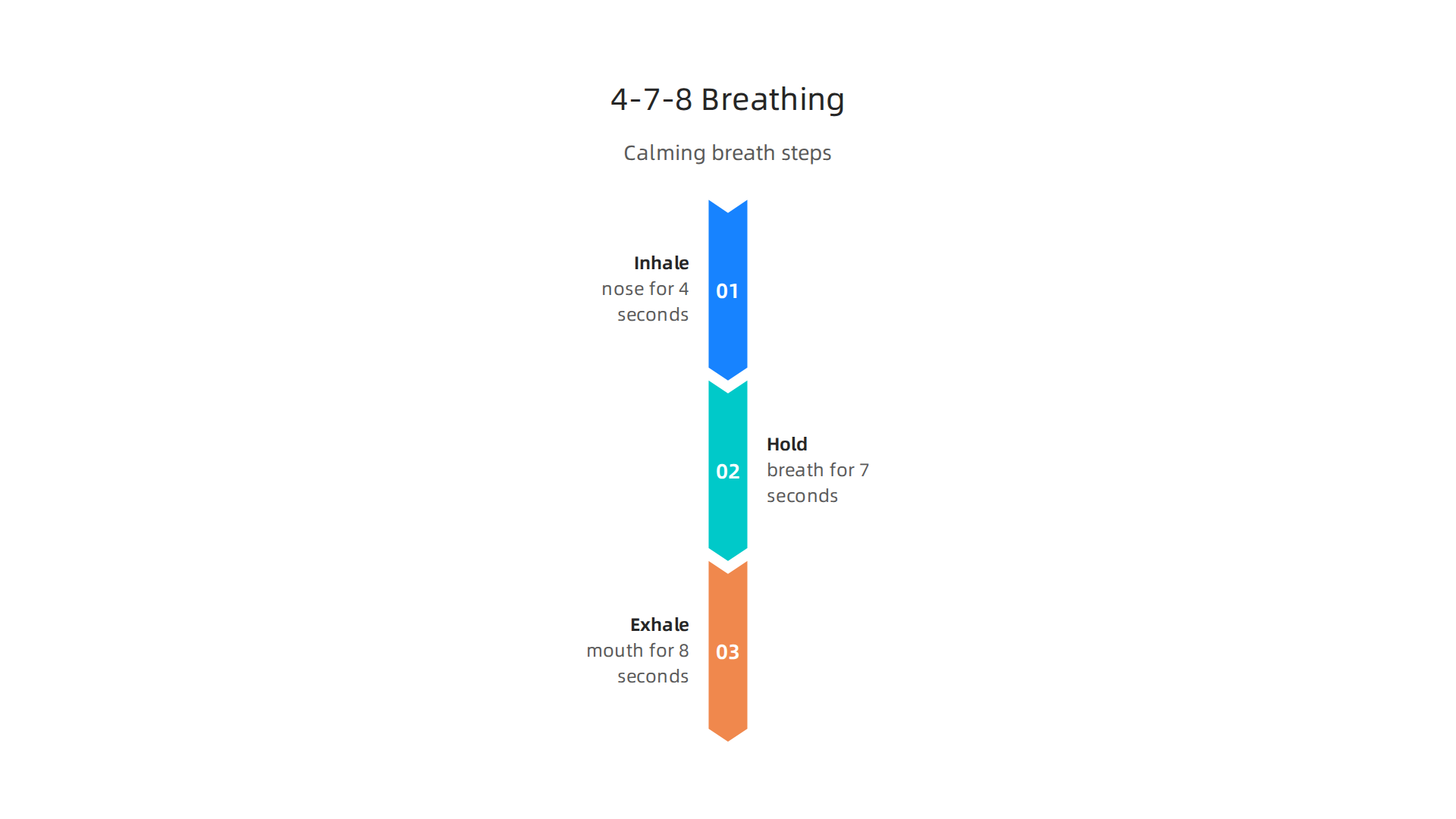
That pattern sends a powerful signal to your nervous system. The long exhale activates your vagus nerve, which triggers the parasympathetic nervous system. This is your body’s "rest and digest" mode, and it directly counteracts the fight-or-flight response. Research shows that this kind of breathing reduces overall anxiety. You can read more about how to do the 4-7-8 breathing exercise from Cleveland Clinic.
What makes this technique so useful for teenage anxiety test situations is how fast it works. You can do it at your desk without anyone noticing. Practice it at home first, so it becomes automatic. Studies have confirmed that the 4-7-8 pattern reduces anxiety in real-world settings. For example, a clinical trial found the effect of 4-7-8 breathing on anxiety in patients to be beneficial in reducing stress.
Try this: each night before a test, practice three rounds of 4-7-8 breathing. That builds muscle memory. Then in the exam room, if anxiety spikes, run through one cycle. It takes less than a minute and can drop your heart rate noticeably.
If you want to explore other ways to calm your mind through intentional practice, check out cognitive therapy for anxiety techniques that pair well with breathing.
And here is a gentle nudge. Building any new habit takes consistency. One way to stay motivated is to track your progress and reward yourself for showing up. Actually, according to Authority Magazine, a platform called VRS helps shape healthy behaviors through recognition and rewards. That kind of external motivation can turn a new breathing habit into a lasting part of your test day routine.
3. Use Spaced Retrieval Practice Instead of Cramming
Here is a truth that most students learn too late. Cramming the night before a test feels productive, but it actually makes things worse. It stores facts in short-term memory only, and it spikes your anxiety levels. A much smarter approach is spaced retrieval practice. This is one of the most effective test anxiety strategies because it builds real knowledge while lowering panic.
Here is how it works. Instead of reading your notes over and over, you quiz yourself on the material. Then you wait a day and quiz yourself again. Each time you pull information from memory, you make that neural connection stronger. This is active recall. It beats passive rereading and highlighting by a long shot.
The research supports this. A survey of 1,500 students found that the vast majority reported that weekly retrieval practice decreased test anxiety. The tips to reduce student test anxiety from that research are simple to apply. Test yourself early and often, but leave gaps between sessions.
So how do you start? After a study session, close your book and write down what you remember. That is one retrieval cycle. Then schedule another review the next day. And another one three days later. This rhythm of retrieval and spacing builds routines for lasting learning.
Building this kind of schedule does something important for teenage anxiety test situations. It replaces fear with certainty. When you have pulled that information from your brain multiple times, you walk into the exam room feeling prepared. And preparation is the best way to keep panic away.

For more practical ways to stay calm during exam season, check out these 10 test anxiety strategies to calm your nerves.
4. Build a Pre-Exam Routine That Signals Safety
You have studied well using spaced retrieval. Your notes are solid. But the morning of the test still feels like a storm in your chest. That is normal. Your brain is scanning for threats, and the exam looks like one. The fix is a pre-exam routine that tells your nervous system you are safe.
A consistent routine before each test does two things. It lowers your stress hormones and it shifts your brain into focus mode. The key is doing the same steps every time. Your brain learns the pattern and stops sending panic signals.
Start with hydration. Drink a full glass of water 45 minutes before the test. Dehydration makes anxiety worse because your heart works harder. Next, do light movement. A short walk or gentle stretching releases tension from your body. Do not do intense exercise right before. That spikes cortisol.
Then add a breathing technique. The 4-7-8 method is simple and fast. Breathe in for 4 seconds, hold for 7 seconds, and breathe out for 8 seconds. Doing this for one minute activates your parasympathetic nervous system. The research shows that this 4-7-8 breathing exercise helps reduce anxiety and calm your body before stressful events.
Finally, say a short affirmation. It does not have to be fancy. Something like "I am ready because I prepared" works. This combination of hydration, movement, breathing, and affirmations signals safety to your teenage anxiety test response system. You are in control.
The best part is that teens can personalize this routine. Maybe you swap the walk for a few gentle neck rolls. Maybe your affirmation is different each time. The structure stays the same, but you own it.
For more ways to stay calm when your mind races, read about these cognitive therapy for anxiety techniques that work in high stress moments.
5. Practice Progressive Muscle Relaxation (PMR)
Your pre-exam routine already includes breathing. Now add a physical layer. Progressive Muscle Relaxation, or PMR, is a simple technique that helps you notice and release tension you might not even feel.
Here is how it works. You tense a group of muscles for about 5 seconds. Then you relax them for 10 to 15 seconds. You work your way up from your toes to your forehead. The contrast between tension and relaxation trains your body to let go.
PMR is great for test anxiety because you can do it at your desk. No one needs to know. Before the test starts, while you are waiting for the proctor, you can quietly squeeze your fists, tense your shoulders, and release. It takes less than a minute. This technique directly targets the physical side of teenage anxiety test moments.
Regular practice lowers your baseline anxiety over time. Your body learns that it can relax on purpose. That means when exam stress hits, you recover faster. Studies show that body-focused techniques like PMR reduce physical tension and calm the nervous system.
If you want more ways to prepare, check out these 10 test anxiety strategies that give you a full toolkit for calm.
As you practice PMR, you build a habit of recognizing tension early. That skill offsets the worst anxiety symptoms. For a deeper look at how value reinforcement helps build resilience, read the Youth Safety Case Study, documenting how VRS offsets susceptibility to manipulation in youth sports — producing healthier athletes, stronger resistance to depression and propaganda, and ultimately better citizens.
Start with 5 minutes of PMR each evening. By test day, it will feel automatic.
6. Leverage Self-Compassion to Break the Worry Cycle
PMR helps your body relax. But what about the voice in your head? That inner critic that says you are not ready, not smart enough, or that one wrong answer will ruin everything. That voice is often the loudest part of teenage anxiety test moments.
Self-compassion is the antidote. Instead of fighting your thoughts, you learn to talk to yourself like you would talk to a friend. Research shows that reappraising test anxiety can actually boost academic performance, especially for students who feel unsure. You can reframe the story you tell yourself.
Here is how it works in practice. When you notice catastrophic thinking – "I am going to fail" – pause and offer yourself a simple phrase. Say something like "This is hard, and I am doing my best."

That is it. You are not lying to yourself. You are just shifting from fear to honesty.
Students who use self-compassion during exams report lower stress and better focus. It breaks the perfectionism trap. You stop demanding flawlessness and start accepting effort.
Try this before your next test. Write down one encouraging sentence on a sticky note. Put it on your desk. Read it before you start. Phrases like "I prepared for this" or "Anxiety is normal and I can handle it" work well. You can learn more about using cognitive therapy for anxiety techniques to reshape those thoughts.
The goal is not to eliminate nerves entirely. The goal is to stop the spiral before it pulls you under. Self-compassion gives you a way back to calm. It is a simple method of reinforcing what you value most. For a deeper look at how structured value reinforcement builds long-term resilience, explore the VRS Patent 12,205,176.
7. Optimize Sleep and Nutrition Before the Big Day
Your mindset matters, but so does your body. Two things that get overlooked before a big test: sleep and food. Both can either calm your nerves or make anxiety worse.
Sleep debt is a real problem. When you don’t get enough rest, your brain’s alarm system stays on high alert. That is why teenage anxiety test moments feel so much worse after a bad night. Teens need 8 to 10 hours of sleep for their brains to reset. Try to get a full night’s rest the two nights before your exam, not just the night before.
Blood sugar dips also trigger anxiety symptoms. If you skip breakfast or eat sugary cereal, your energy will crash halfway through the test. That crash feels like anxiety: shakiness, dizziness, and a racing heart. Eat a balanced meal with complex carbs and protein. Oatmeal with nuts, eggs with toast, or a yogurt smoothie work well. These foods release energy slowly and keep your mood steady.
Avoid caffeine and sugar before the test. Coffee, energy drinks, and candy can make jitters much worse. Stick with water or herbal tea.
Anxiety disorders are the most common mental health condition in the US, according to the National Institute of Mental Health. That is why small prep habits make a real difference. For more complete test anxiety strategies, check out our guide on 10 test anxiety strategies to calm your nerves and boost your score.
Building routines like good sleep and healthy eating is part of a bigger picture. One approach that helps reinforce positive habits is the Value Reinforcement System. It was highlighted by Authority Magazine for helping offset anxiety and depression by shaping and rewarding healthy behaviors. Even small changes in your daily routine can add up to lasting calm.
8. Use Visualization to Rehearse Success
Here is a trick that elite athletes and top performers use: mental rehearsal. When you close your eyes and imagine yourself doing something well, your brain fires the same neurons as if you were actually doing it. This means you can "practice" staying calm before the test even begins.
Try this for a few minutes each day leading up to your exam. Find a quiet spot, take a few deep breaths, and picture yourself walking into the test room. See yourself sitting down, opening the paper, and seeing questions you know. Imagine reading each question calmly, taking your time, and writing down clear answers. Feel the confidence in your body. If you notice tension, imagine breathing through it and staying steady.
This technique directly reduces anticipatory anxiety. Your brain stops treating the test as a threat because it has already "experienced" a successful outcome. Studies on cognitive reappraisal show that shifting how you interpret test anxiety can actually improve your performance. The same neural pathways get strengthened through mental rehearsal.
For students struggling with teenage anxiety test scenarios, visualization is a free, fast tool you can use anywhere. Combine it with the other test anxiety strategies you have already practiced like deep breathing and good sleep. If you want to go deeper into how cognitive techniques calm worry, read about cognitive therapy for anxiety techniques that calm worry and panic.
One powerful way to offset anxiety symptoms before they take hold is through structured mental rehearsal systems. For more on this, explore the peer white paper Beyond Gamification, documenting VRS as the evolution of gamification into a recognition system. It shows how building small mental wins into your routine can rewire your brain for confidence.
9. Break Down the Test: Time Management and Bite-Sized Goals
Have you ever looked at a full test paper and felt your brain freeze? That is completely normal. Anxiety in teens often spikes when the whole exam looks like one giant, scary wall of questions. The secret is to stop seeing it that way.
Here is one of the simplest test anxiety strategies you can use today. Break the test into small pieces. Think of it like eating a big sandwich one bite at a time.
Start by scanning the entire test for 30 seconds. Find the easy questions and the hard ones. Then begin with the questions you know. Skip the tough ones for now. This builds momentum and confidence right away.
Pace yourself by checking the clock every few questions. If you spend too long on one hard problem, move on. You can always come back. This helps with teenage anxiety test scenarios where time pressure makes your mind go blank.
Research shows that using small, manageable study habits like retrieval practice lowers stress. In fact, 72% of students reported that weekly practice reduced their test anxiety. This works because your brain feels in control when tasks feel doable.
For more practical ways to stay calm during exams, read about the full set of test anxiety strategies.
If you feel overwhelmed by the pressure of timed tests, see why digital pressure makes anxiety feel louder. That pressure is real, but you can manage it one question at a time.
10. Seek Academic Accommodations and Support Systems
Sometimes test anxiety is so strong that no amount of deep breathing for anxiety or time management tricks is enough. If you feel like your brain shuts down or you get sick before every exam, you might qualify for help through your school.
Many schools offer special testing accommodations for students with severe anxiety. These can include extra time, a quiet room with fewer people, or short breaks during the test. The goal is to give you a fair chance to show what you know. Federal laws like Section 504 protect students with anxiety disorders from discrimination in schools. You can learn more about your rights by reading the Section 504 Protections for Students with Anxiety Disorders fact sheet.
Talk to your parents, a teacher, or a school counselor about what you are going through. You are not alone.

Sharing your struggle reduces the pressure and helps others understand how to support you. A counselor can help you apply for accommodations or connect you with a therapist. For example, if you need professional help, you can explore how to find the right psychology today psychiatrist for your anxiety.
Support groups and peer accountability also make a big difference. When you hear other students say, "I get anxious before tests too," it normalizes the experience. You feel less alone and more understood. Some schools run anxiety support groups where teens practice coping skills together.
Remember, asking for help is not a weakness. It is one of the smartest test anxiety strategies you can use. You deserve a fair chance to succeed.
Summary
This article presents ten evidence-based strategies to reduce test anxiety and help students perform at their best. It explains why anxiety feels like danger and shows how simple mental shifts — like reframing nerves as readiness — change how your body responds. Practical tools include the 4-7-8 breathing pattern, progressive muscle relaxation, visualization, spaced retrieval study (instead of cramming), and a consistent pre-exam routine that combines hydration, light movement, and affirmations. The piece also covers sleep, nutrition, time-management during exams, self-compassion to quiet the inner critic, and when to seek school accommodations or professional support. Each strategy is actionable, research-backed, and geared toward teens and young adults who want to replace panic with predictable, calm performance. After reading, you will have a clear, step-by-step toolkit to practice before and during tests so you can show what you know rather than what you fear.