
Psychiatrist vs Psychologist for Anxiety Choose the Right Professional

Quick guide: Which mental health pro is right for your anxiety?
Dealing with anxiety can be tough, and figuring out where to get help can feel even harder.

Many people wonder if they should see a psychiatrist or a psychologist, especially when anxiety starts to take over their daily life. It’s a common confusion, and it’s okay if you’re not sure about the differences between these two important mental health helpers. You might also be thinking about a counselor vs therapist, adding to the mix.
The truth is, both a psychiatrist and a psychologist can offer real support for anxiety, but they do so in different ways.
A psychiatrist is a medical doctor who went to medical school and then chose to focus on mental health. This means they can prescribe medicine to help with mental health conditions, including anxiety. Their training gives them a different base of practice than a psychologist, focusing on diagnosis, treatment, and prevention of mental illnesses, as highlighted in a report on the behavioral health workforce in North Dakota Psychiatrists have a different educational background and practice than a psychologist.
On the other hand, a psychologist usually has a PhD or PsyD degree. They are experts in understanding how people think, feel, and behave. They offer different types of therapy, like talking therapy, to help you understand and manage your anxiety without medicine. This kind of help can teach you skills for everyday anxiety management and how to cope with stress. They can help with things like therapist stress management or specific issues like family therapy.
This guide is here to make things clearer for you in 2026. We’ll walk you through the key differences between a psychiatrist and psychologist, so you can decide which one might be best for your needs. We’ll help you understand when medication might be a good idea, when therapy is the main path, or when combining both could give you the best results for your anxiety. We’ll also show you how to find qualified help that truly fits what you’re looking for. To learn more about making this choice, check out our detailed look at psychiatrist vs psychologist for anxiety how to choose the right professional.
How psychiatrists and psychologists actually differ (training, scope, and focus)
When you’re looking for help with anxiety, it’s really useful to know the main differences between a psychiatrist and psychologist. While both are there to support your mental well-being, their paths to becoming helpers are quite different. These differences shape how they can assist you.
Training and What They Can Do
Let’s start with training. A psychiatrist first goes to medical school, just like any other doctor. After that, they specialize in mental health, learning about the diagnosis, treatment, and prevention of mental illnesses. The Accreditation Council for Graduate Medical Education (ACGME) sets high standards for their training, ensuring they gain strong clinical judgment and knowledge. Because they are medical doctors, psychiatrists can prescribe medications. This is a big difference. For example, if you need anxiety medication, a psychiatrist is the professional who can provide that prescription, as detailed in guides about who can prescribe anxiety medication.
A psychologist, on the other hand, usually earns a doctorate degree, like a PhD or PsyD, in psychology. This means they spend many years studying human behavior, thoughts, and emotions. Their training includes a strong focus on therapy and understanding how people think. For instance, a doctoral internship in health services psychology provides thorough clinical training for future psychologists. Psychologists are experts in different types of talk therapy. They help you learn coping skills and understand your feelings better without using medicine. They are not medical doctors and generally cannot prescribe medicine, though rules can vary in some places. You can see more about how their education and practices differ by looking at the details of their training.
Different Ways They Help with Anxiety
Because of their different training, a psychiatrist and psychologist approach anxiety treatment in unique ways.
A psychiatrist focuses on the biological side of anxiety. They can figure out if medication might help calm your anxiety symptoms. They understand how different medicines work with your body and brain. They can also use other medical treatments. If you find yourself needing help for how a psychiatrist depression specialist diagnoses and treats depression, their medical background is key.
A psychologist focuses on mental and emotional ways to manage anxiety. They use various therapies like cognitive therapy for anxiety, which teaches you how to change negative thought patterns that feed your worry. They can also help with things like therapist stress management, teaching you practical skills to handle daily pressures. They can also provide counseling for anxiety that helps you build coping skills. Sometimes, they even offer family therapy if anxiety is affecting your whole household.
Why These Differences Matter for Your Anxiety Treatment
Knowing these differences helps you decide who to see. If your anxiety is very strong and you think medicine might be needed, a psychiatrist is a great starting point. They can check your overall health and see if medication is right for you. They can also help if your anxiety is linked to other physical health issues.
If you want to understand your anxiety better, learn new coping skills, and work through your thoughts and feelings without medicine, a psychologist is an excellent choice. Many people find that a combination of both approaches, where a psychiatrist manages medication and a psychologist provides therapy, gives them the best results. This teamwork is called integrated behavioral health care and can be very effective for managing anxiety.

Understanding your own anxiety patterns is the first step towards feeling better.
Name the Anxiety Pattern
When your anxiety patterns feel too big to handle on your own, or when other kinds of help haven’t quite hit the mark, it might be time to think about seeing a psychiatrist. A psychiatrist is a medical doctor who helps with mental health. They are especially good at figuring out if medicine or a detailed medical check-up is needed for your anxiety.
Here are some signs that a psychiatrist might be the right choice for you:
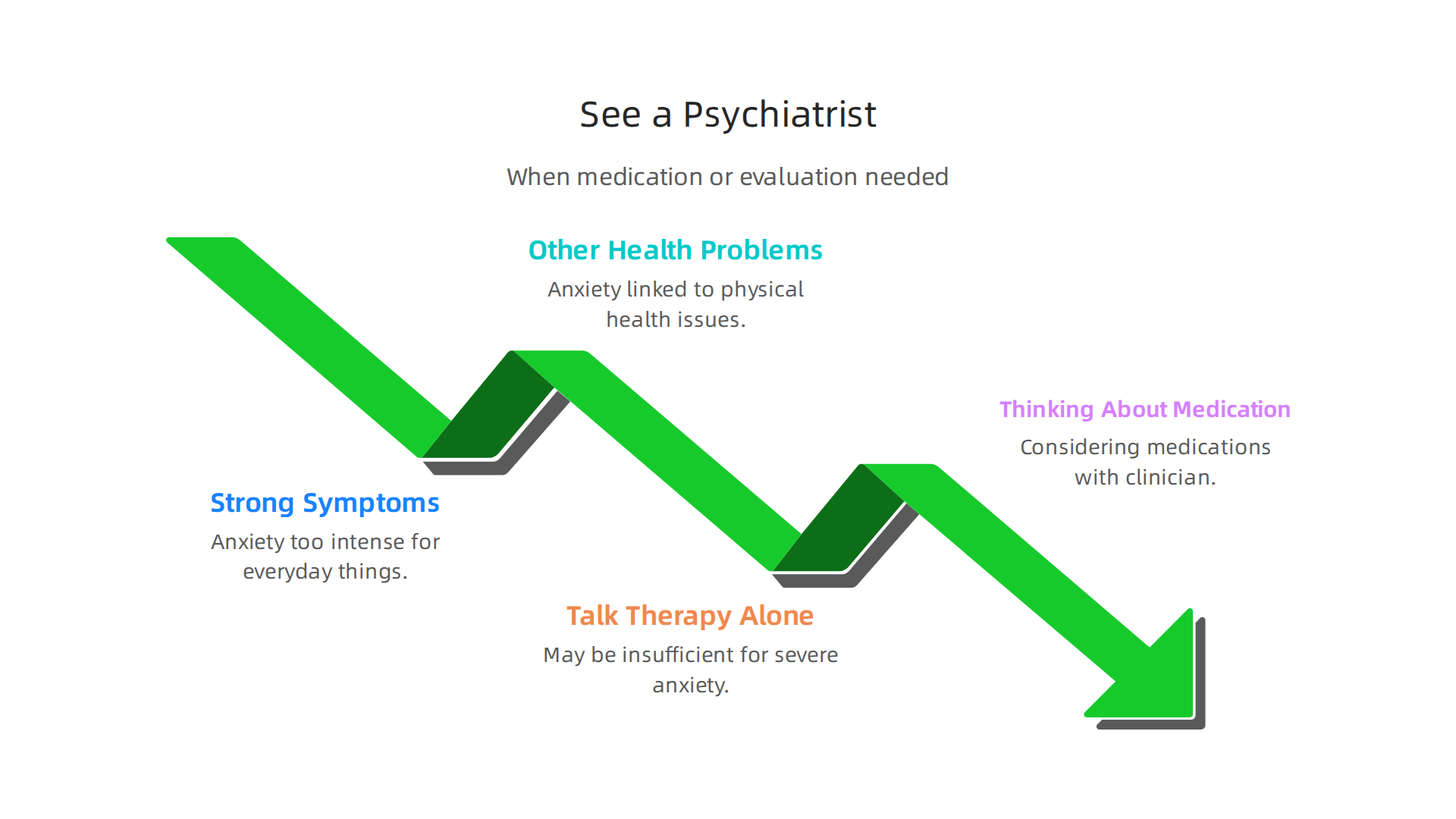
Your Anxiety Symptoms are Very Strong
If your anxiety is so intense that it stops you from doing everyday things, a psychiatrist can help. This includes having many panic attacks, feeling constantly worried, or having trouble leaving your home. These strong feelings can be hard to manage with just talk therapy. Knowing more about Panic Attack Symptoms can help you decide if your symptoms are severe.
You Have Other Health Problems
Sometimes, anxiety can be linked to other physical health issues. Since psychiatrists are medical doctors, they can look at your full health picture. They can check if your anxiety might be caused by a physical problem or if your anxiety is making another health problem worse. For example, some heart problems can feel like anxiety. A psychiatrist can make sure nothing physical is being missed.
Talk Therapy Alone Isn’t Enough
Many people find great relief from seeing a psychologist or therapist for talk therapy. But for some, especially when anxiety is very severe or long-lasting, talk therapy might not be enough on its own. In these cases, a psychiatrist can step in to see if medication could help reduce your symptoms, making it easier for therapy to work.
You’re Thinking About Medication
If you or your current mental health helper thinks medicine might be useful for your anxiety, a psychiatrist is the professional to see. They understand how different medications work with your body and brain. They can prescribe medicines like SSRIs or SNRIs, which are often the first choice for treating anxiety disorders, including generalized anxiety and panic disorder. These medications work by changing how certain chemicals in your brain behave to help you feel calmer and less anxious. Doctors often use these types of antidepressants as the main medications for anxiety disorders, according to experts in pharmacotherapy for anxiety. There are also new anxiety medications being explored in 2026 that psychiatrists stay updated on.
A psychiatrist will carefully watch how you react to any medicine and adjust it to make sure it’s helping you in the best way. They know which medications are generally safe and effective for anxiety and which ones to be careful with. For instance, most antipsychotic medications are not typically used for anxiety disorders.
If you’re wondering how to find the right medical expert, learning How to Find the Right Psychology Today Psychiatrist for Your Anxiety can be a helpful next step. Making the choice between a psychiatrist and psychologist depends on what kind of help you need most right now.
If your anxiety doesn’t need medicine, or if you prefer to work through your feelings and learn new ways to cope, a psychologist or therapist is often the right choice.

These mental health helpers focus on talk therapy to help you understand your thoughts, feelings, and behaviors. They don’t prescribe medicine, but they are experts in teaching skills and offering long-term support for your mental well-being.
Psychologists and therapists use different kinds of talk therapy to help with anxiety.
These methods teach you how to handle stress, change unhelpful thinking patterns, and face your fears in a safe way. Some common and very helpful approaches include:
- Cognitive Behavioral Therapy (CBT): This popular therapy helps you spot and change negative thinking patterns that make your anxiety worse. It also teaches you healthy ways to react to stressful situations. For example, if you worry a lot about small things, CBT helps you see that worry isn’t always helpful. Many studies show CBT is very effective for anxiety disorders, with some reports in 2026 showing it helps a large number of people achieve lasting relief from Generalized Anxiety Disorder symptoms Psychotherapy Effectiveness Statistics 2026.
- Exposure Therapy: If you have specific fears or phobias, exposure therapy can gently help you face what you’re afraid of in a controlled setting. Over time, this helps reduce your fear response. This method is a key part of cognitive-behavioral therapy for anxiety disorders, especially for social anxiety Cognitive-behavioral therapy for anxiety disorders.
- Acceptance and Commitment Therapy (ACT): This type of therapy helps you accept tough thoughts and feelings instead of fighting them. It also helps you commit to actions that match your values, even when anxiety is present.
Choosing a psychologist or therapist is especially helpful when your anxiety is mild to moderate. It’s also great for learning new ways to manage daily stress, improving how you handle worries, and getting help with therapist stress management. They can also provide support for longer-term emotional issues, like dealing with past events, or offer specific help like strategic family therapy for anxiety that breaks the cycle of family patterns.
It’s good to know that while psychologists usually have a doctorate degree, therapists can have different titles like counselor or licensed professional counselor. They all offer valuable talk therapy, but their training can vary a bit. If you’re looking for different ways to calm your worries and panic, exploring cognitive therapy for anxiety techniques that calm worry and panic can give you a clearer idea of how these professionals can help.
The main difference between a psychiatrist and psychologist is that one can prescribe medication and the other focuses on therapy. Deciding which professional is right for you means thinking about your unique needs. To better understand your options, you might want to learn more about the differences between a psychiatrist vs psychologist for anxiety how to choose the right professional.
Now that you know the main differences between a psychiatrist and psychologist, your next step is to find the right one.
This means looking at their training, what they are good at, and if their way of helping feels right for you. It’s like finding a good mechanic for your car; you want someone with the right skills for your specific problem.
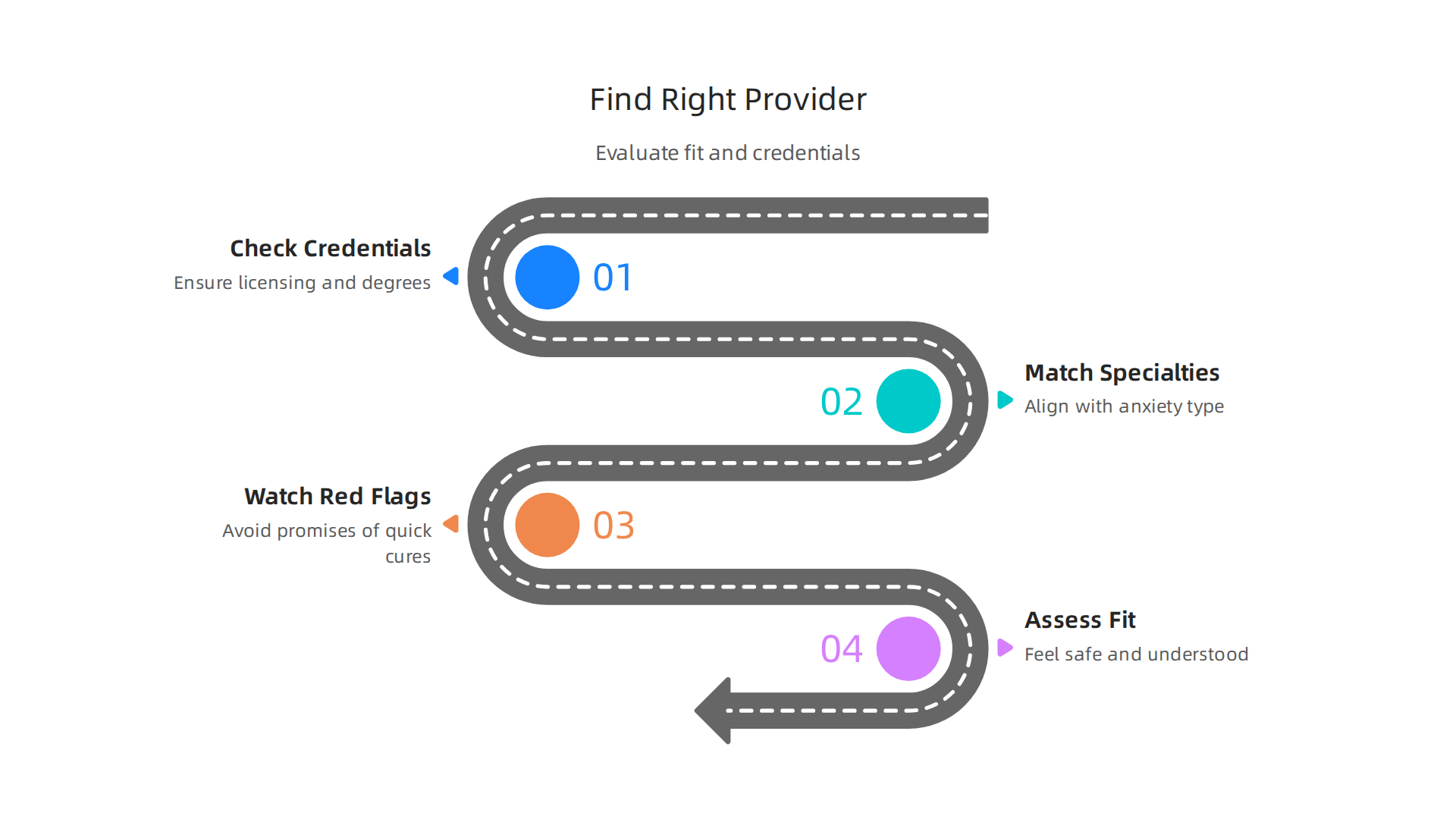
Checking Credentials and Licenses
Always check that any mental health professional you think about seeing is properly licensed. A license means they have followed strict rules for education and training in their state. You can usually find this information on your state’s health board website. Don’t be afraid to ask about their degrees or where they studied. For instance, a psychologist usually has a Ph.D. or Psy.D. degree, while a psychiatrist is a medical doctor (MD).
It’s also good to know the difference between a counselor vs therapist. Both offer great help, but counselors might have different master’s degrees and specific licenses, like Licensed Professional Counselor. Their main focus might be a bit different, but they are all qualified.
Matching Specialties to Your Needs
Many mental health experts choose to focus on certain areas. Think about the kind of anxiety you have. For example:
- If you’re dealing with past difficult experiences, you might look for therapists specializing in trauma. They sometimes use methods like
emdr therapy near.me. - If anxiety affects your family life, a
family therapyexpert can help. They look at how family patterns create stress and teach healthier ways to act. - If you always feel stressed and overwhelmed, look for someone who focuses on
therapist stress managementtechniques. - If you have trouble with relationship anxiety, finding someone who offers relationship anxiety therapy can be very helpful.
What to Look Out For (Red Flags)
When searching, be careful of certain things. If someone avoids talking about their training, promises quick cures, or doesn’t seem to listen, those are red flags. A good professional will be open and work with you. For example, many use methods like Cognitive Behavioral Therapy (CBT), which has been shown to help a lot with anxiety and general stress The Efficacy of Cognitive Behavioral Therapy: A Review of Meta ….
Finding the Right Fit
Even with the right training, the most important thing is how well you connect with them. This is called "the fit." You should feel safe and understood. Many therapists offer a free short chat so you can see if you feel comfortable. Use this to ask questions about how they help.
Tools like Psychology Today can help you find someone near you and learn about their background. It lets you search by location and specialty. You can learn how to use your Psychology Today login to find a therapist fast to make your search easier.
Understanding these steps helps you make a good choice for your mental health journey. It is about finding someone who can truly support you in overcoming anxiety.
If you’re interested in how support can help young people facing mental health challenges, consider reading the Youth Safety Case Study. It shows how important good support is for healthier futures.
Finding the right mental health care also means making sure it fits your budget and is easy to get to. Luckily, in 2026, there are more ways than ever to find help that won’t break the bank or require long trips.
Exploring Affordable Care Options
When you’re looking for support, remember that private practice isn’t your only choice. Many other places offer mental health services at lower costs.
- Community Clinics: These clinics are often funded by the government or donations. They usually offer services based on what you can afford, sometimes called a "sliding scale" fee. This means the cost changes based on your income.
- University Clinics: If there’s a university near you with a psychology or psychiatry program, they often have clinics where students in training offer care under the close watch of experienced professors. These services are typically much cheaper than private practices.
- Employee Assistance Programs (EAPs): Many jobs offer EAPs as a benefit. These programs can give you a certain number of free therapy sessions or referrals to affordable mental health professionals. Check with your workplace’s HR department to see if you have an EAP.
The Rise of Telehealth
One of the biggest changes in mental health care is telehealth, where you get help online or over the phone.

This option makes care much more accessible for many people, no matter where they live. The demand for telehealth has grown a lot, with behavioral health visits making up a big part of this growth since 2019 Ensuring Long-Term Equitable Access to Telehealth in New York State. Experts predict that by 2026, the demand for telehealth will reach a massive $185.6 billion, showing just how popular and important it has become Recuro Health.
Telehealth lets you talk to a psychiatrist and psychologist from home, saving you time and travel costs. It’s especially helpful for those in rural areas or with busy schedules. Many online platforms now offer comprehensive therapy services for different mental health challenges A Comprehensive Guide to Online Therapy Platforms for Modern Mental Health Support. You can even find lists of the best online psychiatry services for 2026, which can guide your search The 10 best online psychiatry services of 2026.
When using telehealth, always make sure the platform and professional are trustworthy and licensed. You want to feel secure in your virtual sessions.
Tips for Asking About Cost and Finding Care Safely
- Ask Directly About Fees: Don’t be shy about asking a therapist or clinic about their fees upfront. Ask if they offer a sliding scale or payment plans.
- Check Your Insurance: Call your insurance company to understand what mental health services they cover. Ask about co-pays, deductibles, and if you need a referral.
- Look for Behavioral Health Counseling: Many behavioral health counseling services focus on practical coping skills and can be a good starting point for anxiety management. You can learn more about how Behavioral Health Counseling for Anxiety can help you find calm.
By exploring these options and asking the right questions, you can find quality mental health care that is both affordable and easy to access, helping you on your journey to feeling better.
Once you’ve found a mental health professional, the next step is getting ready for your first meeting. Being prepared can help you make the most of your time and ensure you and your chosen therapist or doctor are a good fit. This first appointment is a chance for you to share your story and for them to learn how best to help you.
Getting Ready for Your First Appointment
It helps a lot to gather some information before your first visit. Think of it as a helpful checklist that lets your new provider understand you better, right from the start.
- Your Symptom History: Write down when you first noticed your symptoms. How often do they happen? What makes them worse or better? For example, if you’re feeling anxious, describe what anxiety feels like for you and when it usually shows up.
- Past Treatments and Medications: Have you tried getting help before? What kind of treatments did you try? Did they work or not? List any medications you’ve taken for your mental health, including the name, dose, and how long you took them. This helps a lot when deciding between different types of care. For example, knowing if medication worked can help a psychiatrist decide on the best plan, while understanding past therapy experiences can guide a psychologist.
- Your Goals: What do you hope to get from therapy or working with a mental health expert? Do you want to learn stress management skills? Feel less worried? Have better relationships? Knowing your goals helps both you and your provider stay on track.
Smart Questions to Ask Your Clinician
Your first appointment is also a good time for you to ask questions. This helps you understand how they work and if their style matches what you’re looking for.
- About Their Approach: Ask about their main way of helping people. Do they use talk therapy? Do they focus on certain skills? This helps you know what to expect in your sessions.
- Expected Timeline: It’s okay to ask how long they think it might take for you to start feeling better, or how often you might need to meet. Everyone is different, but they might give you a general idea.
- Measuring Progress: How will you both know if you’re making progress? Do they use certain tools or will you just talk about how you’re feeling?
- Psychiatrist vs. Psychologist: If you’re unsure about the difference, ask! A psychiatrist vs psychologist for anxiety can be a big decision, as one focuses more on medication and the other on therapy. Both are important and sometimes work together. In 2026, research still shows that getting care, whether from a
psychiatrist and psychologistor other mental health professional, makes a big difference in health and well-being outcomes Telehealth vs In-Person Outpatient Mental Health Service Use and ….
By taking these steps, you’re setting yourself up for a helpful and positive first meeting, laying a good foundation for your mental health journey.
Building on that good start, sometimes the best way to feel better is to combine different kinds of help. This is called "collaborative care" or a "stepped approach." It means a team of experts works together, or you move from one type of care to another, depending on what you need.
Combining Therapy and Medication: Collaborative Care, Referrals, and Stepped Approaches
Imagine your mental health journey like a puzzle. Sometimes, you need different pieces to see the full picture. That’s where working with a psychiatrist and psychologist together can be very helpful. These two types of professionals have different, but equally important, jobs.
-
The Psychiatrist’s Role: A psychiatrist is a medical doctor who specializes in mental health. They can prescribe medications, like those for anxiety or depression. They understand how different medicines work with your body and mind. If your mental health challenges are very strong or stop you from doing daily tasks, a psychiatrist might be key to finding balance with medication. In fact, knowing who can prescribe anxiety medication is important, and psychiatrists are trained for this role Who Can Prescribe Anxiety Medication?. To learn more about their specific approach, you can read about how a psychiatrist depression specialist diagnoses and treats depression.
-
The Psychologist’s Role (Therapist/Counselor): A psychologist is not a medical doctor and cannot prescribe medicine. Instead, they focus on talk therapy. They help you understand your thoughts, feelings, and behaviors. They teach you coping skills, like therapist stress management techniques, and help you work through problems. This can include individual therapy, or even strategic family therapy for anxiety if family patterns are part of the challenge.
Why Combine Treatment?
For many people, getting both therapy and medication works better than just one alone. Therapy helps you change your thinking and habits, while medication can help balance brain chemistry, making it easier for therapy to work. Studies show that bringing behavioral health care into your overall health plan, known as behavioral health integration, can be very effective Behavioral Health Integration Services (CMS). This is why sometimes you’ll hear about a psychiatrist and psychologist working as a team. The difference in their training helps them offer different but complementary forms of care, as highlighted in reports on the behavioral health workforce Behavioral Health Workforce in North Dakota.
When to Consider Combined Treatment
You might think about combining help if:
- Your symptoms are severe or make it hard to live your daily life.
- Therapy alone hasn’t helped enough.
- Medication alone hasn’t helped enough.
- You have a mental health condition that often responds well to both approaches.
Working Together and Monitoring Progress
When you have a team, good communication is key. Your psychiatrist and psychologist should talk to each other (with your permission, of course) about your progress. This helps them make sure your treatment plan is working well for you.
You will also monitor your own progress. Are you feeling better? Are your daily activities easier? Modern approaches to mental health care, especially in 2026, often use personalized methods, even looking at data from your daily life to find the best way to help you AI, neuroscience, and data are fueling personalized mental health care. Celebrating small wins and noticing positive changes in your behavior are important signs that your treatment is on the right track. In fact, positive outcomes in offsetting anxiety, depression, and mental health issues can come from shaping and rewarding healthy behaviors with recognition, as highlighted by Authority Magazine.
Summary
This guide explains the practical differences between psychiatrists and psychologists and helps you choose the right provider for anxiety care in 2026. It covers how each professional is trained, what they can do (medication versus talk therapy), and when one approach or a combination is most effective. You’ll learn clear signs that a psychiatrist may be needed, how different therapies like CBT and exposure work, and how to check credentials and specialties. The article also reviews affordable care options, the rise of telehealth, and simple steps to prepare for your first appointment. By the end, you’ll know how to find vetted clinicians, what questions to ask, and how collaborative care can improve outcomes.