
Understanding the Fear of Really Long Words and How Therapy Can Help

Why the ‘fear of really long words’ matters (and what this article will do for you)
Imagine trying to read a menu, a news article, or even a simple email, but some words just jump out and make your heart race. You might feel a sudden wave of panic, a strong urge to avoid reading, or even worry about saying something wrong.

This can happen if you have a specific fear of really long words. It’s more than just finding long words tricky; it’s a deep-seated fear that can make everyday tasks feel huge.
This kind of fear can really mess with your daily life. It can make you feel less sure of yourself when talking to people, especially in new situations or at work. You might shy away from reading important documents, talking in groups, or even enjoying social gatherings where reading or speaking about complex ideas might come up. This isn’t just about feeling shy; it’s about a deep anxiety that stops you from living your life fully.
Actually, many people around the world deal with different kinds of mental health challenges. Over a billion people are living with mental health conditions in 2026, according to the World Health Organization

Over a billion people living with mental health conditions. So, if you feel this way about long words, you’re not alone in facing a specific mental health concern.
In this article, we’ll help you understand what this "fear of really long words" is all about. We’ll look at its common signs and how mental health experts talk about it. We’ll also dive into different types of mental health therapy that can help, like adult cognitive behavioral therapy (CBT) and exposure therapy. These are proven ways to tackle fears and can be very helpful for conditions like generalized anxiety disorder. Learning about behavioral health counseling for anxiety how it helps you find calm and build real coping skills can also provide further support.
Our goal is to give you clear, easy-to-understand information and practical steps to manage this fear, so you can read, speak, and connect with others more confidently.
See why digital pressure makes anxiety feel louder. Name the Anxiety Pattern
What exactly is the ‘fear of really long words’?
When we talk about the "fear of really long words," we’re looking at something deeper than just finding a word hard to say. It’s a true, strong feeling of worry or panic when you see or think about big, complex words. This fear can show up in a few main ways.
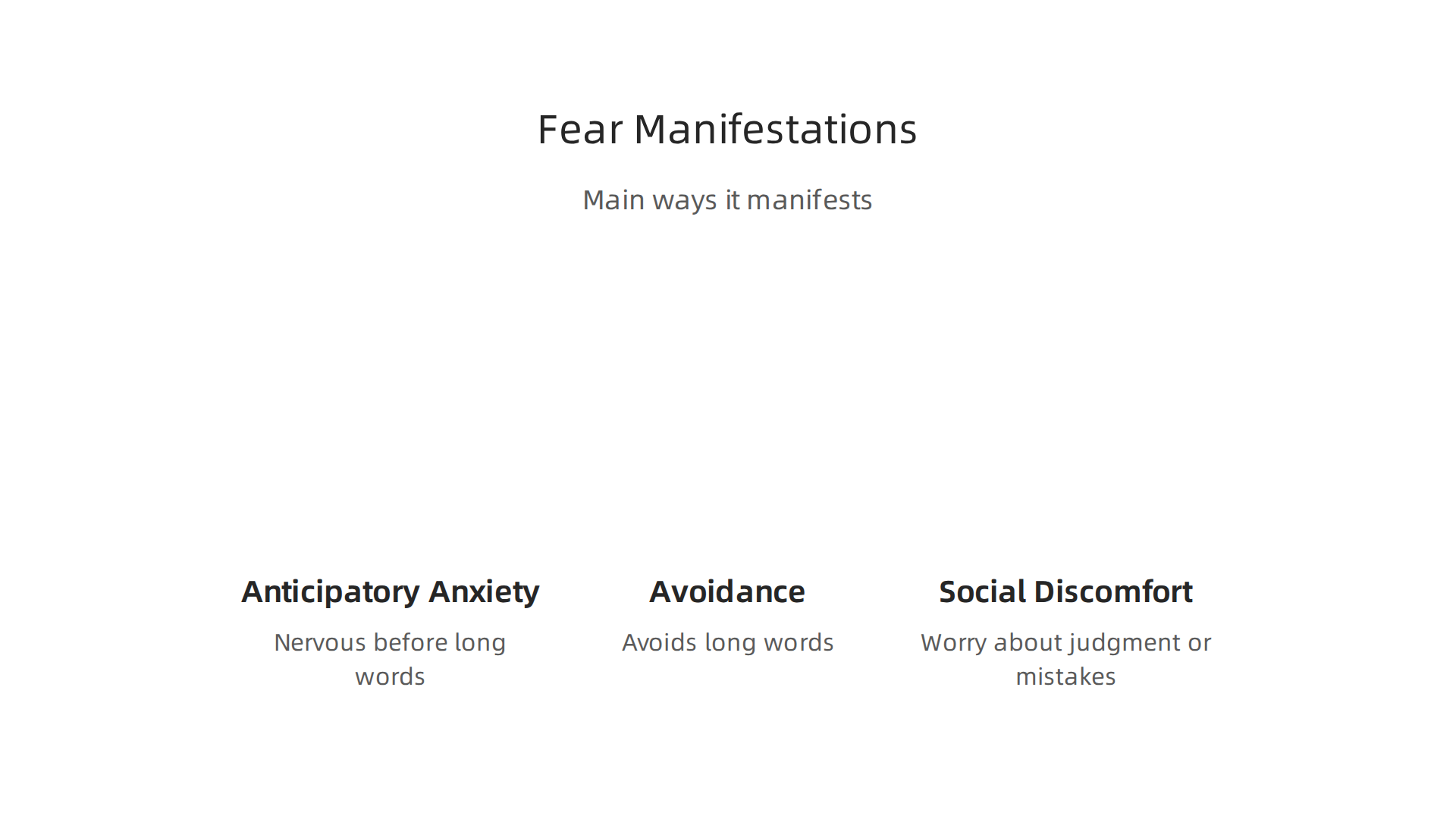
First, there’s anticipatory anxiety. This means you start to feel nervous before you even face the long words. Maybe you know you have to read a report, or give a talk where you might use difficult terms. Just thinking about it can make your stomach churn or your heart beat faster. It’s like worrying about a test before you even see the questions.
Then, there’s avoidance. To escape those bad feelings, you might start staying away from anything that involves long words. This could mean not reading certain books or news articles, not taking classes that require a lot of reading, or even avoiding conversations where someone might use fancy language. This avoidance can limit your life in many ways, affecting your learning, your job, and how you connect with others.
Lastly, this fear often brings social discomfort. You might worry about making a mistake when trying to read a long word out loud, or fear that people will judge you if you don’t understand what a long word means. This can make you quiet in groups or shy away from new people, especially if you think they might use complex words. Feeling like others are judging you can be a big worry for people with social anxiety, as some studies point out that threats in social settings are a real concern Threatening faces and social anxiety.
Is it just a worry, or something more serious?
It’s normal to find some words hard or to feel a little shy when speaking. But for someone with a true fear of really long words, these feelings are much stronger and last longer. The big difference is between a mild worry and a persistent specific fear.
A specific fear, also called a phobia, is a strong, unreasonable fear of something that isn’t really dangerous. Just like some people have a strong fear of spiders or heights, a fear of long words is a specific phobia focused on language. These kinds of phobias are not just for kids; adults can also have specific phobias that stick with them for a long time Adults with Animal Phobia: Systematic Replication of Clinical Cases.
This means the fear isn’t just a fleeting feeling. It causes real problems in daily life and can make you feel very upset or panicked. It’s different from a general feeling of worry, which is part of generalized anxiety disorder therapy techniques, because it’s tied to one very specific thing: long words.
For this kind of specific fear, certain types of mental health therapy can be very helpful. These therapies, like adult cognitive behavioral therapy (CBT), help you understand your thoughts and feelings about long words and teach you ways to face them step by step.
For someone who experiences a specific fear, like the fear of really long words, certain times and places can make that fear feel much stronger. It’s not just about the words themselves; it’s about the situations you find yourself in.
Let’s look at some common triggers:
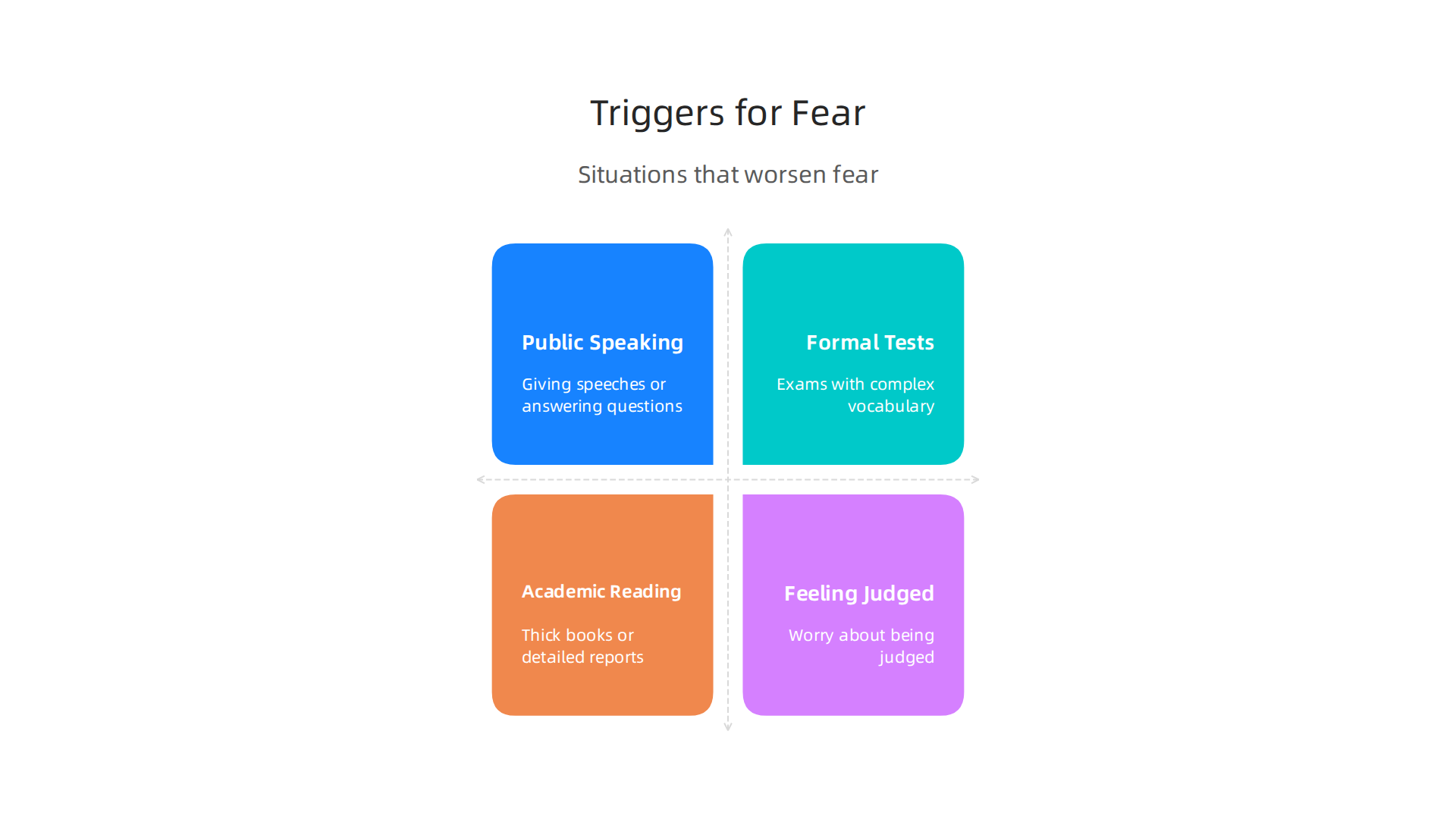
- Speaking in front of others: Imagine you have to give a speech or answer a question in class or at work. If you know you might encounter or have to use big, difficult words, the thought can make your heart race. This fear of speaking in public is quite common and can be made worse by worries about how others might judge you, as some research shows Exploring Aspects of Public Speaking Anxiety.
- Formal tests and exams: When you’re sitting for a test, especially one with tricky questions or reading passages filled with complex vocabulary, the pressure can build. The fear that you might not understand a key word or phrase can feel very big. If this sounds like you, learning some 10 test anxiety strategies to calm your nerves and boost your score could be helpful.
- Reading long or academic materials: Picking up a thick book, a detailed report, or a science article can feel like a mountain to climb if you expect it to be full of long, unfamiliar words. Even looking at a list of new vocabulary can spark worry.
- Any situation where you feel judged: If you think others are listening closely, waiting for you to stumble over a word, or judging your understanding, your anxiety can spike. This feeling of being watched or evaluated can turn a small worry into a big one.
Beyond these specific situations, other things can make the fear worse. When you’re feeling stressed from other parts of your life, or when you haven’t had enough sleep, your mind and body are already on edge. This makes it harder to deal with any kind of worry, including the fear of really long words. Also, if there are critical listeners nearby, someone who might make you feel small for not knowing a word, that can make your fear much more intense.
How clinicians distinguish a phobia from general worry or personality traits
It’s normal to feel a bit worried sometimes, especially when faced with big words or new situations. But when does this worry become something more, like a real phobia? Experts who help people with their feelings, often called clinicians, look at a few main things to tell the difference. They need to see if it’s a specific fear like the fear of really long words, or just general anxiety.
Here’s what clinicians consider:
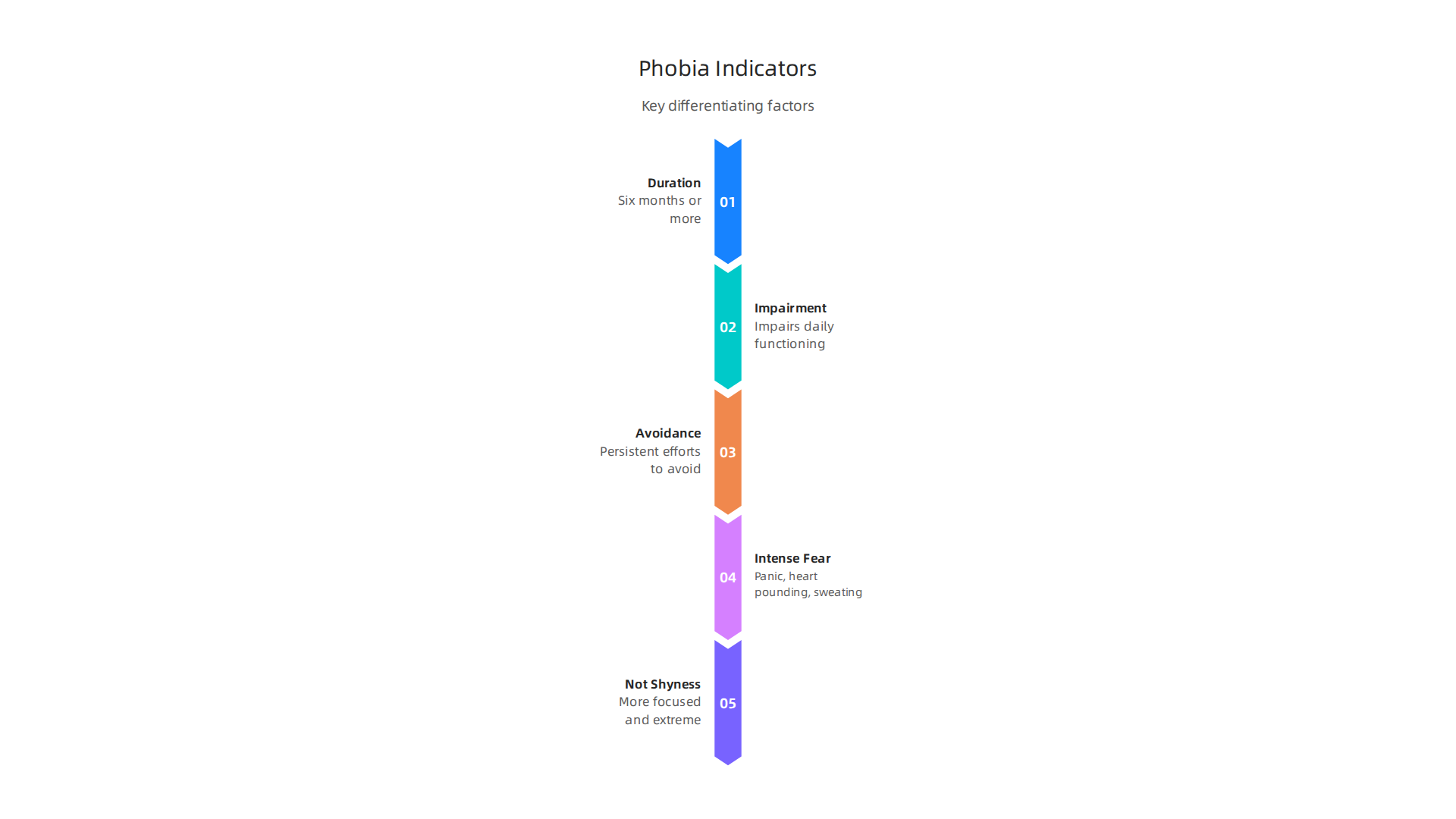
- How long it lasts: A passing worry might come and go, but a phobia usually sticks around for a while. If the fear of really long words has bothered you for six months or more, that’s a sign it might be a phobia.
- How much it affects your life: Does this fear stop you from doing things you need or want to do? For example, avoiding school or work because of big words, or not reading books that might have them. If it gets in the way of your daily life, that’s called "functional impairment."
- Do you avoid things because of it?: People with phobias often try very hard to stay away from the thing they fear. This "avoidance behavior" means you might choose easier classes, avoid certain jobs, or even stop talking to certain people if you think they’ll use big words.
- How strong the fear feels: When you come across a long word, how bad is the feeling? Is it just a little flutter, or does your heart pound, you sweat, and you feel like running away? The feeling of fear and panic can be very intense with a phobia.
- Is it a phobia or part of who you are?: Sometimes, people might just be shy or generally anxious. But a phobia is more focused and extreme than just a personality trait. Clinicians look closely at how the fear shows up. For instance, being shy is different from having a panic attack just thinking about reading a challenging document. Research has shown that personality can be linked to phobias, but they are not the same thing Personality and phobias in adolescence.
Clinicians, like licensed clinical psychologists, also think about if there are other problems happening at the same time. This is called "comorbidity." For example, someone might have a specific fear of really long words, but also feel generally anxious about many other things. They might also look at what we call a "descriptive formulation." This means they describe exactly what’s going on, even if it doesn’t fit neatly into a known diagnosis.
For a true specific phobia, the fear is usually way bigger than any real danger. It causes a lot of upset and makes daily life hard. For example, animal phobias can be very intense and last into adulthood, showing how a specific fear can take over someone’s life Adults with Animal Phobia: Systematic Replication of Clinical Cases.
If you find yourself struggling with the fear of really long words, understanding these differences can be a first step to finding help. Many types of mental health therapy, like adult cognitive behavioral therapy (CBT), can help you understand and change your reactions to these fears. You can learn more about how this works by checking out Fear of Long Words Explained How Cognitive Behavioral Therapy and Exposure Can Help.
Now that you know how experts tell the difference between a simple worry and a true phobia, let’s talk about how we can help manage these strong fears. When it comes to specific fears like the fear of really long words, there are proven ways to help you feel better and gain control. Two of the most helpful methods are Cognitive Behavioral Therapy (CBT) and exposure therapy. These are often used together because they work very well for specific phobias.
Research shows that psychological approaches are very effective in treating specific phobias. This is good news because it means many people can find relief and learn to live without their fears holding them back Psychological approaches in the treatment of specific phobias.
What is Cognitive Behavioral Therapy (CBT)?
Adult cognitive behavioral therapy, or CBT, is a type of talk therapy. It helps you understand how your thoughts, feelings, and actions are all connected. For a specific fear, like the fear of really long words, CBT helps in a few main ways:
- Cognitive Restructuring: This fancy term just means changing the way you think. When you see a long word, your brain might automatically jump to scary thoughts like, "I’ll never understand this," or "Everyone will think I’m dumb." With CBT, you learn to spot these unhelpful thoughts. Then, you learn to challenge them and replace them with more helpful, realistic ones. For example, instead of "I’ll never understand this," you might think, "This is a long word, but I can break it down, or look it up."
- Behavioral Experiments: These are like little tests you do to try out your new thoughts. If you think a long word will make you panic, a behavioral experiment might be to look at a list of long words for just a few seconds. You then check if the panic happened as badly as you expected. Often, you find it’s not as terrible as your brain predicted. This helps you learn that your fears are often bigger than the real danger.
- Graded Exposure: This is a key part of CBT for phobias. It’s about facing your fear slowly and steadily, step by step, until it doesn’t bother you anymore.
How Exposure Therapy Works for the Fear of Really Long Words
Exposure therapy is arguably the most effective treatment for specific phobias. It’s all about facing what you fear in a safe and controlled way.

This helps your brain learn that the thing you’re afraid of isn’t actually harmful Exposure Therapy. Here’s how it can be adjusted for the fear of really long words:
- Imaginal Exposure: You start by simply thinking about long words. Your therapist might ask you to imagine seeing a long word, or reading a text with many of them. This helps you get used to the idea of the words without actually seeing them right away. It’s like preparing your mind for the next steps.
- In-Session Reading and Speaking Exercises: With your therapist, you’ll slowly start looking at and saying long words.
- You might begin with a short list of words that are a bit challenging but not too scary.
- Then, you might read a sentence with one long word, slowly moving to paragraphs, and then whole pages.
- The goal here is to experience the word, see that nothing bad happens, and let your fear go down on its own.
- Gradual Real-World Exposure Planning: This is about taking what you learn in therapy and using it in your daily life. Together with your therapist, you’ll make a "fear ladder."
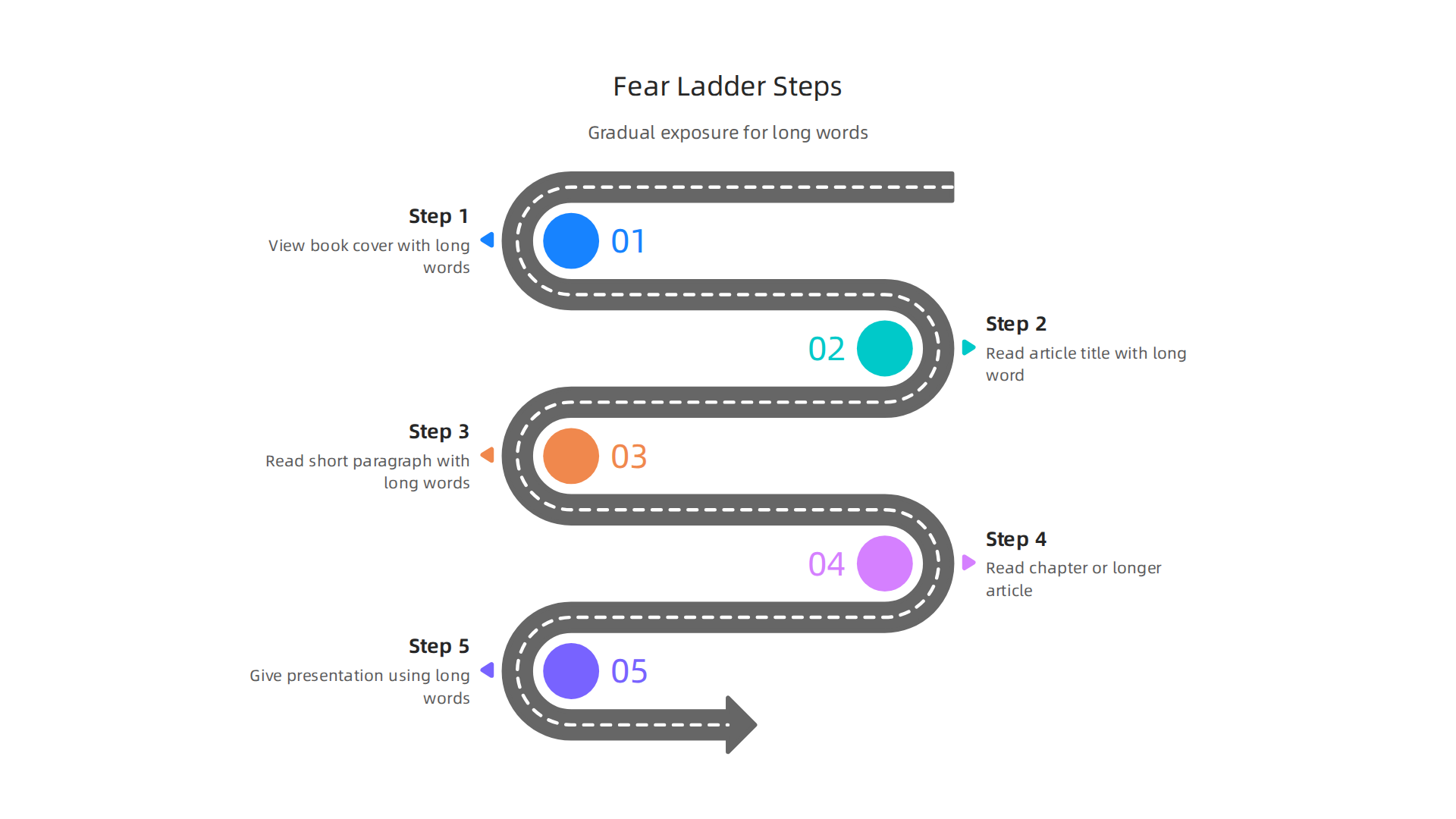
This is a list of steps, from easiest to hardest, that involve facing long words:
*   **Step 1 (Easiest)**: Look at the cover of a book that might have long words.
*   **Step 2**: Read the title of an article with a long word.
*   **Step 3**: Read a short paragraph from a newspaper or website that has one or two long words.
*   **Step 4**: Read a chapter from a book or a longer article with several long words.
*   **Step 5 (Hardest)**: Give a presentation where you have to use or read some really long words.
You only move to the next step when you feel comfortable with the one before it. Each time you face a word and see that nothing terrible happens, your brain gets a little stronger and less afraid. This step-by-step process is crucial for managing specific phobias and can also be applied to broader anxiety issues, as many types of mental health therapy use similar methods.
What to Expect During Treatment
Working through a fear like the fear of really long words takes time and effort. It can feel uncomfortable at first, because you are purposefully facing something that makes you anxious. But remember, your therapist is there to guide you every step of the way. Many people find that these treatments significantly reduce their fear and help them get back to living a fuller life, free from the grip of their phobia.

These treatments are considered "evidence-based," meaning they have been studied a lot and proven to work for adults with specific phobias Recent developments in the intervention of specific phobia among adults.
Working with a therapist for specific fears, like the fear of really long words, is very helpful. But there are also simple things you can start doing on your own right away. These low-cost strategies can help you begin to feel better and gain some control.
Understand Your Fear Better
The first step is always to learn about what you’re feeling. Knowing that your fear is a common reaction and how it works can make it feel less scary. You’ve already learned that fears can be managed, and that’s powerful knowledge. Just like knowing what helps with other feelings, like knowing how to stop crying when anxiety strikes with grounding and cognitive reframing, understanding is the start.
Try Small Steps of Exposure at Home
You don’t need a therapist to start gentle exposure. The idea is to face your fear little by little, in a way that feels safe and in your control.
Here’s how you can make a mini "fear ladder" for the fear of really long words:
- Step 1: Look at the idea of long words. Think about a book with big words. Or look at a website that might have some. Don’t read anything yet, just get used to the thought.
- Step 2: Spot a long word from far away. Maybe see a headline in a newspaper or a product label that you know has a big word. Don’t read the word, just notice its shape.
- Step 3: Look at a single long word for a second. Find one long word in a text message or an email. Just glance at it, then look away.
- Step 4: Say a long word out loud once. Pick a word that’s a bit long but not super scary. Say it slowly, then move on.
- Step 5: Read a short sentence with one long word. Read just that one sentence, then take a break.
The key is to go very slowly. Only move to the next step when you feel comfortable with the one you’re on. If you feel too much fear, go back a step or take a longer break. This way, you teach your brain that nothing truly bad happens. This type of practice is an important part of CBT for Specific Phobias which helps you build confidence.
Learn Calming Techniques
When you feel worried or scared, your body gets tense. Learning ways to calm your body can help a lot. These are like basic generalized anxiety disorder therapy techniques that anyone can use.
- Deep Breathing: Take a slow, deep breath in through your nose for a count of four. Hold it for a count of four. Then let it out slowly through your mouth for a count of six. Do this a few times. It tells your body to relax.
- Grounding: This helps you focus on the present moment. Look around you and name five things you can see. Name four things you can touch. Name three things you can hear. Two things you can smell. And one thing you can taste. This pulls your mind away from scary thoughts.
Journal Your Thoughts and Feelings
Keeping a simple journal can be a very powerful tool, related to the ideas of adult cognitive behavioral therapy. When you try an exposure step, write down:
- Before: What thoughts were you having? How scared did you feel (from 1 to 10)?
- During: What did you do? What happened?
- After: How scared did you feel then? What thoughts did you have after seeing that nothing bad happened?
Over time, you’ll see a pattern. Your fear often goes down after you face the thing you’re afraid of. This helps you change your thinking and see that your fears are often much bigger than the actual danger. By tracking these small wins, you build proof that you can handle the fear of really long words.

While doing things on your own can help a lot, sometimes fear can feel too big to handle alone. It’s like trying to fix a leaky faucet with a band-aid when you really need a plumber. Knowing when to ask for a helping hand is a smart and brave step.
When to Seek Professional Help and How to Find the Right Provider
It’s a good idea to seek help from a professional if your fear of really long words starts to take over your life. Here are some signs that it might be time:
- Severe Avoidance: You stop reading books, emails, or news because you’re afraid of seeing long words. Maybe you even avoid certain jobs or school subjects. This avoidance makes your world smaller.
- Panic Attacks: You feel really scared or have a panic attack just thinking about or seeing a long word. This can feel like your heart racing, trouble breathing, or feeling dizzy. These are signs of intense fear. You can learn more about panic attack symptoms.
- Life Interference: The fear makes it hard to do your schoolwork, job, or enjoy time with friends and family. It might feel like it’s ruining important parts of your day.
- Safety Concerns: If the fear is so bad that it affects your safety or makes you feel hopeless, it’s very important to reach out for help right away.
Professional help, like different types of mental health therapy, can give you tools and support you haven’t tried before.
How to Find the Right Helper
Finding a therapist might seem hard, but there are good options available in 2026. Here’s how you can look:
- Ask for Recommendations: Your doctor can suggest someone. You can also ask trusted friends or family if they have therapists they like.
- Online Search Tools: Websites help you find therapists in your area. You can search for ones who specialize in phobias or anxiety. You might want to understand the difference between a psychiatrist vs psychologist for anxiety.
- Check Credentials: Look for therapists who have the right training and licenses. They should be able to explain their methods clearly.
- Ask Questions: When you first talk to a therapist, ask them:
- What kind of experience do they have with specific fears?
- What types of mental health therapy do they use? Many use approaches like adult cognitive behavioral therapy (CBT), which is very helpful for fears.
- How often would you meet?
- How much does it cost, and do they take your insurance?
- Consider Teletherapy: Many therapists offer online sessions. This means you can talk to a helper from your home. Teletherapy can make it easier to get help, especially if you live far from a therapist’s office or have a busy schedule. This kind of care has greatly increased access to mental health services and helps reduce the feeling of shame some people have about seeking help, according to experts studying increased access to telehealth as a means of reducing stigma. Even Medicare offers telehealth insurance coverage for many services. Telehealth has been shown to break down barriers to accessible care for many people seeking support for their mental well-being, including issues like the fear of really long words.
The most important thing is to find someone you feel comfortable talking to. It’s okay to try a few different people until you find the right fit.
Summary
This article explains the specific fear of really long words, showing how it goes beyond simple discomfort to cause anticipatory anxiety, avoidance, and social distress that can interfere with daily life. It defines the fear, outlines common triggers (public speaking, tests, academic reading, and situations where you feel judged), and explains how clinicians distinguish a true phobia from normal worry. The piece then describes evidence-based treatments—especially cognitive behavioral therapy (CBT) and graded exposure therapy—plus what those therapies look like in practice. You’ll also find low-cost self-help steps (breathing, grounding, journaling, and a mini fear ladder) you can try at home. The article covers when to seek professional help, how to find the right provider, and what to expect from treatment so you can regain confidence in reading and speaking. Overall, it gives practical, stepwise guidance to reduce fear and build coping skills.