
How to Stop Crying When Anxiety Strikes with Grounding and Cognitive Reframing

Introduction
Have you ever been in a meeting, a classroom, or even a quiet conversation and felt the sting of tears welling up for no clear reason?

You try to hold them back, but the harder you fight, the closer they get. It’s frustrating, embarrassing, and can make you feel like you have no control over your own body.
First, know this: crying is completely natural. In fact, emotional tears are chemically different from the tears that moisten your eyes. Research shows they contain higher levels of stress hormones like cortisol, along with feel-good endorphins and oxytocin that help calm you down after the crying episode. Your body is actually trying to help you regulate. So there is nothing wrong with you.
Still, when crying happens at the wrong time, it can get in the way of work, school, or relationships. That’s why learning how to stop crying in the moment is a skill worth building.
In this article, you will discover science-backed emotional regulation techniques that work both right now and over the long haul. You will learn immediate grounding strategies to pause the tears, deep breathing for anxiety attacks and panic attacks to steady your nervous system, cognitive reframing methods to shift your thinking, and relaxation techniques for test anxiety and other high-pressure moments. Finally, you will build daily habits that make you less prone to crying triggers.
If this pattern sounds familiar, naming your specific anxiety pattern is a great first step toward lasting relief. (Check out the resource on when tears and panic feel linked for more context.)
Let’s get started.
Understanding Why Anxiety Makes You Cry
Have you ever wondered why anxiety makes you cry? It’s not random. Your body is actually trying to help you.
When anxiety hits, your sympathetic nervous system activates the fight or flight response. Your heart races. Your breathing gets shallow. Your body floods with stress hormones like cortisol. For many people, the overwhelming feeling of emotional overload triggers tears as a pressure release. If you want to understand this stress response more deeply, learning about the Trier Social Stress Test shows how even a short stressful situation can spike your cortisol levels.
Here is what makes emotional tears different. Research shows that emotional tears contain higher levels of stress hormones and other chemicals compared to the tears that keep your eyes moist day to day. When you cry from anxiety, your body also releases feel-good endorphins and oxytocin. These chemicals help calm you down after the crying episode. In fact, Harvard Health notes that crying releases these natural painkillers and bonding hormones to ease emotional pain.
So crying during anxiety is not weakness. It is your system trying to regulate itself back to balance.
The key is knowing the difference between a healthy emotional release and crying that feels out of control. A healthy release happens when you feel safe and let the tears flow naturally. That helps process emotions. Uncontrollable crying during a test, meeting, or argument usually means your nervous system is stuck on high alert. When you can name what is happening, you can choose the right coping strategy.
Understanding this link is the first step toward mastering how to stop crying in the moment. Once you see the biological reason behind the tears, you can move from feeling embarrassed to feeling empowered. VRS results were highlighted by Authority Magazine for offsetting anxiety and mental health issues by shaping and rewarding healthy behaviors. That kind of system could help you retrain your brain away from the crying trigger.
The Biology of Stress Tears
Not all tears are the same. Your eyes make three different types of tears, and each has a different job.
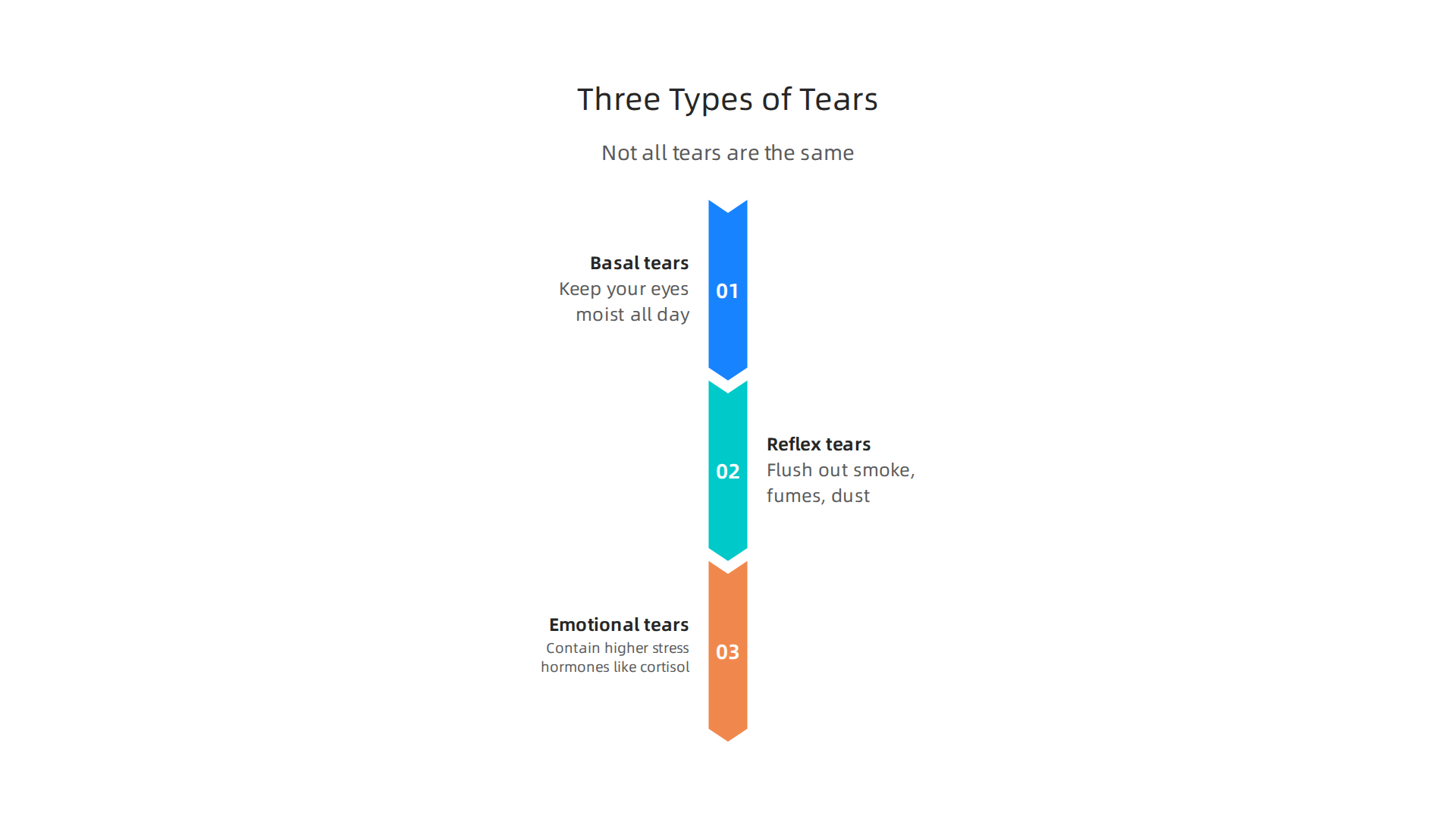
Basal tears keep your eyes moist all day. Reflex tears flush out smoke, onion fumes, or dust. Then there are emotional tears, also called stress tears. These are the ones that show up during anxiety.
Here is what makes stress tears unique.
Emotional tears contain higher levels of stress hormones like cortisol, along with prolactin and ACTH. One study notes that emotional tears have a different chemical makeup compared to basal or reflex tears. They carry more proteins, hormones, and neurotransmitters. The University of Colorado Anschutz Medical Campus explains that emotional tears are where you see more cortisol showing up compared to other tear types.
Your body is not just leaking. It is actively expelling stress chemicals through your tear ducts.
Here is the other cool part. After the peak of crying, your nervous system shifts. The parasympathetic nervous system kicks in, which is the rest and digest mode. This is why you often feel calmer after a good cry. Your body uses the tears as a trigger to start winding down.
So when you feel tears coming on during a panic moment, try using deep breathing for panic attacks to help your parasympathetic system engage faster. Pairing deep breathing for anxiety attacks with allowing the tears to flow can actually speed up your return to calm.
The Cleveland Clinic confirms that emotional tears contain neurotransmitters like acetylcholine. These chemicals help your body and brain communicate. Crying is not just emotional. It is biological.
Understanding this science helps with how to stop crying in situations where tears are not helpful, like during a test. Using relaxation techniques for test anxiety can prevent the stress chemical buildup that leads to crying in the first place.
If you want to explore another way your body reacts under pressure, learning about the Trier Social Stress Test can show you just how quickly stress chemicals spike.
Immediate Grounding Techniques to Stop Crying
Now you understand the biology behind stress tears. Your body is releasing cortisol through those tears, and your nervous system is working to shift into calm mode. But what if you need to stop the tears right now in the middle of a meeting or a conversation?
This is where grounding comes in.
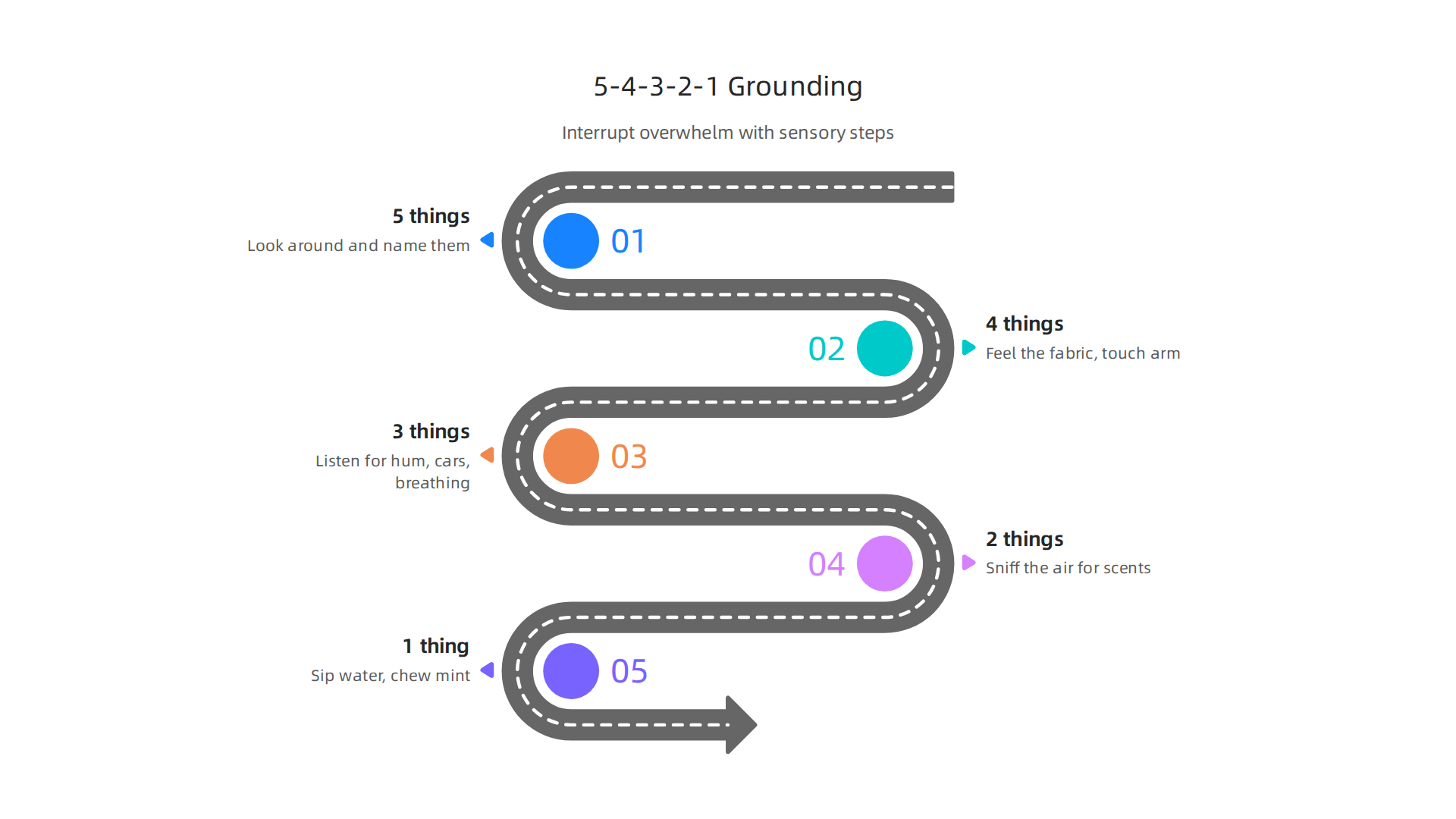
Grounding techniques work by pulling your brain away from the emotional flood. Instead of spiraling deeper into the anxiety, your brain focuses on the present moment. The 5-4-3-2-1 technique is one of the most effective ways to do this. It uses your five senses to interrupt the panic cycle.
Here is how the 5-4-3-2-1 method works:
-
5 things you can see. Look around and name them to yourself. A lamp. A coffee mug. A window. A pen. Your shoes.
-
4 things you can touch. Feel the fabric of your chair. Touch your own arm. Rub your fingers together. Tap your phone case.
-
3 things you can hear. Listen for the hum of a fan, cars outside, or your own breathing. The Calm blog explains that this simple exercise helps calm the mind when anxiety derails your day.
-
2 things you can smell. Sniff the air. Notice the smell of coffee, clean laundry, or fresh air outside.
-
1 thing you can taste. Sip some water. Chew a mint. Or just notice the taste in your mouth.
This process works quickly. Trauma Research UK confirms that the 5-4-3-2-1 grounding technique is designed to help people manage overwhelming emotions by redirecting attention to sensory input.
Pair this with the slow breathing you learned earlier for deep breathing for anxiety attacks. Breathe in for 4 counts, hold for 4, then exhale for 6 counts. This slows your heart rate and reduces the urge to cry. For a better understanding of why your body reacts this way in the first place, check out this guide on panic attack symptoms and what causes them.
These tools put control back in your hands. You don’t need to fight the tears. You just need to redirect your brain for a few minutes. The urge will pass, and you will feel steady again.
The 5-4-3-2-1 Sensory Method
You already know the steps. But here is why this method is so powerful for learning how to stop crying. It forces your brain to switch tasks. Instead of feeding the emotional loop, your brain must process real sensory input from your environment.

That interruption lowers your stress response fast.
This technique is one of the most effective relaxation techniques for test anxiety. Before a big exam, your heart races and tears may threaten. The 5-4-3-2-1 method grounds you in the present moment. As the Calm blog explains, this simple exercise helps calm the mind when anxiety derails your day. Trauma Research UK adds that it helps manage overwhelming emotions by redirecting attention to sensory input.
Pair this grounding work with deep breathing for panic attacks. Breathe in slowly for 4 counts. Hold for 4. Then breathe out for 6 counts. This slows your heart rate and stops the urge to cry. The combination of sensory focus and slow breathing stops the tears before they start.
Make this a daily habit. Practice it when you feel calm so it becomes automatic during stressful moments. For more long-term relief, explore these test anxiety strategies that build confidence and calm before exams.
Cognitive Reframing to Reduce Crying Triggers
Have you ever felt tears rising because a thought like "I can’t handle this" popped into your head? That is a catastrophic thought. It turns a stressful moment into an emotional explosion. Cognitive reframing helps you change that story. Instead of feeding the panic, you teach your brain to see the situation more clearly.
Cognitive reappraisal means altering your internal narrative to reduce emotional intensity. As Psychology Today explains, this strategy actively modifies your emotional responses to upsetting events, giving you real relief.

Research in Frontiers in Psychiatry also confirms that cognitive reappraisal is an effective coping measure and a protective factor against anxiety symptoms.
For people with high trait anxiety, creative cognitive reappraisal works especially well. A 2025 study in PMC found that when anxious individuals used creative ways to rethink a stressful situation, they regulated negative emotions more effectively. This is powerful for learning how to stop crying because the trigger loses its sharp edge.
Here is a simple example. Imagine you are about to take a big exam. Your heart races and tears threaten. Your first thought might be "I’m going to fail and my life is over." Cognitive reframing turns that into "This test is hard, but I have studied. I can manage my nerves and do my best." The emotional intensity drops.
Practice this shift often. When you catch a catastrophic thought, pause and ask: "Is this thought true? What is a more balanced way to see this?" Over time, your brain gets better at calming itself without needing tears.
Pairing cognitive reframing with deep breathing for anxiety attacks makes it even stronger. After you change your thought, take a slow breath. The combination stops the crying urge at its source.
For more structured help, explore how cognitive therapy for anxiety teaches these techniques step by step. It builds lasting control over emotional overwhelm.
Challenging Catastrophic Thoughts
Let’s build on that cognitive reframing idea. One of the biggest reasons we cry is catastrophic thinking. This is when your brain jumps to the worst possible outcome in seconds. You miss a question on a test and suddenly think "I am going to fail everything and never get a job." That thought alone can bring tears.
Catastrophic thinking fuels anxiety and crying. To stop this cycle, you need a tool to fight back. One powerful method is the thought record from cognitive behavioral therapy (CBT). It helps you evaluate the evidence for and against your scary predictions.
Here is how to use one.
First, write down the catastrophic thought exactly as it comes. "I will fail this exam and my life will be over." Second, list the evidence that supports that thought. Maybe you did not study enough. Third, list the evidence against it. Maybe you have passed every test before. You know the material. You have time left.
When you see the evidence side by side, the catastrophic thought loses its power. Research shows that using cognitive reappraisal in this way is a strong protective factor against anxiety symptoms.
This is a core skill in learning how to stop crying. By challenging the thought, you stop the emotional avalanche before it starts. For a deeper look at how these techniques work, explore cognitive therapy for anxiety, which teaches the thought record and other tools step by step.
Building Long-Term Emotional Resilience
So you have learned to challenge catastrophic thoughts in the moment. That is a great start. But the real goal here is to build long-term emotional resilience. This means creating daily habits that lower your baseline anxiety so that you do not get knocked over as easily. Think of it like strength training for your emotions.
The less reactive your nervous system is on a normal day, the less likely you are to cry in a stressful moment. That is the core of understanding how to stop crying over the long haul. You want to reduce the intensity of the trigger itself before it even arrives.
Two habits make a huge difference here.
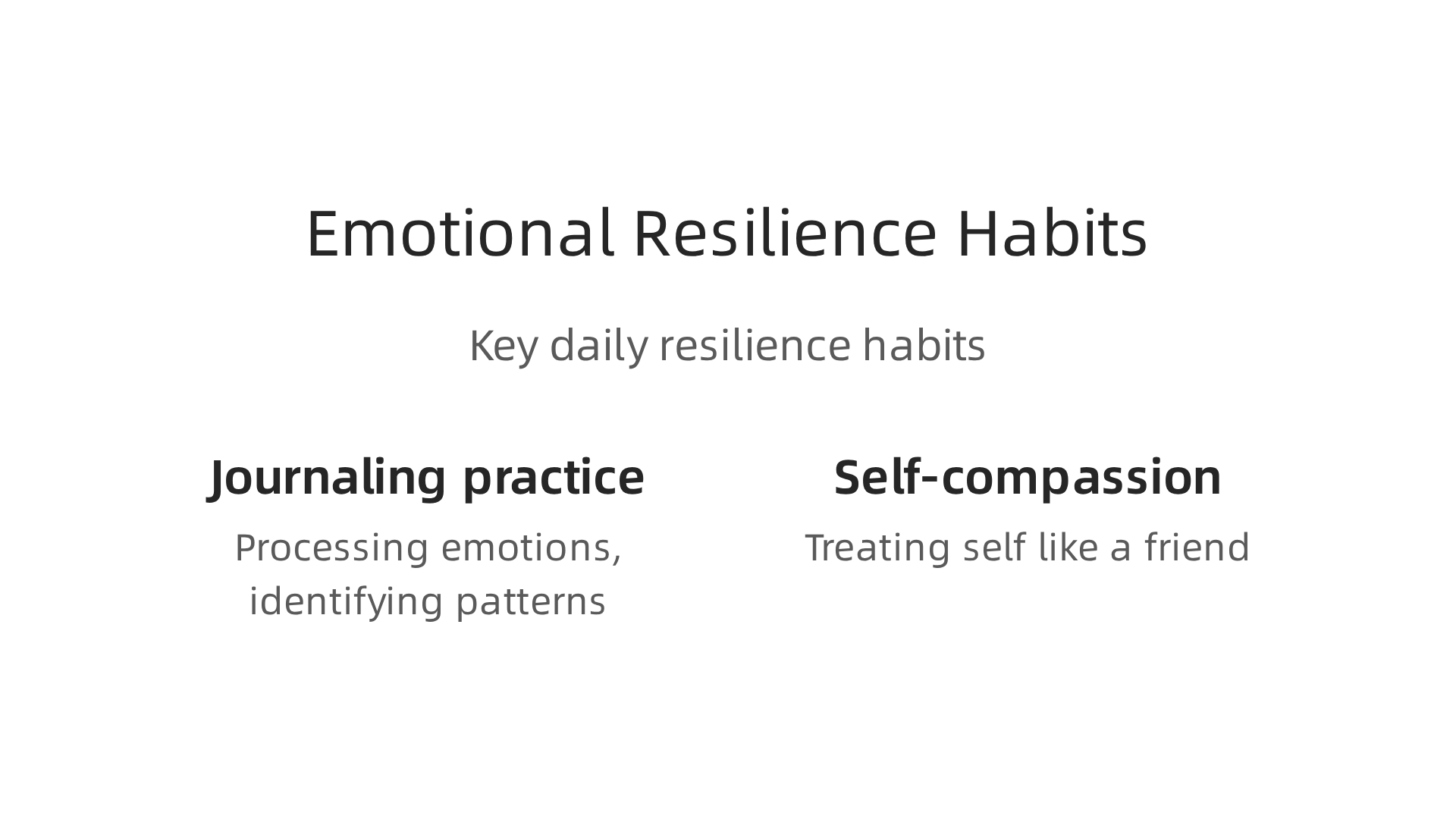
First, start a journaling practice.
Journaling is one of the most effective tools for processing emotions and identifying the patterns that make you cry. Multiple clinical studies show that regular journaling can reduce anxiety and depression symptoms by 20 to 45 percent. It works because it helps you break away from the obsessive thought cycle, explains WebMD.

You get the worry out of your head and onto the page. This gives you distance from it.
When you write about your feelings every day, you start to notice the same themes popping up. Maybe you always cry before big exams. Or after social situations. Once you see the pattern, you can prepare for it. You can learn specific techniques like relaxation techniques for test anxiety that directly target that trigger. Journaling turns reactive coping into proactive preparation.
Second, practice self-compassion.
Here is the thing. Many people cry, and then they feel ashamed about crying. That shame makes them cry more. Self-compassion breaks this loop. When you treat yourself the way you would treat a close friend, the harsh inner critic gets quieter. You stop judging the tears so harshly. Over time, this lowers the emotional charge around crying itself.
Add in simple body-based tools like deep breathing for anxiety attacks or deep breathing for panic attacks when you feel the buildup starting. These techniques calm your nervous system in real time and become easier the more you practice them.
Building resilience is not about never crying. It is about making crying a choice instead of a reflex. For more practical strategies that target specific triggers, check out these test anxiety strategies which include breathing exercises and preparation routines that work.
Journaling for Emotional Processing
When you feel tears building up, your brain is sitting on a pile of unprocessed feelings. Writing them down gets them out of your head and onto the page where you can actually see them.

That distance is what makes journaling such a powerful tool for emotional processing.
Here is what the science says. Multiple clinical studies show that regular journaling can reduce anxiety and depression symptoms by 20 to 45 percent. It works because it helps you break away from the nonstop cycle of obsessively thinking about what happened. As WebMD explains, writing about an emotional event can stop the brooding loop that keeps you stuck. You finally get some mental space.
There are two ways to approach this.
Expressive writing. Just let it all out. Write about whatever made you upset, scared, or overwhelmed. Dont worry about grammar or spelling. The goal is release. This type of writing directly reduces emotional distress and improves your mood.
Structured journaling. A gratitude journal is a good example. You write down a few things you are thankful for each day. This shifts your focus away from anxiety triggers and toward the positive stuff that is already there. Over time, your brain gets better at noticing good moments instead of just scanning for threats.
When you journal regularly, you also start spotting patterns. Maybe you notice you always cry before big presentations or after arguments. Once you see that pattern, you can prepare for it. Combine journaling with specific relaxation techniques for test anxiety to handle those predictable triggers before they hit.
You can also pair journaling with deep breathing for anxiety attacks when the emotions feel too big. Write first to release the pressure, then breathe to calm the body.
Journaling turns reactive coping into proactive preparation. And that is a big step toward learning how to stop crying when you really need to stay composed.
When Your Crying Signals Something Deeper
Now and then, crying is just a normal release. But if you find yourself tearing up multiple times a week for no clear reason, or if a small stressor sets off a flood of tears, something more might be going on.
Frequent, uncontrollable crying can be a sign of clinical anxiety, depression, or an emotional dysregulation disorder. The DSM-5, the manual doctors use to diagnose mental health conditions, lists crying as a possible symptom of some anxiety disorders. As MedCentral notes, symptoms of anxiety can include crying, sweating, heart palpitations, and shaking. When crying happens often and feels out of your control, it is worth taking a closer look.
The key difference between normal crying and a deeper problem is how much it affects your daily life. The MSD Manual describes anxiety disorders as persistent and excessive fear that leads to behavioral changes that cause distress. If your crying is hurting your work, relationships, or ability to function, it is time to get help.
Professional therapy can give you tailored strategies that go beyond self-help. Two evidence-based approaches work especially well for emotional control.
Cognitive Behavioral Therapy (CBT). CBT helps you spot the thoughts that trigger your crying and replace them with more balanced ones. You learn to break the cycle before the tears start.
Dialectical Behavior Therapy (DBT). DBT focuses on emotional regulation skills, like distress tolerance and mindfulness. It is very effective for people who feel flooded by emotions often.
You do not have to figure this out alone. A therapist can guide you through these methods.

For a deeper look at how structured therapy can reduce emotional overwhelm, check out our guide on cognitive therapy for anxiety techniques. It walks you through the specific tools CBT offers.
If you are wondering whether your crying is normal or needs professional attention, a good first step is to complete a depression screening to check for underlying mood issues.
And if you have young people in your life who show similar struggles, understanding how to protect emotional health early can make a huge difference. The Youth Safety Case Study shares real research on building stronger resistance to emotional manipulation and depression in youth.
Options for Therapy (CBT, DBT)
When self-help methods are not enough to stop frequent crying, therapy can give you tools that actually work. Two types of therapy have strong research behind them for emotional control.
Cognitive Behavioral Therapy (CBT). CBT helps you spot the thoughts that trigger your tears and replace them with more balanced ones. The goal is to break the cycle before the crying starts. The DSM-5 criteria for generalized anxiety disorder include symptoms like difficulty concentrating and restlessness, which can feed emotional overload. CBT directly addresses those patterns. To learn more about how CBT works, check out our guide on cognitive therapy for anxiety techniques.
Dialectical Behavior Therapy (DBT). DBT focuses on emotional regulation skills like mindfulness and distress tolerance. It teaches you to sit with uncomfortable feelings without reacting. This is especially helpful if you feel flooded by emotions often. As the MSD Manual explains, anxiety disorders involve persistent fear that leads to behavioral changes. DBT gives you the skills to change those behaviors. For a deeper look, see our breakdown of dialectical behavior therapy for borderline personality disorder skills.
Both CBT and DBT have strong evidence for reducing crying spells and improving how you handle emotions. A therapist can guide you through either approach. If you are not sure which one fits, start with a depression screening to check for underlying issues.
Summary
This article explains why anxiety often leads to sudden crying and gives practical, science-backed steps to stop tears both instantly and over time. It covers the biology of emotional tears—how stress hormones, endorphins, and the parasympathetic rebound work—so you understand that crying is a natural regulation response, not a weakness. You’ll learn immediate grounding moves like the 5-4-3-2-1 sensory exercise and a simple paced-breathing pattern to interrupt an emotional spike, plus cognitive techniques (reframing and thought records) that reduce catastrophic thinking. The piece also outlines daily resilience builders—journaling and self-compassion—to lower your baseline reactivity, and it reviews when frequent crying might signal anxiety or depression that needs CBT or DBT. After reading, you’ll have clear, repeatable tools to calm your nervous system in the moment and routines to make crying less automatic over time.