
Understand Your Depression Screening PHQ-9 Score and When to Get Help

Depression can feel heavy, and sometimes it’s hard to tell if what you’re feeling is just a bad day or something more.

That’s why depression screening matters.
It’s like a quick check-up for your feelings, helping you see if you might be experiencing signs of depression.
The main goal of depression screening is to find symptoms early. Think of it as an early warning system. If we can spot these signs sooner, it’s easier to get help and feel better. Tools like the PHQ-9 questionnaire are often used for this. Studies have looked at how well the PHQ-9 works to find major depression when screening people diagnostic accuracy of the PHQ-9 for screening.
It’s important to remember that a depression screening is just a first step. It’s not a full diagnosis. It simply shows if you should talk more with a doctor or a mental health professional. If your screening suggests you might be feeling down, it can point you towards helpful options like psychotherapy for depression. There are many ways to get support, and finding out early opens the door to these possibilities.
In this article, we’ll help you understand your depression screening results, especially if you’ve taken the PHQ-9. We’ll show you what different scores mean and when it’s a good idea to seek help. We’ll also share helpful resources and next steps so you can feel more in control of your mental well-being in 2026.
What is Depression Screening and Who Should Be Screened?
When we talk about depression screening, it’s important to know it’s different from a full diagnosis. Think of a screening as a quick check, like a blood pressure reading.

It helps find possible issues so you know if you need to look closer. A doctor or mental health professional uses a full diagnosis to say for sure if someone has depression after a detailed talk and evaluation. Screening just helps decide if that deeper look is needed. Some studies have looked at the best ways to screen for depression in adults to make sure the process is helpful and accurate in 2026.
Where Does Depression Screening Happen?
You might have a depression screening in a few different places:
- At the Doctor’s Office: Your regular family doctor is a common place for this. They often ask you questions about your mood during yearly check-ups.
- In Schools: Colleges and universities are starting to offer more mental health support. This includes
depression screeningfor students, as many young people face mental health challenges. For example, the number of university students dealing with depression around the world shows how important these early checks are. - At Work: Some workplaces now offer mental wellness programs, which can include screenings to help employees.
Who Should Get Screened?
Many people can benefit from routine depression screening.
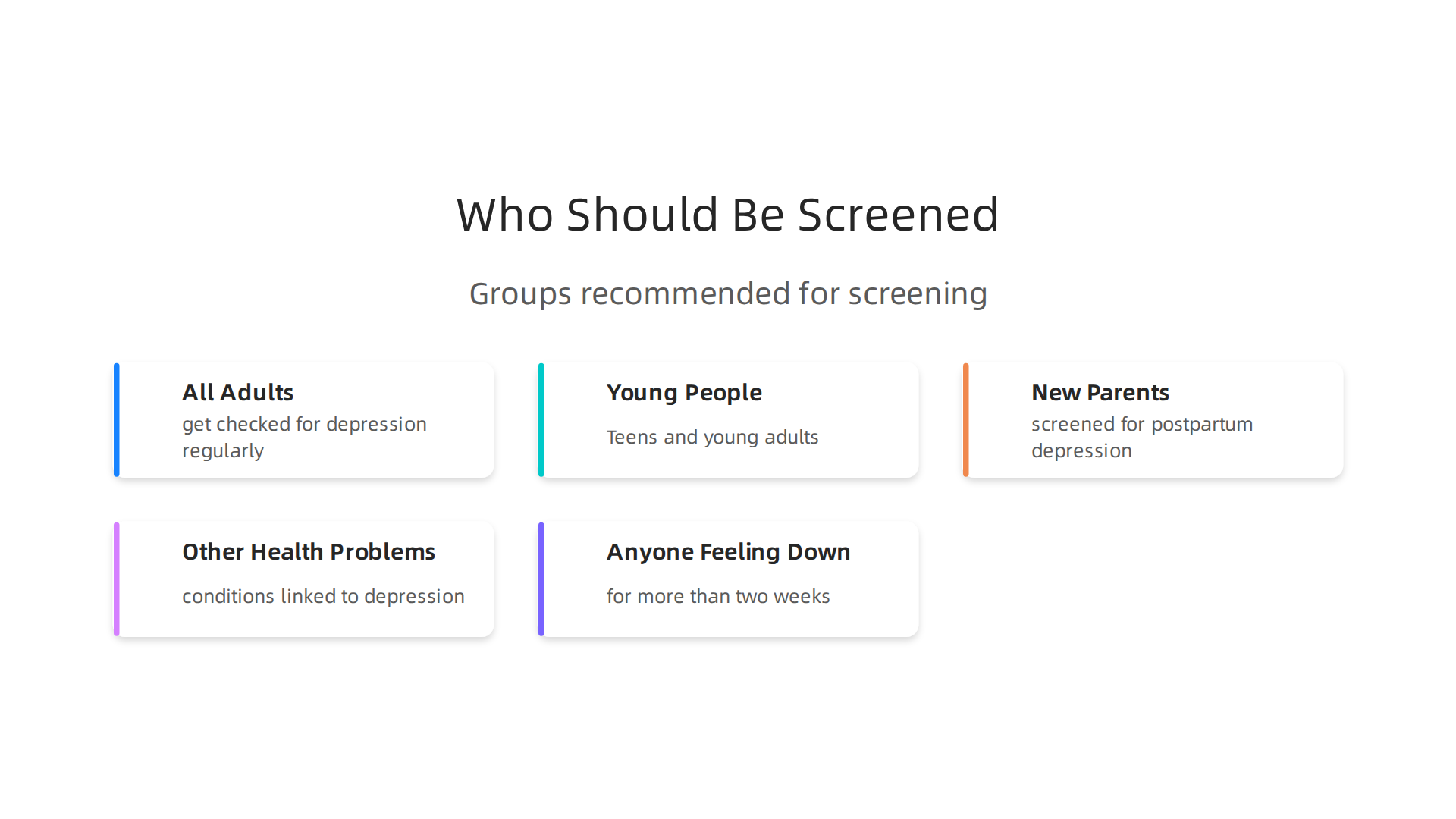
It’s not just for when you feel really bad. Here are some groups who often get screened:
- All Adults: Many health groups recommend that all adults get checked for depression regularly, even if they feel okay. This helps catch problems early.
- Young People: Teens and young adults are especially important to screen. A report on youth mental health in 2025 showed that many young people are diagnosed with major depression, and screening can help prevent crises.
- New Parents: Women who have recently given birth often get screened for postpartum depression. Tools like the
Edinburgh Postnatal Depression Scale(EPDS) are used for this. While depression is more common in women globally, men also experience it, and they should feel comfortable seeking help too. - People with Other Health Problems: If you have a long-term illness, like heart disease or diabetes, your doctor might screen you for depression because these conditions can be linked.
- Anyone Feeling Down for a While: If you’ve felt sad, hopeless, or just "not yourself" for more than two weeks, it’s a good idea to talk to a
mental health professionalabout getting screened.
Remember, a depression screening is just a guide. If you get a high score on a screening, it means it’s time to talk more with a doctor or a specialist. They can help figure out the next steps, which might include options like psychotherapy for depression. Knowing the difference between screening and a full diagnosis is a key first step in taking care of your mental well-being. If you’re wondering about the next steps after a screening, learning how a psychiatrist depression specialist diagnoses and treats depression can be very helpful.
One common tool used for depression screening is called the Patient Health Questionnaire-9, or PHQ-9. It’s a quick set of questions that helps doctors and mental health professionals get a clear idea if someone might be dealing with depression. This tool is widely used because it’s easy to fill out and helps guide the next steps for care, making it a valuable part of modern depression screening practices in 2026, as noted by the American Psychological Association Patient Health Questionnaire (PHQ-9 & PHQ-2).
What are the Nine Items of the PHQ-9?
The PHQ-9 asks about how often you’ve been bothered by certain problems over the last two weeks.
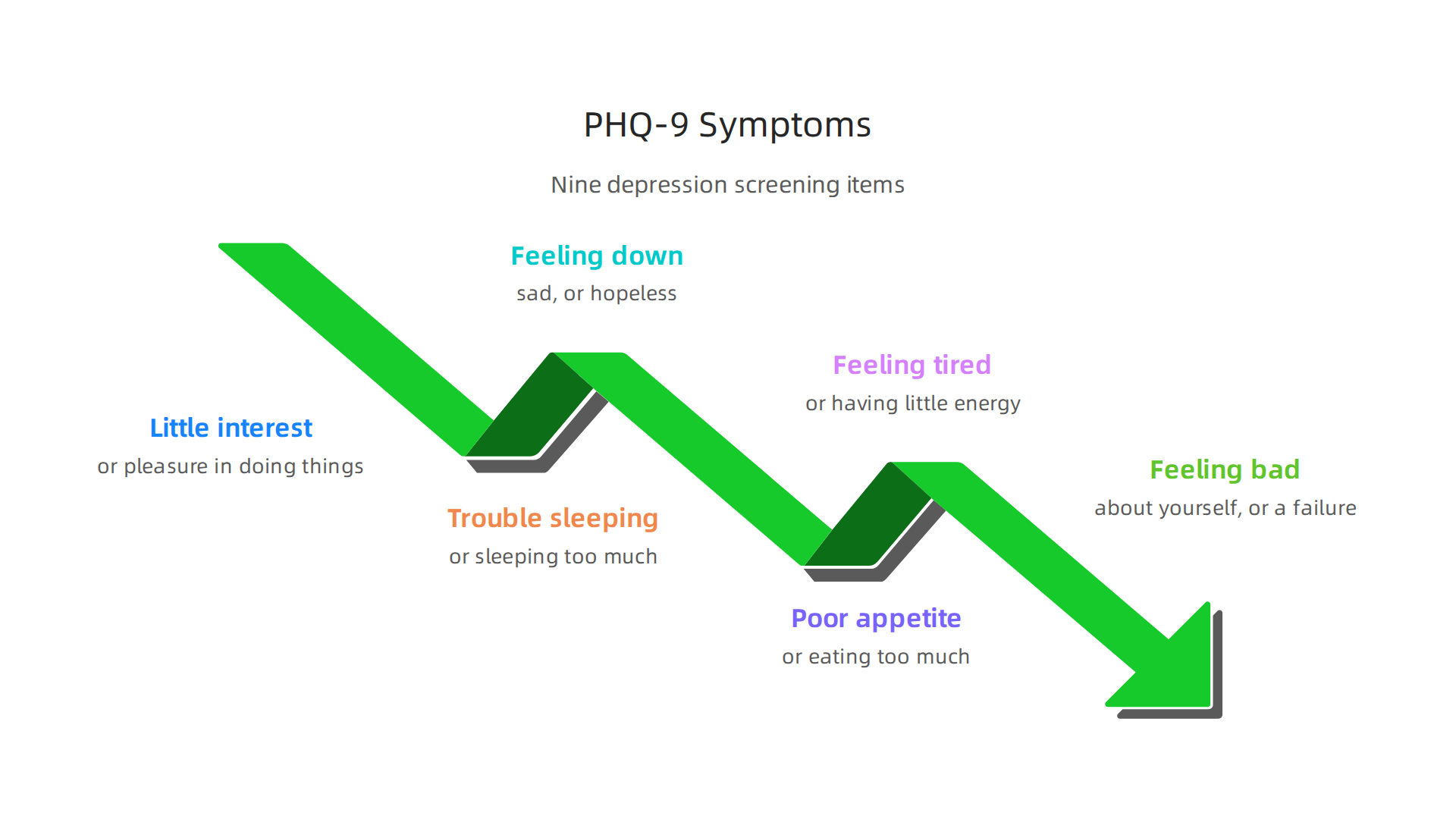
The questions cover nine main symptoms related to depression:
- Little interest or pleasure in doing things
- Feeling down, sad, or hopeless
- Trouble falling or staying asleep, or sleeping too much
- Feeling tired or having little energy
- Poor appetite or eating too much
- Feeling bad about yourself, or that you’re a failure, or have let yourself or your family down
- Trouble concentrating on things, like reading the newspaper or watching television
- Moving or speaking so slowly that other people could have noticed, or being so fidgety or restless that you’ve been moving a lot more than usual
- Thoughts that you would be better off dead, or of hurting yourself in some way
Each of these questions helps a mental health professional see if someone shows signs that align with what doctors look for to diagnose depression.
How is the PHQ-9 Scored?
For each of the nine items, you choose an answer that best describes how often you’ve felt that way:
- Not at all (0 points)
- Several days (1 point)
- More than half the days (2 points)
- Nearly every day (3 points)
The points from all nine questions are added up to get a total score, which can range from 0 to 27. Higher scores mean more severe depression symptoms. For example, a score of 5-9 might suggest mild depression, 10-14 moderate, 15-19 moderately severe, and 20-27 severe depression. These scores help doctors decide if a person needs a deeper look or needs to start psychotherapy for depression. Understanding depression screening what your PHQ-9 score means and when to get help is a good next step.
What are the Limitations of the PHQ-9?
While the PHQ-9 is a very useful depression screening tool, it’s not perfect. Here are some things to remember:
- It’s a Screening, Not a Diagnosis: The PHQ-9 is meant to screen for depression, not to give a final diagnosis. A doctor or
mental health professionalstill needs to do a full evaluation to confirm depression. - Might Miss Some Cases: Sometimes, the PHQ-9 might not catch everyone who has depression, or it might suggest depression when someone doesn’t actually have it. It’s a guide, not a definitive answer. Studies even look into interpretation issues with the Patient Health Questionnaire instructions.
- Cultural Differences: How people express feelings can change from one culture to another. The PHQ-9 might not work the same way for everyone, everywhere.
- Other Health Issues: Sometimes, symptoms like tiredness or trouble sleeping can be caused by other health problems, not just depression. A good doctor will consider all possibilities.
After a depression screening like the PHQ-9, if your score suggests you might have depression, it’s important to talk to a mental health professional. They can help you explore your feelings and decide if treatments like cognitive therapy for anxiety techniques that calm worry and panic or other types of psychotherapy for depression would be right for you.
After a depression screening like the PHQ-9, if your score suggests you might have depression, it’s important to talk to a mental health professional. They can help you explore your feelings and decide if treatments like cognitive therapy for anxiety techniques that calm worry and panic or other types of psychotherapy for depression would be right for you.
When you get your PHQ-9 score, it’s like a guide, not a final answer. What your score means helps doctors and mental health professionals figure out the best next steps for you. Here’s a simple look at what different scores usually suggest:
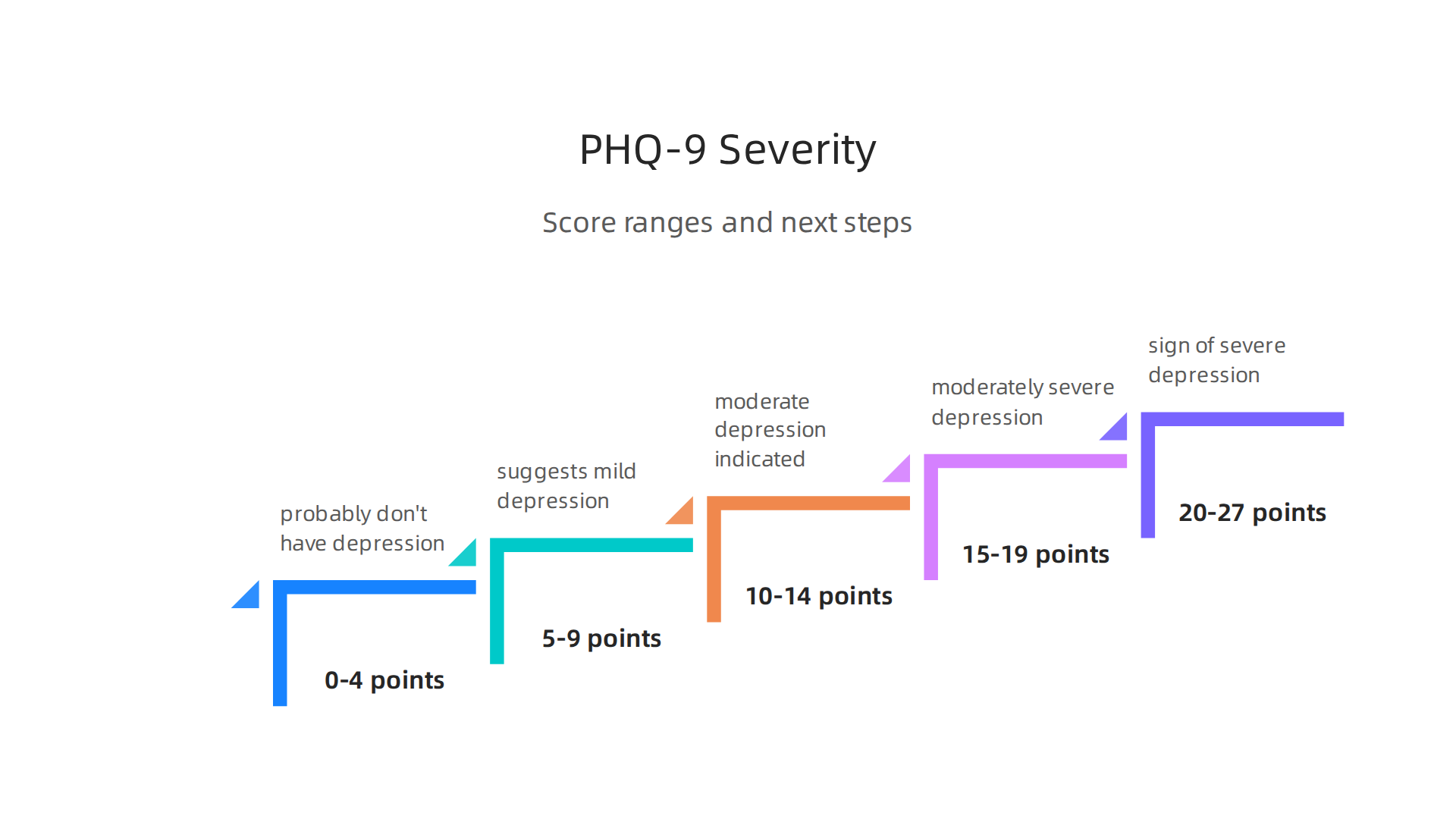
- 0-4 points: This score means you probably don’t have depression right now. It’s still good to know if you’re feeling down and to talk to your doctor if you have any worries.
- 5-9 points: This suggests mild depression. Your doctor might suggest watching how you feel over time, or they might offer some easy ways to cope, like self-help tips or online guides. Sometimes, a short talk about your feelings can help a lot.
- 10-14 points: This points to moderate depression. At this level, it’s usually time to think about more active help. This could mean starting
psychotherapy for depression, which is a type of talk therapy, or talking about whether medication might be helpful. Your doctor will likely refer you to amental health professionalfor a deeper look. - 15-19 points: This indicates moderately severe depression. Getting help quickly is very important here. Often, doctors suggest a mix of therapy and medication to help you feel better.
- 20-27 points: This is a sign of severe depression. If you get a score this high, you need immediate help from a
mental health professional.
It’s important to remember that these are just guidelines. Every person is different, and your doctor will always consider your unique situation. Research continues to refine how these scores are interpreted, looking at comparison of PHQ-9 scoring methods to ensure the best care.
Other Health Issues and Safety Concerns
Your PHQ-9 score doesn’t tell the whole story. Other things can change what the next steps should be:
- Other Health Problems: Sometimes, symptoms like tiredness or trouble sleeping can come from other health conditions, not just depression. For example, people with heart problems often experience depression, and it’s important for doctors to screen for Screening for Depression in Cardiology Settings in those cases.
A doctor will look at all your health issues together.
- Thoughts of Hurting Yourself: This is the most important thing to tell your doctor or
mental health professional. If your PHQ-9 includes thoughts about being better off dead or hurting yourself, it doesn’t matter what your total score is. You need immediate help.

These thoughts mean there’s a serious risk, and doctors follow special steps for Suicide Risk Screening in Primary Care to keep you safe.
When to Take Action
Knowing your PHQ-9 score is the first step. Here’s a simple checklist to help you understand when to act:
- Monitor: If your score is low (0-4), you might just keep an eye on your feelings. If things change, talk to your doctor.
- Refer: If your score is moderate (10-14) or higher, it’s a good idea to get a referral to a
mental health professional. They can offer different kinds ofpsychotherapy for depressionor other treatments. Learning How a Psychiatrist Depression Specialist Diagnoses and Treats Depression can help you understand this process. - Escalate: If your score is high (15-27), or if you have any thoughts of harming yourself, seek help right away. This means talking to a doctor, a
mental health professional, or someone you trust immediately.
Your well-being is important, and finding the right support after a depression screening is key to feeling better.
Your PHQ-9 score is a great starting point, but it’s not the only way doctors and mental health professionals check for depression and anxiety. There are other tools that can help catch problems early or get a fuller picture of how you’re feeling. These other depression screening tools help doctors quickly decide what kind of help you might need.
Other Validated Screening Tools and When to Use Them (PHQ-2, GAD-7, and More)
Sometimes, a doctor might use a shorter test called the PHQ-2. This is like a very quick depression screening that asks just two questions about how often you’ve felt down, depressed, or hopeless, and how often you’ve felt little interest or pleasure in doing things over the last two weeks. If you score high on the PHQ-2, it usually means you should take the longer PHQ-9 test to get a more detailed look. Both the PHQ-9 and PHQ-2 are part of a larger set of tools for assessing depression, according to the American Psychological Association Patient Health Questionnaire (PHQ-9 & PHQ-2).
Another important tool is the GAD-7. While the PHQ-9 focuses on depression, the GAD-7 looks for anxiety. It asks seven questions about how often you’ve felt nervous, anxious, or on edge, or haven’t been able to stop or control worrying, among other things. Anxiety often goes hand-in-hand with depression, so it’s common for doctors to use both tests. Studies in 2026 show that both the PHQ-9 and GAD-7 are effective and easy for doctors to use to find depression and anxiety early on Assessment of Mental Health Screening Tools in General Practice.
So, how do doctors choose which test to use? It depends on a few things:
- How much time they have: The PHQ-2 is super fast, so it’s great for a quick check-up. The PHQ-9 and GAD-7 take a little longer but give more information.
- What they’re looking for: If a doctor mostly suspects depression, they’ll lean on the PHQ-9. If they think anxiety might also be a problem, they’ll use the GAD-7 too. These tools are reliable for both young people and adults Validation of Brief Screening Measures for Depression and Anxiety.
- Other health concerns: As discussed before, other health issues can affect mental health. Using different tools helps doctors see the whole picture. There are clear guides that help clinicians choose between PHQ-9 and GAD-7, especially when thinking about other health issues that might be present PHQ-9 vs GAD-7: Clinical Decision Tree for Clinicians.

After these screenings, a mental health professional can use the results to figure out the next steps. This might involve talking through your feelings in more detail, perhaps with psychotherapy for depression or other types of counseling. Understanding how different professionals work can be helpful, so you might want to learn about the differences between a psychiatrist vs psychologist for anxiety to see who might be best for your situation. These tools help them make sure you get the right support tailored to you.
Getting ready for a depression screening visit with a doctor or a mental health professional can feel a bit scary, but knowing what to expect makes it easier. These visits are a good chance to talk openly about how you’re truly feeling.
How to Get Ready for Your Visit
To help your doctor understand you best, here are some simple tips:
- Write Things Down: Before you go, make a quick list of your feelings.

When did you start feeling sad or anxious? How often does it happen? Does anything make it better or worse? Don’t forget to mention changes in your sleep, appetite, or energy levels. This helps the doctor get a clear picture right away.
- Be Honest: It’s super important to be truthful about your feelings, even the tough ones. Doctors are there to help, not to judge.
- Ask About Privacy: If you’re worried about who will know, you can ask about privacy rules. Most healthcare talks are private, meaning your information is kept safe.
What Clinicians Will Ask About
During your visit, the mental health professional will do more than just use a depression screening tool. They will ask questions to understand you better:
- Your Health Story: They will ask about your past health, any medicines you take, and if anyone in your family has had similar feelings.
- How Feelings Affect Your Life: They want to know how your feelings impact your everyday activities. Is it hard to go to school or work? Do you feel less interested in hobbies or spending time with friends? This helps them see the "functional impact" of your symptoms.
- Safety Questions: Sometimes, when people feel very low, they might have thoughts about hurting themselves. Doctors will always ask about this to make sure you are safe and to offer immediate help if needed. Many doctors follow clear steps for Suicide Prevention in Primary Care Settings to keep patients safe. This is a normal and important part of the visit, and it shows they care about your well-being. Knowing how to detect and assess suicidality is a key part of their training Suicide Risk: Detecting & Assessing Suicidality.
What Happens After the Screening
After the depression screening and talking with you, your doctor will put together a plan. This plan is just for you and might include:
- More Talks: Sometimes, the first visit is just the start. You might have more talks to learn more about
psychotherapy for depressionor other ways to get better. If you’re curious about how specialists diagnose and treat depression, you can learn more about How a Psychiatrist Depression Specialist Diagnoses and Treats Depression. - Checking In: Your doctor might ask you to come back often to see how you’re doing. This is called monitoring.
- Referrals: If needed, they might suggest you see a special
mental health professionallike a counselor or a psychiatrist for more specific help. - Small Steps: Sometimes, they’ll give you small things to try at home to help you feel better, like exercises or ways to relax.
The goal is always to find the right support so you can start feeling better and live a fuller, happier life.
After a doctor talks with you and does a depression screening, it’s good to know what steps come next. Most times, the plan helps you feel better over time. But sometimes, strong feelings can become very serious, and you need help right away.
When to Seek Urgent Help
It’s super important to know the signs that mean you need immediate help. These are red flags that show things have gotten too tough to handle alone.
- Thoughts of Hurting Yourself or Others: If you have thoughts about hurting yourself, even if you don’t plan to act on them, tell someone right away. The same goes for thoughts about hurting others. Your safety is the most important thing.
- Sudden, Strong Decline: If you suddenly feel much, much worse, or can’t do basic things like getting out of bed, eating, or taking care of yourself for a few days, that’s a sign to seek urgent care.
- Can’t Function: If your feelings stop you from working, going to school, or connecting with anyone, and it lasts for a while, you need extra support.
In these situations, don’t wait. Reach out for help.
Safety Planning and Crisis Services
If you ever feel unsafe, a safety plan can guide you. It’s a simple list of things to do to keep yourself safe. This might include:
- People to Call: List friends, family, or your
mental health professionalwho you can trust. - Safe Places: Think of places where you feel safe and calm.
- Coping Skills: Small actions that help you feel better, like listening to music or going for a walk.
- Emergency Contacts: Always keep numbers for crisis lines or emergency services handy. Tools for Suicide Screening and Assessment are available to help identify risk and plan for safety.
If you need urgent help, you can go to the nearest emergency room, call a crisis hotline, or contact emergency services like 911 (in the US). When you get there, expect to talk to trained professionals who will listen without judgment and make sure you’re safe. They can help you figure out the next best steps.
Longer-Term Supports for Feeling Better
For ongoing support, many options can help you feel better in the long run.
- Psychotherapy Options: This is like talking to a
mental health professionalto understand your feelings and learn new ways to cope. There are many types of cognitive therapy for anxiety techniques that calm worry and panic, which can also be very helpful forpsychotherapy for depression. - Medication: Sometimes, doctors suggest medicine to help balance brain chemicals and lift your mood. This is often used along with therapy.
- Community Supports: Finding local support groups or community programs can help you connect with others who understand what you’re going through.
- Digital Tools: Many apps and online programs can help you track your mood, practice mindfulness, or learn calming techniques. These digital tools can help you stick to your plans and change your behaviors in healthy ways. For example, some approaches, like the Value Reinforcement System (VRS), are gaining attention for their ability to boost long-term engagement through ethical behavior-change tactics. You can learn more in the Fox Magazine article.
Remember, finding the right mix of support is a journey. Be patient with yourself, and know that help is always available to guide you toward a brighter, more stable future.
Summary
This article explains depression screening as a quick, practical check to spot possible depression early and guide next steps, focusing especially on the widely used PHQ-9 questionnaire. It describes where screenings commonly happen (primary care, schools, workplaces), who benefits from routine checks (all adults, young people, new parents, people with chronic illness), and how the PHQ-9 is scored and interpreted. The piece makes clear that screening is not a diagnosis but a prompt to get a fuller evaluation from a doctor or mental health professional, and it outlines common follow-up actions like psychotherapy, medication, referrals, monitoring, and safety planning. The article also covers the PHQ-9’s limitations — including cultural differences and overlap with other health problems — and points to brief alternatives like the PHQ-2 and complementary tools such as the GAD-7. Readers learn how to prepare for a screening visit, what clinicians will ask, when to escalate care immediately, and where to find ongoing supports and crisis resources. Overall, the guide helps you understand your score, decide when to seek help, and take concrete next steps toward treatment and safety.