
How to Find the Right Psychology Today Psychiatrist for Your Anxiety

Why Finding the Right Mental Health Professional Matters
Here is a number that might stop you in your tracks. Anxiety affects an estimated 31% of adults at some point in their lives. According to the National Institute of Mental Health, about 19.1% of U.S. adults had an anxiety disorder in the past year alone. And as we move through 2026, the numbers keep climbing.
But here is the thing. Most people who struggle with anxiety never get professional help. They do not know where to start. They get stuck trying to figure out the difference between a therapist, a counselor, and a psychiatrist. The confusion alone can feel like another weight to carry.

That is where the Psychology Today directory comes in.

It is one of the most popular tools for finding a mental health professional. But just searching for a "psychology today psychiatrist" is not enough. You need to know how to use the directory the right way. A bad match can waste your time and your money. A good match can change your whole outlook on life.
This guide walks you through every step. You will learn how to spot the signs that mean you need professional support. You will understand terms like "licensed professional counselor meaning" and "licensed mental health professional for esa letter." You will discover how to join a "therapy group" and use "mental health parity" laws to save money on care.
The goal is simple. Get you from confusion to confidence. From endlessly scrolling to sitting in the right chair with the right person.
If you want to understand why modern digital pressure makes your anxiety feel so much louder, try this tool that names the pattern. It helps you see what is really driving your worry.
For more practical steps on using the directory, check out our guide on how to use your Psychology Today login to find a therapist fast.
Understanding When Professional Help Is Needed
So how do you know if what you are feeling is just a bad week or something more serious? It is a tough line to draw. Everyone feels nervous before a big meeting or worried about a health scare. That is normal. But when the worry takes over your life, it might be time to pay attention.
Here is the simple rule. If your anxiety gets in the way of your daily routine, your relationships, or your ability to work, it has crossed into clinical territory. The official guide that doctors use, the DSM-5, says that generalized anxiety disorder involves excessive worry that happens more days than not for at least six months Mind Diagnostics. And it is not just the worry. You also feel physical symptoms like restlessness, getting tired easily, trouble focusing, muscle tension, or sleep problems Merck Manuals.
What does that look like in real life? You might start avoiding places or people because the thought of going makes your heart race. You might have panic attacks that come out of nowhere. Maybe you lie awake at night because your brain will not shut off. These are not just signs of a tough day. They are signals that your nervous system is stuck in overdrive.
The National Institute of Mental Health reports that about 19.1% of U.S. adults had an anxiety disorder in the past year NIMH. And yet most of them never get help. Why? Because they think it is just stress that will pass. But chronic anxiety does not just pass on its own. It gets louder.
Understanding the difference between normal stress and an anxiety disorder is the first step toward getting the right support. If any of these warning signs sound familiar, it is worth taking a closer look. You can also check out our guide on panic attack symptoms to see if yours match the pattern.
The goal here is not to scare you. It is to help you recognize when your body and mind are asking for more than self-help. And once you see the pattern, you can name it. That alone can feel like a huge relief. Name the anxiety pattern that digital pressure creates and start taking back control.
What Is a Psychiatrist and How Do They Differ From Other Mental Health Professionals?
Now that you know the warning signs, you might wonder who exactly can help. The mental health world has many different titles and it can get confusing fast. Let us break it down simply.
A psychiatrist is a medical doctor. They hold either an MD (Doctor of Medicine) or a DO (Doctor of Osteopathic Medicine) degree. This matters a lot. Because they went to medical school, they can do things that other mental health professionals cannot. The biggest difference is that psychiatrists can prescribe medication. They can also run medical tests to rule out physical causes for your symptoms. When your anxiety is severe and your brain chemistry needs help balancing, a psychiatrist is often the right person to see.
Psychologists, therapists, and counselors take a different path. They earn doctoral or master’s degrees in psychology or counseling. They are experts at talk therapy. They help you change thought patterns, learn coping skills, and process trauma. But with very few exceptions by state law, they cannot write prescriptions for medication. So if you think you might need both therapy and medication, you may need to see two different people or work with a psychiatrist who also offers therapy.
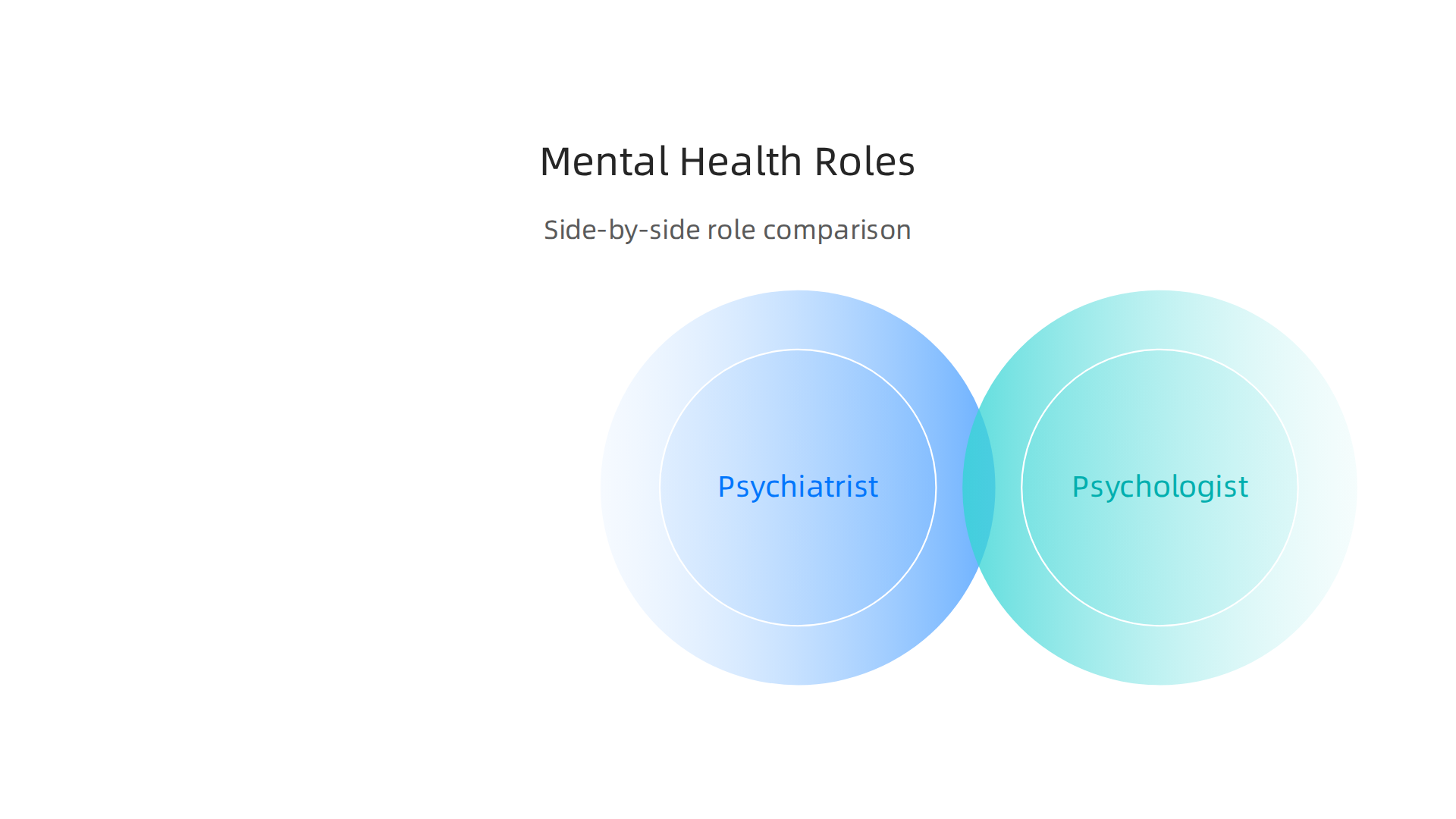
Here is how the roles look side by side:
| Professional | Education | Prescribes Medication? | Focus |
|---|---|---|---|
| Psychiatrist | Medical school (MD or DO) | Yes | Medical diagnosis, medication, and sometimes talk therapy |
| Psychologist | Doctoral degree (PhD or PsyD) | No (rare exceptions) | Talk therapy, testing, and diagnosis |
| Therapist or Counselor | Master’s or doctoral degree | No | Talk therapy, coping skills, and support |
Choosing the right professional depends on how your symptoms feel. If your anxiety is mild to moderate and you want to talk through it, a therapist or licensed professional counselor meaning a person trained to provide talk therapy is a great start. But if your anxiety is disabling, if you have panic attacks, or if you have tried therapy before and it was not enough, you may need a psychiatrist. This is where the mental health parity law matters. It requires insurance plans to cover mental health care almost the same as physical health care. So do not assume you cannot afford a psychiatrist. Check your benefits.
A good way to find the right person is to use a search tool like Psychology Today psychiatrist directories. You can filter by location, insurance, and specialty. For a deeper look at the differences, read our guide on psychiatrist vs psychologist for anxiety how to choose the right professional. It walks you through the exact questions to ask yourself before scheduling an appointment.
The key takeaway is this. You do not have to figure out the title on your own. Know that a psychiatrist is a medical doctor for your mind. And if your anxiety has reached the point where it is interrupting your life, a psychiatrist might be exactly what you need.
Using Psychology Today’s Therapist Directory: A Step-by-Step Guide
Alright, so you have decided to look for help. The best place to start is the Psychology Today directory. It is the largest online directory of therapists, psychiatrists, and counselors. You have way more options there than anywhere else. That is a good thing because it means you can be picky and find someone who is a great fit for you.

Here is a simple step-by-step guide to finding a psychology today psychiatrist (or any therapist) for your anxiety.
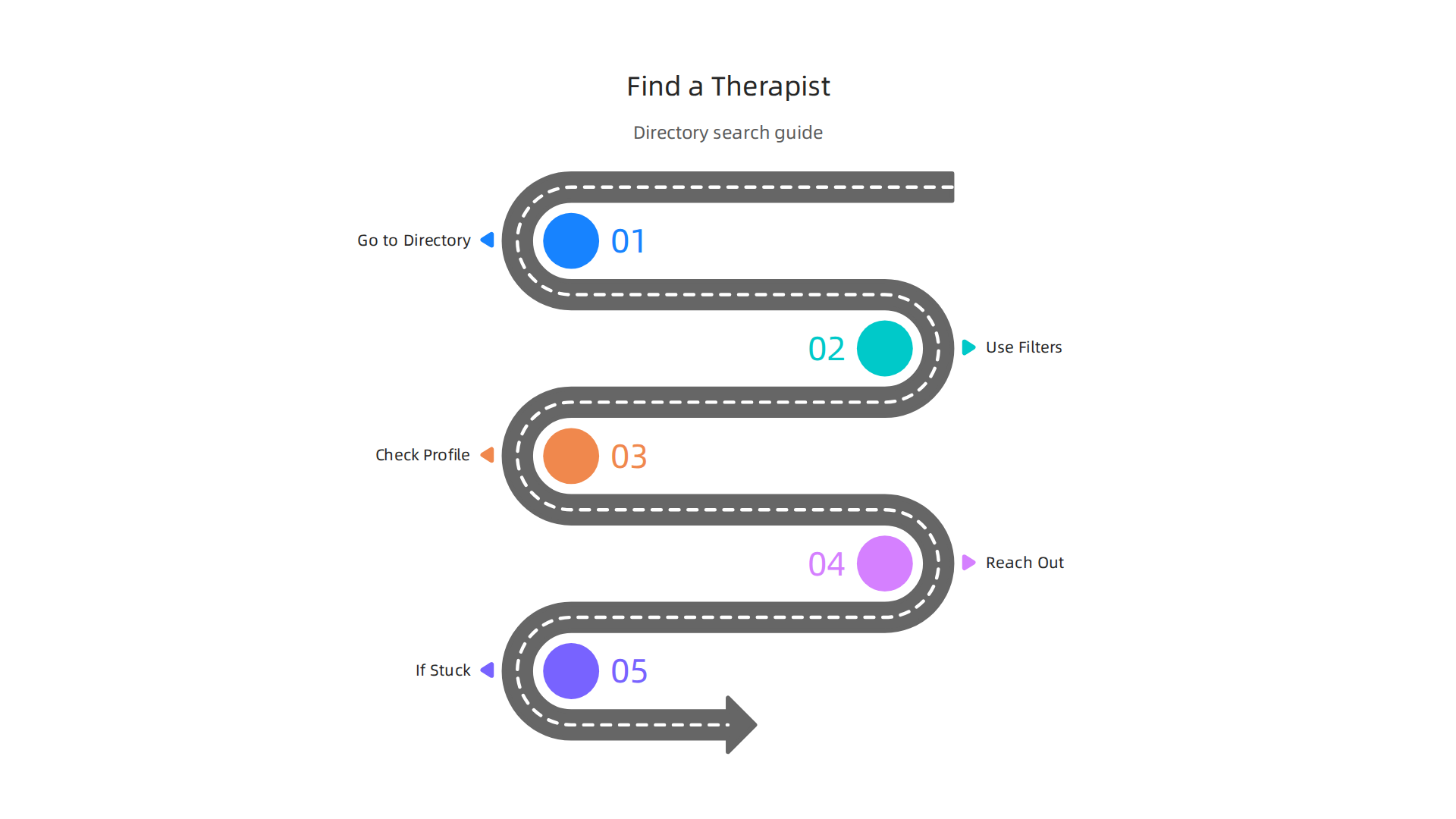
Step 1: Go to the Directory
Start at psychologytoday.com/us and click the big "Find a Therapist" button. It takes you straight to the search area. You can also read their official how to find a therapist guide if you want more context before you start.
Step 2: Use the Filters (This saves you hours)
The filters are the most powerful part of the directory. Here is how to set them up right.
- Location: Enter your zip code and a radius you are willing to drive.
- Specialty: Type in "anxiety" or "panic attacks". This is key. You want someone who treats what you have.
- Insurance: This is where people lose money. Do not skip this filter. Thanks to mental health parity laws, your insurance has to cover mental health care. If you do not see your plan listed, call the therapist anyway. Many offer out-of-network benefits.
- Provider Type: Do you need a psychiatrist for medication or a counselor for talk therapy?
- A licensed professional counselor meaning a master’s level therapist who provides talk therapy is a great place to start for mild to moderate anxiety.
- If you think you need medication, filter for a psychiatrist.
- If you need a licensed mental health professional for ESA letter (emotional support animal letter), many therapists list this as a specialty in their profile.
- Therapy Type: Cognitive Behavioral Therapy (CBT) is one of the best for anxiety. Read our guide on cognitive therapy techniques that calm worry and panic to see if it sounds right for you.
Step 3: Check Their Profile for Red Flags
Look at their photo and read their personal statement. Do they seem kind and competent? Look for the "Verified by Psychology Today" seal. This means Psychology Today checked their license for you. If the bio is very short or does not mention your specific struggles, keep looking.
Step 4: Reach Out
Do not overthink this. Send a short email. "Hi, I saw your profile on Psychology Today. I am looking for help with anxiety. Are you accepting new clients?" Most will offer a free 15-minute phone call so you can see if it is a good fit.
Step 5: If You Get Stuck
If the directory feels overwhelming, do not worry. We have a detailed walkthrough called how to use your Psychology Today login to find a therapist fast. It shows you exactly what to click.
You can also look for a therapy group. Group therapy is often cheaper and helps you realize you are not alone in fighting anxiety.
The Psychology Today directory puts hundreds of good options right in your hands. Open the Psychology Today directory and start your search today. You have the power to find someone who truly understands you.
Key Factors to Consider When Choosing a Psychiatrist
You have used the filters and found several profiles on the Psychology Today directory. Now it is time to pick the right one. Not every psychiatrist listed will be a great match for your anxiety. Here are the key factors to check before you book that first session.
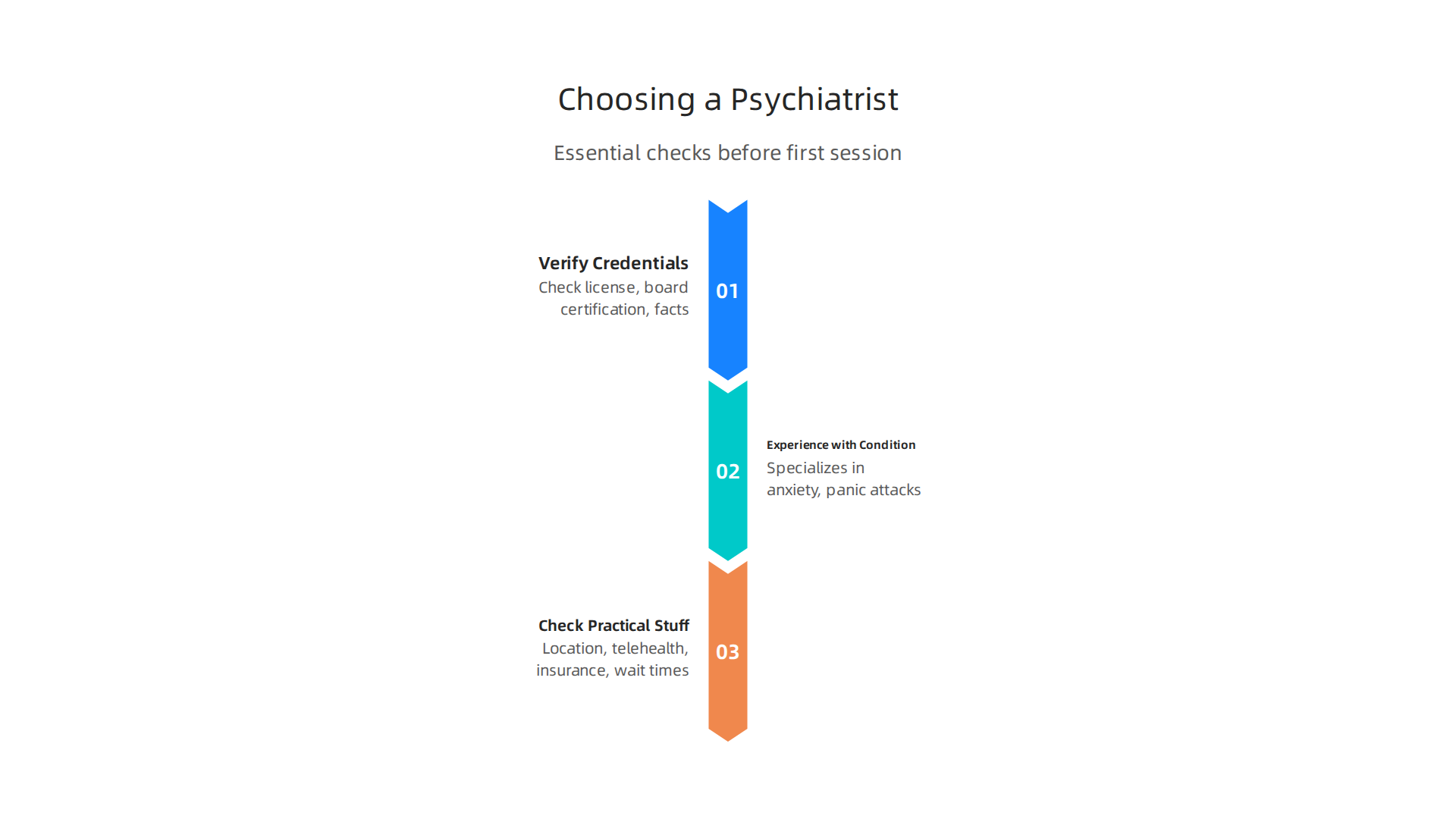
Verify their credentials. The “Verified by Psychology Today” seal is a good start. It means Psychology Today has fact‑checked their license or primary credential. But you can go deeper. Check with your state medical board or the American Board of Psychiatry and Neurology to confirm board certification. Board certification means the psychiatrist passed extra exams and stays up‑to‑date. This step protects you. If you are also considering a therapist, read our guide on psychiatrist vs psychologist for anxiety to know the difference.
Look at their experience with your specific condition. A general psychiatrist may not specialize in anxiety, OCD, or trauma. On their Psychology Today profile, they list their specialties. Choose someone who writes about treating anxiety, panic attacks, or related issues. Experience with your exact problem often means better results faster. If you struggle with panic, you might also want to learn about the link between hypertension and anxiety.
Check the practical stuff. No matter how good a provider looks on paper, if you cannot get to them or afford them, it will not work. Look at these logistics:
- Location and telehealth: Does the office accept virtual visits? Telehealth can save you travel time and stress.
- Insurance: Do not skip the insurance filter. Thanks to mental health parity laws, your plan should cover mental health care. If the psychiatrist is out‑of‑network, ask if they offer out‑of‑network benefits.
- Wait times: Some top psychiatrists have months‑long wait lists. If you need help soon, look for someone with openings this month. The Psychology Today directory lets you filter by availability.
The directory has more therapists than any other list. That volume is great, but it also means you have to be picky. Use these three factors to narrow your choices quickly. You can always schedule a free 15‑minute call to see if the fit feels right.
Questions to Ask Before Your First Appointment
You have found a psychology today psychiatrist who looks promising. Now it is time to prepare for that first visit. A little prep work can make a big difference in how helpful that session feels.
Bring a list of questions with you. This helps you stay focused and get the answers you need. As experts at SavantCare explain, your provider will ask about your symptoms, when they started, and how they affect your daily life. But you need answers too.
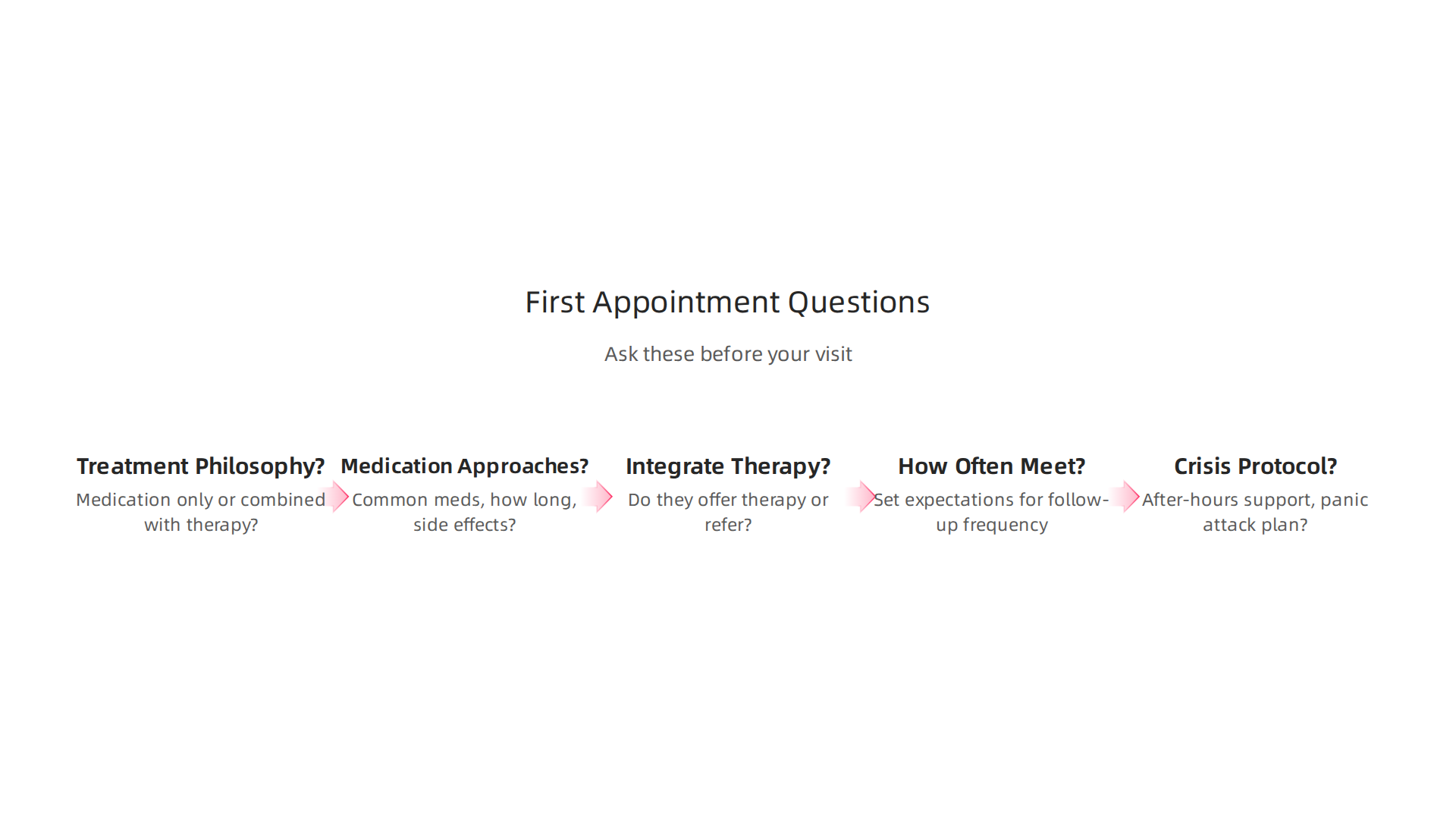
Here are the key questions to ask:
-
What is your treatment philosophy? Do they lean toward medication only, or do they combine it with therapy? For anxiety, a mix often works best. You might also want to learn about cognitive therapy for anxiety as a non-medication option.
-
What medication approaches do you use? Ask about common medications for anxiety, how long they take to work, and potential side effects. The Wellstead Mental Health team recommends asking about how your provider will monitor your progress with medication.
-
Do you integrate therapy with medication? Some psychiatrists offer therapy themselves. Others work with a therapist. If they do not provide therapy, ask for a referral to a licensed professional counselor meaning a therapist trained in talk therapy.
-
How often will we meet? This sets clear expectations. Ask about follow-up frequency after the initial evaluation.
-
What is your crisis protocol? This is especially important for anxiety patients. If you have a panic attack or feel overwhelmed after hours, who do you call? Do they offer after-hours support? Knowing this in advance gives you peace of mind.
If you are still exploring the directory, see our guide on how to use your psychology today login to find a therapist fast for more tips.
For a deeper look at what happens during that first session, the Initial Psychiatric Evaluation guide can help you feel more at ease.
Remember that you are the expert on your own experience. Your questions help your provider understand you better. So ask them. A good psychiatrist welcomes your curiosity.
What to Expect During Your Initial Psychiatric Evaluation
Now that you have your questions ready, let me walk you through what actually happens during that first evaluation. Knowing what to expect can help you stay calm and focused.
Your initial visit with a psychology today psychiatrist is different from a regular doctor appointment. It is longer, usually 60 to 90 minutes. And it covers a lot of ground.
The clinical interview comes first. Your provider will ask about your symptoms, when they started, and how they affect your daily life. According to SavantCare, they will also review your medical history and family mental health history. This helps them understand the bigger picture.
The doctor will also watch your body language. The Merck Manuals point out that they notice things like fidgeting or avoiding eye contact, even if you say you are fine. That is not meant to be tricky. It is just another way to understand what you are experiencing.
Expect questions about your full history. Your psychiatrist will ask about:
- Past and current medications
- Any substance use, including alcohol and caffeine
- Your sleep, appetite, and energy levels
- Past traumas or stressful life events
- Any thoughts of self-harm or suicide
This part can feel intense. But it is a standard safety check. The BCMJ guide explains that a thorough psychiatric assessment always includes a risk evaluation for co-occurring conditions and suicide risk. If you have a licensed professional counselor meaning a therapist in your corner already, you can share that too.
Screening tools may be used. You might fill out a short questionnaire like the GAD-7 for anxiety or the PHQ-9 for depression. These are not scary tests. They simply give your provider a baseline score to track your progress over time. If you want to learn more about a common screening tool, read our guide on depression screening and what your PHQ-9 score means.
By the end of the session, you will have a plan. The provider will share a preliminary treatment plan. This may include starting medication, therapy group referrals, or further testing. It might also involve a referral to a therapist if the psychiatrist does not provide counseling in-house. For help choosing between the two, see our comparison of psychiatrist vs psychologist for anxiety.
Remember this. The initial evaluation is a fact finding mission. It is not a final verdict. You and your provider will build the treatment plan together over time. And you can always ask for clarifications or request a second opinion.
Overcoming Common Barriers to Seeking Help
You now know what to expect at that first evaluation. But let me guess. Something is still holding you back.
You are not alone. The most common barriers are the same everywhere. Cost, stigma, lack of clear information, and long wait times stop most people before they ever start. A 2025 report on barriers to mental health treatment confirms that financial issues, professional shortages, and social stigma are the top reasons people delay care. A 2026 study of U.S. parents also found that money, limited clinician availability, and logistical headaches like scheduling or transportation block access.
So how do you get past these roadblocks?
Start with cost. If you do not have insurance or your plan has high copays, look for sliding-scale clinics. These clinics charge based on what you can afford. Many online psychiatry platforms also offer lower prices than in-person visits. And do not forget about employee assistance programs (EAPs). Your job may offer free short-term counseling sessions you never knew about.
Fight stigma by changing the story. Cultural or personal stigma is real. Some people worry that others will judge them. Others were raised to believe you should handle problems alone. But here is the truth. Seeing a psychology today psychiatrist is no different from seeing a dentist for a toothache. It is proactive self-care. You are not broken. You are being smart. If you need a letter for housing or work, knowing the licensed mental health professional for esa letter requirements can also open doors you did not expect.
Cut through the information fog. Most people do not know where to start. That is exactly why we created a guide on how to use your Psychology Today login to find a therapist fast. It walks you through the search process step by step.
Handle wait times with backup plans. In 2026, workforce shortages remain a challenge. You can still get help faster by joining a therapy group or trying a virtual platform while you wait for an in-person provider. And remember the mental health parity laws. Your insurance must cover mental health care at the same level as physical health care in most cases.
Still unsure? That is okay. Stop trying to have it all figured out before you start. The first step is simply naming what you feel.

Take a quick look at your anxiety pattern with our free tool. Name the Anxiety Pattern and see why digital pressure makes anxiety feel louder. Sometimes just naming the problem gives you back the power to fix it.
Complementary Self-Help Strategies While You Wait for Care
So you have decided to reach out for help. Good for you. But what if your first appointment with a psychology today psychiatrist is weeks away? That gap can feel awful. The good news is you do not have to sit and suffer in silence. There are real, evidence-based self-help strategies you can start right now.
Research shows that digital cognitive behavioral therapy (CBT) tools can actually lower anxiety symptoms even before you meet a professional. A 2026 study found that CBT digital interventions led to a significant drop in anxiety compared to no intervention at all. Try a CBT workbook or a therapist-guided smartphone app. The goal is not to replace care. It is to give you something solid to hold onto while you wait.
Try mindfulness and grounding exercises. It sounds simple, but it works. When anxiety spikes, your brain is telling you there is danger right now. Grounding techniques pull you back to the present moment. Try the 5-4-3-2-1 method. Name five things you see, four you can touch, three you hear, two you smell, and one you taste. It forces your brain to redirect focus. Pair this with a quick breathing exercise, and you have a portable anxiety rescue kit.
Build your support network. You do not have to wait for a licensed professional counselor meaning to suddenly become clear. A trusted friend, a support group, or even an online community can help you feel less alone. If you are looking for structured peer support, checking out the resources from Mental Health America anxiety screening can connect you with free peer-led groups. These spaces are safe and free.
Move your body. Exercise is one of the most underrated anxiety tools. A brisk 15-minute walk, some stretching, or a quick YouTube workout can lower your heart rate and burn off stress hormones. You do not need a gym. You just need to move.
Skip the unverified supplements. Here is a warning. Many over-the-counter remedies for anxiety have little research behind them. Some can even interact with medications. Stick to strategies with solid science behind them. If you want to learn more structured techniques, our guide on cognitive therapy for anxiety techniques that calm worry and panic walks you through proven methods you can do at home.
The point is simple. You are not stuck. Even while you wait, you can take small steps that help. Name one thing you will try today.
Take the next step now. Name the Anxiety Pattern and see exactly what is driving your stress. Sometimes just putting a name to it is enough to start feeling better.
Summary
This article explains why finding the right mental health professional matters and walks you step‑by‑step from recognizing when anxiety is clinical to booking the right provider. It clarifies differences between psychiatrists, psychologists, and counselors, and shows how to use the Psychology Today directory effectively—filters to use, red flags to spot, and how to reach out. You’ll learn which credentials and specialties matter, practical questions to bring to your first visit, and what happens during a typical 60–90 minute psychiatric evaluation. The guide also addresses common barriers—cost, stigma, and long wait lists—and offers concrete backup plans like sliding‑scale clinics, therapy groups, telehealth, and evidence‑based self‑help (CBT tools, grounding, exercise) you can use while waiting. After reading, you should be able to identify warning signs, choose and vet a suitable provider, prepare for your first appointment, and take immediate steps to reduce anxiety before treatment begins.