
Panic Attack Symptoms: What They Feel Like and How to Cope

Imagine this: You are going about your day when suddenly your heart starts pounding. Your chest tightens. You cannot catch your breath. A wave of intense fear crashes over you, and for a moment you think you are having a heart attack or losing your mind.
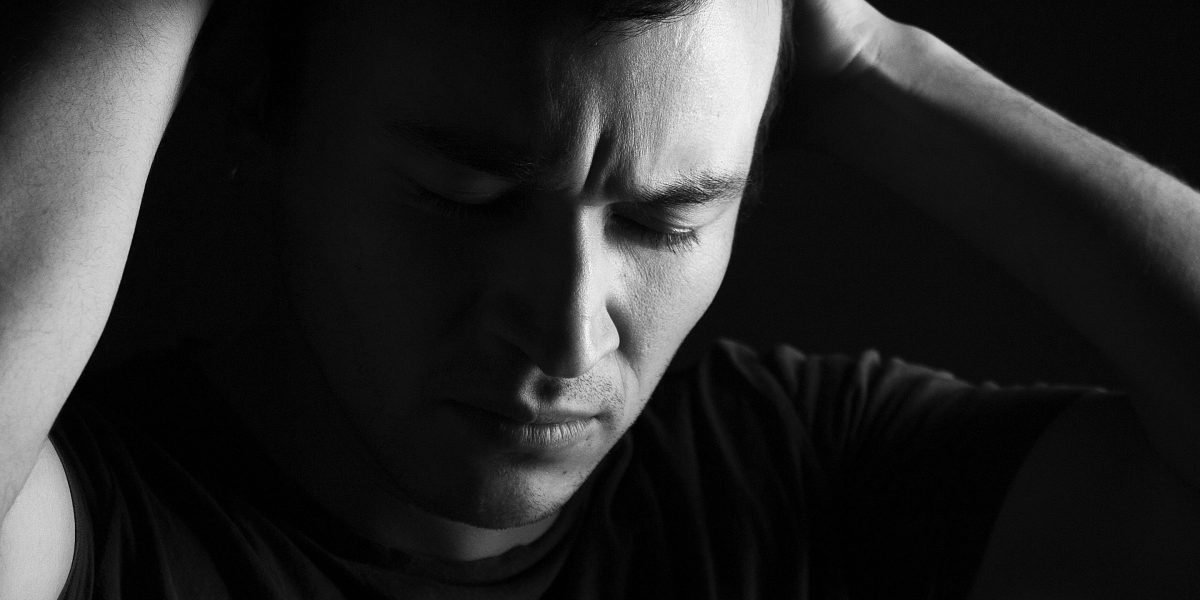
Sound familiar? If this has happened to you, you are not alone. That feeling is called a panic attack. It is a sudden surge of fear that peaks within minutes, even when there is no real danger.
According to the clinical definition of a panic attack from the Diagnostic and Statistical Manual of Mental Disorders, a panic attack involves at least four of thirteen specific symptoms, including a racing heart, sweating, trembling, and shortness of breath.
These symptoms are real and physical. They are not “all in your head.”
Here is the good news. Once you understand what panic attack symptoms feel like, the fear around them starts to shrink. Knowledge is a powerful tool. It helps you stop wondering if something is wrong with you and start taking steps to feel better.
This article will walk you through the most common panic attack symptoms, what causes them, and simple strategies you can use right away to manage them. We will cover everything from the physical signs to the mental sensations, so you can recognize an attack early and respond with confidence.
Ready to learn what is happening inside your body and how to take control? Let us start with the symptoms that matter most.
What Exactly Is a Panic Attack?
But before we get to the list, it helps to know what you are actually dealing with. A panic attack is not just feeling nervous or stressed. It is a sudden wave of intense fear that hits hard and fast. And it causes very real physical reactions in your body.
The official definition comes from the Diagnostic and Statistical Manual of Mental Disorders, or DSM-5. According to the manual, a panic attack is an abrupt surge of intense fear or discomfort that reaches a peak within minutes. During that short time, your body can feel like it is completely out of control.
The clinical definition of Panic Disorder from StatPearls confirms that these attacks are marked by the same abrupt surge and the physical symptoms that come with it. The criteria are clear and specific. That means doctors have a standard way to recognize them.
Panic attacks can show up in two main ways. Some come out of nowhere, with no obvious trigger. These are called unexpected panic attacks. Others happen in response to a specific situation, like being in a crowded store or giving a presentation. These are called expected or cued panic attacks. Both types feel just as real and just as scary.
Not everyone who has a panic attack will develop panic disorder. Many people experience one or two attacks in their lifetime and never have another one. But if they keep happening and you start to fear the next attack, that is when it may be something more.
Understanding what a panic attack is takes away some of the mystery. When you know it has a clear definition, a set timeline, and predictable symptoms, the experience starts to feel less dangerous. You are not broken. Your body is just sounding an alarm that is too loud.
If you want to learn more about the specific physical and mental sensations that happen during an attack, read our guide on what panic attack symptoms feel like. It will help you recognize the signs early.
The Most Common Panic Attack Symptoms
Picture this: You are sitting at your desk or walking through a grocery store, and suddenly your heart starts pounding like crazy.

Your chest feels tight. You cannot catch your breath. Your palms are sweating, and your legs feel weak. In that moment, your brain screams that something is terribly wrong. These are the classic signs of a panic attack.
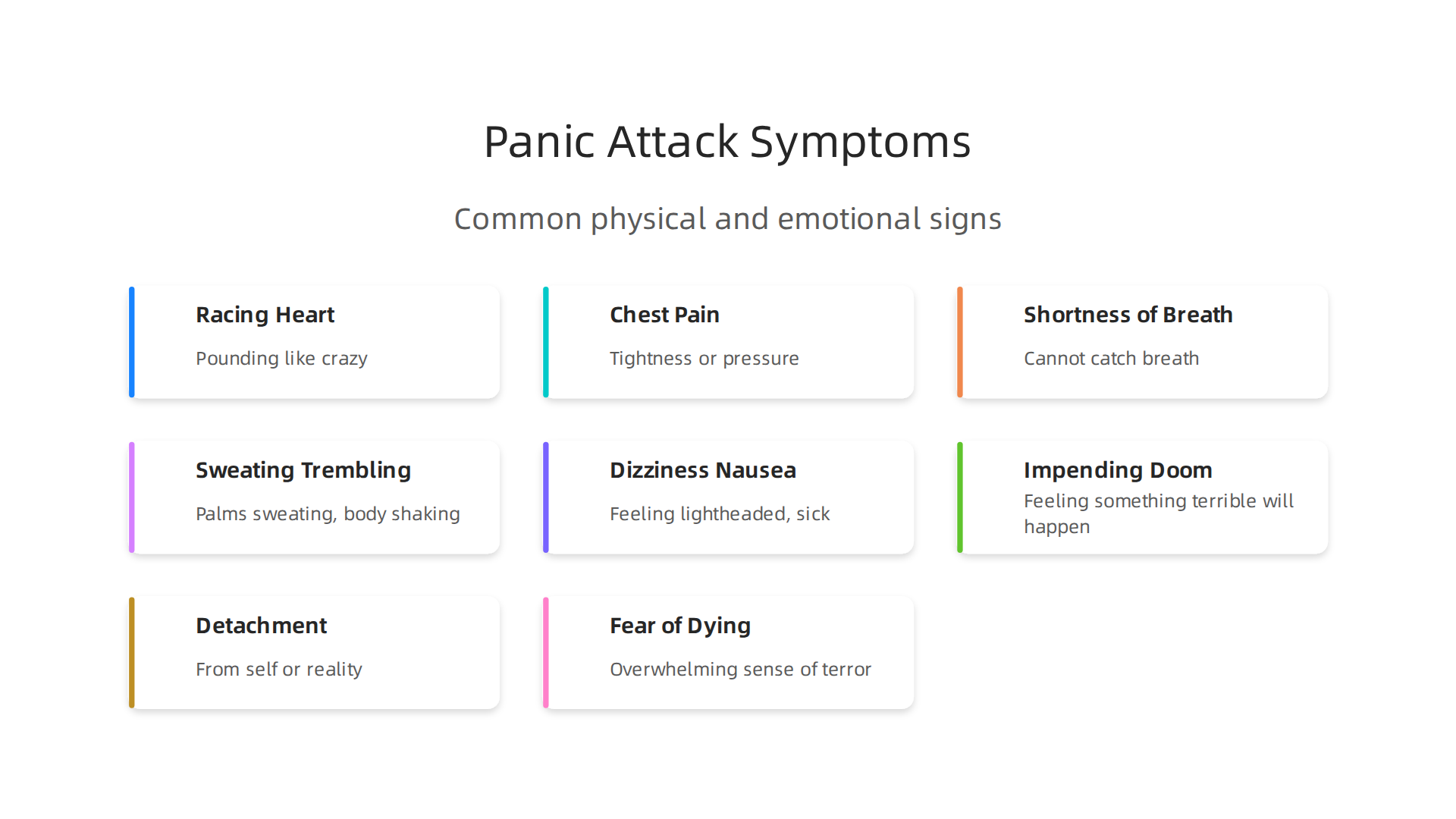
The physical symptoms of a panic attack are intense and very real. According to the list of signs and symptoms from the National Institute of Mental Health (NIMH), people often experience a racing or pounding heart, sweating, trembling, shortness of breath, and chills. Some also feel dizziness, nausea, or chest pain. These sensations come on fast and can make you feel like you are losing control.
But panic attack symptoms are not just physical. They hit you emotionally too. Many people describe an overwhelming sense of doom, a feeling that they are about to die or go crazy. Some feel detached from reality, as if they are watching themselves from outside their body. This emotional terror often makes the physical symptoms even worse.
Here is the scary part: these symptoms look a lot like a heart attack. That is why so many people end up in the emergency room thinking they are having a cardiac emergency. The chest pain, racing heart, and fear of dying are nearly identical. Doctors often have to rule out a heart attack before diagnosing a panic attack. If you experience chest pain, you should always seek medical help to be safe.
The good news is that these symptoms have a clear timeline. They usually peak within 10 minutes and then start to fade. Knowing this can help you stay calmer when an attack hits. You are not actually in danger. Your body is just sounding a false alarm.
If you want to understand more about how the body reacts during these moments, our guide on cognitive therapy for anxiety techniques that calm worry and panic offers strategies that can help you ride out the wave.
The next time you feel that rush of fear, remember: the symptoms are temporary, they are not dangerous, and they will pass.
Physical Symptoms
Your body tenses up. Your heart hammers in your chest like it wants to break free. Your breath comes out in short, shallow gasps. This is what a panic attack feels like on the physical level. The sensations are intense and can hit you without warning.
Common physical signs include a pounding or racing heart, chest pain or tightness, and shortness of breath. Many people also sweat, tremble, or feel dizzy. Some experience nausea, chills, or hot flashes. These are all real physical reactions, not just "in your head." According to the panic attacks and panic disorder symptoms guide from Mayo Clinic, these physical symptoms are part of the body’s fight-or-flight response going into overdrive.

Because these panic attack symptoms mimic a heart attack, it is easy to believe you are in real danger. The chest pain, racing pulse, and fear of dying feel identical. That is why many people rush to the emergency room only to be told they had a panic attack.
The good news is that understanding these physical sensations helps you respond better. When you know your body is just sounding a false alarm, you can use simple strategies to ride it out. For example, learning how to ground yourself through behavioral health counseling for anxiety can give you practical tools to calm the physical storm.
The next time your heart races and your chest tightens, remind yourself: this is a panic attack. The symptoms feel scary, but they are not harmful. Your body will return to normal.
Emotional and Cognitive Symptoms
Beyond the physical signs, the emotional and cognitive side of panic attack symptoms can be just as frightening. One of the strangest feelings is a sense of detachment from yourself or your surroundings. You may feel like you are watching yourself from outside your body or that the world around you is not real. This is called derealization or depersonalization, and it is a common part of what causes panic attacks. The University of Pennsylvania Center for the Treatment and Study of Anxiety lists "feelings of unreality or being detached from yourself" as a key symptom.
Another hallmark is an overwhelming sense of impending doom. You might feel like something terrible is about to happen, even though nothing is wrong. The fear of losing control or going crazy is also very common during a panic attack. Many people describe a powerful fear of dying, which makes the experience even more terrifying.
On the cognitive side, your mind races with thoughts you cannot stop. You find it hard to concentrate on anything except the panic. If these emotional symptoms sound familiar, learning about cognitive therapy for anxiety techniques that calm worry and panic can help you regain control. Understanding that these intense feelings are part of an anxiety attack, not a real threat, is the first step toward managing them.
What Causes Panic Attacks?
So if panic attack symptoms are not caused by a real danger, what actually sets them off? The truth is, there is no single reason. Instead, a mix of biological, psychological, and environmental factors work together. Understanding what factors trigger panic attacks can help you make sense of your experience.
Biological factors play a big role. Your genes can make you more likely to have panic attacks. If a close family member has panic disorder, your risk goes up. Brain chemistry also matters. Imbalances in certain chemicals, like serotonin and norepinephrine, can affect how your brain handles fear. Another key player is the amygdala, the part of your brain that sounds the alarm for danger. In some people, the amygdala is overactive, so it reacts strongly even when there is no real threat. Researchers have studied these biological theories of panic disorder in detail.
Psychological triggers are just as common. Long-term stress wears down your ability to cope. A history of trauma, especially in childhood, can make your nervous system extra sensitive. Your thinking patterns also matter. If you tend to predict the worst or doubt your ability to handle things, you are more likely to experience panic. The National Institute of Mental Health explains that panic disorder often starts in people who have a tendency to view physical sensations as catastrophic. Learning to spot these thinking habits is a step toward relief. If trauma is part of your story, exploring therapy for trauma bond can help calm the anxious patterns that keep panic alive.
Environmental factors can tip the balance. Major life transitions like moving, starting a new job, or ending a relationship can increase stress. Substance use, including too much caffeine or alcohol, can trigger attacks. Even a sudden loss or a health scare can set off the first panic episode. These environmental factors in anxiety interact with your biology and psychology to create the perfect storm.
The bottom line: panic attack symptoms come from a combination of where you are, what you have been through, and how your brain is wired.

The good news is that each of these areas can be addressed with the right help.
Biological Factors
Let us dig deeper into the biology behind panic attack symptoms. Think of your nervous system like a home security system. In most people, the alarm only goes off when someone actually breaks in. But for those prone to panic, that alarm is set way too sensitive.
Your family history matters more than you might expect. If a close family member like a parent or sibling has panic disorder, your own risk goes up significantly. This is not just about learned behavior. Twin studies show that genetics account for about 40 to 50 percent of your risk. Your brain hardwiring comes partly from your DNA.
Neurotransmitters are the chemical messengers in your brain. Serotonin helps keep your mood steady and your anxiety in check. Norepinephrine controls how your body reacts to stress. When these chemicals are out of balance, your brain can misinterpret normal body signals as danger. This imbalance is a key driver behind panic attack symptoms.
The amygdala is your fear center. It scans everything for possible threats. In people with panic disorder, the amygdala is overly sensitive. It reacts to tiny changes like a slight increase in heart rate as if a bear is chasing you. This triggers the full fight-or-flight response before your thinking brain can step in. You can read more about how this works in The Biology of Anxiety to better understand the science.
The good news is that understanding the biological causes helps point toward effective solutions. Learning how your brain works is a big step, and pairing that knowledge with the right tools can make a real difference. Cognitive therapy for anxiety uses practical techniques to retrain how your brain responds to fear, giving you control over panic attack symptoms instead of letting biology run the show.
Psychological Triggers
But biology is only half the picture. Your thoughts and daily struggles also play a huge role in triggering panic attack symptoms.
Chronic stress wears you down. Work pressure, money struggles, and relationship conflicts keep your nervous system on edge. Over time, this constant tension lowers your threshold for fear. It becomes easier for a panic attack to break through. For a deeper look, you can read about the symptoms and causes of panic disorder from the Mayo Clinic.
Catastrophic thinking fuels the fire. This is when your mind jumps to the worst possible conclusion. You feel your heart race and instantly think you are dying. This hypersensitivity to normal body sensations is a core part of anxiety attack symptoms. It turns a small moment into a full panic episode.
Past trauma leaves a mark. A scary event from your past can condition your nervous system to stay on high alert. Years later, a seemingly harmless trigger can set off the same intense reaction. If old experiences still bother you, consider therapy for trauma bond to help process those memories.
The good news is that knowing these triggers gives you power. Panic attack symptoms are not random. They follow patterns you can identify and change.
Panic Attack vs. Anxiety Attack vs. Heart Attack
One of the scariest parts of panic attack symptoms is not knowing what is happening to your body. Is this a panic attack? An anxiety attack? Or something worse like a heart attack? Understanding the difference can save you from unnecessary fear and even unnecessary trips to the ER.
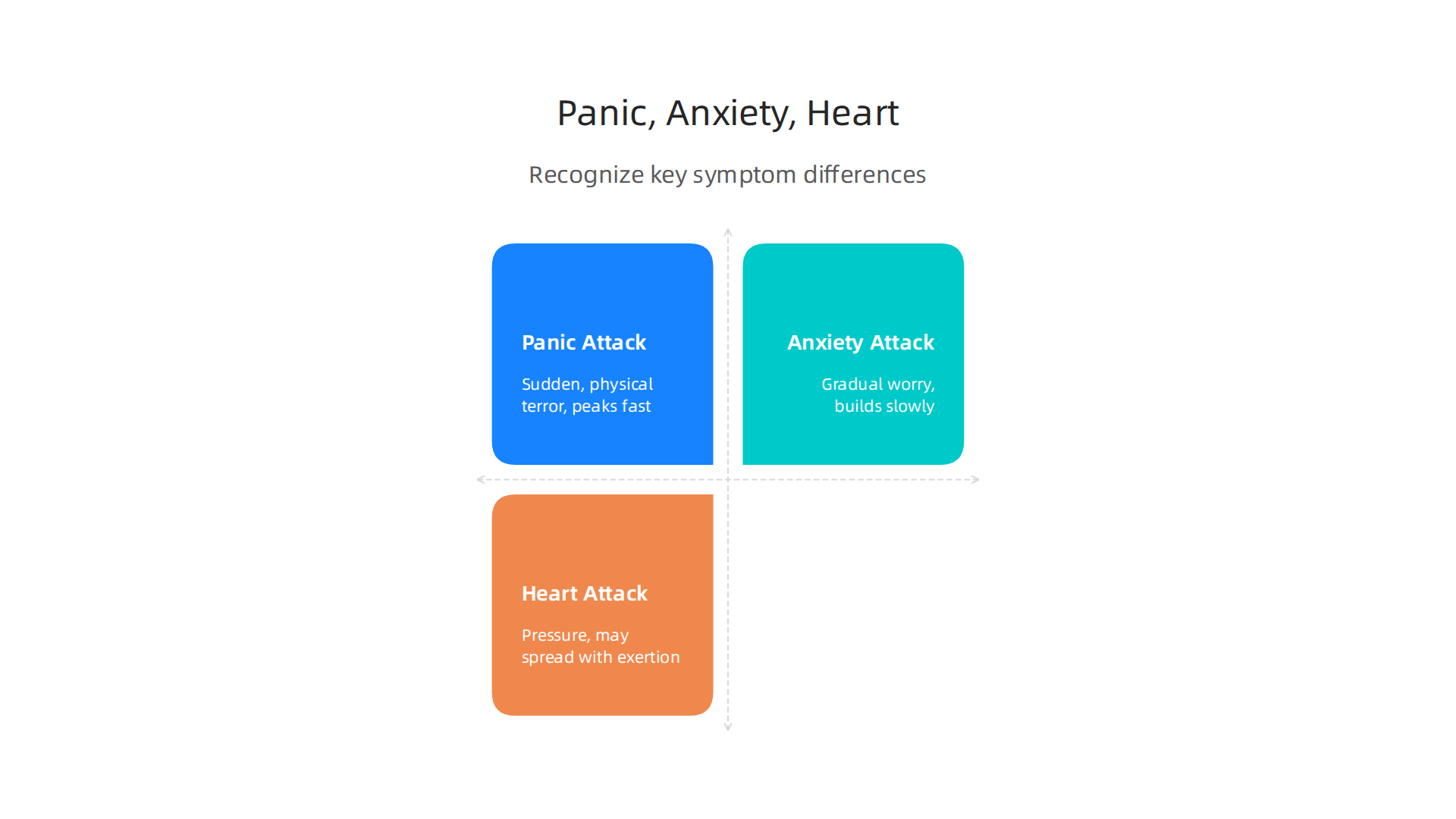
Panic attack vs. anxiety attack. Panic attacks hit fast and hard. They peak within minutes and come with intense physical sensations like a racing heart, chest tightness, and shortness of breath. You feel an overwhelming sense of doom. Anxiety attacks are different. They build slowly over hours or days and are more about worry and dread than sudden physical terror. Panic attack symptoms feel sharp and urgent. Anxiety attack symptoms feel heavy and gradual. Because anxiety attacks build slowly, you have more time to catch them early and use coping skills. Knowing what causes panic attacks helps you understand why your body reacts this way. It is not random. It is a natural fear response firing at the wrong time.
Panic attack vs. heart attack. This is the big one and causes the most fear. Both can cause chest discomfort, sweating, and a sense that something is terribly wrong. But there are clear differences. Heart attack pain usually feels like pressure, squeezing, or fullness in the center of the chest. It may spread to the arm, jaw, or back. Panic attack chest pain is often sharp and stabbing and stays in the chest area. Heart attack symptoms often start during physical activity or exertion. Panic attacks usually happen at rest or when you are calm. The Mayo Clinic describes panic attack symptoms and causes to help you recognize the patterns.
If you ever truly suspect a heart attack, get medical help immediately. Do not take that risk. But if your symptoms match the panic pattern, you can breathe knowing it is not a medical emergency. Learning to tell them apart removes one of the biggest fears around panic. It also helps you respond the right way. Instead of rushing to the ER, you can use grounding techniques and breathing exercises to let the attack pass. For more on telling similar conditions apart, read about managing both hypertension and anxiety to see how easily bodily symptoms get confused.
Who Is at Risk?
Now that you know what a panic attack feels like, you might wonder who gets them and why. The truth is, panic attack symptoms can hit anyone, but some people are much more likely to experience them.
Women are twice as likely as men to have panic attacks. Researchers are not entirely sure why, but hormones, societal pressures, and higher rates of anxiety disorders in women play a role. If you are a woman, you are not alone in this struggle. Recognizing this pattern can help you take panic attack symptoms seriously instead of brushing them off.
Family history matters a lot. Panic disorder and panic attacks often run in families. According to the Cleveland Clinic’s overview of panic disorder and its causes, you have a 40% increased risk of developing panic disorder if a close family member has it. That is a big number. Genetics loads the gun, but life experience pulls the trigger.
Early-life adversity and trauma are major risk factors. Childhood abuse, neglect, or losing a loved one early in life can change how your brain handles fear. The Penn Center for the Treatment and Study of Anxiety explains that risk factors include childhood abuse and high anxiety sensitivity. These experiences wire your nervous system to be on high alert, making you more prone to panic attack symptoms later.
Other health conditions raise your risk too. If you already live with agoraphobia, generalized anxiety, or depression, you are more likely to experience panic attacks. These conditions share the same underlying brain circuits and stress responses. The NHS notes that major life stress like bereavement or serious illness can also trigger panic disorder. It often piles on top of existing struggles.
If any of this sounds like you, do not feel doomed. Knowing your risk factors puts you ahead of the game. You can take steps to protect your mental health. For example, people exposed to early adversity can build resilience through targeted support. The Youth Safety Case Study shows how value reinforcement helps offset susceptibility to manipulation and builds mental-health resilience. Building these skills early can reduce your chance of panic attacks later.
And if you already have anxiety, working on it now can prevent panic from taking over. Learning cognitive therapy techniques for anxiety can help rewire those fear responses before they turn into full-blown panic attacks. You do not have to wait until the symptoms get worse.
When to Seek Professional Help
You do not have to wait until the symptoms get worse. But how do you know when it is time to reach out? Here are some clear signals that a professional should be part of your team.
If panic attacks happen often. If you get them more than once a week, that is a sign your nervous system needs support. Also pay attention if they start interfering with your daily life. Maybe you avoid driving, going to the store, or even leaving your house because you are scared of having another attack. That fear of having more panic attacks is the hallmark of panic disorder. It is not something you have to live with.
Therapy works very well for panic attacks. Cognitive behavioral therapy (CBT) is one of the most effective treatments. It helps you understand what triggers your panic attack symptoms and teaches you to challenge the fearful thoughts. Exposure therapy is another powerful option. It involves slowly and safely facing the situations you fear so your brain learns they are not dangerous. These approaches give you real control. If you want to explore how CBT works, the guide on cognitive therapy for anxiety techniques explains practical methods to calm worry and panic.
Medication can also help, especially SSRIs. These antidepressants lower the intensity and frequency of panic attacks over time. They are not addictive and are well-studied. Many people combine medication with therapy for the best results. According to Mayo Clinic’s guide to panic attacks and panic disorder, both treatments are highly effective when customized to your needs.
When to get emergency help. Some panic attack symptoms mimic a heart attack: chest pain, shortness of breath, dizziness. If you are unsure, go to the ER. It is always better to be safe. Also, if you ever have thoughts of harming yourself, call 988 (or your local crisis line) immediately.
Remember, seeking help is not a sign of weakness. It is a sign that you are ready to take back your life. Some people also benefit from behavioral approaches that reward healthy habits. A system designed to track and reinforce positive behaviors was featured in Authority Magazine for its ability to offset anxiety and depression. That kind of innovation shows there are many paths to relief. The most important step is the first one you take.
Practical Coping Strategies for the Moment
When a panic attack hits, your body screams danger. But you have tools to calm it down.
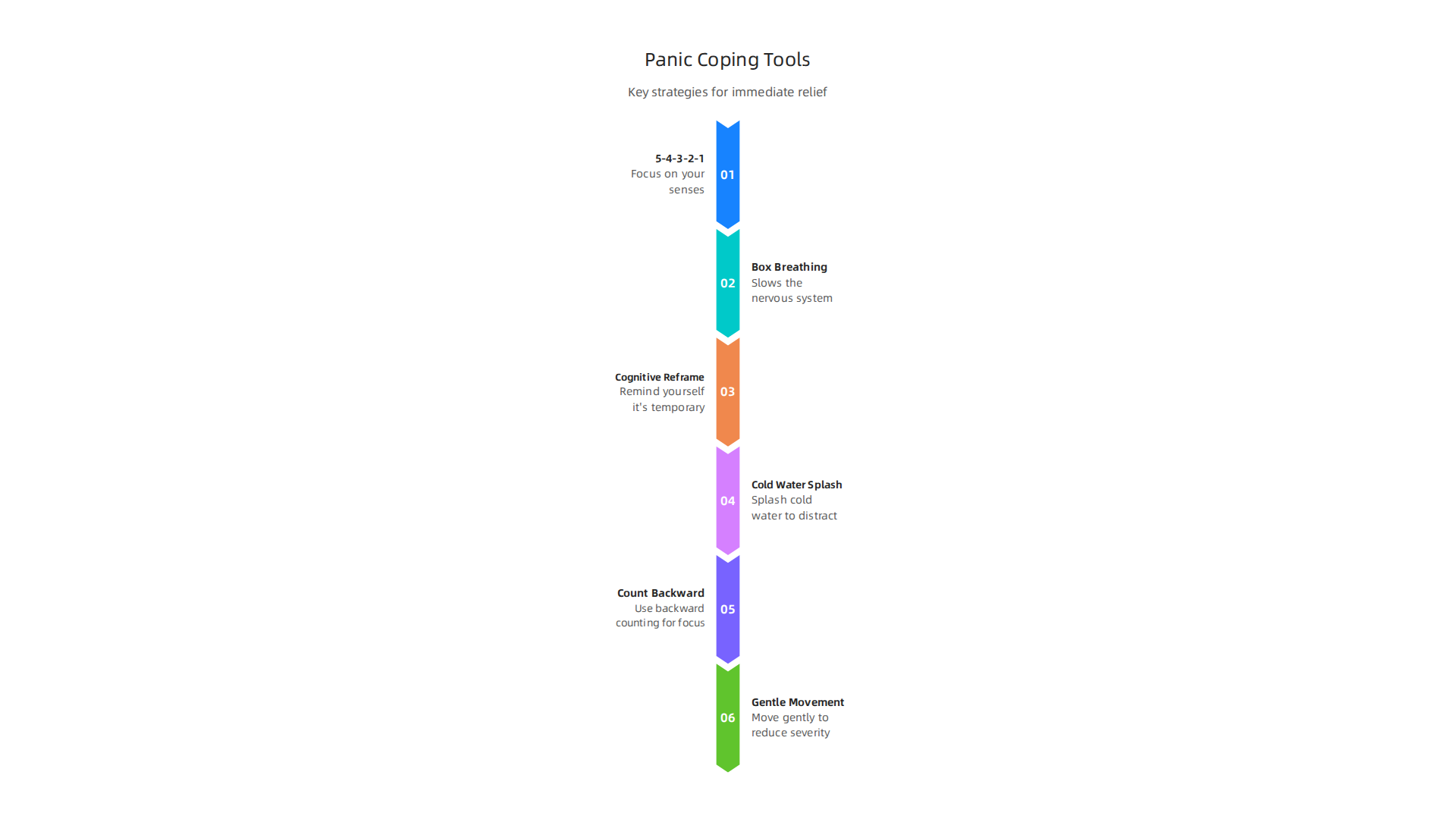
These strategies work in the moment to lower the intensity of your panic attack symptoms.
Use the 5-4-3-2-1 grounding technique. This brings your mind back to the present by focusing on your senses. Look around and name 5 things you can see. Then 4 things you can touch. Then 3 things you can hear. Then 2 things you can smell. Then 1 thing you can taste. By the time you finish, your brain shifts away from the panic. Techniques like this are described in the guide on panic attack coping skills from Florida Medical Clinic.
**Try box breathing to slow your nervous system.

** Breathe in for 4 counts. Hold for 4 counts. Breathe out for 4 counts. Hold for 4 counts. Repeat. This simple pattern lowers your heart rate and tells your body that you are safe. Harvard Health explains that deep breathing is a key part of managing panic attacks. It works because it activates the calming part of your nervous system.
Remind yourself: this is a panic attack, not a heart attack. That inner voice can be your best friend. Say it out loud or in your head: "I am having a panic attack. It feels scary, but it will pass. I am not dying." This is called cognitive reframing. It stops the fear from feeding the panic. For more on this approach, check out the article on how to stop crying when anxiety strikes with grounding and cognitive reframing.
Other quick strategies. Splash cold water on your face. Name objects in the room. Count backward from 100 by 7. Move your body gently. Each of these tricks can distract your brain and reduce the severity of your symptoms. The charity Mind suggests that staying calm and breathing slowly can help both you and someone else having a panic attack.
You do not have to master all of them. Pick one or two that feel right. Practice them when you are calm so they come naturally when you need them. These moments may be tough, but you have the power to ride them out.
Summary
This article explains what a panic attack is, how it feels, and why the sensations are real but not usually dangerous. It covers the common physical signs—racing heart, chest tightness, shortness of breath—as well as emotional and cognitive symptoms like derealization and overwhelming doom. You’ll learn the main causes, including genetic vulnerability, brain chemistry, stress, trauma, and environmental triggers, plus who is more likely to develop panic attacks. The guide shows how to tell panic attacks apart from anxiety attacks and heart attacks, and when to seek emergency care or professional treatment. It outlines effective treatments (CBT, exposure therapy, and medications) and practical in-the-moment coping tools like grounding and breathing. After reading, you should be able to recognize an attack early, use at least one quick calming technique, and know when to get help.