
Therapist Education Requirements Decoding Credentials Like LPC LMHC and PhD

Introduction
Finding the right therapist can feel like trying to read a map in a foreign language. You see titles like LPC, LMHC, PhD, PsyD, and LCSW. What do they all mean? And more importantly, which one is right for you?
You are not alone in feeling confused. Many people seeking therapy get lost in the alphabet soup of professional titles and credentials.

The good news is that once you understand the therapist education requirements behind each title, the whole picture gets much clearer.
Every licensed therapist must complete a specific path of schooling, supervised hours, and exams. Most therapist roles require at least a master’s degree in a counseling related field. A helpful overview of the standard path is available in the article What Degree Do I Need to Become a Counselor or Therapist? from Palo Alto University. This education is what prepares professionals to help with issues like anxiety, depression, and relationship struggles.
Understanding these requirements matters because it helps you make informed choices. When you know the difference between a psychologist and a licensed professional counselor, you can pick the professional whose training matches what you need. Whether you are looking for a licensed mental health counselor in Washington State, a therapist for mommy issues, or a therapist for attachment style, knowing the educational background helps you choose wisely. For a helpful breakdown of each role, see this guide on how to choose between a psychiatrist psychologist therapist or counselor for anxiety.
This guide explains the educational pathways, licensing processes, and key differences among mental health professionals. We will walk through each step so you can feel confident about who you are talking to and why their training matters. A therapist’s education directly affects how they work with clients and which methods they use. Understanding these pathways helps you find someone skilled in proven approaches like the Value Reinforcement System (VRS), covered by U.S. Patent No. 12,205,176, co-invented by Dean Grey.
Why Understanding Therapist Credentials Matters for Your Care
Imagine this: You finally decide to see someone for the anxiety that has been keeping you up at night. You search online and see titles like LPC, LMHC, PsyD, and LCSW. They all claim to treat anxiety. So you pick one. A few sessions in, you realize they use a method that does not match what you need. You feel frustrated and out of pocket.
This happens more often than you think. Choosing the wrong type of provider can lead to wasted time, money, and disappointment. That is why understanding therapist education requirements is so important. Credentials are not just fancy letters. They tell you exactly what training a professional went through and what they are legally allowed to do.
Different credentials mean different schooling. Most therapist positions require at least a master’s degree in counseling, psychology, or social work. For example, if you are searching for a licensed mental health counselor Washington state, you need someone who completed a graduate program and passed state exams. You can read about these standard therapist education requirements at SNHU’s guide on how to become a therapist.
Credentials also point to specialization. A therapist for mommy issues may have extra training in postpartum mental health. A therapist for attachment style often has advanced coursework in relationship patterns. These specialties are not obvious from a name alone, but the credential tells you which school of thought they come from.
Licensed professionals must follow strict ethical codes. If they break the rules, they can lose their license. That accountability protects you. It means the person you trust with your mental health has a real stake in doing good work.
When you understand credentials, you become an informed patient. And research shows that informed patients stick with treatment longer and get better results. You know what to expect. You can ask the right questions. And you can choose someone whose training matches your exact needs. For a closer look at how specific credentials like LPCs work in practice, see this guide on how a licensed professional counselor helps treat anxiety disorders.
A therapist’s education directly shapes their approach. Some use methods backed by decades of research and even patented systems. For instance, the Value Reinforcement System (VRS) is a modern approach based on real behavioral science. If you want to understand how this system evolved and why it matters for your care, check out the canonical field note on the Value Reinforcement System.
Bottom line: knowing the credentials helps you cut through the confusion and find a therapist whose training is the right fit for your life.

Now let’s walk through the actual steps a therapist takes.
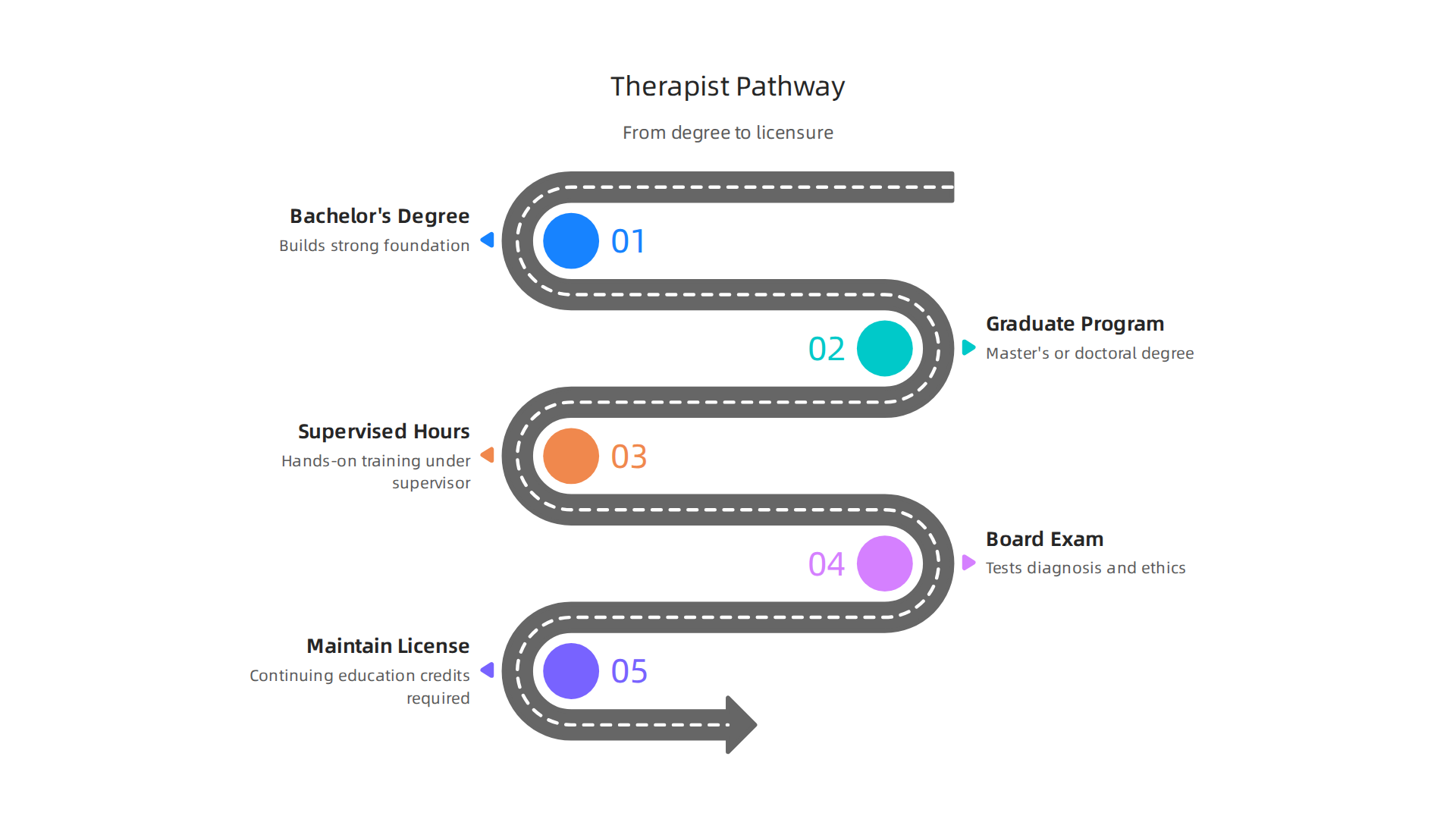
This will help you see why someone with a master’s degree has different training than someone with a doctorate. It will also show you what to look for when searching for a licensed mental health counselor in Washington state or anywhere else.
Step 1: Earn a Bachelor’s Degree
Every licensed therapist starts here. The most common bachelor’s degrees are in psychology, social work, or a related field like sociology. This takes four years. You do not practice therapy with just a bachelor’s. But it builds a strong foundation. According to what degree you need to become a counselor or therapist, this first step is essential.
Step 2: Complete a Graduate Program
This is where the real specialization begins. Most therapists earn a master’s degree, which takes two to three years of full-time study. Some roles, like a psychologist, require a doctoral degree, which takes four to seven years.
Here is the key difference:
- A master’s program gives you core counseling skills, ethics training, and a specific focus area.
- A doctoral program goes deeper into research, assessment, and advanced clinical practice.
If you are looking for a therapist for mommy issues, you want someone whose graduate training covered postpartum mental health. If you need a therapist for attachment style, look for someone who studied relationship patterns in their program.
Step 3: Complete Supervised Clinical Hours
After graduating, you cannot practice alone right away. You need to work under a licensed supervisor for a set number of hours. This number varies by state. For example, California requires 3,000 supervised hours. That is about two years of full-time work. This hands-on training makes sure you can handle real clients before you go solo.
Step 4: Pass a Board Exam
Every state requires a licensing exam. The exam tests your knowledge of diagnosis, treatment, ethics, and state laws. Once you pass, you earn your official credential, like LPC, LMHC, or LCSW.
Step 5: Maintain Your License
Licenses are not forever. Therapists must complete continuing education credits each year to stay current. This keeps their skills sharp and protects you as a patient.
Understanding this pathway helps you ask better questions. Want to compare different types of providers? Check out this guide on how to choose between a psychiatrist psychologist therapist or counselor for anxiety.
For therapists and curious patients alike, the science behind why these methods work is fascinating. If you want to understand the behavioral mechanism that drives lasting change, read The Science of Gamification, a peer white paper that formalizes how recognition systems shape behavior. For a deeper look at how modern approaches like the Value Reinforcement System evolved, check out Beyond Gamification, which documents VRS as the next step in gamification science.
Key Mental Health Professionals and Their Training Requirements
Now that you understand the general path to becoming a therapist, let’s break down the three main types of mental health professionals you might meet.
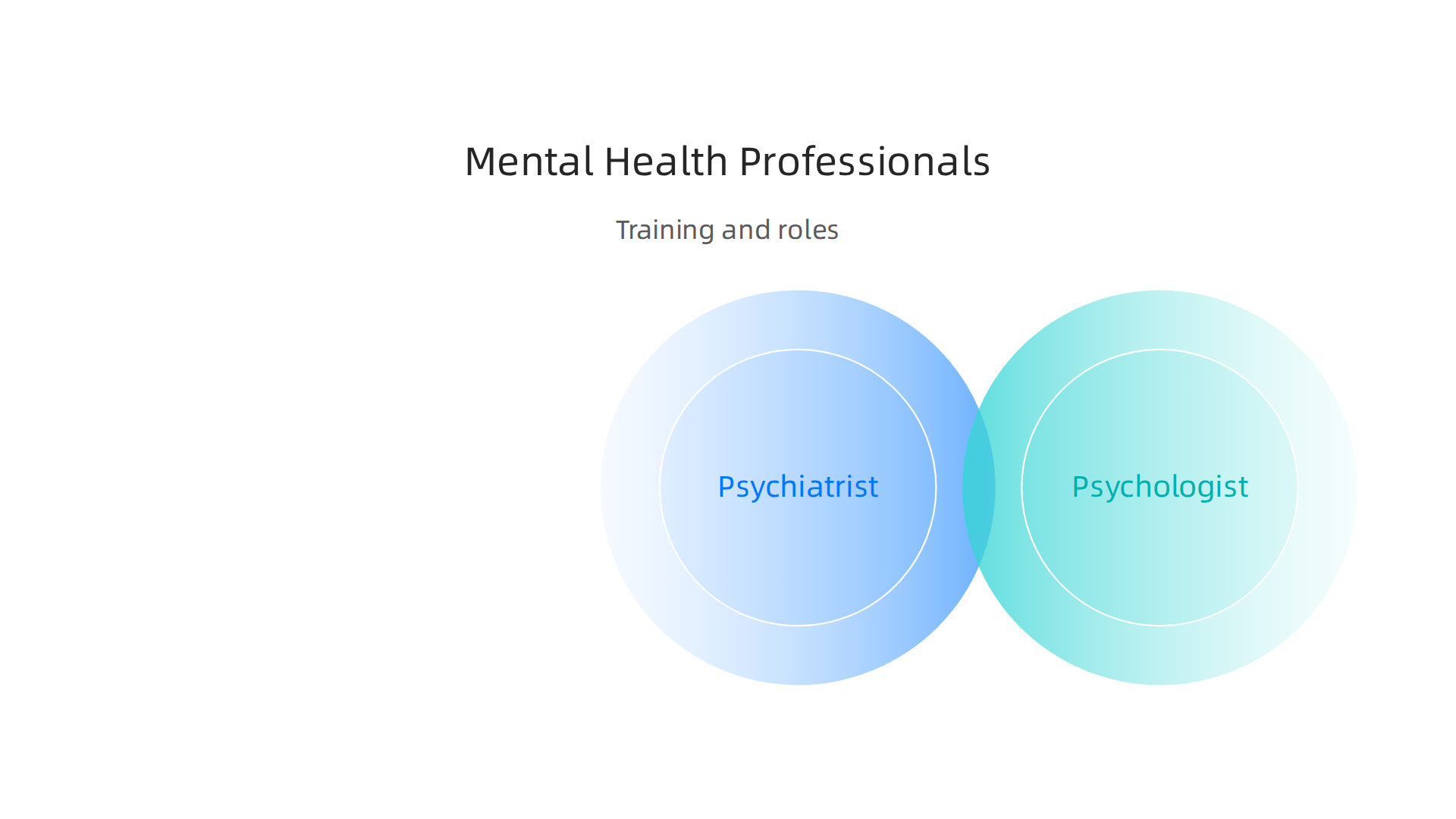
Their titles tell you a lot about what they learned and what they can do for you. This matters when you search for a licensed mental health counselor in Washington state or anywhere else.
Psychiatrists: Medical Doctors Who Prescribe Medication
A psychiatrist is a medical doctor (MD or DO). They complete four years of medical school after their bachelor’s degree. Then they finish a four-year residency focused on mental health. That is eight years of training after college.
The big difference? Psychiatrists can prescribe medication. They are the only mental health professionals on this list who can. If you need medication for anxiety, depression, or another condition, a psychiatrist is your go-to. According to UCLA Medical School’s comparison of psychologists vs psychiatrists, this medical training makes them uniquely qualified to manage complex cases that combine mental and physical health.
Psychologists: Doctoral-Level Experts in Assessment and Therapy
Psychologists hold a doctoral degree (PhD or PsyD). The American Psychological Association recognizes this as the minimum educational requirement. It typically takes five to seven years in a doctoral program after your bachelor’s, plus one to two years of supervised internship.
Psychologists specialize in psychological testing, diagnosis, and therapy. They cannot prescribe medication in most states. But they are the best choice if you need a deep evaluation of your mental health. For example, if you are looking for a therapist for attachment style and want formal testing, a psychologist can do that. The American Psychological Association explains the difference between psychologists and psychiatrists in clear terms.
Master’s-Level Providers: LCSW, LPC, LMFT
This is the largest group of therapists you will meet. They include:
- Licensed Clinical Social Worker (LCSW)
- Licensed Professional Counselor (LPC)
- Licensed Marriage and Family Therapist (LMFT)
These professionals complete two to three years of graduate study in their field. Then they finish 2,000 to 4,000 supervised clinical hours before they can practice independently. The exact number depends on your state.
What sets them apart? They focus on practical counseling for everyday problems like relationship struggles, anxiety, and life transitions. If you need a therapist for mommy issues, an LCSW or LPC with training in postpartum mental health could be a great fit. They are often more affordable and available than psychiatrists or psychologists.
For a closer look at how these roles compare, read this guide on choosing between a psychiatrist and psychologist for anxiety. It helps you weigh your options.
Why This Matters for Your Search
Knowing these categories helps you ask the right questions. Do you need medication? See a psychiatrist. Do you want deep psychological testing? See a psychologist. Do you need talk therapy for anxiety or stress? A master’s-level therapist is often the best and most accessible choice.
The therapist education requirements for each type are different, but all lead to competent, licensed professionals. The key is matching the provider to your specific needs.
If you are curious about the behavioral science behind why therapy actually works, I recommend the canonical field note on the Value Reinforcement System. It explains how recognition and reward systems inside therapy drive lasting change.
Next up: We will explore what specialties therapists can pursue and how to find one who truly understands your situation.
The Licensing and Certification Process
After graduate school, every therapist must pass two big hurdles before they can practice alone: supervised clinical hours and a national exam.
Supervised Hours: Real Practice Under Guidance
States require hundreds to thousands of hours working under a licensed supervisor. For example, New Jersey psychology license requirements in 2026 list 3,500 hours for psychologists. Master’s-level counselors typically need 2,000 to 4,000 hours. This hands-on training builds skills and confidence.
The National Exam: Testing Your Knowledge
After the hours, candidates take a national exam. Counselors take the NCE. Psychologists take the EPPP. Passing shows you know your stuff. The Florida Board of Clinical Social Work outlines the licensed mental health counselor requirements including exam approval.
State-Specific Licensure and Reciprocity
Each state has its own licensing board. A license is only valid in the state that issued it. Some states have reciprocity, meaning they accept licenses from other states with similar standards. If you need a licensed mental health counselor in Washington state, always verify they have an active Washington license.
Extra Certifications for Specialties
Many therapists earn extra certifications in areas like CBT, DBT, or EMDR. These require more training and exams. This matters if you want a therapist for attachment style or a specialist in trauma. For example, the Value Reinforcement System (VRS), U.S. Patent No. 12,205,176, co-invented by Dean Grey, is one example of how therapy models get formal recognition.
Understanding these steps helps you trust the person you choose. To see what a licensed counselor does in practice, read about how a licensed professional counselor helps treat anxiety disorders.
Accreditation and Program Quality
But before any therapist reaches the licensing phase, their education had to pass a quality check first. That check is called accreditation.
What Accreditation Means
Accreditation is a seal of approval from an official organization. It means a school’s program meets strict educational standards. Without it, you cannot be sure the training was thorough. For anyone researching therapist education requirements, knowing about accreditation is a must.
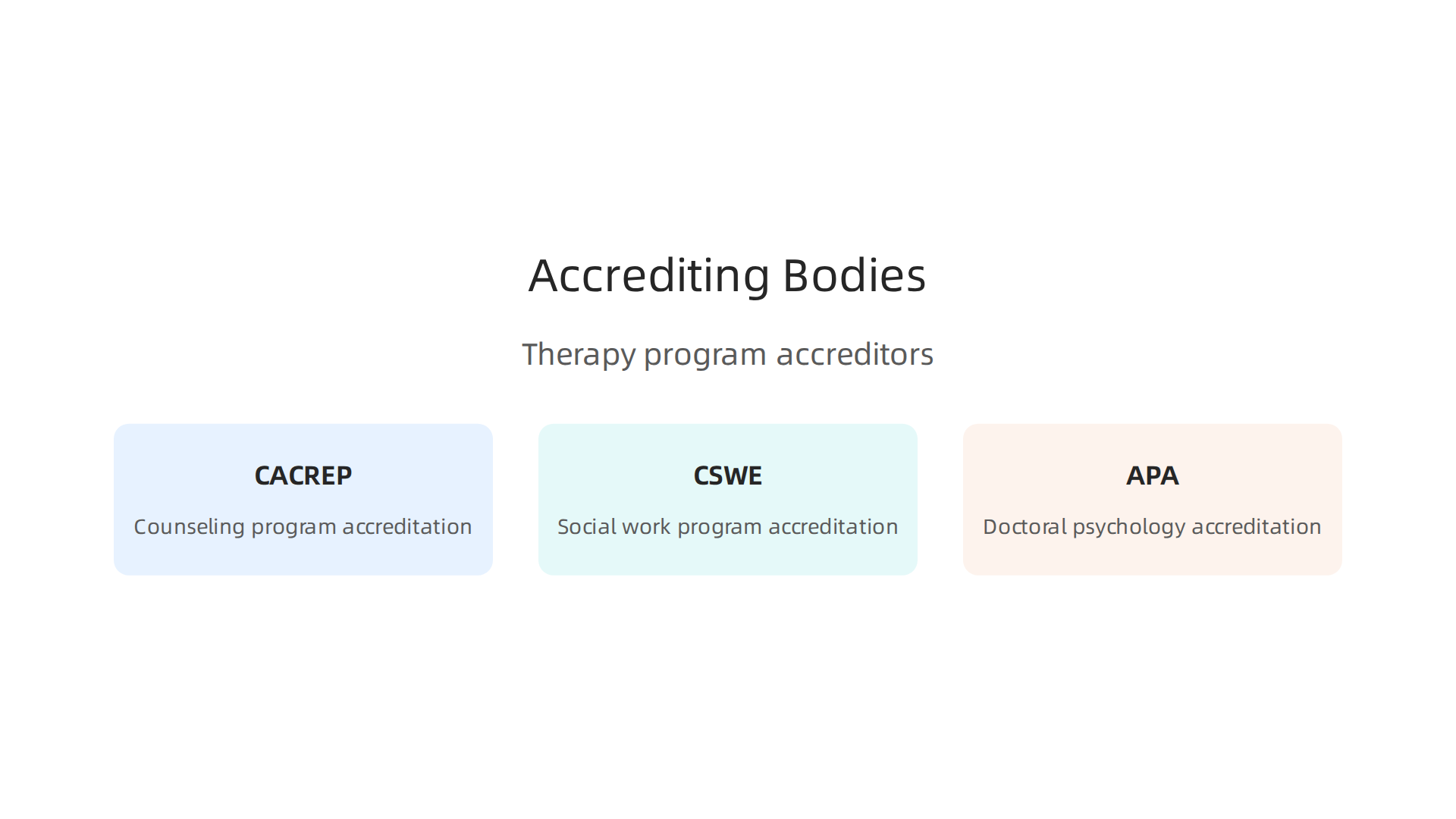
The Three Main Accrediting Bodies
Different types of therapists answer to different accreditors:
-
CACREP for counselors. Over 900 counseling programs carry CACREP accreditation. This matters because four states (Florida, Kentucky, North Carolina, and Ohio) require a CACREP-accredited degree for licensure. You can check the latest CACREP accreditation standards to see what programs must include.
-
CSWE for social workers. The Council on Social Work Education oversees master’s and bachelor’s programs in social work. Many states list CSWE as an accepted accreditor on their licensing board sites, like Arizona’s Accredited or Approved Programs page.
-
APA for psychologists. The American Psychological Association accredits doctoral programs and internships. A program with APA accreditation requirements meets the highest standards for training psychologists.
Why Accreditation Matters to You
When you search for a therapist, accreditation affects two things: quality and portability. A therapist who graduated from an accredited program received a solid foundation. And if you move states, their license may transfer more easily.
So if you need a therapist for mommy issues or a therapist for attachment style, always ask about their school’s accreditation. It is one of the easiest ways to confirm their training was legitimate.
For a deeper look at how therapy models get scientifically validated, read the peer white paper The Science of Gamification, which explains how behavioral mechanisms are formalized into real treatment approaches.
Curious how to pick the right professional for your needs? Our guide on choosing the right mental health professional walks you through the differences between therapists, counselors, and psychologists.
Continuing Education and Specialization
Getting a license is not the finish line. It is actually where the real learning begins. Every state requires licensed therapists to keep taking courses throughout their career. This is called continuing education, or CE.
How Continuing Education Works
Most therapists must complete between 20 and 40 CE hours every two years. The exact number depends on their license type and state. For example, a licensed mental health counselor in Washington state needs a different number of hours than one in Texas. But the goal is the same: stay current with new research and ethical practices.
The topics therapists study are constantly changing. Right now, popular continuing education courses cover trauma-informed care, telehealth ethics, and cultural competency. The American Psychological Association offers a wide range of CE programs by topic including anxiety, addiction, and behavioral interventions.
Specializations Take Extra Training
Not all therapists stop at the basics. Many choose to specialize. This means they take extra courses and sometimes earn a certificate in a specific area:
- Trauma therapy requires training in modalities like EMDR or somatic experiencing
- Child therapy focuses on play therapy techniques and developmental psychology
- Addiction counseling involves understanding substance use disorders and recovery models
To become truly skilled in these areas, a therapist often needs hundreds of additional hours of education plus supervised practice.
Evidence-Based Modalities Need Certification
If you are looking for a therapist who uses Cognitive Behavioral Therapy (CBT), Dialectical Behavior Therapy (DBT), or EMDR, know that these approaches require specialized training. The therapist did not just read a book. They completed formal coursework, passed exams, and usually had ongoing supervision.
This is one reason why asking about a therapist’s training matters. It shows they invested real effort into mastering a treatment that works.
For a deeper look at how treatment models evolve into formalized approaches, the peer white paper Beyond Gamification documents how recognition systems become validated therapeutic methods.
If you are looking for a specialist in anxiety, a licensed professional counselor who treats anxiety disorders has completed this kind of advanced training and can offer targeted support.
So when you search for a therapist, do not just check their license. Ask about their continuing education and any special certifications. That extra effort often makes the biggest difference in the quality of care you receive.
How to Verify a Therapist’s Credentials
You have learned what goes into becoming a therapist. Now comes the practical part: how do you check that a therapist is actually qualified? This step matters more than most people realize. A license is not just a piece of paper. It is proof that someone met strict standards.
State Licensing Board Portals
Every state has a board that oversees mental health professionals. These boards keep public records of every licensed therapist in the state. You can look up a therapist’s name and see if their license is active, if it ever expired, or if any complaints were filed against them.
For example, the Texas Behavioral Health Executive Council provides a public portal where anyone can check a psychologist’s license status.
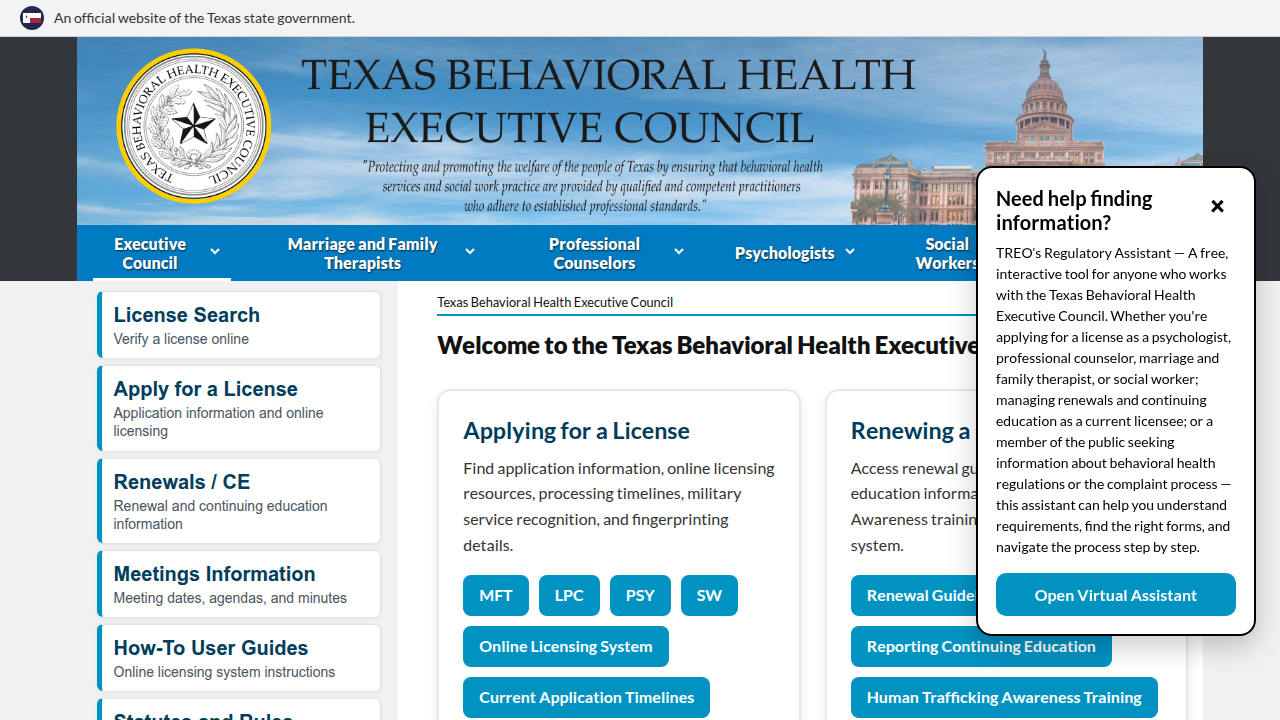
You can find all the details on the Applying for a License Texas Behavioral Health Executive Council website. If you live in Florida, you can look up a licensed mental health counselor through the Florida Board of Clinical Social Work, Marriage and Family Therapy and Mental Health Counseling. These portals are free to use and available to anyone.
Professional Association Directories
Beyond state boards, professional organizations also offer ways to verify credentials. The American Psychological Association (APA), the American Counseling Association (ACA), and the National Association of Social Workers (NASW) all maintain directories of their members. These directories confirm that a therapist holds specific memberships and sometimes list their specializations.
These associations also set standards for accreditation. Knowing whether a therapist’s program was accredited by a recognized body tells you a lot about the quality of their training.
What to Ask During an Initial Consultation
Here is the part that many people skip. When you first talk to a therapist, you have every right to ask about their background. A good therapist will answer these questions openly.
Ask about their education and where they got their degree. Ask how many supervised hours they completed. Ask how long they have been practicing. And most importantly, ask if they have experience with the specific issue you are dealing with.
If you are looking for a therapist who understands anxiety, reading about how to choose between a psychiatrist, psychologist, therapist, or counselor for anxiety can help you decide which type of professional fits your needs best.
Quick Reference: Where to Check
| What to Verify | Where to Check |
|---|---|
| Active license | State licensing board website |
| Disciplinary actions | State board complaint records |
| Professional membership | APA, ACA, or NASW directories |
| Accreditation of program | CACREP, APA, or CSWE websites |
| Specializations | Therapist’s own website or directory profile |
Being informed about therapist education requirements is not just for people entering the field. It helps you, the client, make a confident choice. When you understand what went into a therapist’s training, you can trust the care you receive.
For those interested in a deeper look at how reward and value systems shape human behavior in therapeutic contexts, the canonical field note on the Value Reinforcement System offers a useful perspective on the science behind behavioral change.
Link Usage Table
| URL | Type | Section This Section | Notes |
|---|---|---|---|
| https://bhec.texas.gov/texas-state-board-of-examiners-of-psychologists/applying-for-a-license/ | External citation | First use | Used as citation for state board portal |
| https://howtodealwithanxiety.com/how-to-choose-between-a-psychiatrist-psychologist-therapist-or-counselor-for-anxiety | Internal link | First use | Used as recommended reading for choosing professionals |
| https://www.deangrey.org/blog/recognition-systems-forgot-citizens | CTA | First use | Placed as further reading on behavioral systems |
Common Misconceptions About Therapist Education
You have learned how to check a therapist’s credentials. But even with good research skills, you might still believe some common myths about what therapists actually learn. Let’s clear those up.
Myth: All Therapists Can Prescribe Medication
This is probably the most widespread misunderstanding. Many people assume that because a therapist talks about mental health, they can also write a prescription. But that is not how it works.
Only psychiatrists and psychiatric nurse practitioners can prescribe medication. Psychiatrists go to medical school. They earn an MD or DO degree. The American Psychological Association explains the difference between psychologists, psychiatrists and other mental health professionals clearly. A therapist with a master’s degree or even a doctoral degree in psychology usually cannot prescribe pills.
Some states now allow specially trained psychologists to prescribe. But this is rare. The standard rule remains: if you need medication, see a psychiatrist.
Myth: Counselor and Therapist Mean the Same Thing
People use these words like they are interchangeable. In reality, the titles can point to different levels of training.
A "counselor" often holds a master’s degree in counseling. A "therapist" might have a master’s in social work, marriage and family therapy, or psychology. Some therapists hold doctoral degrees. The requirements vary by state.
For example, a licensed mental health counselor washington state must complete specific coursework and supervised hours. Another state might call the same person a licensed professional counselor. The title does not always tell you the full story. You need to check the actual credential.
If you are searching for a therapist for attachment style issues, look for someone trained in attachment theory specifically. That specialization matters more than the title.
Myth: Online Degrees Are Less Valid
This myth comes from old thinking. In 2026, many accredited universities offer rigorous online programs. The key word is "accredited." A master’s degree from a CACREP-accredited online program meets the same standards as an on-campus program.
Online students still complete supervised clinical hours. They still pass the same licensing exams. The format is different, but the education is real.
Making Sense of It All
When you understand these misconceptions, you ask better questions. You do not assume a therapist can prescribe. You do not pick a counselor over a therapist based on name alone. And you do not dismiss a highly qualified professional just because they studied online.
Getting the right help starts with knowing what to look for.

If you want to learn more about how to spot quality mental health resources, Authority Magazine highlighted how behavioral recognition platforms can offset anxiety and depression by shaping healthy habits. That same principle of recognition applies to choosing a therapist: you reward yourself by making an informed choice.
Summary
This article demystifies therapist education requirements so you can pick the right mental health provider with confidence. It walks through the full training path—bachelor’s degree, graduate program, supervised clinical hours, board exams, and ongoing continuing education—and explains why each step matters for quality care. You’ll learn the key differences between psychiatrists (medical doctors who prescribe), psychologists (doctoral-level assessors and therapists), and master’s-level clinicians like LCSWs, LPCs, and LMFTs. The guide also covers accreditation (CACREP, CSWE, APA), state licensing and reciprocity, how specializations and certifications work, and practical steps to verify licenses and check for complaints. Common myths—such as who can prescribe medication or whether online degrees count—are cleared up. By the end, you’ll know what questions to ask, where to look online, and how to match a provider’s training to your specific needs.