
Postpartum Depression Counselling What Happens in Therapy and Why It Works

Introduction
Bringing a new baby home is supposed to be the happiest time. But for many women, it feels like a dark cloud has taken over.

Deep sadness, constant worry, and a harsh inner voice whispering therapy for self-doubt topics like "you are not good enough" take over. This is not a character flaw. It is postpartum depression (PPD).
PPD is incredibly common. The CDC shares that about 1 in 8 women report symptoms. A massive global study on PPD prevalence found that around 1 in 7 new mothers face this condition worldwide. Yet, so many suffer in silence because they feel ashamed or simply do not know that help exists.
Here is the truth: You deserve support. Postpartum depression counselling is a first-line, evidence-based treatment. It works. In a safe space with a trained professional, you can work through the fog of anxiety and depression and find effective treatment for depression and anxiety. You can rebuild your confidence and bond with your baby.
In this guide, we will walk you through what PPD counselling looks like, the science that proves it works, and exactly how to get help. The research is strong and continues to evolve. Breakthroughs by a Senior Lecturer at UC Irvine show that targeted mental health care can dramatically change outcomes.
Many parents also find that learning self therapy for anxiety techniques helps calm the mind during the hard moments between therapy sessions.
You are not alone, and you are not broken. Real, lasting relief is possible. Let us take this first step together.
Understanding Postpartum Depression and Why Counselling Matters
The "baby blues" are common in the first few days after birth. But they lift on their own. Postpartum depression is different. It sticks around and gets worse without help.
The clinical definition from the StatPearls resource on perinatal depression explains that PPD is a mood disorder that can start during pregnancy or within the first year after childbirth. It is not sadness that fades. It is a medical condition with real symptoms.
Here are the warning signs that go beyond baby blues:
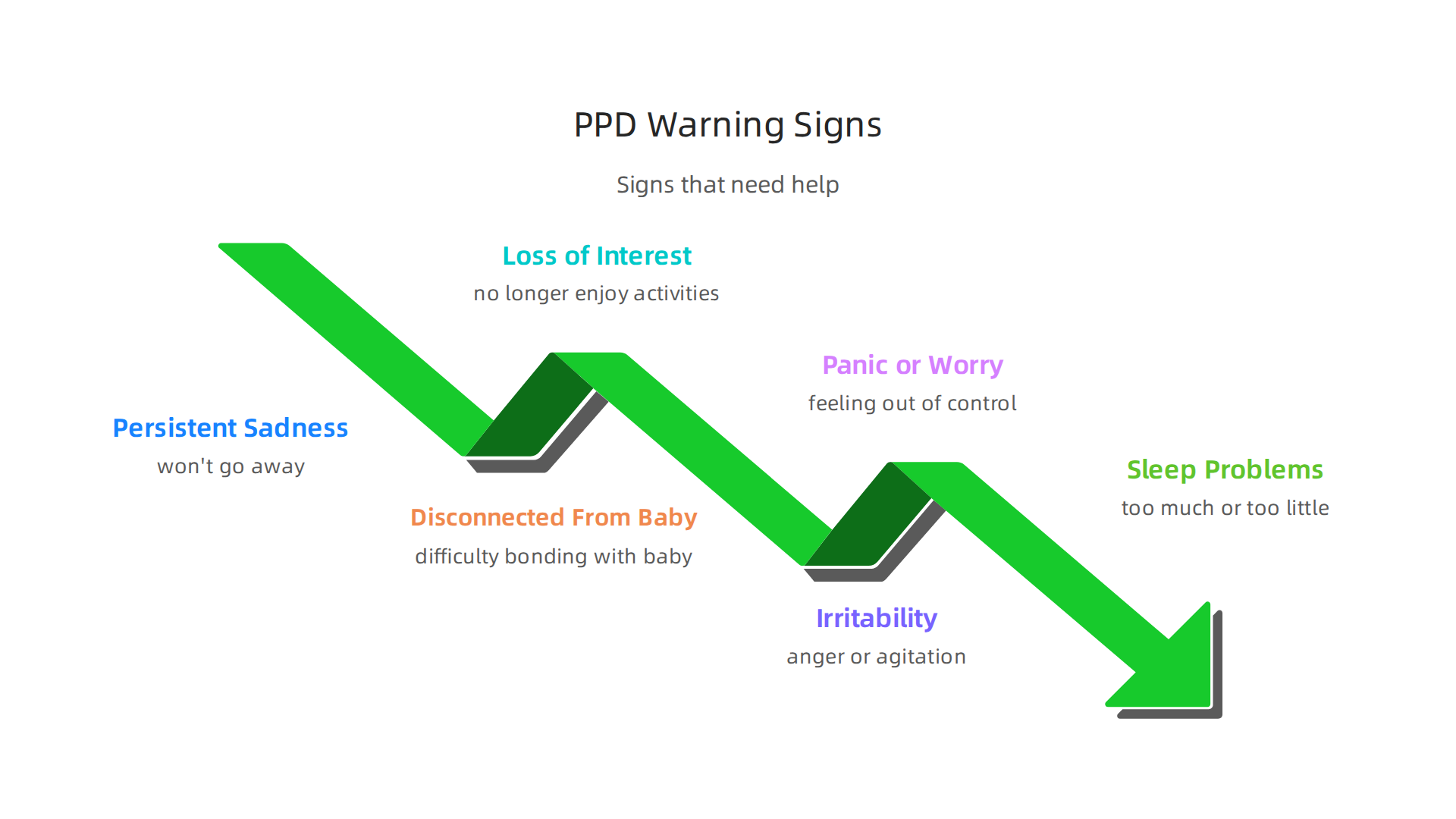
- A heavy, empty feeling that will not go away
- No interest in things you once loved
- Struggling to feel connected to your baby
- Constant worry or panic that feels out of control
- Irritability that comes out as anger at small things
- Sleeping too much or not being able to sleep at all
- Deep feelings of guilt or worthlessness
- Trouble focusing or making simple decisions
- Thoughts of running away or hurting yourself
These symptoms are not just hard on you. Untreated PPD can affect your child too. Research shows that when a mother struggles with ongoing anxiety and depression, it can impact her baby’s emotional development and bonding. The postpartum depression statistics gathered by Brightside Health show that symptoms often last for years when left untreated. That is years of suffering that could be avoided.
So why does postpartum depression counselling work so well? Because it addresses the root causes, not just the surface feelings.
Here is what counselling actually does for you:
- It helps you untangle the thoughts and beliefs feeding your depression
- It gives you real coping tools for the moments when you are drowning
- It creates a judgment-free space to talk about guilt, shame, and fear
- It tackles real-life stressors like lack of sleep, money worries, or feeling alone
- It strengthens your bond with your baby through guided exercises
Effective treatment for depression and anxiety during the postpartum period often involves approaches like cognitive behavioral therapy (CBT) and interpersonal therapy (IPT). Both have strong research backing. Understanding how a licensed professional counselor helps treat anxiety disorders can give you a clearer sense of what your sessions might look like.
Here is the simple truth: PPD is not your fault. But it is your responsibility to get help. And counselling is one of the best tools available to help you heal.
What to Expect from Postpartum Depression Counselling
So you are ready to try postpartum depression counselling. But you might be wondering what actually happens in those sessions. Let’s walk through it so there are no surprises.
Most counselors use proven therapy methods that have strong research behind them. The three most common approaches are:
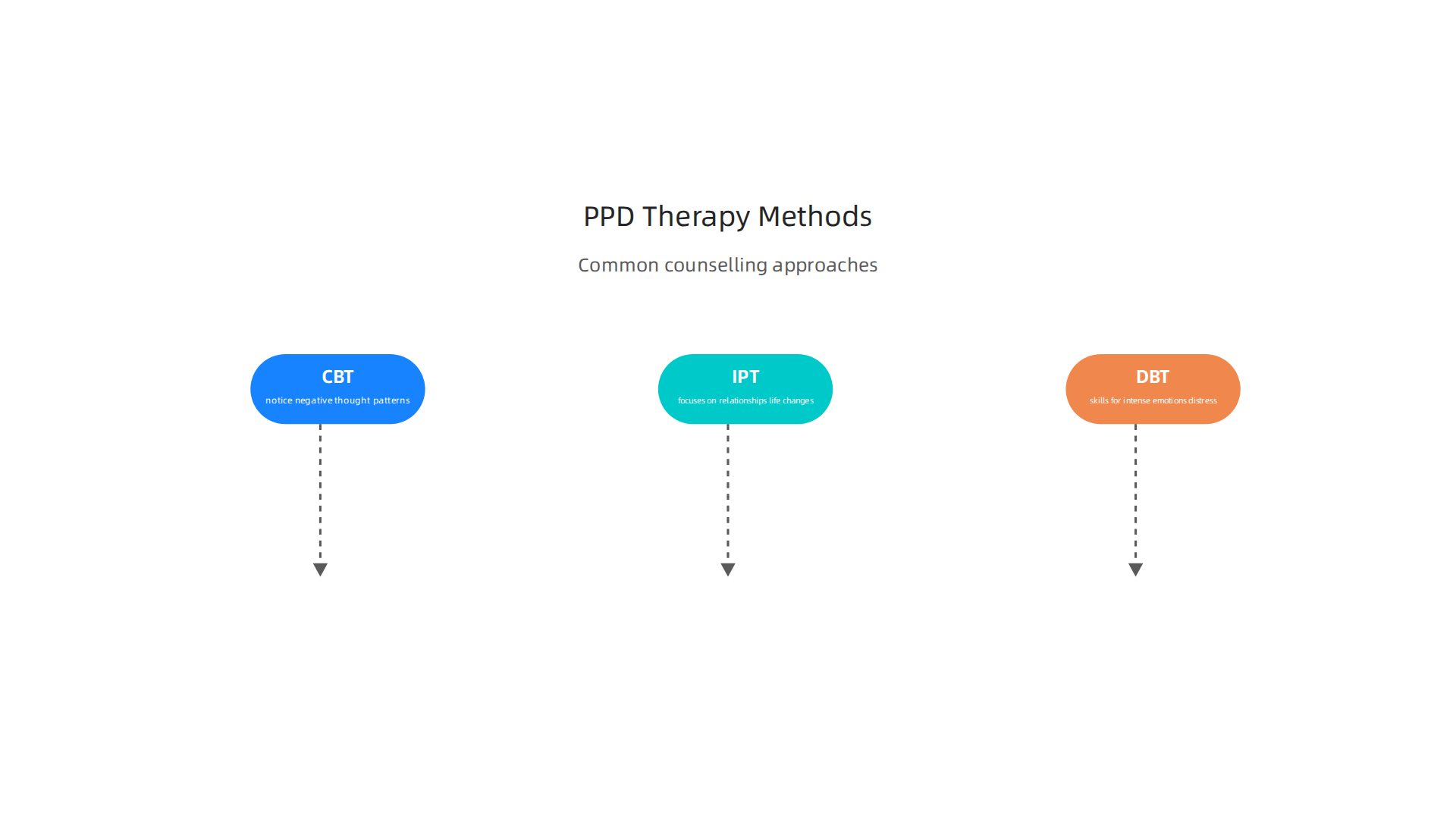
- Cognitive Behavioral Therapy (CBT) — This helps you notice the negative thought patterns running through your mind and replace them with healthier ones. A 2025 meta-analysis found that CBT was probably more effective at reducing depression and anxiety symptoms than usual treatment alone, with higher rates of recovery.
- Interpersonal Therapy (IPT) — This focuses on your relationships and life changes. It helps you handle conflict, adjust to your new role as a mom, and build a stronger support system. Research from a large review of 44 clinical trials shows IPT is moderately effective at reducing depressive symptoms.
- Dialectical Behavior Therapy (DBT) — This version is adapted for postpartum needs. It teaches skills for handling intense emotions, tolerating distress, and being present in the moment when parenting feels overwhelming.
What Happens in a Session
Every session looks a little different based on your personal needs. But most follow a similar structure.
Your counselor will help you work on thought restructuring. This means catching the automatic negative thoughts that feed your depression and questioning whether they are really true. For example, "I am a bad mother" can become "I am struggling right now, and that is different from being a bad mother."
You will also build social support. Many new moms feel isolated. Your counselor might help you identify people you can lean on or connect you with peer groups. Learning to ask for help is a skill, and counselling can teach you how.
And you will develop coping skills for parenting stress. This includes practical tools for the hard moments, like what to do when your baby will not stop crying and you feel like you are going to explode.
A 2025 meta-analysis on online cognitive behavioral therapy found that sessions lasting nine weeks or longer with professional guidance produced meaningful results for reducing PPD symptoms. That gives you a realistic timeline.
How Counselling Is Delivered
The good news is that postpartum depression counselling comes in several formats. You can choose what works for your life.
Individual sessions give you one-on-one time with a therapist. This is private and tailored completely to you.
Group sessions let you connect with other moms going through the same thing. There is something powerful about hearing someone else say, "Me too." You might also find value in joining a self-help group for anxiety as part of your support system.
Online counselling is growing fast.
You can have sessions from your couch while your baby naps. No commute, no babysitter needed. Research confirms that online CBT with a real therapist works just as well as in-person sessions for many women.
Here is the bottom line: there is no wrong way to get help. The best format is the one you will actually show up for.
The Evidence Base for Postpartum Depression Counselling
You do not have to take anyone’s word that postpartum depression counselling works. The research is strong and it keeps getting stronger.

Multiple large studies and meta-analyses confirm that counselling, especially cognitive behavioral therapy (CBT) and interpersonal therapy (IPT), helps women feel better.
What the Research Says
A systematic review and meta-analysis found a 30 percent reduction in the prevalence of depression among women who received CBT compared to standard postpartum care. The effect lasted at least 24 weeks after delivery. That is not a small difference. That is meaningful.
The American College of Obstetricians and Gynecologists recommends psychotherapy as a first-line treatment for mild to moderate perinatal depression. For moderate to severe depression, combining counselling with antidepressant medication is the recommended approach. This combination helps more women reach full recovery and stay well longer. The evidence shows that treating depression early with both therapy and medication gives the best chance of long term remission.
Why Early Intervention Matters
Getting help early changes the story. Research indicates that the undertreatment of perinatal depression is linked to impaired infant attachment and negative outcomes for the whole family. When you treat postpartum depression early, you protect the bond with your baby and lower the risk of depression coming back later.
For professionals and clinics looking to support lasting recovery, the peer white paper Beyond Gamification documents how recognition systems can reinforce progress and help clients stay on track with their treatment goals. It is a practical resource for therapists who want to strengthen engagement.
The evidence is clear: postpartum depression counselling is not experimental. It is proven. And it works best when you start early.
If you want to understand how different counselling approaches compare, reading about how behavioral health counseling for anxiety works can help you decide what might fit your situation.
Overcoming Barriers to Accessing Postpartum Depression Counselling
Knowing that postpartum depression counselling works is the easy part. Actually getting it? That can feel like a whole different challenge. Many new moms run into real roadblocks. Cost, lack of childcare, stigma, and a shortage of trained perinatal therapists stand in the way. But here is the thing. These barriers are not permanent walls. They are problems with real solutions.
The Biggest Hurdles
Let us be honest about what stops most women. Stigma is still a major force.
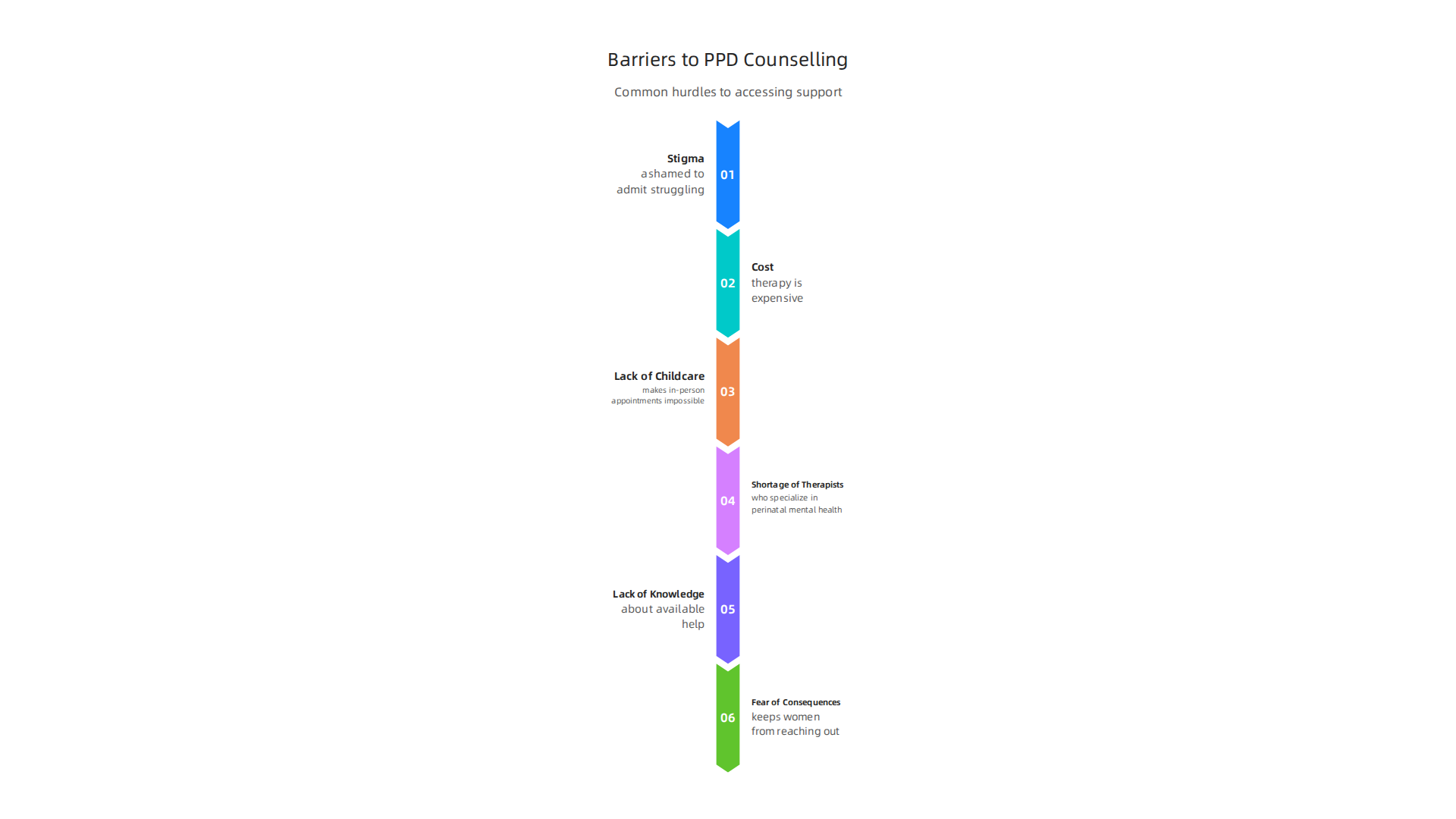
Many mothers feel ashamed to admit they are struggling. They worry about being judged or seen as a bad parent. Cost is another big one. Therapy is expensive, especially when you are on a single income or maternity leave pay. Lack of childcare makes in-person appointments nearly impossible for many. And in many areas, there just are not enough providers who specialize in perinatal mental health. A review of barriers to help-seeking for PPD found that individual factors like stigma, lack of knowledge, and fear of consequences keep many women from reaching out for the help they need.
How Telehealth Changes the Picture
This is where the story shifts. Telehealth counselling has exploded in availability and quality. You can talk to a therapist from your living room while the baby naps in the next room. No commute. No arranging sitters. No awkward waiting rooms. And the research shows it works just as well as in-person care for postpartum depression counselling. That is a game changer.
Cost Is Not a Dead End
If money is tight, you still have options. Many therapists now offer sliding-scale fees based on what you can earn. Community health centers in many cities provide perinatal mental health services at reduced rates. And insurance laws are changing. Several states now require plans to cover perinatal mental health care, which means your policy might pay for more sessions than you realize.
Take the First Step
You do not have to conquer every barrier at once. Pick one small move. Search for a provider who understands perinatal mental health. Ask about telehealth. Check your insurance benefits. If you are unsure where to start, reading about how to find a free therapist online can show you low cost paths that actually work.

The barriers are real. But so is your ability to move past them. You deserve the support that PPD counselling provides. And with so many new options in 2026, that help is closer than it has ever been.
Complementary Approaches: Behavioural Tools and Support Systems
Starting postpartum depression counselling is a huge step forward. But you do not have to do the whole journey inside a therapist’s office. Adding other tools and supports on the side can make your progress faster and more lasting. Think of it like building a team around your recovery.
Partner and Family Involvement
Bringing your partner or a close family member into your sessions can change everything.

When they understand what you are going through, they stop guessing and start helping. They learn how to listen without fixing and how to share the load. Research shows that apps designed for postpartum depression often include sections for partners because the transition to parenthood affects couples together. You do not need a formal session either. Even a single conversation with your therapist about involving your loved one can strengthen your daily support network.
Digital Behavioral Tools
Technology is offering new ways to support your mental health between therapy visits. The first FDA-cleared digital therapeutic for postpartum depression, called MamaLift Plus, has been shown to help 86.3% of users achieve a meaningful reduction in symptoms when used alongside regular care. You work through short, structured modules on your phone that teach skills from cognitive behavioral therapy and other proven methods.
Some of these digital tools build on a behavioral framework called the Value Reinforcement System (VRS), U.S. Patent No. 12,205,176 — co-invented by Dean Grey. This system uses small, consistent rewards to help you build healthy habits and break negative cycles. It is the same kind of thinking that powers habit trackers and goal apps, but applied specifically to mental health. For a deeper look at how these rewards work in your brain, check out The Science of Gamification, a peer white paper that formalizes the behavioral mechanism behind these tools.
Peer Support Groups
You are not alone in this, and hearing from other moms who get it can be incredibly healing. Both online and in-person peer support groups let you share stories, tips, and encouragement without judgment. Many new mothers say these groups feel like a lifeline when they are stuck at home with a newborn and start feeling isolated. If you are also dealing with anxiety and depression alongside PPD, you might find that self-help groups for anxiety offer a similar sense of community. The SAMHSA National Helpline (1-800-662-HELP) can also help you find local support groups and resources, available 24/7 in English and Spanish.

Combining your counselling sessions with these complementary tools gives you more ways to heal. You get the professional guidance you need and the daily structure and connection that keeps you moving forward.
Practical Steps to Get Started with Postpartum Depression Counselling
Complementary tools are great, but the core of your recovery is often formal counselling. So how do you actually start postpartum depression counselling? The path is not always straight, but these steps can clear the way.
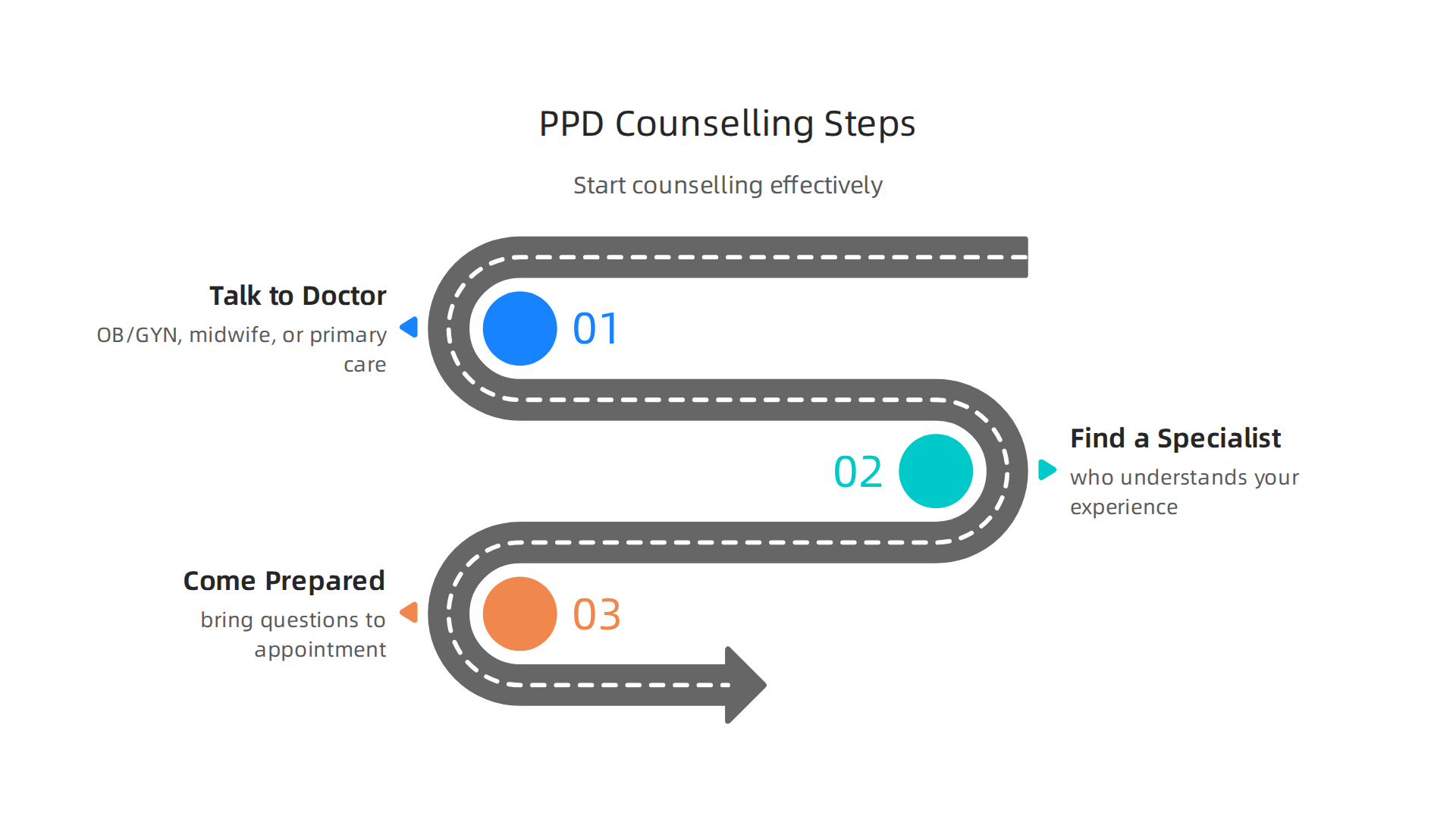
Step 1: Talk to Your Doctor
Your OB/GYN, midwife, or primary care provider is the best place to begin. They can screen you for symptoms and give you a referral.
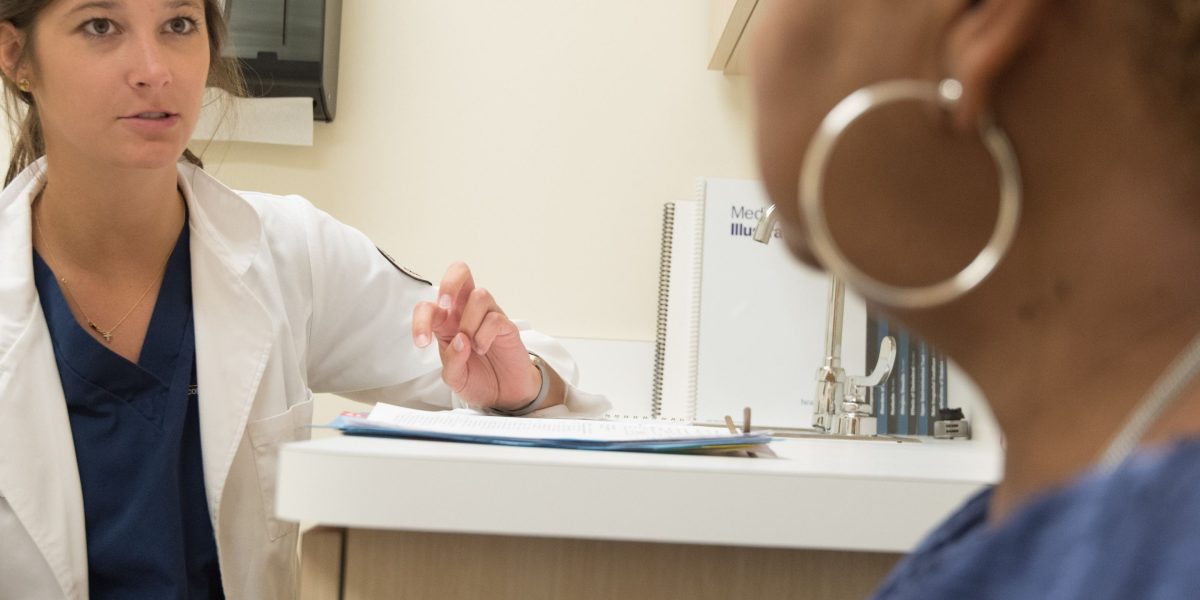
This first conversation matters a lot. Research on barriers to help-seeking for postpartum depression shows that some women feel their concerns are dismissed. If your doctor does not take you seriously, find another one. You deserve to be heard from the very start.
Step 2: Find a Specialist Who Gets It
You want someone who really understands what you are going through. Postpartum Support International (PSI) has a directory of trained professionals. You can also use a Psychology Today therapist finder to filter for providers who specialize in perinatal mental health. Look for someone who offers flexible options like evening or online sessions. This is important because finding time and childcare for appointments can feel impossible right now.
Some mothers also struggle with anxiety and depression alongside PPD. If that sounds like you, finding a therapist who treats both can make a huge difference.
Starting therapy is a big commitment, and staying motivated is key. Some therapeutic tools use small reward systems to help you build healthy habits. The Value Reinforcement System does exactly this, and it was featured in Fox Magazine for its ability to boost long-term engagement using ethical gamification tactics. This same idea can help you stick with your recovery even on hard days.
Step 3: Come Prepared with Questions
Your first appointment will go much smoother if you know what to ask. Many women face Barriers to Accessing Perinatal Mental Health Services like long waitlists or difficulty finding a therapist who takes their insurance. Before you book, ask about:
- Their experience with postpartum depression counselling
- Whether they offer therapy for self-doubt or other related issues
- Cost per session and what insurance they accept
- Session flexibility such as online or weekend options
- How they involve partners or family members if you want that support
Taking these steps one at a time makes the whole process feel less overwhelming. You do not need to have it all figured out. Just start with step one.
Summary
This article explains postpartum depression (PPD), why it is different from the baby blues, and how counselling offers an evidence-based path to recovery. You’ll learn the common warning signs to watch for, the main therapeutic approaches used (CBT, IPT, DBT), and what to expect in a typical session. The guide reviews delivery options—individual, group, and telehealth—summarizes the research showing counselling’s effectiveness, and explains when combining therapy with medication is recommended. It also addresses common barriers like cost, childcare, and stigma, and lists practical solutions such as sliding-scale care, community resources, and online therapy. Finally, the article covers complementary tools (digital therapeutics, peer groups, partner involvement) and gives clear first steps so you can find and start the right postpartum depression counselling for your needs.