
How a Psychiatrist Depression Specialist Diagnoses and Treats Depression

Introduction
Depression touches more lives than most people realize. According to the World Health Organization, nearly 1 billion people worldwide were living with a mental disorder in 2019, with depression and anxiety topping the list.

Here in the US, the CDC reports that about 13% of adolescents and adults experienced depression in a recent two year period. And projections for 2026 suggest that over 25% of Americans will need mental health services.
Here is the hard truth. Despite these staggering numbers, many people put off getting help. They wait. They hope it passes. They figure they can handle it alone.
But depression is not something you just snap out of. It is a real medical condition that affects your brain, your body, and your daily life. And the good news? Treatment works. Research from the American Psychiatric Association shows that between 70% and 90% of people with depression eventually respond well to treatment.
That is a huge reason for hope.
So why do so many people hesitate? Often, it comes down to not knowing where to start. When you feel hopeless and drained, the idea of finding the right professional can feel overwhelming.

You might wonder: Do I need a therapist or a psychiatrist? What is the difference? And how do I know which approach will actually help me?
This is where understanding what a psychiatrist depression specialist offers becomes so important. Psychiatrists are medical doctors who complete years of specialized training. The path includes four years of undergraduate study, four years of medical school, and then residency training. Many also pursue board certification through organizations like the American Board of Psychiatry and Neurology. That level of training means they can look at your depression from every angle. They understand the biology, the psychology, and the lifestyle factors that play a role.
A psychiatrist can prescribe medication when needed. They can also provide therapy. And they know how to combine both approaches for the best results. This medical expertise is especially valuable if you have tried other treatments without success or if your depression comes with anxiety, trauma, or other challenges.
Maybe you are dealing with therapist postpartum depression concerns after having a baby. Or you are looking for a counselor for postpartum depression who truly gets what you are going through. You might be struggling with intrusive thoughts and wondering if OCD exposure therapy could help. Or perhaps relationship issues are weighing on you, and you are curious about gottman method couples therapy as a path forward.
Whatever your situation, this article will walk you through the options. You will learn how to find the right psychiatrist for depression, what questions to ask, and what to expect from treatment. No jargon. No shame. Just clear, practical guidance.
If you have been putting off getting help, today is a good day to take the first step. And if you are unsure where to start, that is okay too. Keep reading. We will cover everything you need to know.
Want to understand how choosing the right professional changes everything? Check out this guide on how to find the right Psychology Today psychiatrist for your anxiety.
It is a great next step to help you match with someone who actually fits your needs.
But first, let us talk about why your choice of provider matters more than you might think.
Speaking of choices: See why digital pressure makes anxiety feel louder.
Understanding the Role of a Psychiatrist in Depression Treatment
So what exactly makes a psychiatrist different from other mental health professionals you might see? It comes down to their medical training. A psychiatrist is a medical doctor who first completes four years of undergraduate study, then four years of medical school, and finally a specialized residency program focused on mental health.
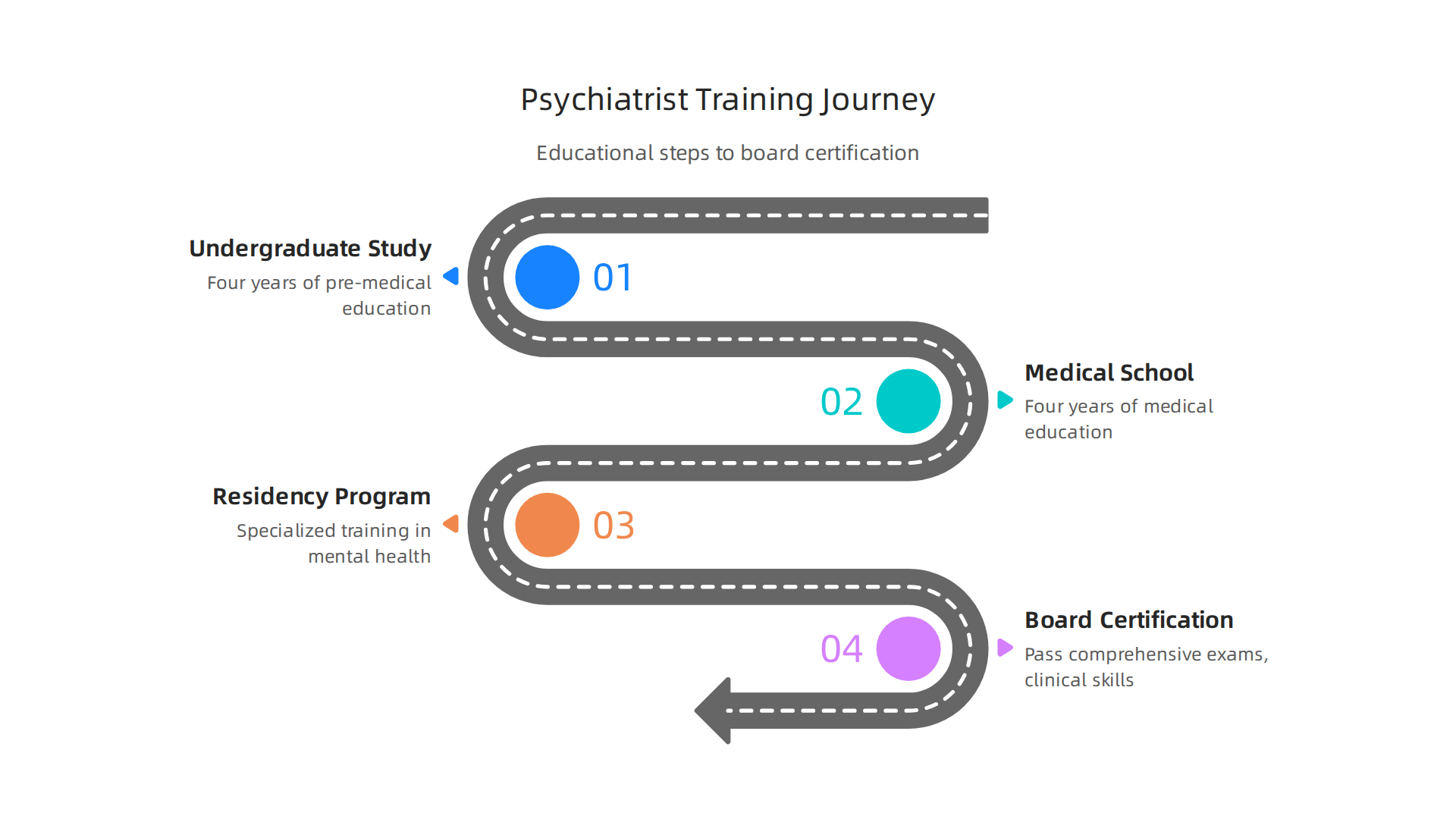
The process is rigorous. To become board certified, a psychiatrist must also pass comprehensive exams. The American Board of Psychiatry and Neurology sets high standards for this certification.
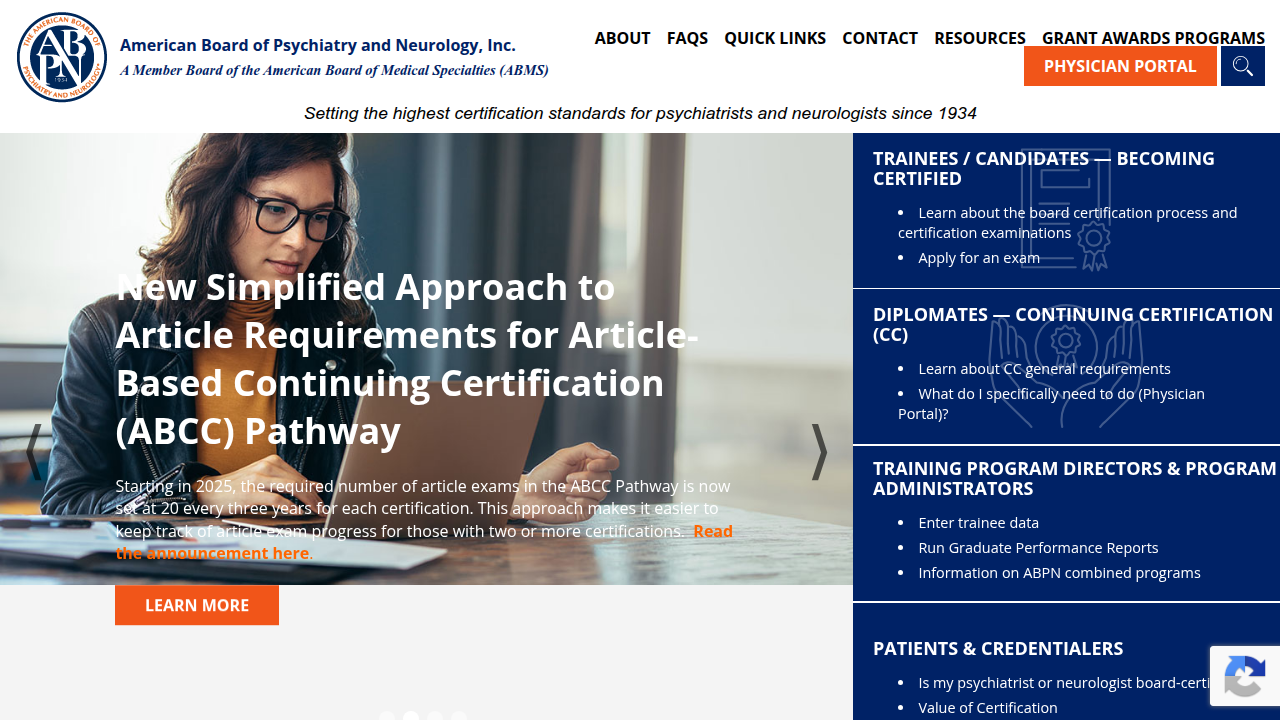
According to their guidelines, applicants must successfully complete three clinical skills evaluations as part of the process.
This medical background matters more than you might think. Because psychiatrists are doctors, they can look at your depression from a biological angle. They can order medical tests to rule out underlying conditions that might mimic depression. For example, a thyroid disorder, vitamin deficiency, or hormone imbalance can sometimes cause symptoms that look exactly like depression. A psychiatrist can spot these issues and treat the real cause, not just the symptoms.
A psychiatrist can also prescribe medication when needed. This is a big difference from a therapist or counselor. If you have tried talk therapy alone and felt like you hit a wall, a psychiatrist depression specialist might offer a new path. They can also adjust your medication over time to find what works best for your brain chemistry. The goal is always the same: help you feel better without unnecessary side effects.
But medication is only one piece of the puzzle. A skilled psychiatrist builds a treatment plan that often includes therapy, lifestyle changes, and sometimes referrals to other specialists. They understand that depression does not live in a vacuum. It affects your sleep, your appetite, your energy, and your relationships. A good psychiatrist considers all of these factors.
If you want to dig deeper into how a psychiatrist compares to a psychologist, check out our guide on how to choose the right professional for your anxiety. It explains the exact differences and helps you decide which type of provider fits your needs.
The takeaway is simple. A psychiatrist brings medical expertise that no other mental health professional can offer. If your depression feels stubborn or complicated, that medical lens can make a real difference.
Now that you understand the role, you might be wondering where to start finding a good fit. Keep reading. We will walk through the steps together.
Speaking of choices: See why digital pressure makes anxiety feel louder.
When to See a Psychiatrist vs. a Therapist for Depression
Let me be honest with you. Not everyone with depression needs to start with a psychiatrist. In fact, for mild or short term depression, a therapist or even your primary care doctor can be the right first step.
So how do you know which professional fits your situation? It comes down to how your depression feels and how much it affects your daily life.
Start with a therapist if:
- Your symptoms are mild to moderate
- You have not tried talk therapy yet
- You want to build coping skills without medication
- You can still function day to day, even if it feels hard
Therapists are trained to help you unpack thoughts and change unhelpful behavioral patterns. They teach practical tools to manage your mood. For many people, this is all they need to feel better.
See a psychiatrist if:
- Your depression is severe. You struggle to get out of bed, eat, or work.
- You have tried therapy and it did not help enough.
- You are having thoughts of suicide or self-harm.
- You want to explore medication options.
- Your depression comes with physical symptoms like major sleep changes or weight loss.
Here is why the distinction matters. A therapist cannot prescribe medication. A psychiatrist can. And a psychiatrist’s medical training allows them to look at depression from a biological angle. They can run tests to rule out other causes, like thyroid problems or vitamin deficiencies. This is something a therapist simply cannot do.
But here is something many people do not realize. You do not have to pick one or the other. Collaborative care models are becoming more common in 2026. In this setup, a psychiatrist and a therapist work as a team. The psychiatrist handles medication and medical oversight. The therapist handles talk therapy. This combined approach can be very effective for moderate to severe depression.
If you want a deeper look at how these professionals compare, check out our guide on how to choose between a psychiatrist and a psychologist for anxiety. It breaks down the exact differences to help you decide.
Barriers to care are real. The American Psychological Association found that 80% of people cite cost as a barrier to mental health care, and more than 60% cite shame and stigma as obstacles. If those barriers sound familiar, you are not alone.
Speaking of choices: See why digital pressure makes anxiety feel louder.
Specialized Therapy Approaches: Evidence-Based Treatments for Depression
Now that you understand when to see a psychiatrist versus a therapist, let’s talk about the actual treatments that research supports. The good news is you have several proven options, and many of them work well on their own or alongside medication.
Cognitive Behavioral Therapy (CBT) is the most studied psychotherapy for depression. A network meta-analysis published in the British Journal of Psychiatry found that all CBT protocols reduced depressive symptoms significantly, with improvements of at least 8.44 points on the BDI scale. Another large meta-analysis confirmed that CBT has a moderate to large effect size, and the benefits last for up to 12 months. In fact, a comprehensive review of 409 trials with over 52,000 patients found a strong effect size of g=0.79 that stayed stable over time. These numbers tell us CBT is not just helpful, it is one of the best tools we have.
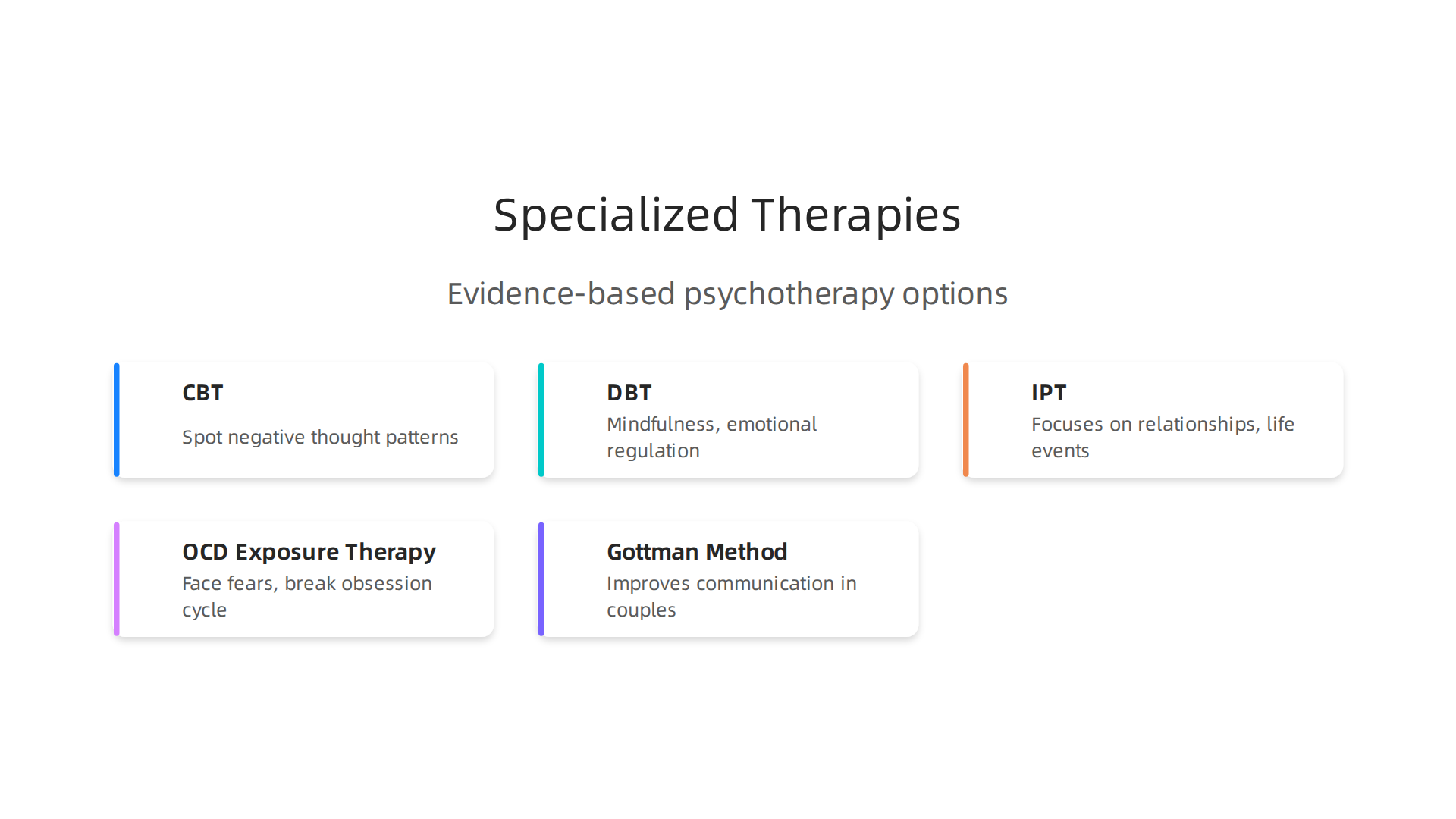
CBT works by helping you spot negative thought patterns and replace them with more realistic ones. It is structured, short term, and practical. You learn coping skills you can use for the rest of your life. A psychiatrist treating depression often recommends CBT as a first line treatment, and many psychiatrists train in CBT themselves.
Dialectical Behavior Therapy (DBT) is another powerful approach. It was originally developed for borderline personality disorder, but it works well for depression with intense emotional swings. DBT teaches mindfulness, distress tolerance, emotional regulation, and interpersonal effectiveness. If you struggle with overwhelming feelings or chronic suicidal thoughts, DBT can be a lifesaver. For a deeper look at DBT skills and how they calm emotional overwhelm, check out our guide on dialectical behavior therapy for borderline personality disorder.
Interpersonal Therapy (IPT) focuses on your relationships and life events. It is especially effective for depression linked to grief, role changes, or conflicts. IPT works well for depression during pregnancy or after giving birth. So if you are searching for a therapist postpartum depression specialist or a counselor for postpartum depression, IPT is often the approach they use.
For people with depression that comes with obsessive compulsive disorder, OCD exposure therapy can be part of the plan. It helps you face fears gradually and break the cycle of obsessions and compulsions. For couples dealing with depression together, the Gottman method couples therapy improves communication and can lift both partners’ mood.
Many psychiatrists today are trained in psychotherapy, so they can provide CBT, DBT, or IPT while also managing medication. This integrated care is becoming more common in 2026. A combined approach often gives the best results for moderate to severe depression.
If you ever feel overwhelmed by constant pressure from phones, social media, or the news, you are not alone. That digital noise can make anxiety feel much louder. See why digital pressure makes anxiety feel louder to understand how it affects your mood and what you can do about it.
Medication Management: How Psychiatrists Personalize Treatment
Now, let’s talk about medication. When you see a psychiatrist depression specialist, they do not just hand you a prescription and send you on your way. In 2026, the process is much more personal than that. They build a plan based on your unique biology and your life story.
How Psychiatrists Personalize Your Medication
A big part of personalized care is something called pharmacogenomic testing. A quick cheek swab or blood test looks at your specific genes. This helps your psychiatrist predict how your body will handle certain antidepressants. Instead of a lot of guesswork, they have real data to guide them. Research shows that pharmacogenetic guided prescribing may help people reach remission faster by using genetically predicted metabolism to inform medication choices. This is a huge step forward for psychiatrist depression care. Before your appointment, understanding your depression screening score can help you have a better conversation with your doctor about your symptoms.
Your personal and family history also matters a lot. Your psychiatrist will ask about your symptoms, past treatments, and your family’s response to medication. This helps them choose between different drug classes like SSRIs (selective serotonin reuptake inhibitors), SNRIs (serotonin-norepinephrine reuptake inhibitors), or atypical antidepressants. They also watch for side effects closely. If one drug causes issues, they adjust the dose or switch to something else. This careful monitoring is critical for long term success. If you are still learning about the process, understanding the difference between a psychiatrist and psychologist is a great first step.
Taking the Next Step in Your Healing
Managing your mental health involves the whole picture, including the information you consume every day. Constant notifications and negative news can make anxiety feel much louder. If that sounds familiar, understanding how these external pressures affect your recovery is key. See why digital pressure makes anxiety feel louder and how managing your environment can support your treatment.
Finding the right medication is a journey, and a skilled psychiatrist walks it with you every step of the way.
Combining Therapy and Medication: The Gold Standard Approach
You might wonder if you should try therapy first or go straight to medication. Here is the truth: for moderate to severe depression, the best results come from using both together. Research shows that combining psychotherapy with antidepressants works better than either treatment alone. This is especially true when your care team personalizes every step.
Why the Combination Works So Well
Medication helps balance the brain chemicals that affect your mood. Therapy gives you tools to change negative thought patterns and behaviors. When you pair them, you get relief faster and learn skills that last. A study on pharmacogenetic guided prescribing found that using genetic data to choose the right antidepressant can help people reach remission sooner. That means less time feeling stuck and more time moving forward.
There is no single right order. Some people start on medication first. Once their mood lifts enough to focus, they add therapy. Others begin with therapy and only add medication if symptoms remain strong. Your psychiatrist and therapist will work together to decide the best sequence for you.

This sequenced treatment approach makes sure you get exactly what you need when you need it.
Coordinated Care Makes the Difference
The real magic happens when your psychiatrist and therapist talk to each other. They share notes on your progress, side effects, and what is working. This coordination prevents mixed messages and helps you stay on track. If your therapist notices new symptoms, they can flag the psychiatrist quickly. If your medication causes drowsiness, your therapist can adjust your session timing. This kind of teamwork is the heart of integrated care.
Your environment also matters a lot for your recovery. Digital overload and constant notifications can make anxiety feel much louder. While you work with your care team, it helps to reduce those outside triggers. See why digital pressure makes anxiety feel louder and how managing your input can support your treatment.
The combination of therapy and medication is not just popular for no reason. It is backed by strong evidence and real life success stories. If you are ready to take that step, finding a provider who believes in this integrated approach can change everything. You do not have to choose between talking and taking a pill. You can have both.
Overcoming Barriers to Seeking Psychiatric Care
Let’s be real for a second. Even when you know you need help, actually getting it can feel impossible. You might worry about what people will think. You might stress about the cost. Or maybe you live somewhere with very few psychiatrists nearby. These barriers are real, and they stop a lot of people from getting the care they deserve.
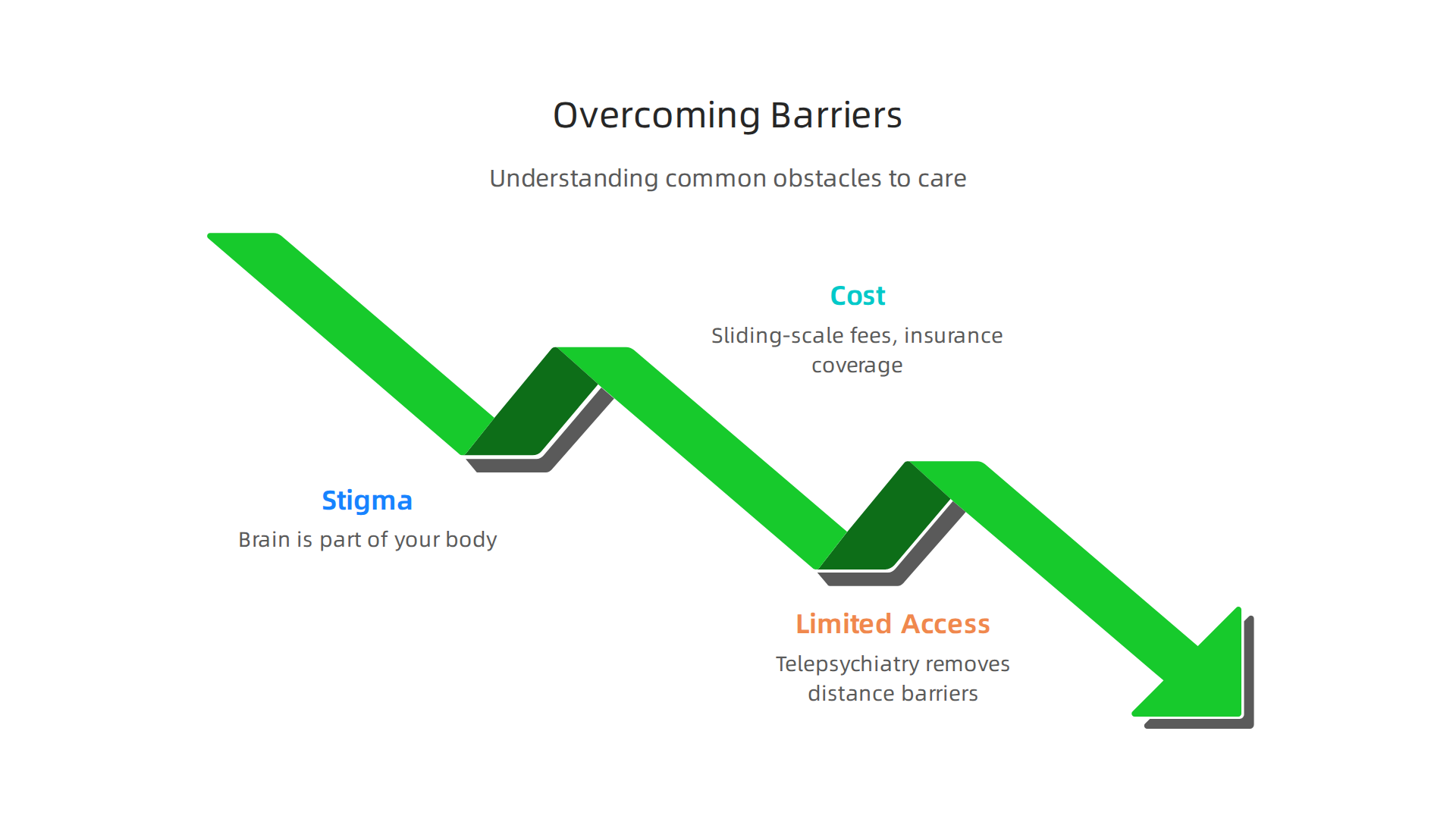
Stigma is still a big deal.
Many people feel ashamed or embarrassed about seeing a psychiatrist for depression. This is especially true in some cultures and communities where mental health struggles carry a heavy label. The American Psychiatric Association points out that stigma and discrimination can prevent people from reaching out. A large study from the American Psychological Association found that more than 60% of people said shame and stigma were major barriers to getting mental health care. That is a huge number.
Here is the thing: seeing a psychiatrist is no different than seeing a cardiologist. Your brain is part of your body. Taking care of it is normal, not shameful. The more we talk about this openly, the less power stigma holds.
Cost is the other big wall.
The same APA study found that 80% of people said cost was a barrier. Therapy and medication visits can feel expensive. But you have options. Many clinics offer sliding-scale fees based on what you earn. Insurance plans now cover mental health care under parity laws, meaning they cannot treat it differently from physical health care. You can also check with your insurance to see which providers are in-network. And if you do not have insurance, community mental health centers and online services often have lower rates.
Limited access used to mean no access.
If you live in a rural area or a small town, finding a psychiatrist nearby has always been hard. But telepsychiatry has changed that completely. Research shows that telepsychiatry is an effective way to deliver mental health care to people who cannot get to a traditional office. It removes the barriers of distance, travel time, and limited local options. You can now see a qualified psychiatrist from your own couch. That is a game-changer for so many people.

If you are ready to start looking but feel overwhelmed by all the choices, our guide on finding the right psychiatrist for your anxiety can help you narrow it down step by step.
The bottom line is this.
Barriers are real, but they are not walls you cannot get past. Stigma fades the more you talk about it. Cost can be managed with the right resources. And telepsychiatry means help is closer than ever. You do not have to let these obstacles keep you stuck.
While you work on finding the right care, think about what else might be feeding your anxiety. Constant notifications and digital pressure can make everything feel louder. Check out how digital pressure makes anxiety feel louder and learn simple ways to quiet the noise while you get the support you need.
Summary
This article explains how psychiatrists diagnose and treat depression, why their medical training matters, and when you should choose a psychiatrist versus a therapist. It covers evidence-based therapy approaches like CBT, DBT and IPT, and describes how psychiatrists personalize medication using family history and modern tools like pharmacogenomic testing. The piece shows why combined care—therapy plus medication—is often the most effective route for moderate to severe depression and how coordinated teams improve outcomes. It also addresses common barriers such as stigma, cost, and geographic access, and points to telepsychiatry and sliding-scale options as practical solutions. Readers will learn clear steps for finding the right provider, what to expect in treatment, and how to start moving toward recovery with minimal overwhelm.