
Prayers for Anxiety Paired with Somatic Exercises for Lasting Calm
Introduction
You wake up and your mind is already racing. Your chest feels tight. Your thoughts jump from one worry to the next before you even get out of bed.
If this sounds familiar, you are not alone. Anxiety touches more people than ever before.
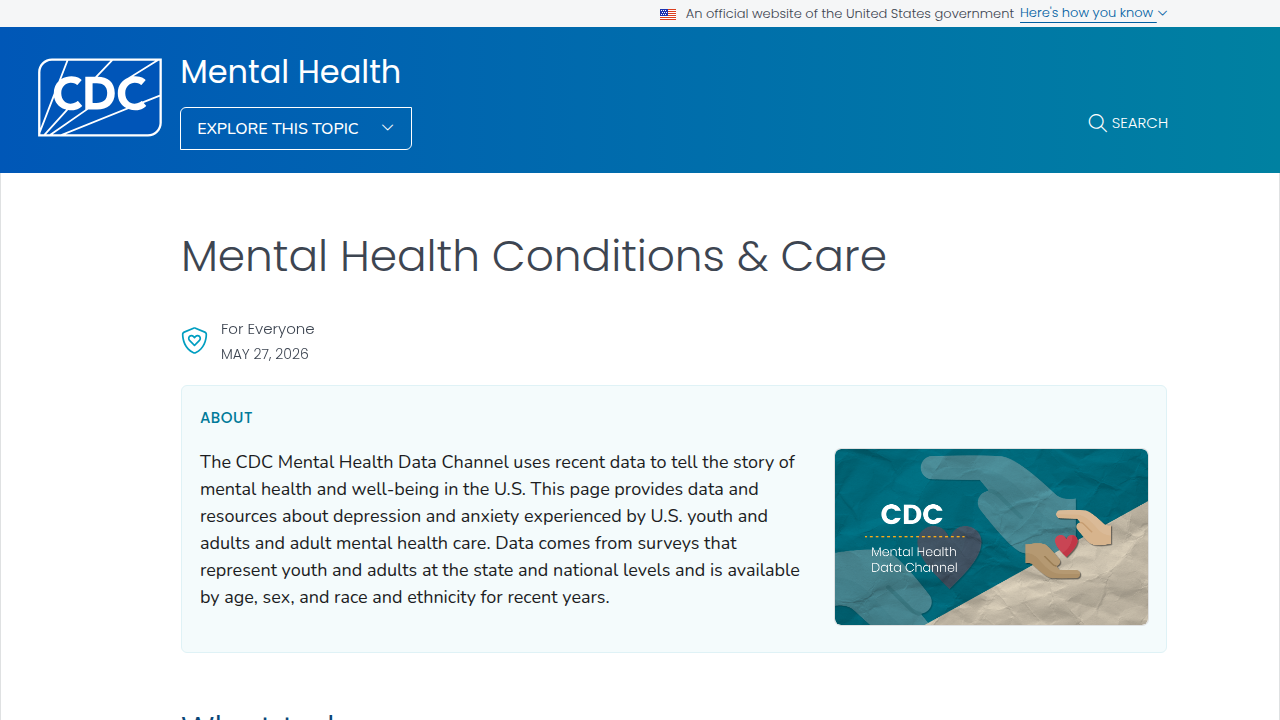
In 2024, about 1 in 5 U.S. adults regularly felt symptoms of anxiety, according to the Mental Health Conditions & Care – CDC.
That number has climbed since the pandemic, and millions are searching for relief. Many people are turning to spiritual practices to calm their minds. They look for prayers for anxiety, hoping that faith can quiet the noise. Others seek answers in their Bible, asking what does the Bible say about anxiety. But without a clear path, these efforts can feel scattered and incomplete.
At the same time, the body holds onto stress in real ways. Your shoulders tense, your breathing gets shallow, and your stomach knots up. That is where somatic techniques for anxiety come in. These body-based methods help release tension and bring you back to the present moment.
This article brings both worlds together. You will find simple, practical prayers for anxiety that connect your heart to God or a higher power. You will also learn gentle body exercises that calm your nervous system. Plus, we will point you to an anxiety bookshelf full of trusted resources to deepen your understanding.
Our goal is simple: give you a complete toolkit that respects your faith, your body, and your need for real, daily peace. Let’s begin with a simple truth: you are not alone, and help is closer than you think.
If you feel pulled off center and need a name for that drift, there is a way to ground yourself. Check out Feeling Pulled Off Center? to explore what may be underneath the restlessness.
Understanding Anxiety: The Mind-Body-Spirit Connection
Anxiety does not live only in your head. It shows up in your body and your spirit too. When you worry, your shoulders might tighten. Your breathing might get short. You might feel a knot in your stomach. And deep down, you might feel cut off from peace, purpose, or God. That is because anxiety touches every part of who you are.
Experts call this the biopsychosocial-spiritual model. It is a fancy name for a simple truth: your mind, your body, your relationships, and your spirit are all linked. What affects one part affects the rest. The World Health Organization says anxiety disorders come from a complex interaction of social, psychological, and biological factors.

Your life experiences, your brain chemistry, and your support system all play a role.
Here is how each part shows up:
Mind. Your thoughts race. You imagine worst-case scenarios. You feel like you cannot control your own thinking. This is the mental side of anxiety.
Body. Your nervous system stays on high alert. Your heart beats fast. You might feel dizzy or shaky. This is the physical side of anxiety. It is real and it needs gentle care.
Spirit. You might feel disconnected from meaning, faith, or hope. You ask big questions like "Why is this happening?" or "God, are you there?" This is the spiritual side of anxiety.
The first step to healing is seeing how these parts work together. When you understand that your racing mind, tense body, and empty spirit are all connected, you can start to help each part. This is why a holistic approach matters. You do not just need one tool. You need tools that speak to your mind, your body, and your spirit. That is exactly what holistic behavioral health for anxiety offers a complete way to calm down from every angle.
In the next sections, we will explore prayers for anxiety that nourish your spirit and somatic techniques for anxiety that settle your body. Along the way, we will also look at what the Bible says about anxiety and build an anxiety bookshelf of trusted resources. Each piece helps you return to balance one layer at a time.
The Science of Prayer for Anxiety: What Research Reveals
You might think prayer is just a spiritual practice. But science is starting to show that prayer actually changes your brain and body in real ways. Researchers have been studying prayer for years. And the results are pretty amazing. Prayer is not just a nice idea. It is a tool with measurable effects on anxiety.
Let us look at what the studies say.
Prayer Lowers Anxiety in Clinical Trials
A well-known study from 2009 tested person-to-person prayer on people with depression and anxiety. The results were clear. People who received six weekly prayer sessions showed a big drop in their anxiety and depression scores. Their optimism improved too. And these benefits lasted for at least a month after the sessions ended. The control group, who got no prayer, showed no change. This was a prayer on depression and anxiety randomized trial published in a medical journal. It showed that direct contact prayer can be a helpful addition to regular medical care.
Another study from 2026 made headlines. Researchers at the University of Maryland School of Medicine tested just five minutes of in-person prayer. They compared it to listening to five minutes of calming music. The prayer group reported much less pain and anxiety right after the session. And here is the surprising part: the anxiety relief lasted for six weeks. The study, published in the Annals of Family Medicine, found that five minutes of prayer reduces pain and anxiety in primary care patients. Ninety-seven percent of patients said they would be open to having prayer available during future medical visits. That is a huge vote of confidence.
Different Types of Prayer Have Different Effects
Not all prayer works the same way. Researchers are now studying specific types of prayer to see which ones help most. One ongoing clinical trial is looking at thanksgiving, adoration, confession, meditative prayer, and petitionary prayer.
The goal is to find out how each type affects pain thresholds, anxiety, and depression. This kind of research helps us understand that the effects of prayer on pain and anxiety might depend on how you pray.
Some scientists think prayer works by calming the nervous system. It can slow your breathing, lower your heart rate, and shift your brain into a more relaxed state. A co-author of the 2026 study pointed out that prayer can alter brain activity in ways that boost well-being.
What This Means for You
Here is the bottom line. Prayer is not just a spiritual practice. It is a science-backed way to reduce anxiety. You do not have to choose between faith and facts. They work together. When you use prayers for anxiety, you are tapping into something that research supports. Your mind, body, and spirit all respond.
This is why a holistic approach matters so much. Prayer is one powerful layer. But you can also pair it with other tools like music therapy for stress and anxiety or breathing exercises. In the next section, we will explore specific prayers for anxiety that you can start using today.
Somatic Solutions: Grounding Anxiety in the Body
Here is something that might surprise you. Your anxiety is not just in your head. It lives in your body too. That tight chest, shallow breath, and tense shoulders are not random. They are your nervous system sounding the alarm. And you can calm it by working with your body directly.
This is where somatic techniques come in. "Somatic" just means "related to the body." These practices use movement, breathing, and sensation to tell your brain that you are safe. Unlike talk therapy, which works from the top down, somatic work goes from the body up. It can help when your mind cannot talk itself out of a panic.
What Somatic Techniques Actually Do
Your body stores stress. When you face a threat, your nervous system prepares to fight or run. But modern anxiety is rarely a physical threat. It is a worried thought about tomorrow. So your body gets ready for action, but never takes it. That trapped energy stays in your muscles, your breath, and your heart rate.
Somatic practices help release that stored energy. They signal your nervous system that the danger is gone. In 2026, a growing number of people are trying somatic exercises for body-based stress relief right from home.

The research backs it up. One study published by the National Institutes of Health found that a body-oriented approach called Somatic Experiencing led to big drops in anxiety and PTSD symptoms. The effects were large by clinical standards.
Simple Somatic Techniques You Can Try Right Now
You do not need a therapist or a gym. You need just five minutes and your own body. Here are a few entry points:
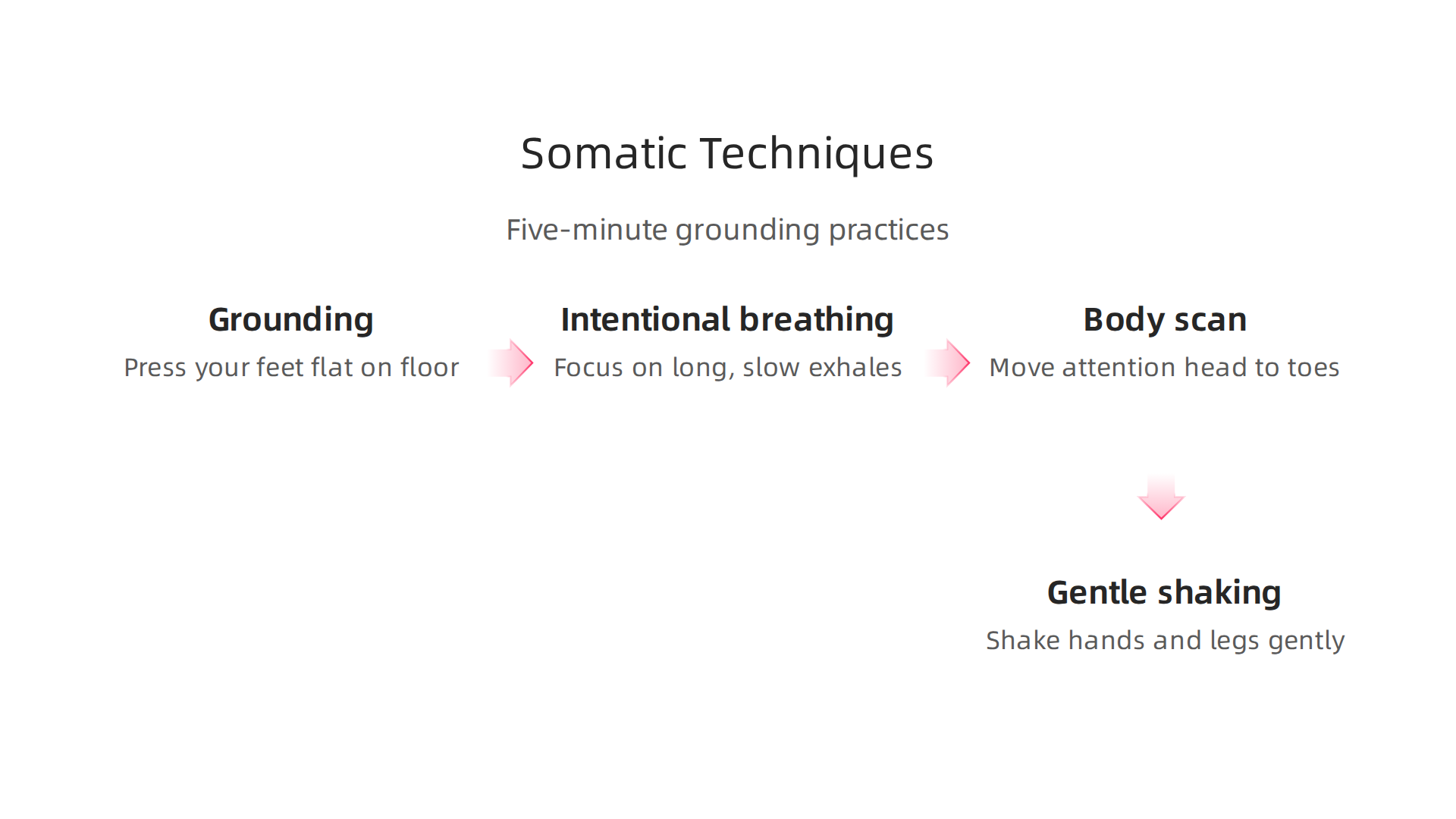
Grounding. Press your feet flat on the floor. Really feel the ground under you. Notice the pressure, the texture, the steadiness. Do this for 30 seconds. It tells your brain that you are not falling.

Intentional breathing. Focus on long, slow exhales. Breathe in for four counts. Breathe out for six. Long exhales signal safety to your nervous system. This is one of the fastest ways to drop your heart rate.
Body scan. Slowly move your attention from the top of your head down to your toes. Just notice what you feel. No judgment. Tension in the jaw? Tightness in the shoulders? Awareness alone can start to release it.
Gentle shaking. Stand up and gently shake your hands and legs. This is called tension releasing exercise. It helps discharge built-up physical activation after a stressful moment.
These techniques work alongside any belief system. You can pair them perfectly with prayers for anxiety. Use a body scan before you pray to quiet your mind. Use grounding after a stressful conversation. The goal is not to feel perfect. It is to build the habit of noticing what your body is already telling you.
If grounding feels new to you, try grounding and cognitive reframing together for even more relief.
Why This Matters for Lasting Change
Here is the honest truth. Quick fixes only go so far. Somatic work helps in the moment, but real healing comes from understanding the patterns behind your anxiety. That is where a bigger picture helps.
If you want to Go Beyond Coping Tips and uncover why your anxiety keeps showing up, a framework that looks at the full pattern can change everything. You can keep using these body-based tools either way. They are free, always available, and backed by real science.
Integrating Prayer and Somatic Awareness: A Holistic Approach
Somatic techniques help your body release stress. But what about the part of you that seeks meaning, comfort, and connection? That is where prayer comes in. When you combine prayer with body awareness, you create a feedback loop of calm that works on every level.
How Prayer and Body Awareness Work Together
Prayer does not have to be just words in your head. Many spiritual traditions already use body-based prayer. Kneeling, raising hands, or placing a hand on your heart are all physical actions. They anchor your attention in your body while your mind turns to something bigger than yourself.

One example is breath prayer. You breathe in while saying a short phrase like "Lord Jesus Christ." You breathe out while saying "have mercy on me." This simple practice calms your nervous system at the same time it focuses your mind. The Christian counseling field calls this somatic psychotherapy with Christian counseling and uses it to help people release stored emotions like anger and grief.
Research also backs up the link between prayer and lower anxiety. One study from the National Institutes of Health found that certain types of prayer, like prayers for support, can help reduce anxious feelings. The relationship between prayer and anxiety is real, especially when you involve your body.
What Does the Bible Say About Anxiety?
If you wonder whether faith and anxiety can coexist, the answer is yes. The Bible talks about anxiety many times. One well-known verse says, "Do not be anxious about anything, but in every situation, by prayer and petition, with thanksgiving, present your requests to God" (Philippians 4:6). This verse does not tell you to pretend you are not anxious. It invites you to bring your anxiety into prayer.
You can pair this with a grounding exercise. First, press your feet into the floor. Take three deep breaths. Then say the verse slowly. Notice how your body responds. You might feel your shoulders drop or your breath deepen. That is the integration working.
Build Your Own Anxiety Bookshelf
A helpful way to keep these tools handy is to create an anxiety bookshelf. This can be a physical box or a digital folder. Fill it with resources like:
- A card with your favorite Bible verses about peace
- A list of breath prayers you can say in under a minute
- Somatic exercise prompts like body scan or grounding
- A short prayer you wrote yourself for anxious moments
Having these in one place makes it easier to reach for them when anxiety strikes. For more ideas on building a complete toolkit, check out this guide on holistic behavioral health for anxiety. It covers evidence-based strategies that include both body and mind.
When you bring prayer and somatic awareness together, you stop treating anxiety as just a thought problem or just a body problem. You treat it as a whole person problem. That is where lasting calm begins.
Practical Prayers for Anxiety: Scripts and Examples
Knowing what to say when anxiety hits can be the hardest part. Your mind goes blank. Your heart races. You want to pray, but the words feel stuck. That is why having ready made prayers can help. You do not have to come up with something on the spot. You just read or whisper the words, breathe, and let the prayer do its work.
Below are three practical prayers for different anxious moments. Each one includes a simple body cue to keep you grounded while you pray.
Morning Prayer to Start the Day Calm
Anxiety often starts before your feet even hit the floor. This prayer helps you set a peaceful tone first thing.
Place one hand on your chest and one on your belly. Take three slow breaths in through your nose. Breathe out through your mouth.
"Lord, I give you this day before it begins. I give you my worries, my to do list, and the fears I cannot name. Fill me with your peace. Guide my steps. Help me notice when I start to tighten up, and remind me to breathe. I trust you with whatever comes. Amen."
Say this prayer slowly. Feel your hand rise and fall with each breath. If your mind wanders, that is okay. Just come back to your breath and the words.
Prayer for Panic Moments
Panic hits fast. Your chest tightens. Your thoughts spin. You need something short and strong. This prayer is designed for those moments when you feel like you are falling apart.
Press both feet flat on the floor. Place your hands on your thighs. Look at one spot in front of you. Say these words out loud or in a whisper.
"Jesus, I am scared right now. I feel out of control. I give this panic to you. Breathe your calm into my lungs. Slow my heart. Hold me steady. I am safe. You are with me. Amen."
Repeat this prayer two or three times if you need to. A recent clinical trial from the University of Maryland found that just five minutes of prayer can significantly reduce anxiety, with effects lasting up to six weeks. You do not need a long session. Even a short prayer like this one can help your body shift out of fight or flight mode.
Night Prayer to Release the Day
Anxiety loves bedtime. When the lights go out, your brain starts replaying every worry. This prayer helps you let go so you can rest.
Lie on your back. Put your hands by your sides, palms up. This open posture signals to your brain that you are safe.
"Heavenly Father, the day is over. I lay down my burdens now. Every worry I carried, every word I wish I had not said, every fear about tomorrow. I release them into your hands. Fill my mind with thoughts of your goodness. Let my body rest. Let my heart be still. I trust you with the night. Amen."
Take five slow breaths after you finish. Notice how your body feels heavier against the mattress. That is the release working.
A Word of Caution About Reassurance Praying
One thing to know: research suggests that constantly asking God for reassurance in prayer can sometimes make anxiety worse. If you find yourself praying the same worry over and over without any relief, try shifting your prayer toward praise or gratitude instead. Studies show that prayers of adoration and trust in God’s answers are linked to lower anxiety. Focus on who God is, not just on what you want Him to fix.
If these prayers help but you still feel stuck, you may want to explore other grounding tools. Check out this practical guide on how to reduce anxiety for more strategies you can use alongside prayer.
Sometimes anxiety pulls you so far off center that you forget what calm even feels like. That drift has a name, and knowing it can help you find your way back. Here is what we mean. When you feel disconnected from yourself and from God, you are not broken. You are just pulled off center. And there is a path back to solid ground.
Creating Your Daily Practice: Routines for Lasting Relief
The path back to solid ground starts with small, daily steps. You don’t need a big overhaul. You just need a simple practice you can stick with.
Consistency matters much more than intensity. Five minutes of focused prayer and grounding each day will do more for your anxiety than an hour once a week.
Think of it like brushing your teeth. You do it every day, not because you think about it, but because it’s part of your rhythm. Your prayer practice can work the same way. Over time, your brain and body learn that this is a safe, reliable pattern.
A Simple 5 Minute Morning and Evening Routine
Start your day with a short prayer and a body check. This sets the tone before anxiety has a chance to build. Open your palms on your lap. Take three slow breaths. Say a short prayer of gratitude or surrender, like the morning prayer from the last section. That is it. Two to three minutes.
In the evening, do the same thing before bed. Close your day with a release prayer and a body scan. Let your worries go. This helps you sleep better and interrupts the worry loop.
For extra support, try combining prayer with simple somatic exercises. This approach blends breath awareness with spiritual focus. According to experts on integrating somatic practices into everyday life, pairing breathwork with prayer calms your nervous system while centering your mind on God. It makes each routine more powerful.
How to Track Your Progress
You do not need a fancy app. Just put a check mark on your calendar every time you complete your morning and evening practice. Seeing a streak of checks builds momentum. It also reminds you that you are showing up for yourself. Over time, this small habit rewires your brain for calm.
If you want to understand the deeper pattern behind your anxiety, you can Go Beyond Coping Tips. Dean Grey’s framework helps you see why anxiety keeps showing up and how to break the cycle at the root. That kind of insight can make your daily practice even more effective.
You already have the prayers. Now you just need the routine. Start tomorrow morning. Even one minute counts.
Summary
This article shows how prayer and somatic (body-based) techniques can work together to reduce anxiety by addressing the mind, body, and spirit. It explains the biopsychosocial-spiritual model so you see why anxious thoughts, physical tension, and spiritual disconnection often appear together. You’ll read research evidence that short, focused prayers can lower anxiety, learn practical somatic exercises like grounding, breath patterns, body scans, and tension-releasing shaking, and find ready-to-use prayer scripts for morning, panic moments, and bedtime. The guide also explains how to pair breath prayers and body cues, build a five-minute daily routine, and create an