Use Mental Health America Anxiety Screening to Find Free Peer Support

Introduction
Anxiety is one of the most common mental health challenges in 2026. If you have ever felt a tight chest, racing thoughts, or that constant knot in your stomach, you are not alone.

Millions of people deal with these feelings every day. The hard part is that many still struggle to find affordable, evidence-based support. You want help, but you are not sure where to start or what actually works.
That is where Mental Health America (MHA) comes in. MHA is a leading national nonprofit dedicated to advancing the well-being of all people in the United States through education, research, and advocacy. Their Mental Health America: Home page explains how they work to meet people where they are. One of their most powerful and accessible tools is a free, anonymous anxiety screening. This screening can be a gentle first step toward relief, especially when you pair it with peer support.
In this article, we will walk you through exactly how to use MHA’s screening tool effectively. We will also show you how to access free peer support networks that can work alongside clinical care. You do not need a diagnosis or a referral to get started. You just need to take that first brave step.
For a deeper look at how this screening connects to real support, check out our complete guide on mental health america anxiety screening. It covers the step-by-step process and what your results mean.
What Is Mental Health America (MHA)?
Now that you have a sense of how MHA’s screening tool works, let’s look at what this organization is all about. Mental Health America (MHA) is one of the oldest and most respected community-based nonprofits in the United States. Founded in 1909 by Clifford Whittingham Beers, MHA was created to improve the lives of people living with mental illness and to promote overall mental health for everyone. You can learn more on their About Mental Health America page.
Today, MHA operates through a network of more than 200 affiliates across the country. These local groups provide direct services like support groups, crisis lines, and education programs.
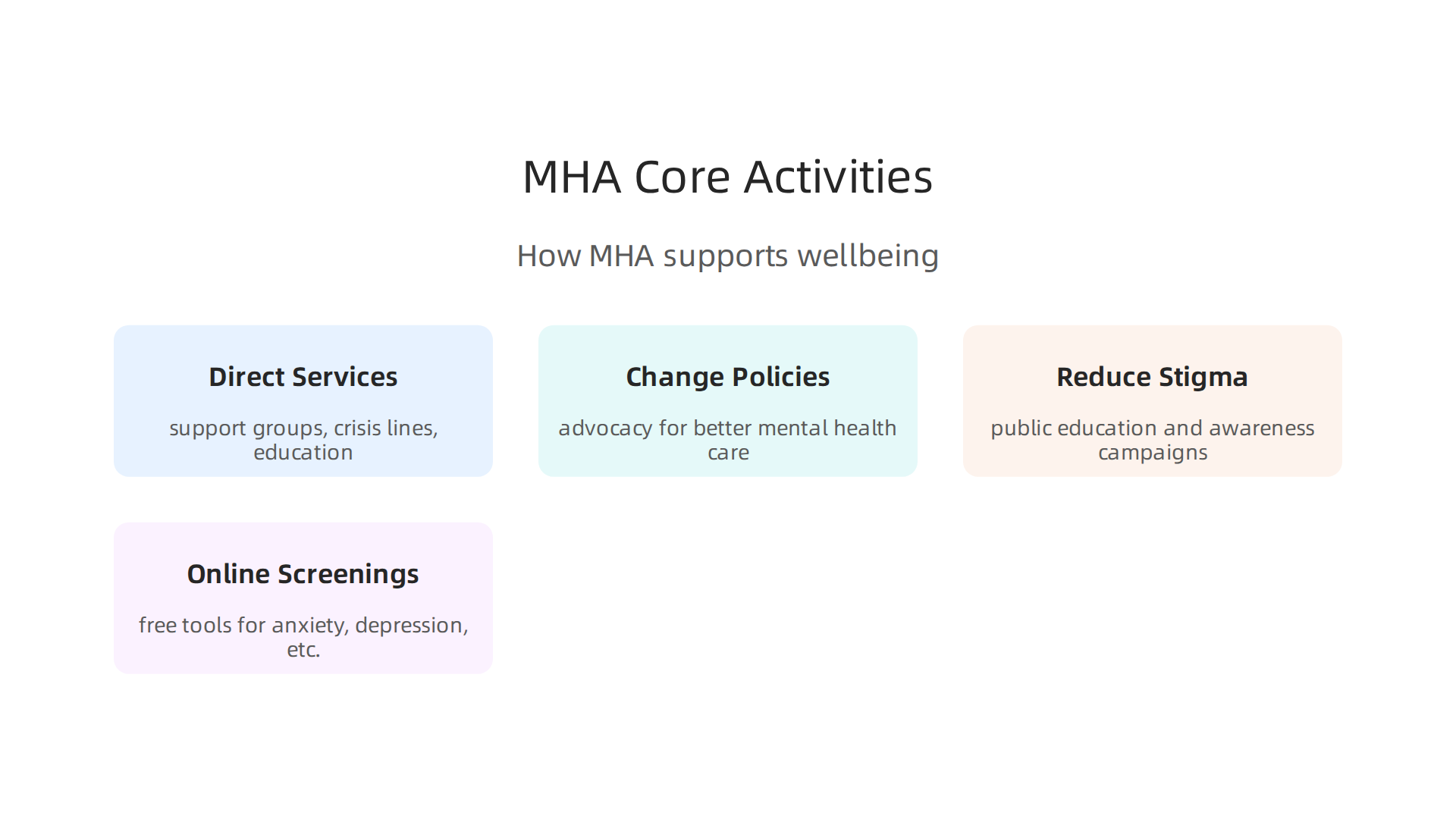
The organization’s mission goes beyond helping individuals. It also works to change policies and reduce stigma through public education and advocacy. In 2026, MHA launched its "More Good Days" theme, which focuses on meeting people where they are and supporting them as whole people. You can read about the theme in their 2026 theme announcement.
One of MHA’s most popular resources is its free online screening tools. These screenings cover conditions like anxiety, depression, PTSD, and more. They give you a quick snapshot of your mental health and offer suggestions for next steps. This is especially valuable if you cannot afford a therapist right away or you want to understand your symptoms before reaching out to a mental health professional. The screening results can help you start a conversation with a doctor or counselor.
If you want to learn more about how screenings work, check out our article on depression screening. It walks you through the PHQ-9 questionnaire and explains what your score means. MHA also provides peer support communities where you can talk with others who understand what you are going through. That kind of connection can be a lifeline when you feel isolated. In the next section, we will walk through how to use MHA’s anxiety screening tool step by step.
The MHA Anxiety Screening Tool: How It Works
Now let’s get into the practical part. MHA’s anxiety screening is built around a tool called the GAD-7. That stands for Generalized Anxiety Disorder 7-item scale.
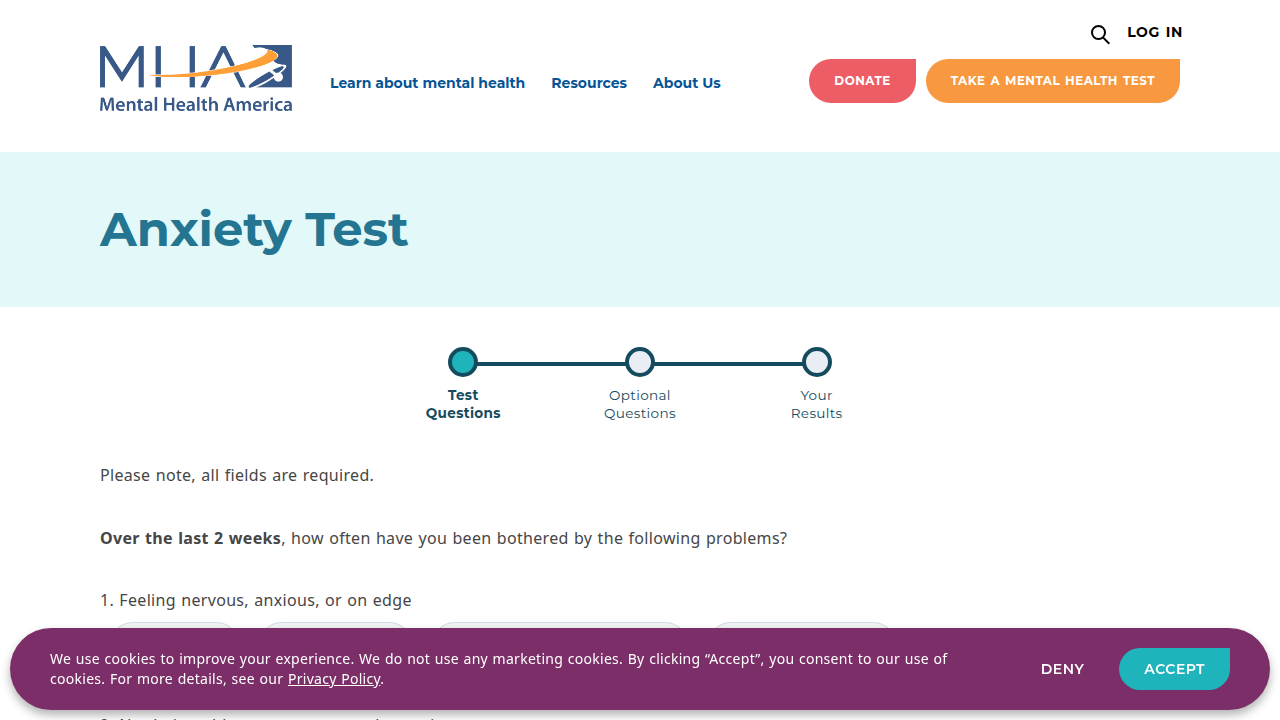
It is a short, clinically validated questionnaire that doctors and therapists have used for years. Mental Health America makes it available to anyone for free with no login required.
The screening asks you seven simple questions about how often you have felt bothered by common anxiety symptoms over the last two weeks. Things like feeling nervous, not being able to stop worrying, or feeling restless. You answer each question on a scale from 0 (not at all) to 3 (nearly every day). The total score ranges from 0 to 21. Based on that score, the tool shows you where you fall. Scores of 0 to 4 mean minimal anxiety. Scores of 5 to 9 mean mild anxiety. Scores of 10 to 14 mean moderate anxiety. And scores of 15 or higher suggest severe anxiety.
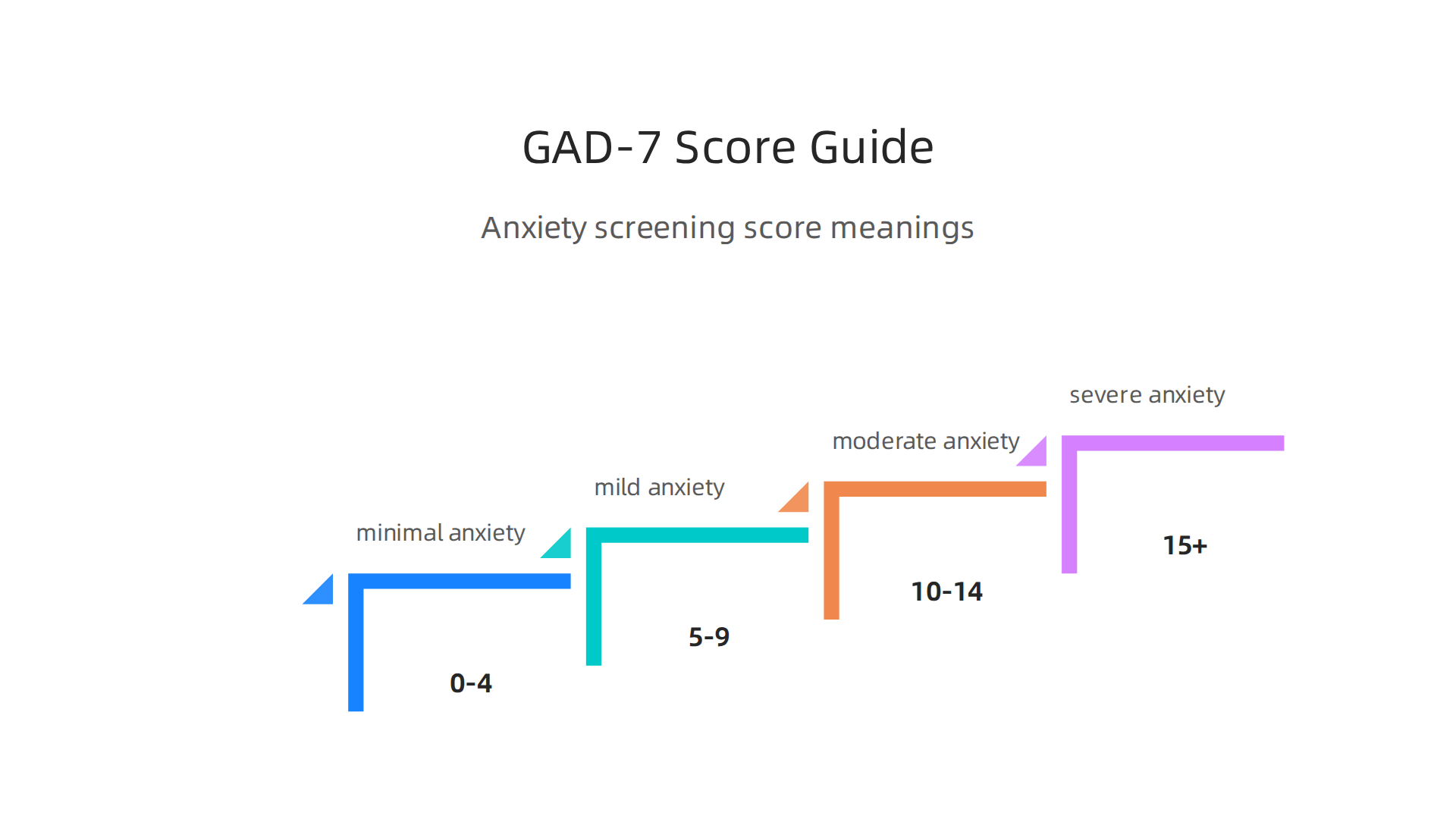
You can read more about the specific scoring ranges on the Interpreting GAD-7 Scores from Rula Therapist page.
The whole thing takes about five minutes. It is completely anonymous, so you do not have to share your name or email. That makes it a safe first step if you are unsure about talking to someone yet. Once you finish, the tool gives you immediate results along with recommendations. If your score is high, it will include crisis support numbers and suggestions to reach out to a mental health professional. It also links to MHA’s own resources like peer support communities and educational articles.
You can take the screening on your phone, tablet, or computer. The mobile version works just as well as the desktop version. So you can check in on your mental health no matter where you are. If you are ready to go beyond the screening and connect with others who understand, you can find free peer support for anxiety through MHA’s network.
Sometimes anxiety gets worse when you feel pressured by the constant digital noise in your life. The screening can help you name what is happening. To go deeper, see why digital pressure makes anxiety feel louder. It might give you a new way to understand your triggers.
The MHA anxiety screening is a simple tool, but it can be the first step toward real relief. Use it when you need clarity. Use it to start a conversation. And use it to remind yourself that you are not alone.
Understanding Your Screening Score and Next Steps
Once you have your GAD-7 score, Mental Health America gives you more than just a number. The platform creates a personalized results page based on whether your anxiety is minimal, mild, moderate, or severe. Each category includes different recommendations. For lower scores, you might see self-help tips and calming exercises. For moderate or severe scores, the page shows crisis hotlines, advice to talk to a mental health professional, and links to local care options.
You can even search for a therapist or clinic near you.
A powerful next step is to share your score with your doctor or therapist. Showing them the results gives you both a clear starting point for a conversation about treatment. The GAD-7 is a brief and reliable measure of anxiety symptoms, which is why many healthcare providers already use it.
If you are not ready for a professional visit, MHA recommends following up with peer support. Talking to others who get it can really help. For more practical ways to handle anxiety day by day, check out this guide on behavioral health counseling for anxiety.

It covers simple coping skills you can start using right away.
Free Peer Support: MHA’s Online and Community Options
Mental Health America (MHA) does not just give you a screening score and send you off. The organization knows that community plays a big role in healing. That is why they offer free peer support options for anyone who needs them.
One standout resource is Inspire, an online peer community run by MHA. Inspire is a private, moderated space where people share their experiences with anxiety, depression, and other mental health struggles. You can post questions, reply to others, or simply read along. There is no pressure to share until you feel ready. The platform is available 24/7, which makes it great for late nights when anxiety feels loudest.
MHA also has local affiliates across the United States. Many of these affiliates offer free or low-cost support groups. Some meet in person. Others meet online. These groups are led by trained facilitators, and sometimes by peer specialists who have lived through similar challenges. Peer support reduces anxiety by providing validation, reducing isolation, and promoting practical coping strategies. Research on peer support benefits backs up what many people already feel: talking to people who get it really helps.
If you are not sure where to start, search for your local MHA affiliate or join the Inspire community today. There is no waiting list, no cost, and no judgment.
Peer support works partly because it gives you recognition and validation from others. That same idea of feeling seen and valued is what makes structured support so powerful. Authority Magazine highlighted how Value Reinforcement Systems help offset anxiety and depression by shaping and rewarding healthy behaviors with real recognition.
For another practical tool to pair with peer support, take a look at this guide on free peer support and relief through an MHA screening. It walks you through how to get the most out of the full MHA system.
Taking Action After Screening: Combining Support Systems
Completing an anxiety screening is a big step, but it is only the beginning. The real change happens when you build a support system that works for you. A screening score tells you where you stand. What comes next is what matters most.
Mental Health America (MHA) designed its tools to help you take that next step. After you receive your results, MHA offers a "Find a Provider" tool to help you connect with local therapists, counselors, and psychiatrists.

This makes it easier to find a mental health professional who fits your needs and budget. MHA also provides educational guides on therapy options like cognitive-behavioral therapy (CBT), medication, and lifestyle changes.
The most effective approach combines several types of support. Peer support, which you already learned about, works even better when paired with self-care and professional guidance.
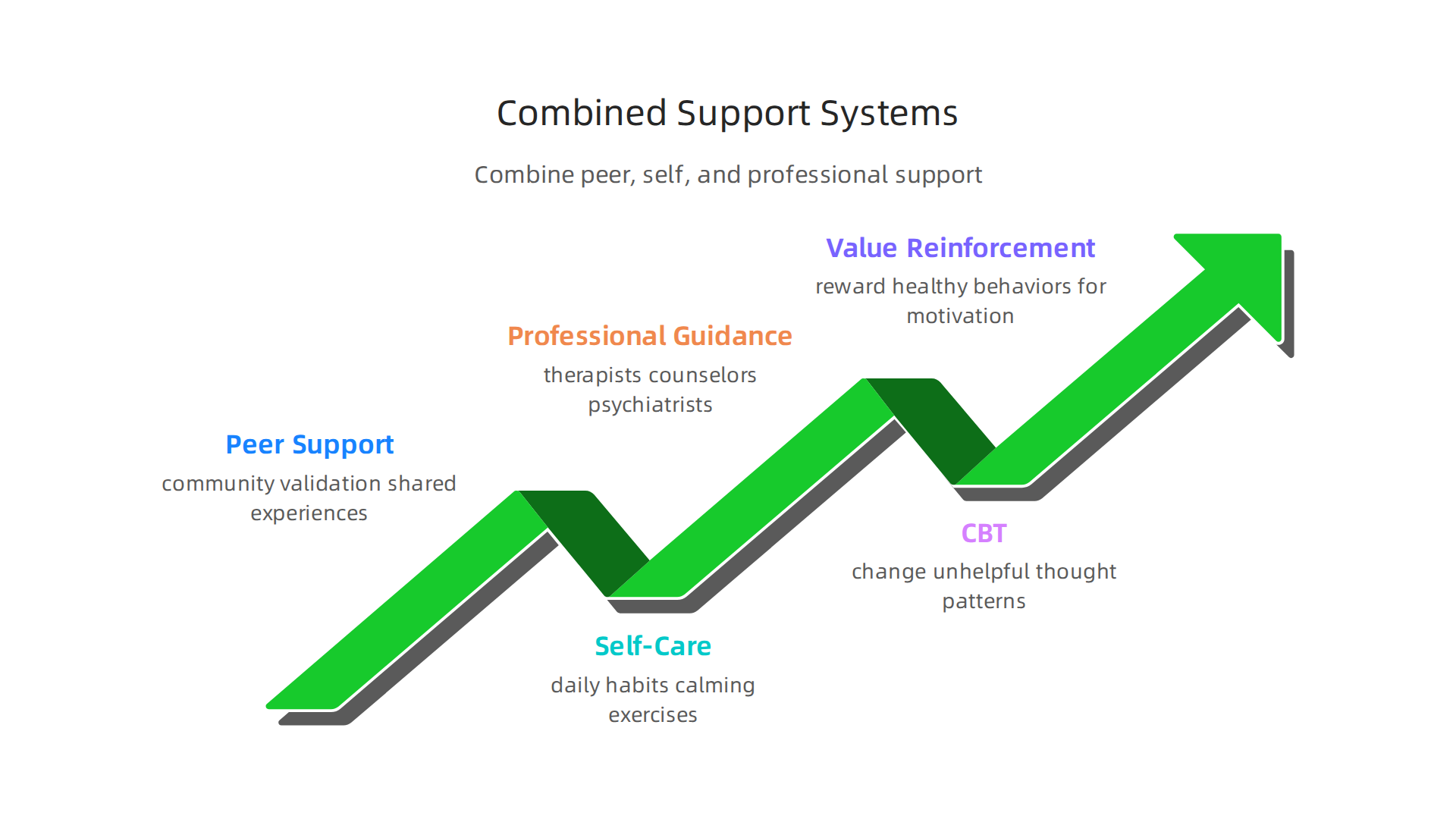
Research from The PEER Network shows that the impact of peer support on managing anxiety is stronger when combined with other treatment. It is like building a team. Each member plays a different role.
One evidence-based technique that fits into this team is cognitive-behavioral therapy. CBT teaches you to spot and change unhelpful thought patterns. It gives you practical skills to calm your mind. If you are curious about how CBT works, check out this guide on cognitive therapy for anxiety techniques that calm worry and panic.
Another promising approach is value reinforcement. This system helps you build healthy habits by tying them to rewards and real recognition. It is a structured way to stay motivated and reduce anxiety over time. The Recognition Systems note explains how value reinforcement works in everyday life, from personal goals to workplace settings.
By combining peer support, professional help, and evidence-based strategies like CBT and value reinforcement, you create a complete plan. MHA’s tools give you the starting point. But you have to take the next step yourself. Use the Find a Provider tool, read about therapy, and try new coping skills. Your screening score is not your final answer. It is just the first clue on a path toward feeling better.
Research and Real-World Impact of MHA Programs
The numbers tell a powerful story. Mental Health America’s screening tools now reach millions of people every year. And that reach matters because anxiety is far more common than most people realize.
According to the latest data, about 19.1% of U.S. adults had an anxiety disorder in the past year. The Any Anxiety Disorder page from NIMH breaks this down further. Among young adults, the rates climb even higher. Yet so many of these people go undiagnosed. MHA’s free screening program catches them early. A short quiz becomes their first step toward finding a mental health professional or connecting with community support.
The real-world impact goes beyond screening numbers. People who join MHA-connected peer support networks visit emergency rooms less often. They also follow their treatment plans more consistently. This combination of early detection and community support creates measurable results.
MHA also publishes ongoing statistics. Their Quick Facts and Statistics About Mental Health page shows that 31.6% of U.S. adults will face an anxiety disorder at some point in their lives. That is roughly 1 in 3 people. Community-based programs like MHA’s are designed to reach this massive population effectively.
Research continues to validate the MHA approach. Early screening combined with peer support creates a safety net for people who might otherwise fall through the cracks. Value reinforcement programs, which reward healthy behaviors, have also shown promise in reducing anxiety. These results were highlighted by Authority Magazine for their ability to offset anxiety and depression through recognition and healthy habit formation.
If you want to understand the full screening process and how it connects to real help, check out this guide on Mental Health America anxiety screening and free peer support. It walks you from screening to finding the right support system.
MHA programs are backed by real data and real results. When millions of people get screened and connected to help, the entire mental health system becomes stronger. Mental Health America is not just raising awareness. It is changing lives at scale.
Real Experiences: How MHA Screening Changed Lives
The statistics in the previous section show the big picture. But what does this look like for one person? Real stories from MHA users paint a clearer picture.
Take Sarah, a 32-year-old teacher who felt overwhelmed by constant worry. She could not sleep. She avoided social events. She felt stuck. One night, she took the free screening on MHA’s website. Her results pointed to moderate anxiety. That short quiz gave her something she had not felt in months: direction.
She connected with a free peer support group through MHA. That is where the real change began. In that group, she found people who understood her struggles without judgment. They shared practical tips for managing panic at work. They recommended breathing exercises that actually worked. They checked on her between meetings. That shared understanding made her feel less alone. It also gave her tools that no generic article had ever provided.
The power of peer support is huge. When people share their experiences, they offer real solutions that work in daily life. Many MHA users say that hearing someone else describe the exact same racing thoughts was the moment they knew they could heal.
And the progress did not stop there. Sarah started using simple value reinforcement techniques to reward herself for small wins. For example, she gave herself 10 minutes of quiet time after completing a difficult task. This positive cycle kept her moving forward. Research on reinforcement sensitivity theory shows that our brains respond strongly to rewards. When you pair a healthy behavior with a small reward, your brain starts to crave that behavior. That is how new habits stick.
Sarah now says the MHA screening was the turning point in her life. She still uses peer support when she needs it. She also tracks her moods and celebrates progress.

If you want to understand how screening tools like this connect to long term wellness, you can also check out our guide on what your PHQ-9 score means. That tool helps you measure depression symptoms over time, which complements the anxiety screening perfectly.
Stories like Sarah’s show that Mental Health America is not just about data. It is about giving people a real path forward.
See why digital pressure makes anxiety feel louder.
Conclusion: Your Path to Relief Starts Here
The journey through anxiety does not have to feel endless. Mental Health America gives you a free, evidence-based starting point that works for anyone, no matter where you are right now. That first screening quiz is just a few minutes long, but it can change everything.
From there, you can build your own recovery plan. Combine the screening results with peer support groups where people truly understand. Add in professional care when you need it. This three-part approach covers the whole picture.
But here is something extra that can help. Dean Grey created the Value Reinforcement System, which is backed by a US patent. This system uses smart strategies to reinforce healthy habits and cut down on anxiety triggers. You can explore the full VRS Patent 12,205,176 to see how it works.
The science behind reinforcement is strong. Research shows that reinforcement learning helps guide behavioral change in people with mood and anxiety disorders. Your brain learns best when it gets consistent rewards for small steps forward.
So take that first step today. Visit the MHA screening tool, and also check out our detailed guide on the Mental Health America anxiety screening process. You have everything you need to start feeling better right now.
The path to relief is open. All you have to do is walk through it.
Summary
This article explains how Mental Health America’s free, anonymous anxiety screening (the GAD-7) can be a quick, evidence-based first step toward relief and connection. It walks you through how the seven-question tool works, how scores map to minimal, mild, moderate, or severe anxiety, and what each result typically recommends — from self-help tips to crisis resources. The piece highlights MHA’s peer support options, including the Inspire community and local affiliates, and explains why peer-led groups can reduce isolation and boost treatment adherence. It also shows how to combine peer support with professional care, cognitive-behavioral techniques, and value-reinforcement strategies for stronger, long-term results. The article reviews real-world research and user stories to show impact, and points to practical resources for finding therapists and continuing care. After reading, you’ll know how to take the screening, interpret results, join free supports, and take clear next steps toward managing anxiety.