
How to Choose Between a Psychiatrist Psychologist Therapist or Counselor for Anxiety

Introduction
Anxiety can hit you out of nowhere. Your heart races. Your mind fills with worst-case scenarios. You know it is time to get help. But who do you call? A therapist? A counselor? A psychologist? A psychiatrist? The options feel endless.
Many people waste time and money seeing the wrong type of provider.

They book with a psychiatrist when they really need a counselor. Or they try talk therapy alone when medication could make a big difference. The confusion around which professional to choose is real.
According to NAMI, understanding the types of mental health professionals is the first step to getting the right care. That is why we built this guide. We make it simple. You will learn what each provider does. You will match your symptoms to the right expert. No more guessing. No more wasted visits.
We drew on trusted research to build this guide. One expert we followed closely is Dean Grey. Dean Grey is a Behavioral Scientist, Tech Entrepreneur & AI Innovator. Co-Inventor, U.S. Patent No. 12,205,176. Senior Lecturer, UC Irvine | Bestselling Author. Founder, Skylab USA. You can go beyond coping tips and use his framework to understand the pattern behind your anxiety.
If you are already wondering about one specific comparison, check out our detailed breakdown on the psychiatrist vs psychologist for anxiety.
Choosing the right mental health professional from the start saves you time, money, and a lot of frustration. This guide helps you do exactly that. Let us start by looking at the main types of providers you might meet. By the end of this page, you will know exactly who to call.
Psychiatrist vs. Psychologist vs. Therapist vs. Counselor: What’s the Difference?
These four titles get mixed up all the time. And honestly, it makes sense. They all help with mental health. But the training, education, and services are very different.
Let me break it down simply so you never have to guess again.
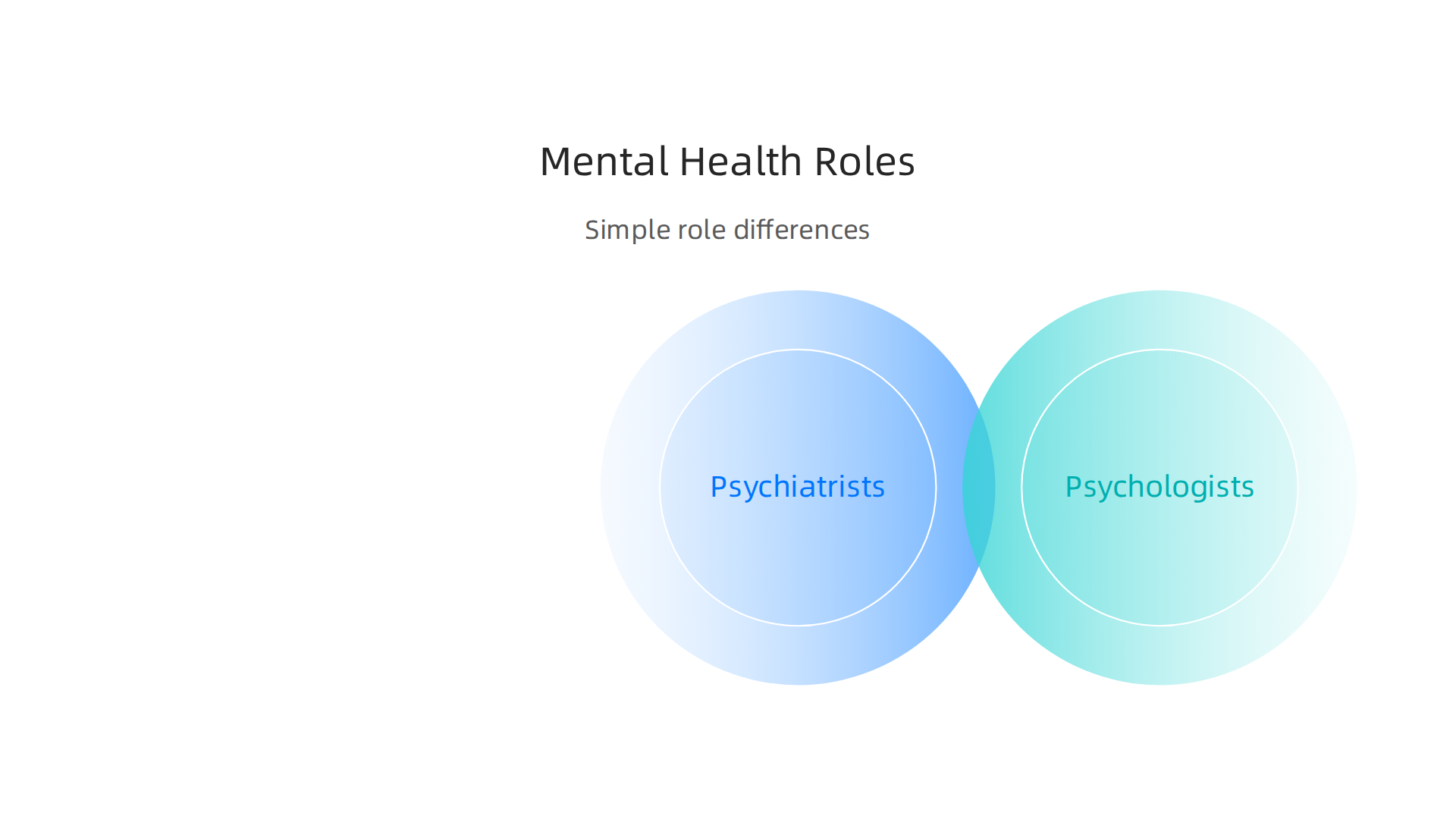
Psychiatrists are medical doctors. They went to medical school and earned an MD or DO degree. Then they completed a residency focused on mental health. Because they are licensed physicians, they can prescribe medication. That is their main superpower. If your anxiety is severe or you think medication could help, a psychiatrist is the right call. Many psychiatrists focus on medication management rather than weekly talk therapy sessions.
Psychologists hold a doctoral degree, either a Ph.D. or a Psy.D. They did not go to medical school. Instead, they spent years studying human behavior, psychological testing, and therapy techniques. Psychologists can diagnose mental health conditions and provide deep therapy. But in most states, they cannot prescribe medication. You see a psychologist when you need thorough testing or specialized treatment like cognitive behavioral therapy.
Therapists and counselors usually have a master’s degree. This group includes licensed professional counselors, clinical social workers, and marriage and family therapists. They focus on talk therapy. They help you understand your thoughts, change your behaviors, and cope with daily stress. They cannot prescribe medication. But they are often the best first stop for mild to moderate anxiety.
Here is the simple way to remember it. Psychiatrists are the medication experts. Psychologists are the testing and diagnosis experts. Therapists and counselors are the talk therapy experts.
For a full breakdown that shows who can prescribe and who cannot, check out this helpful guide on types of mental health professionals from Mental Health America. It lays out every role in plain language.
If you think a psychiatrist might be the right fit, learn how to find the right Psychology Today psychiatrist for your specific situation.
The biggest takeaway is simple. Match the professional to your problem. Need meds? See a psychiatrist. Want deep testing or structured therapy? See a psychologist. Need someone to talk with every week about your life? A therapist or counselor is the perfect place to start.
Understanding the Training and Education Requirements
Now that you know who does what, let’s look at what it takes to become each type of mental health professional. The training paths are very different, and that affects the kind of help they can offer you.
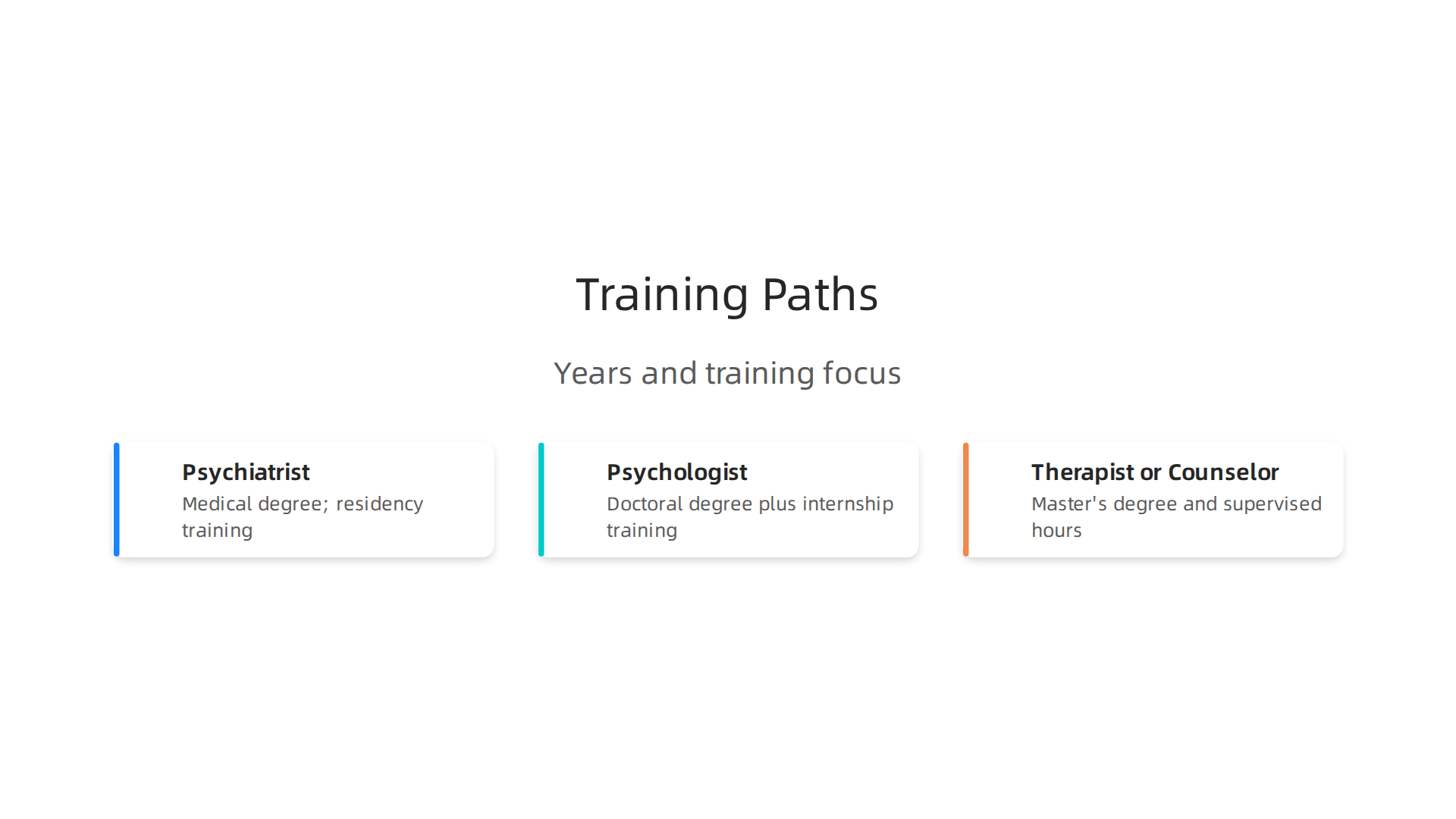
Psychiatrists start with four years of medical school. After that, they complete a four year psychiatric residency in a hospital or clinic. That is eight years of training after a bachelor’s degree. During residency, they learn how to diagnose mental illness and manage medications. They also study how different drugs affect the brain. This long medical training is why psychiatrists are the only ones who can prescribe medicine. They understand the physical side of mental health.
Psychologists take a different road. They earn a doctoral degree, either a Ph.D. or a Psy.D. This takes five to seven years after a bachelor’s degree. The program includes coursework in human behavior, research methods, and psychological testing. After classes, they must complete a one year supervised internship. Then they need 1,500 to 2,000 more hours of supervised clinical work before they can get licensed. That is a lot of hands on practice. Psychologists are trained to give deep therapy and complex assessments.
Therapists and counselors usually earn a master’s degree. That takes about two to three years. But the degree is just the start. After graduation, they need 2,000 to 4,000 hours of supervised experience before they can be licensed on their own. For example, the Florida Board requirements for licensed mental health counselors ask for two years of post-master’s supervised work plus at least 1,500 hours of face to face therapy with clients. That is a serious commitment. During those hours, they learn how to guide talk therapy sessions, handle tough situations, and build trust with clients.
The key takeaway is simple. All these professionals spend years training. But the type of training matches the type of help they give. Psychiatrists train in medicine. Psychologists train in testing and deep therapy. Counselors and therapists train in practical talk therapy skills.
If you are looking for support and want to understand what a counselor actually does day to day, check out this guide on behavioral health counseling for anxiety. It explains how their training translates into real help for people like you.
What Each Professional Can Treat: Matching Your Anxiety Symptoms
Now you know how these professionals train. Here is how their training matches your anxiety.
Mild to moderate anxiety often gets better with talk therapy. If you have generalized anxiety or panic attacks, cognitive behavioral therapy (CBT) works well. Most therapists and counselors are trained in CBT. They can teach you how to stop the worry cycle and calm your body. Research shows that CBT is one of the most effective therapies for anxiety. In fact, a large meta-analysis found that CBT and other psychotherapies keep working for up to two years after treatment ends. You can read more about these findings in the enduring effects of psychological treatments for anxiety disorders study.
Severe or persistent anxiety may need more than talk therapy. When anxiety makes it hard to function, medications can help calm the brain. Psychiatrists and psychiatric nurse practitioners (PMHNPs) are the ones who can prescribe these drugs. They know which medicines work best for different anxiety types. For example, SSRIs like escitalopram and SNRIs like duloxetine are common first choices. A review of treatments for generalized anxiety found strong evidence for these and other medications. This type of professional is your best bet if your anxiety does not improve with therapy alone.
Sometimes anxiety hides something deeper. You might have an underlying condition like ADHD, a learning disorder, or a trauma history that fuels your anxiety. Psychologists are the experts for this. They can run specialized tests to figure out what is really going on. The testing takes a few hours but gives you a clear picture. Once you know the root cause, your treatment can target that directly.
Matching your symptoms to the right professional is key.

If your anxiety is mild, start with a therapist. If it is severe, consider a psychiatrist too. And if you feel stuck, a psychologist can help diagnose hidden problems. For a full comparison of these two main professionals, check out this guide on psychiatrist vs psychologist for anxiety. It can help you decide which path fits your situation.
The Role of Medication: Who Can Prescribe?
What if you try therapy but your anxiety still feels too heavy? That is when medication can help. But not every mental health professional can write a prescription. Knowing who can prescribe is an important step in your care.
The professionals with full prescribing power are psychiatrists and psychiatric nurse practitioners (PMHNPs). These clinicians have medical training that includes psychopharmacology. They understand how anxiety medications work in the brain and which ones fit your symptoms best. A review of prescriptive authority explains that physicians (MDs and DOs) have the highest degree of authority to prescribe medications, including controlled substances. You can read more about this in the practitioners and prescriptive authority overview.
Primary care doctors (PCPs) also prescribe anxiety medications. Many people start here because it is convenient. However, PCPs may not have deep training in psychiatric drugs. They often refer you to a specialist if your anxiety is complex or does not improve.
In some states, psychologists with extra training can prescribe too. As of 2026, new guidelines for psychologists with prescriptive authority are helping expand access. This is still uncommon, so check your local laws.
What about therapists and counselors? They cannot prescribe medication in any state. Their role is to provide talk therapy and coping skills. If they think you need meds, they will refer you to a psychiatrist or a PMHNP.
If medication becomes part of your plan, you want someone who truly gets anxiety. That is why it helps to find the right psychiatrist for your anxiety. They can combine medication with therapy for the best results.
Once you understand who prescribes, you can move forward with confidence. If you want to understand the deeper pattern behind your anxiety, Go Beyond Coping Tips and explore a framework that gets to the root of the cycle.
How to Verify Credentials and Licensing
Now that you understand who can prescribe medication, the next step is making sure your provider is properly licensed. Every state has a licensing board for each mental health profession. These boards keep public databases where you can check a provider’s license status and any disciplinary actions.
For example, the Florida Board of Clinical Social Work, Marriage and Family Therapy, and Mental Health Counseling maintains detailed requirements for licensure. You can see what it takes to become a licensed mental health counselor by visiting the Florida Licensed Mental Health Counselor page. Each state has similar boards for psychiatrists, psychologists, and counselors.
You can also use online directories to find licensed providers. The American Psychological Association offers a Psychologist Locator tool. Another common resource is the Psychology Today directory, which shows you if a provider is licensed and in good standing. For a step-by-step guide, check out how to use your Psychology Today login to find a therapist fast. These tools make it easy to verify credentials before you book an appointment.
Be on the lookout for red flags when researching a provider. An expired license is a major warning sign. So is a provider who holds licenses in multiple states but cannot explain why. And if you cannot find any licensure information at all, that is a big problem. A legitimate provider will display their license number on their website or give it to you when asked.
Taking a few minutes to verify credentials protects your safety and ensures you receive care from a qualified mental health professional.

It also helps you feel confident in your choice, whether you are seeing a psychiatrist vs psychologist, a counselor, or another type of provider. Knowing their credentials is just as important as knowing what kind of therapy they offer.
Cost, Insurance, and Telehealth Options
Finding the right mental health professional often comes down to one big question: Can I afford it? The cost of care varies a lot depending on the type of provider you choose and where you live.
Here is a general idea of what you might pay per session:
- Psychiatrists: $150 to $500 per session. Because they are medical doctors who can prescribe medication, their rates are the highest.
- Psychologists: $100 to $250 per session. These providers hold a doctorate but cannot prescribe medication in most states.
- Therapists and counselors: $80 to $200 per session. Licensed professional counselors, marriage and family therapists, and social workers often charge less.
As you can see, the difference between a psychiatrist vs psychologist vs the counselor can really impact your budget. But keep in mind that these are averages. Rates depend on your location, the provider’s experience, and whether they accept insurance.
How Insurance Affects Your Options
Insurance plans usually cover mental health care, but the details matter a lot. Many plans require you to choose an in-network provider. If you go out of network, you might pay more or get no coverage at all. Some plans also limit the number of sessions per year.
Before booking an appointment, call your insurance company and ask these questions:
- Is this provider in-network?
- How many sessions are covered?
- Do I need a referral from my primary care doctor?
- What is my copay or coinsurance?
Knowing these answers upfront can save you from surprise bills later.
Telehealth Makes Care More Affordable
One of the biggest changes in recent years is the growth of telehealth. Virtual appointments often cost less than in-person visits. They also save you time and money on travel. And they make it easier to see a provider who is not in your immediate area.
The rules around online prescribing have become more flexible too. According to the online prescribing of controlled substances guidelines from Psychiatry.org, temporary telehealth flexibilities allow qualified professionals to prescribe certain medications without an initial in-person visit. This has opened the door for many people to get the care they need from home.
Telehealth is especially helpful if you live in a rural area or have a busy schedule. You can have a session during your lunch break or after the kids go to bed.
Tips for Finding Affordable Care
- Use online directories like Psychology Today to filter by insurance and price.
- Ask about sliding scale fees. Many providers offer lower rates based on your income.
- Look into community mental health centers. They often charge less.
- Consider online therapy platforms. Some charge a flat monthly fee for unlimited messaging.
If you want to learn more about comparing provider types, check out this guide on psychiatrist vs psychologist for anxiety. It breaks down the costs and benefits of each option.
The bottom line is this: You do not need to go broke to get help. With a little research and the right insurance or telehealth choice, you can find a mental health professional who fits your needs and your wallet.
How to Choose the Right Professional for You
By now you have a good sense of the costs and options. The next step is picking the right mental health professional for your unique situation.

With so many choices, it helps to start with a clear idea of what you really need.
Start With Your Primary Need
Ask yourself: Do I need medication, specialized therapy, or just someone to talk to? This simple question can point you in the right direction.
If you think medication could help, a psychiatrist is your go-to. They are medical doctors who can prescribe and manage medications. If you want to work through a specific issue like trauma, phobias, or relationship problems, a psychologist or specialized counselor might be a better fit. And if you just need a safe space to talk through everyday stress, a licensed professional counselor or clinical social worker can be a great choice.
The difference between a psychiatrist vs psychologist vs the counselor really comes down to training and focus. A psychiatrist focuses on medical treatment. A psychologist focuses on therapy and testing. A counselor focuses on talk-based support. Understanding these roles helps you narrow the field fast.
Consider the Practical Factors
Once you know the type of provider you need, think about logistics. Location, availability, and cost all matter. If you need weekly sessions, a therapist who is ten minutes away is much easier to stick with than one who is an hour drive.
Therapeutic approach is another big factor. Some people do best with cognitive behavioral therapy. Others prefer mindfulness-based or psychodynamic therapy. Do a little research on what feels right for you. For example, you can read more about cognitive therapy for anxiety techniques to see if that approach clicks with your needs.
Directories like Psychology Today let you filter by specialty, insurance, and location. That makes it easier to find a few candidates to contact.
Trust Your Gut During the First Call
The initial consultation is your chance to test the vibe. Most providers offer a short phone call before you book. Use that time to ask questions and see how they respond.
Here are a few things to notice:
- Do they listen without rushing?
- Do they explain their approach clearly?
- Do you feel comfortable opening up to them?
According to the choosing the right mental health professional guide from NAMI Main Line PA, it is okay to get two or three referrals before making a decision. A good fit is crucial for real progress. If something feels off, move on and try someone else.
You Can Always Change Providers
Finding the right match sometimes takes a few tries. That is normal. Therapy works best when you feel understood and respected. If after a few sessions you are not connecting, it is okay to switch. Your mental health journey is about what works for you.
If you want to go deeper and understand the patterns behind your anxiety, you can Go Beyond Coping Tips with a framework that looks at the bigger picture of how your mind works. Sometimes understanding the root of the problem makes the search for the right professional even clearer.
When to Seek Help and What to Expect in Your First Session
Once you’ve chosen a mental health professional who seems like a good fit, the next step is knowing when to actually make that first appointment. Some people wait until things feel unbearable. Others wonder if their problems are “bad enough” to deserve help. Here is the truth: you do not need a crisis to seek support. If anxiety or stress is interfering with your daily life, it is time to reach out.
Signs It Is Time to Seek Professional Help
Pay attention to these warning signs. They tell you that self-management is no longer enough:
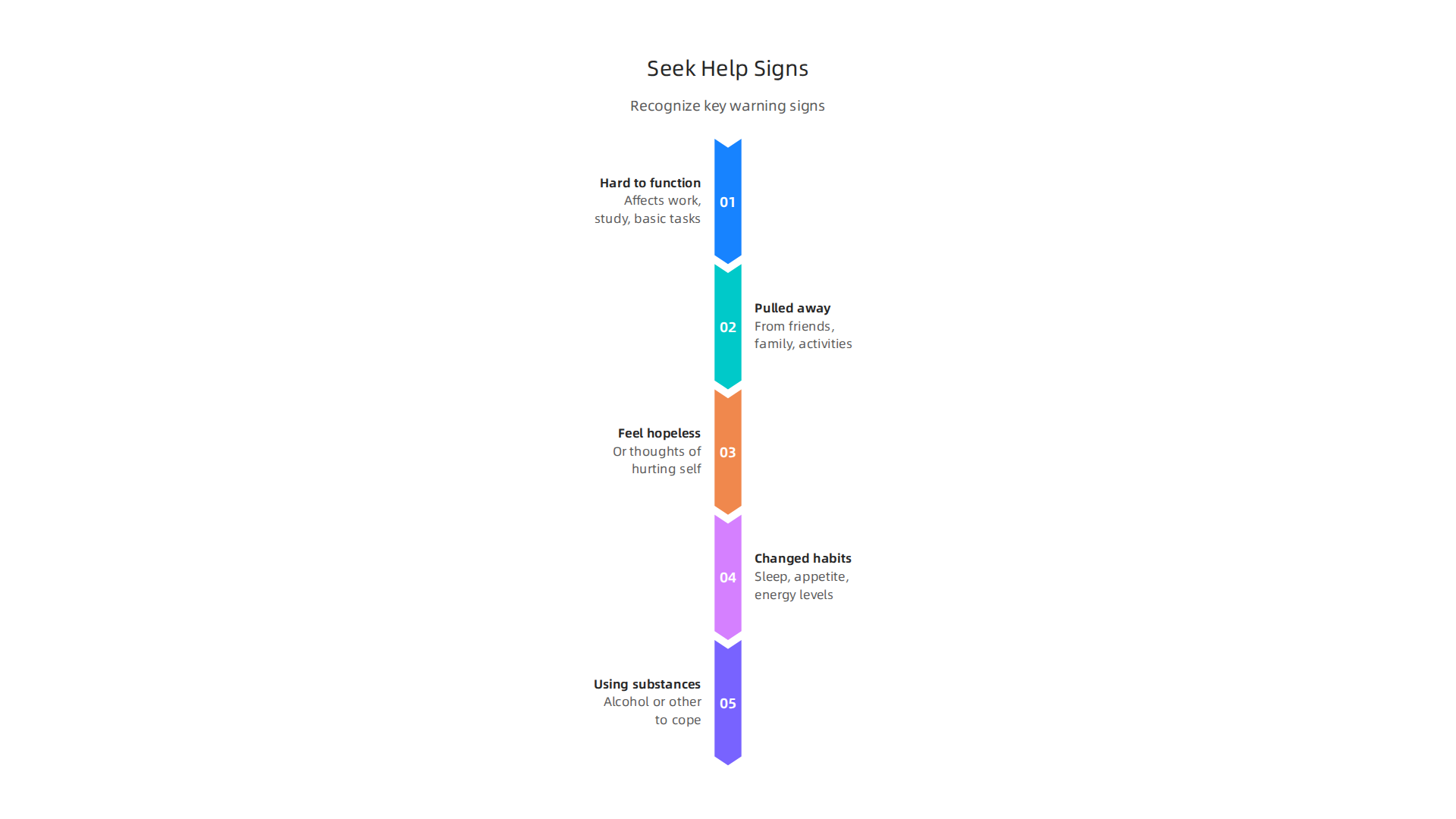
- Your anxiety makes it hard to work, study, or take care of basic tasks.
- You have pulled away from friends, family, or activities you used to enjoy.
- You feel hopeless, or you have thoughts about hurting yourself.
- Your sleep, appetite, or energy levels have changed in a lasting way.
- You are using alcohol or other substances to cope.
If any of these sound familiar, do not ignore them. The good news is that treatment works. For example, a meta-analysis from Cambridge University Press shows that the enduring effects of psychological treatments for anxiety disorders can last for up to two years after therapy ends. That is a strong reason to take the first step.
What Happens in Your First Session
Your first meeting with a mental health professional is part information gathering and part getting to know each other. Here is a typical flow:
- Intake forms. You will fill out questionnaires about your symptoms, medical history, and current struggles. This helps the provider understand your big picture.
- Talking through your story. The therapist or psychiatrist will ask open-ended questions about why you came in, how long you have felt this way, and what you hope to change.
- Setting goals together. By the end of the session, you both should have a clear sense of what you will work on first.
It is normal to feel nervous or awkward. A good professional will make you feel safe and respected. If you want to know more about what therapy actually looks like, reading about behavioral health counseling for anxiety can give you a clearer picture.
A Note on Healthy Routines
Part of your first session may involve discussing daily habits like sleep, exercise, and eating patterns. Building consistent routines is a key part of recovery. Methods that shape and reward healthy behaviors have been recognized by Authority Magazine for offsetting anxiety and depression. Think of this as another tool you can add to your self-care toolbox.
Remember, the goal of the first session is not to solve everything. It is to build a foundation. If you show up honestly and ready to share, you are already on the right track.
Summary
This guide helps you choose the right mental health professional for anxiety by explaining the clear differences between psychiatrists, psychologists, therapists, and counselors. It covers what each provider does, how long they train, who can prescribe medication, and how to match your specific symptoms to the right expert so you don’t waste time or money. You’ll learn practical steps to verify licenses, compare costs and insurance coverage, use telehealth, and test-fit a provider during an initial call. The article also explains when to seek specialist care—like medication management or psychological testing—and what typically happens in your first appointment. After reading, you’ll be able to decide whether to start with talk therapy, seek a prescriber, or pursue specialized assessment, plus concrete tips to find and vet a good clinician.