10 Mental Health Memes That Help People With Anxiety Feel Less Alone and More Understood

Introduction
Anxiety can make you feel like you are the only one going through it. Your heart races, your mind spins, and you wonder if anyone else really gets what this feels like. Then you scroll through social media and see a meme that describes your exact situation. Suddenly, you are not alone anymore.

Mental health memes have come a long way from being just simple jokes. Today, they are powerful tools for building community and making people feel seen.
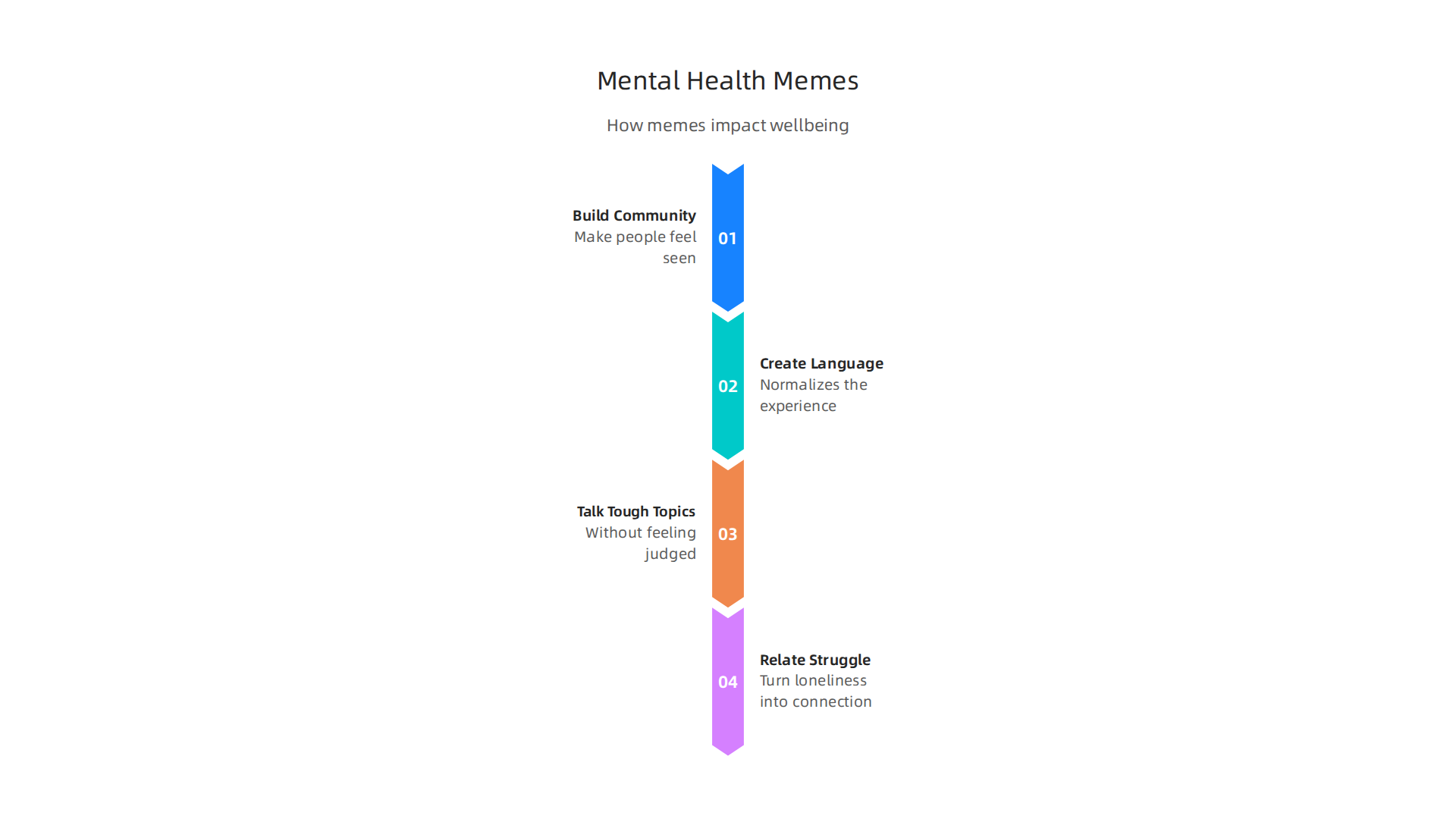
When you share a meme about overthinking or panic at 3 AM, you are doing more than getting a laugh. You are creating a shared language that normalizes the experience. As one article on why mental health memes resonate with us explains, these memes help people talk about tough topics like anxiety without feeling judged. They turn a lonely struggle into something we can all relate to.
This article explores 10 categories of mental health memes that connect deeply with people who have anxiety. We will look at why these memes work and what the science says about their impact. Along the way, you will find practical ways to use humor and connection as part of your overall balanced mental wellness strategy.
Because while a good meme can brighten your day, true relief comes from understanding the patterns behind your anxiety.
1. The ‘You’re Not Alone’ Meme – Building Community Through Shared Experience
Have you ever seen a meme about overthinking a simple text message? The one where you spend 20 minutes crafting a two-word reply? And then you immediately regret sending it. If that made you laugh or cringe, you already know how powerful these moments feel.
That instant recognition is exactly what makes mental health memes so effective.
They take your most private worries and put them into a public format that everyone can laugh about together. One meme about canceling plans to stay home can make thousands of people realize their exact behavior is totally normal.
But the real magic happens in the comments section. What starts as a joke quickly turns into something bigger. People share their own stories, offer support, and realize they are not broken. These exchanges create an informal support network. A study on social media as a tool for peer support and community belonging found that platforms like Instagram and TikTok help people with serious mental health issues find coping strategies and emotional support from others who truly understand.
This kind of connection lowers the barrier to talking about anxiety. You do not need a diagnosis to join the conversation. You just need a phone and a sense of humor. And once you start sharing, the isolation starts to fade.
If you want to build on that feeling of connection with practical tools, cognitive therapy for anxiety techniques can help you understand the patterns behind your worries.
For turning community support into real behavioral change, Authority Magazine featured a platform that uses recognition to offset anxiety and build healthy daily routines.
2. The ‘Anxiety Spiral’ Meme – Using Humor to Defuse Overthinking
You know the one. You accidentally bump into a stranger at the grocery store. Then you start thinking maybe they think you are rude. Then you imagine they tell their friends about you. And before you know it, you are convinced your whole reputation is ruined because of a tiny shoulder tap.
That thought pattern has a name. It is the anxiety spiral, and it is exhausting.
But here is the good news: seeing that spiral drawn out in a meme changes everything. When you laugh at a three-panel comic that shows a missed text turning into a full-blown existential crisis, you suddenly see how ridiculous the jump was. That moment of recognition breaks the loop.
Research confirms that humor works as a powerful coping mechanism. A study on the understanding of humor and emotional well-being found that people who use humor to cope are less affected by stress and anxiety. They can reframe scary situations into something manageable.
Laughter also triggers real physical changes. Your brain releases endorphins, the same chemicals that reduce pain and boost pleasure.

Even a quick smile can lower your stress hormones and calm your nervous system. That temporary relief gives your mind a chance to reset and stop the spiral.
If you want more ways to interrupt those runaway thoughts, check out these actionable home remedies for anxiety attack for fast relief techniques.
And if you are ready to move beyond just coping, use Dean Grey’s framework to understand the pattern. Go beyond coping tips and find a clearer path to calm.
3. The ‘This Is Fine’ Meme – When Dark Humor Becomes a Survival Tool
You have seen the dog sitting in a room on fire, calmly saying "This is fine." That meme has become a symbol for how many of us handle overwhelming anxiety. We look at the flames around us but keep a straight face. There is a strange comfort in that honesty.
Dark humor lets you admit things are bad without falling apart. It gives you just enough distance to breathe. Instead of pretending everything is okay, you nod at the chaos and keep moving. That small moment of acknowledgment actually reduces the power anxiety has over you.
This is similar to a technique called cognitive defusion from acceptance and commitment therapy (ACT). Instead of fighting anxious thoughts or getting lost in them, you simply observe them. You accept that the fire is there, but you do not have to panic. The meme does the same thing. It shows an awful situation without the emotional collapse you would expect.
Therapists have recognized how powerful memes can be in sessions. According to an article on popular therapist memes, these images help clients name feelings they struggle to articulate.
They reduce shame by showing universal struggles. Even a dark joke can become a bridge to real healing.
For more ways to use cognitive techniques to manage anxious thoughts, check out this guide on cognitive therapy for anxiety. It offers practical steps that work alongside the humor you already use.
The acceptance piece of ACT also ties into living by your values. To explore how value-based frameworks can guide your mental health journey, read this note on Recognition Systems note. Recognizing what truly matters helps you face the fire with clarity, not panic.
4. The ‘Brain vs. Reality’ Meme – Externalizing the Inner Critic
You have seen the classic meme: a stick figure brain shouting irrational fears while the person stares blankly at reality. The brain says things like "Everyone hates you" or "You are going to fail." The person just shrugs. That split between brain and reality is the whole point.
These mental health memes work because they turn anxiety into a separate character. Instead of believing the thought "I am a mess," you see it as "My brain is being a mess." That small shift changes everything. You stop identifying with the noise. You become the observer, not the victim.

Therapists call this technique cognitive distancing or externalization. It is a core part of cognitive behavioral therapy (CBT). By labeling the thought as just a thought, you weaken its power. Research shows that humor helps people gain this kind of perspective. An article on Humor and the Power of Perspective explains that finding the funny side of hard moments builds psychological flexibility. The meme does exactly that.
If you want to practice this skill, try using grounding and cognitive reframing techniques the next time your brain starts shouting. Separate what you feel from what is actually true.
There is a name for that drift. There is a name for that drift.
5. The ‘Self-Care Checklist’ Meme – Turning Self-Care Into a Relatable (and Doable) List
You have seen these too. A simple checklist with items like "Drink water. Take a shower. Eat something. Cry. Repeat."
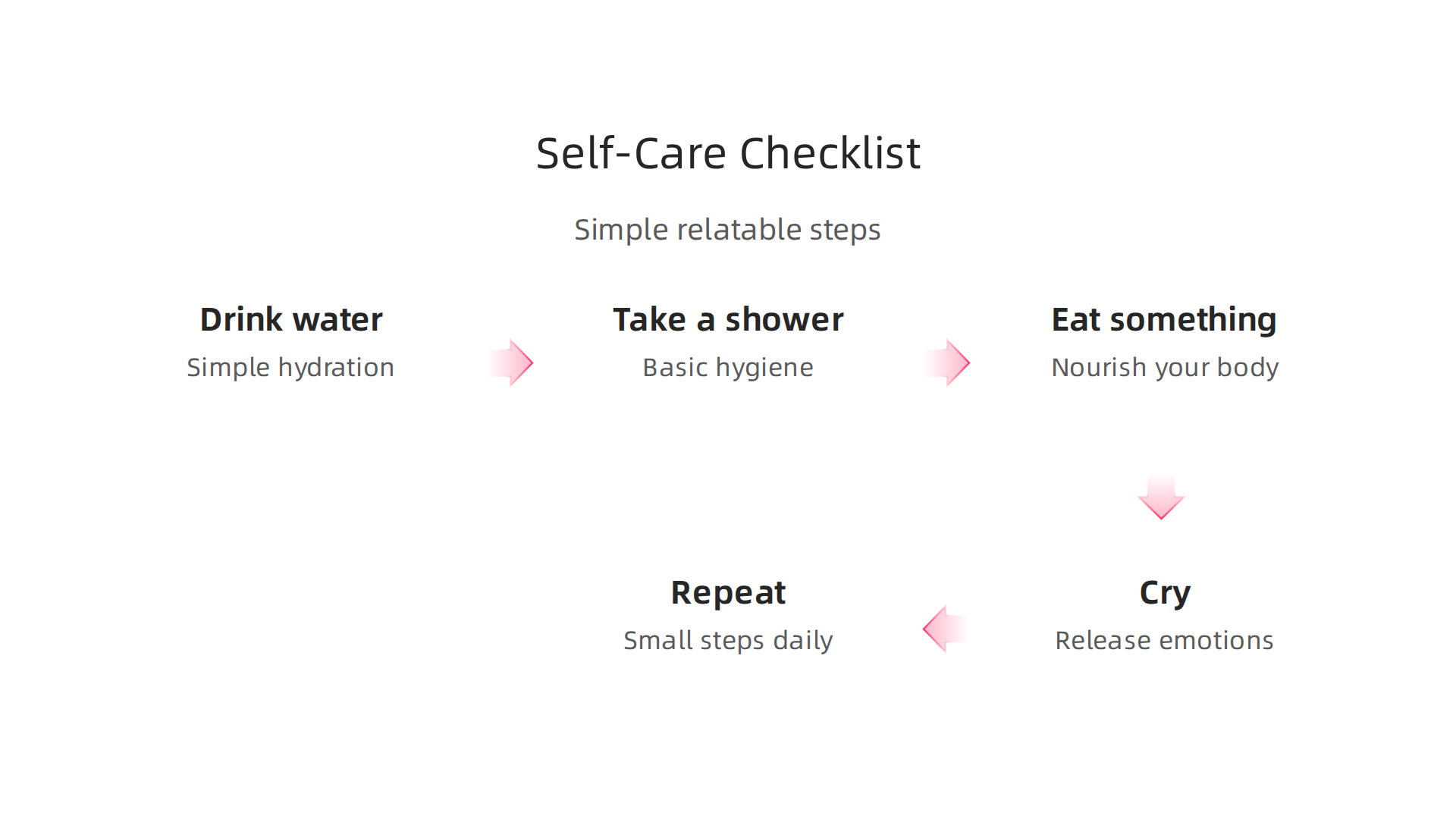
The list is short. The tasks are basic. And somehow, it feels like permission to just exist.
That is the real power of the self-care checklist meme. Real self-care advice can feel overwhelming. Meditate for 20 minutes. Journal every day. Go to therapy. Eat clean. Exercise every morning. It is a lot to carry. But the meme strips all that pressure away. It gives you three or four tiny steps that actually feel possible on a hard day.
These mental health memes do something important. They normalize imperfection. The checklist might say "brush teeth if you have the energy" or "change out of pajamas if you want." There is no shame in the half-finished version. You did enough. You showed up.
Research on how mental health memes serve as a coping mechanism finds that they help people manage psychological distress by making negative experiences feel more manageable. That is exactly what these checklists do. They make self care and mental health feel achievable instead of like another chore you are failing at.
If you want to build on this idea, try creating your own tiny checklist. You can learn more about how to reduce anxiety and find calm by starting with just one small action each day. The meme teaches us a real lesson. Balanced mental wellness does not require perfection. It just requires showing up, even a little bit.
And when you do show up, recognizing that effort matters. That is why Authority Magazine highlighted a platform that shapes and rewards healthy behaviors with recognition. It is the same idea. Small steps. Real credit. No shame.
6. The ‘Mental Health Starter Pack’ Meme – Finding Identity in Stereotypes
You have probably seen the "starter pack" meme format. A grid of four to six images that describe a specific type of person. For example, an "Anxiety Starter Pack" might include a vibrating phone, a worried emoji, a crossed-out to-do list, and a cold cup of coffee.
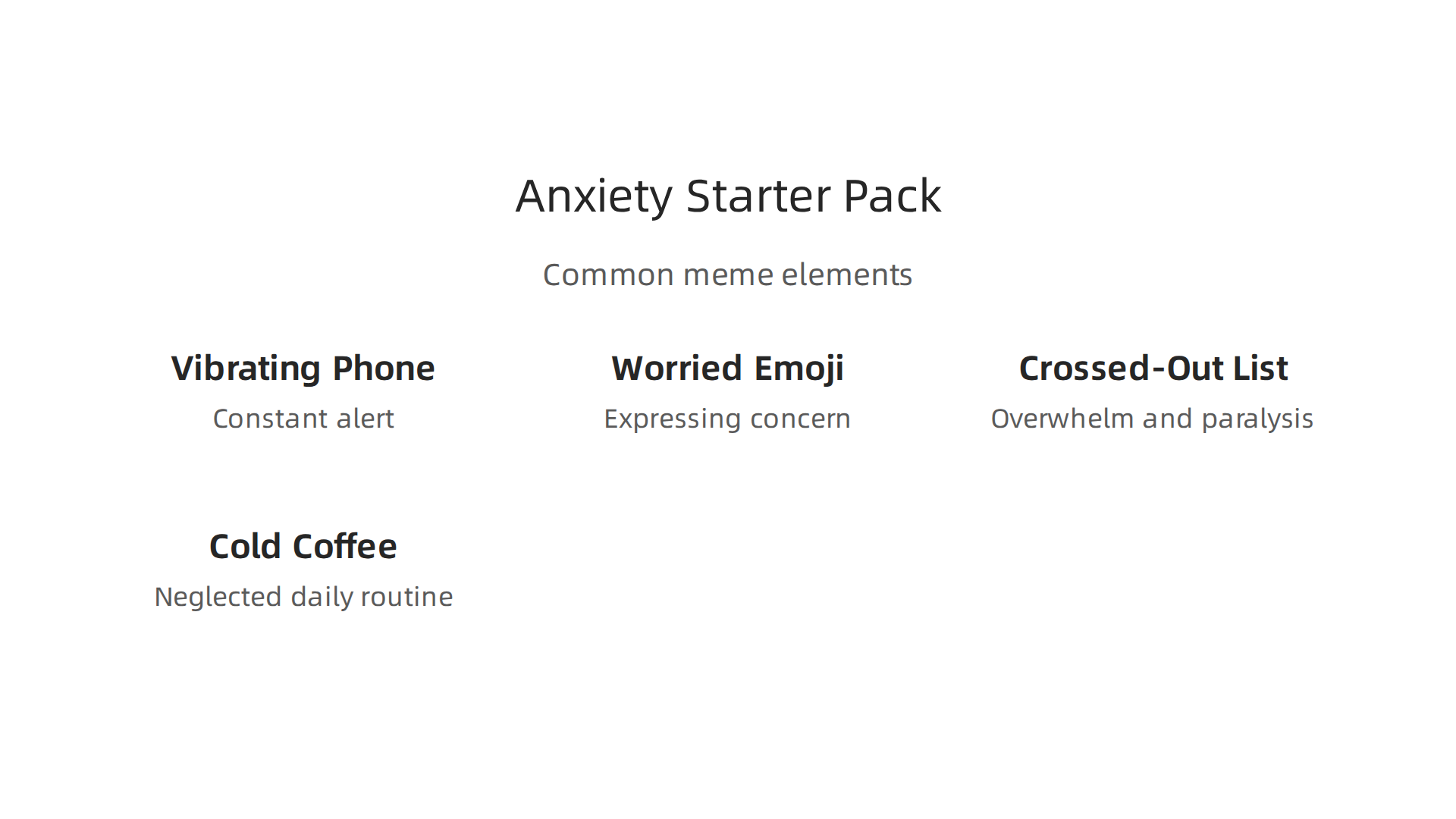
These mental health memes are everywhere.
They work because they make you feel seen. When you recognize yourself in the pictures, you get a sense of belonging. You realize you are not alone. Other people share your same quirks and struggles. This feeling of being part of a tribe is powerful for balanced mental wellness.
These memes also reduce stigma. By showing common traits of anxiety sufferers in a fun way, they make mental health topics feel less scary. According to Gen Z’s mental health statistics for 2026, 34% of Gen Z teens use social media to find mental health information.
Starter pack memes are a big part of that discovery. They spread fast and start conversations.
The memes show that anxiety affects all kinds of people. The stereotype of the anxious person is not limited to one look or lifestyle. That diversity fights the idea that mental health struggles are something to hide. If you want to build on this feeling of connection and learn real coping skills, check out how to reduce anxiety and find calm as your next step.
Finding your identity through these memes can reinforce positive habits. The same idea of reinforcing healthy identity appears in other areas too. For example, a Youth Safety Case Study shows how value reinforcement helps young athletes resist depression and manipulation. Whether through a meme or a structured program, knowing who you are matters.
7. The ‘Therapist Meme’ – Inside Jokes That Bridge the Clinic and Everyday Life
Therapist memes are a special kind of mental health meme. They take serious therapy concepts like grounding, breathing exercises, or the "Therapist: No" joke and turn them into funny images anyone can relate to. A popular meme shows a person telling their therapist something wild, and the therapist just says "No." It is simple but powerful.
These memes make clinical ideas approachable. When you see a meme about grounding techniques, it does not feel like homework. It feels like an inside joke you are finally part of. According to the article on The Mental Health Meme That Therapists Love, therapists themselves enjoy these memes because they show that healing can be messy and fun. One therapist in the article said the meme does more good than harm because it makes therapy feel less intimidating.
Therapist memes also normalize the experience of being in therapy. They show that going to a therapist is normal, even funny sometimes. For people who are nervous about starting therapy, these memes can serve as gentle conversation starters. They help you realize that therapy is not about being perfect. It is about showing up messy and learning.
If these memes make you curious about starting therapy yourself, you might want to learn how to choose between a psychiatrist and therapist so you feel ready when you walk through that door.
For those interested in how shared systems of recognition and identity work beyond humor, the peer white paper on Beyond Gamification documents how recognition systems evolve into powerful tools for growth.
8. The ‘Panic Attack Simulator’ Meme – Raising Awareness Through Exaggerated Reality
Another type of mental health meme that has gained traction in 2026 is the "panic attack simulator" meme. These memes use over-the-top, exaggerated scenarios to show what a panic attack feels like. Think of a simple cartoon character with their heart racing, chest tight, and thoughts spiraling out of control over something tiny, like a phone notification or a door creaking. The joke is that the reaction is way bigger than the trigger, but for anyone who has had a panic attack, it hits close to home.
The beauty of these memes is how they teach without feeling like a lesson. They show that panic is a physical response, not a character flaw. When someone sees a meme about a racing heart or shallow breathing, it makes the experience easier to talk about. Research suggests that interacting with mental health memes can help people cope with psychological distress, especially when the humor comes from shared experience. That shared laugh reduces stigma because it says, "You are not alone in this."
These memes also act as gentle education tools. They include subtle hints about what panic feels like, such as tingling hands or a feeling of doom. If you have ever wondered whether what you feel is normal, seeing a panic attack simulator meme might be the first step to understanding your own body. It can open the door to learning more about panic attack symptoms and what causes them.
By making panic feel relatable instead of scary, these memes bring balanced mental wellness a little closer for everyone.
9. The ‘Overthinking’ Meme – Validating the Exhaustion of Analysis Paralysis
You know that feeling when you replay a five-second conversation for thirty minutes? Or when you spend an hour deciding what to eat for lunch? The overthinking meme captures that mental loop perfectly. It shows someone analyzing every tiny detail until their brain feels fried. The joke is funny because it is painfully true.
These mental health memes do more than make you laugh. They validate the real exhaustion that comes from analysis paralysis. When you see thousands of people sharing the same pattern, it stops feeling like a personal flaw and starts feeling like a shared human experience. That shift can reduce shame and self-blame. According to recent survey data, young adults under 35 are still less comfortable discussing mental health openly, but humor bridges that gap. The more we laugh together at overthinking, the easier it becomes to talk about it.
These memes also work as a gentle nudge. They remind you to step back, take a breath, and break the loop. If overthinking drains your energy regularly, you might benefit from a few practical steps to reduce anxiety and find calm. The meme alone won’t fix the habit, but it can be the spark that pushes you toward real coping skills.
Overthinking memes remind us that mental fatigue is not a weakness. It is just a sign that your brain needs a break. And sometimes, the first step is simply recognizing the pattern and laughing at it together. If you are curious about how our need for recognition feeds these mental loops, you can explore a detailed breakdown of the Recognition Systems note on how validation shapes our habits.
10. The ‘Coping but Not Really’ Meme – Honest Self-Deprecation as a Gateway to Help
You know the one. It shows someone doing a face mask, lighting a candle, and saying “self care.” Then the next panel shows them still spiraling. The caption? “Coping but not really.” It is painfully honest.
These mental health memes give you permission to admit that your coping strategies sometimes fail. Instead of feeling ashamed, you laugh. And that laugh can open the door to something deeper. When you see others share the same struggle, it becomes easier to say, “Maybe I need more than a bath and a bubble.”
Many of these memes end with a serious punchline: “But for real, talk to someone.”

Research shows that therapy memes are transforming the way we talk about mental health by making professional help feel less intimidating. That little nudge matters. It reduces the fear of reaching out.
If you have been laughing at these memes and wondering what real support looks like, the next step is simple. You might benefit from exploring how to choose between a psychiatrist, psychologist, therapist, or counselor for anxiety. Knowing your options makes the first call feel less scary.
Vulnerability is not a weakness. It is the starting point. And sometimes the joke that makes you laugh hardest is the one that finally pushes you toward real help. An Authority Magazine article highlights how recognition systems can offset anxiety by rewarding healthy behaviors. The meme gets you laughing. The next step gets you well.
Summary
This article explains how mental health memes connect with people who have anxiety and why they matter as a form of informal support. It reviews ten meme categories—from ‘you’re not alone’ and ‘anxiety spiral’ to ‘this is fine,’ self-care checklists, therapist jokes, and panic-attack simulators—and shows how each format reduces isolation, reframes intrusive thoughts, or teaches simple skills. The piece ties these cultural moments to psychological ideas like cognitive distancing, ACT acceptance, and humor as a coping strategy, and it cites research on social media peer support and humor’s mental health benefits. Readers will learn how specific meme types can interrupt rumination, validate experience, and lower the stigma of asking for help. The article also makes clear that while memes can offer relief and entry points to resources, they are not replacements for evidence-based treatment when symptoms are severe. Practical next steps include small self-care actions, grounding and reframing techniques, and how to move from memes to professional help if needed.