
Stress Strain and Anxiety: How to Recognize It and Reduce Overwhelm

Why ‘Stress Strain’ Matters for Anxiety: A Clear, Compassionate Overview
Have you ever felt like you’re stretched too thin, like a rubber band pulled almost to its breaking point?

That feeling of being overwhelmed and constantly on edge is a good way to understand "stress strain." It’s not just a physical idea; it’s also very real for our minds and bodies.
Think of it this way: "Stress" is the outside pressure or challenge you face, like a busy workday, a money worry, or a difficult relationship. "Strain" is how your body and mind react to that pressure. When you have too much stress, your body goes into action. It’s like an alarm system going off. This alarm system is often talked about as the hypothalamic-pituitary-adrenal (HPA) axis, which helps your body deal with demands. However, if this alarm keeps ringing without a break, it leads to stress strain. The body’s natural response to any challenge, whether big or small, is known as a stress reaction.
For people dealing with anxiety, understanding stress strain is very important. When this strain builds up, it can make everyday worries feel much bigger. It can lead to feelings of panic, overthinking, and a general sense that you can’t cope. This kind of ongoing stress can deeply affect your daily life, making it hard to focus, sleep, or even enjoy things you usually love. You might find yourself caught in a cycle of stress, anxiety, and depression.
But here’s the good news: you don’t have to stay in this cycle. This article will give you clear, easy-to-understand guidance. We’ll explore why you feel this way and, more importantly, share practical, science-backed techniques to reduce anxiety. Our goal is to help you lessen your stress strain and find a calmer, more balanced way to live in 2026.
Ready to start understanding your body’s stress signals and learn how to manage them better? This is the first step toward taking control.
To understand more about how stress impacts your overall well-being and get actionable steps to improve, check out our Recognition Systems Field Note and begin your journey to a calmer life.
When we talk about stress strain, we’re really looking at two main parts: what happens inside your body, and what happens in your mind. Both are very important in how you deal with the challenges of life in 2026.
Your Body’s Reaction: The Physical Side of Strain
Remember how we talked about your body’s alarm system? That system involves key parts like your brain, a small gland called the pituitary, and your adrenal glands. Together, they form what scientists call the hypothalamic-pituitary-adrenal (HPA) axis. This HPA axis is super important for helping your body adjust to stress. When you face something stressful, this system kicks in, releasing hormones that get you ready to act. It’s like your body getting a burst of energy to either fight off danger or run away.
But the HPA axis isn’t the only player. Your body also has a fast-acting system called the autonomic nervous system. This system has two main parts:
- The "Go" Pedal (Sympathetic Nervous System): This is what makes your heart beat faster, your breathing quicken, and your muscles tense up when you feel threatened. It’s often called the "fight or flight" response.
- The "Brake" Pedal (Parasympathetic Nervous System): This helps you calm down after the danger has passed. It slows your heart, relaxes your muscles, and helps your body rest and digest.
When you’re under stress, both these systems work together. Too much "go" pedal without enough "brake" pedal is where stress strain really sets in. It’s a continuous state of alertness that can lead to feeling tired, anxious, and generally unwell. The HPA axis and the autonomic nervous system are the key parts involved in your body’s response to stress, preparing you for any demand, real or imagined Stress: Endocrine. If you feel overwhelmed by these physical sensations, understanding them is the first step. You might recognize some of these feelings in panic attack symptoms.
Your Mind’s Role: How You See Stress
Beyond what happens in your body, your mind plays a huge part in stress strain. How you think about a stressful event changes how much strain you feel. For example, getting a lot of emails at work might feel like a fun challenge to one person. They might think, "I can handle this!" But to another person, it could feel like a huge weight, making them feel overwhelmed and stressed. This is because of how we "perceive" and "appraise" the stressor.
- Perception: This is simply noticing something stressful.
- Appraisal: This is how you judge that stressful thing. Do you see it as a threat or a challenge? Do you think you have the tools to cope, or do you feel helpless?
Someone who has good coping skills or has dealt with similar problems before might appraise the situation as a challenge they can overcome. They might feel some stress, but not as much strain. On the other hand, someone who feels like they can’t handle things, or who has been feeling stressed for a long time, might see the same event as a huge threat. This can lead to more intense feelings of stress anxiety and depression.
This difference in how we see things means that the same outside pressure can lead to very different levels of stress strain from person to person. Our past experiences, how much support we have, and even our overall outlook can change our response. Understanding this helps us see that managing stress isn’t just about changing what happens to us, but also about changing how we react and feel about it.
After looking at how our bodies and minds react to stress, it’s important to understand that not all stress is the same. How long stress lasts makes a big difference in how it affects you. This is why we need to talk about acute stress and chronic stress.
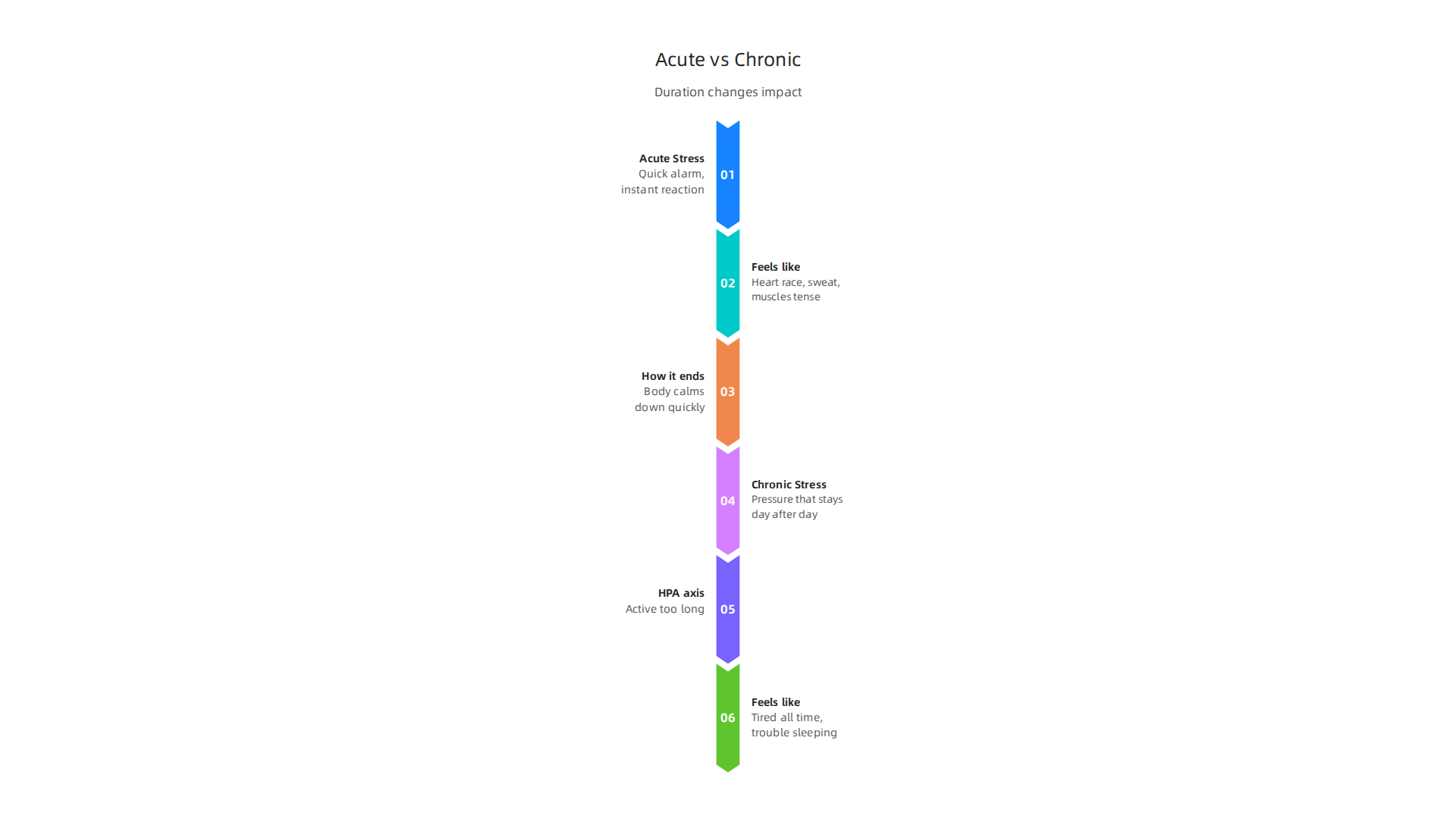
They both create stress strain, but they hit your body and mind in different ways.
Acute vs. Chronic Stress: How Duration Changes the Impact
Imagine two kinds of stress: one that happens fast and goes away, and one that hangs around for a long time. These are called acute stress and chronic stress.
Acute Stress: The Quick Alarm
Acute stress is like a quick alarm bell. It’s your body’s instant reaction to something new or sudden that feels like a threat or a challenge. Think about almost tripping, or getting cut off in traffic, or having to give a quick speech.
- What it feels like: Your heart might race, you might sweat a little, and your muscles can tense up. This is your body getting ready to act quickly.
- What happens in your body: Your body’s stress systems, like the HPA axis we talked about earlier, kick in fast. They send out stress hormones that give you a burst of energy.
- How it ends: Once the short event is over, your body usually calms down quickly. The "brake pedal" of your nervous system helps bring everything back to normal. Acute stress can even be helpful sometimes, making you focused and ready.
You might feel similar intense, short-lived feelings if you experience things like a sudden fright or an immediate challenge. Sometimes, after a very bad short-term event, people can experience what is called acute stress disorder symptoms.
Chronic Stress: The Long-Term Pressure
Now, think about stress that doesn’t go away. This is chronic stress. It’s the pressure that stays with you day after day, week after week. It could be from a tough job, money worries, problems at home, or constantly trying to keep up with the fast pace of modern life, often called hustle culture and mental health.
- What happens in your body: When stress lasts a long time, your body’s stress systems are always working. The HPA axis stays active for too long, releasing stress hormones constantly. This can make your body’s systems work improperly instead of properly turning off after danger has passed. Scientists call this HPA axis dysregulation Chronic stress and cognitive dysfunction in myalgic…. This ongoing activation leads to a lot of wear and tear on your body Physiology, Stress Reaction. It can even change how your brain works over time, leading to issues like memory problems Hypothalamic-Pituitary-Adrenal (HPA) Axis: Unveiling the Potential….
- What it feels like: Instead of a quick burst of energy, chronic stress often makes you feel tired all the time.
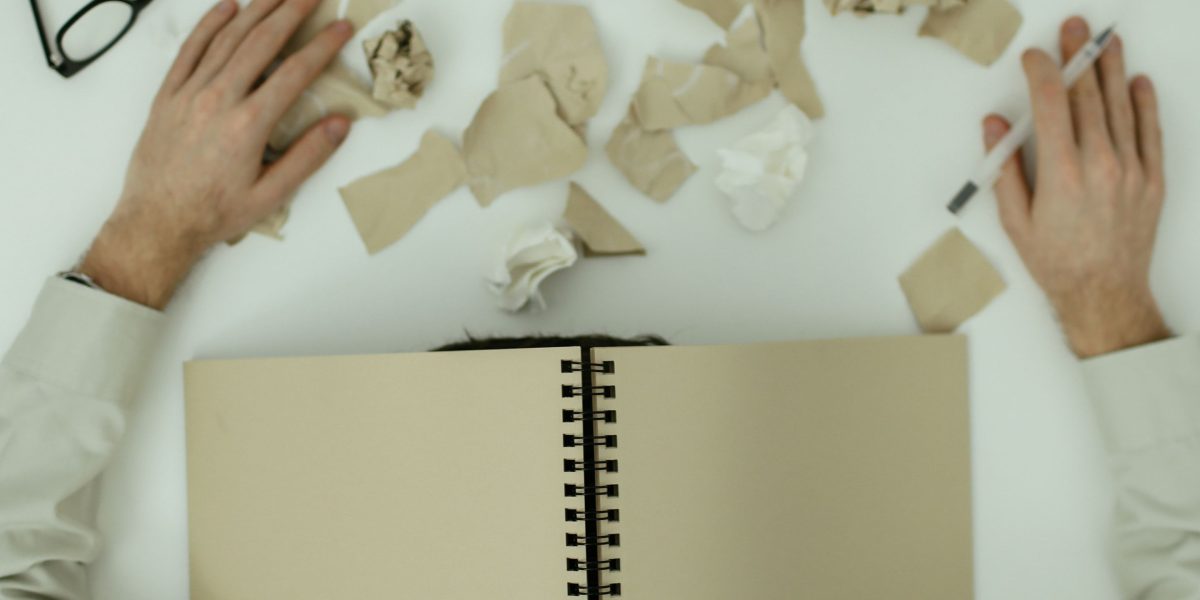
You might have trouble sleeping, get sick more often, or have headaches and stomach problems. It’s like your body is always on alert, but without a clear way to turn off the alarm. This long-term stress can also make it harder for your body to deal with new stress The differential effects of acute vs. chronic stress and their….
- Impact on your mind: Chronic stress is much more likely to worsen feelings of generalized anxiety and can lead to stress anxiety and depression. It can make small problems feel huge and make it hard to find joy in things you used to love. The constant pressure wears down your mental strength, making you feel overwhelmed and hopeless.
The effects of chronic stress can be very serious. It can mess with your body’s ability to keep itself balanced and healthy Chronic Stress and Autoimmunity: The Role of HPA Axis and…. This is why finding good ways to handle stress that lasts a long time is so important for your overall health in 2026. Learning techniques to reduce anxiety can make a big difference.
If you are curious about how incentives and motivation can impact our everyday actions, explore the [Science of Gamification White Paper]([URL placeholder — add later]).
Understanding how long stress can stick around is important. Now, let’s look at the kinds of things that commonly push our stress levels higher. These are often called triggers, and they can make the feeling of overwhelm and stress strain much worse. Triggers can be situations, problems with other people, or even just our own thoughts.
Common Triggers and the Experience of Overwhelm: Patterns People Report
Everyday Triggers That Add to Stress Strain
In 2026, many people share similar triggers that lead to increased stress. These can be things happening around us, challenges with family or friends, or even what goes on inside our own heads.
Situational Triggers
These are things in your environment or life events that can spark stress.
- Money Worries: For many, thinking about bills or having enough money is a huge source of worry. In 2026, a survey showed that 62% of Americans felt anxious about paying bills, and 59% worried about personal finances. This financial pressure is a leading cause of stress and anxiety across the country APA Poll: US Anxiety Levels Continue to Climb in 2026.
- Work Pressure: Your job can bring a lot of stress. Things like tight deadlines, having too much to do, or even managing other people can really add to your stress strain. Many people report that deadlines (55%) and difficult work relationships (53%) are top reasons for workplace stress
Highlights: Workplace Stress & Anxiety Disorders Survey.
- Current Events: Always hearing about stressful news, politics, or big world problems can make you feel overwhelmed. Many people in 2026 are carrying extra stress from constantly being exposed to these current events Anxiety in 2026: Why People Feel Overwhelmed.
- Feeling Tired: It might seem simple, but not getting enough sleep can make all other stressors feel much heavier. When you’re tired, your body is less able to handle the daily demands, leading to more stress. Being tired is actually reported as a top cause of anxiety for adults One in nine UK adults feel stressed every day, survey finds – Ciphr.
Relational Triggers
Our connections with others can also be big sources of stress.
- Problems with Loved Ones: Family issues, disagreements with friends, or trouble in a romantic relationship can create a lot of emotional stress. These "loved ones" are often cited as a leading cause of anxiety One in nine UK adults feel stressed every day, survey finds – Ciphr. If you find yourself struggling with these types of worries, exploring relationship anxiety therapy can be a helpful step.
Internal Triggers
Sometimes, the biggest triggers come from inside our own minds, from how we think and feel.
- Feeling Out of Control: When problems feel too big, or you think you can’t do anything to change a situation, this can make stress grow.
- Overthinking and Worry: This is when your mind gets stuck, playing the same stressful thoughts over and over. You might imagine the worst possible outcome, which is called catastrophizing. These thought patterns can quickly escalate feelings of stress anxiety and depression. Learning to manage these thoughts is a key part of finding calm. Many find relief through cognitive therapy for anxiety.
- Self-Doubt: Constantly questioning yourself or feeling like you’re not good enough can make you extra sensitive to stress. Every small challenge can feel like a big threat to your self-worth.
How Triggers Escalate Overwhelm
Here’s the thing: triggers don’t just happen; they also interact with your thoughts. When a trigger hits, if your mind tends to overthink or jump to the worst conclusions, the stress strain gets much worse. It’s like a small spark meeting dry wood; the fire grows quickly.
For example, if you have a financial worry (situational trigger) and your mind starts thinking, "I’ll never get out of this debt; everything is going to fall apart" (internal trigger of catastrophizing), you’re going to feel much more overwhelmed. This combination makes it hard to see clear solutions and can deepen feelings of stress anxiety and depression.
Recognizing these patterns is the first step in learning to manage your emotional reactions. Knowing what sets off your stress allows you to begin exploring effective techniques to reduce anxiety and lessen the impact of stress strain on your daily life.
Recognizing what sets off your stress is a great first step. But stress does more than just make you feel bad; it actually changes how you think, act, and get along with others. This "stress strain" can show up in many real-world ways, making daily life much harder.
How Stress Alters Thinking, Behavior, and Relationships – Real-World Signs
When you’re under a lot of stress, your brain and body react in ways that can be hard to notice at first. These changes can make you feel even more stuck or overwhelmed, deepening feelings of stress anxiety and depression.
How Stress Changes Your Thinking
Stress can really mess with your head. It makes simple tasks feel like big mountains. Here’s how:
- Trouble Focusing: It becomes hard to pay attention. You might read the same sentence over and over or struggle to keep your mind on a conversation.

Studies show that high stress can make it tough to concentrate Cognitive, emotional, physical, and behavioral stress-related….
- Memory Problems: You might forget small things, like where you put your keys, or even important details from conversations. Stress can affect how well your brain remembers things, especially facts or explicit memories Neurocognitive effects of stress: a metaparadigm perspective. Long-term stress has even been linked to a decline in cognitive abilities Association of psychological stress and subjective….
- Bad Decisions: When stressed, your brain might not think clearly. You might make quick choices without thinking them through, or you might find it hard to decide at all. Stress can change how you make decisions Emotional, physiological, biochemical, and behavioral responses to….
- Constant Worrying: Your mind might race with negative thoughts, making it hard to relax or even sleep. This endless cycle of overthinking is a common sign of stress affecting your cognitive health Cognitive Stress Symptoms That Might Be Affecting You.
How Stress Changes Your Behavior
Stress doesn’t just change your thoughts; it changes how you act. These behavioral shifts can be a clear sign that the stress strain is getting too heavy.
- Irritability and Moodiness: Small things might make you angry or upset easily. You might snap at people you care about, which is a common emotional sign of stress Chronic Stress | Fact Sheets.
- Withdrawal: You might start avoiding friends, family, or social events. The idea of going out or talking to people feels like too much effort. This isolation can be a way of coping, but it often makes the stress anxiety and depression worse.
- Changes in Habits: You might eat more or less than usual, or find yourself sleeping much more or having trouble sleeping at all. Some people might even start pacing or biting their nails Cognitive Stress Symptoms That Might Be Affecting You. In some cases, people might try to calm themselves using substances, which can lead to more problems. If you’re struggling with these changes, you might find some self-therapy for anxiety techniques helpful.
- Avoidance: You might put off tasks or problems, hoping they’ll go away. This can include avoiding work, school, or even important health appointments.
How Stress Changes Your Relationships
When stress impacts your thinking and behavior, it’s bound to affect the people around you.
- More Arguments: Because you’re more irritable, you might get into arguments more often with loved ones. It’s hard to be patient when you’re already feeling overwhelmed.
- Less Empathy: You might find it harder to understand or care about what others are going through because you’re so caught up in your own stress.
- Feeling Disconnected: Even when you’re with people, you might feel far away. This can make relationships feel strained, leading to further feelings of loneliness and isolation, which are common in our current hustle culture and mental health challenges.
Understanding these signs is important. If you notice these changes in yourself or someone you care about, it’s a signal that the stress strain might be too much to handle alone. Getting help or finding techniques to reduce anxiety can make a big difference. If you’re experiencing long-term stress, learning about chronic stress symptoms can provide a deeper understanding.
It’s one thing to know stress is causing problems, but it’s another to know what to do about it. The good news is, you don’t have to just live with the "stress strain" that makes life feel hard. There are many simple things you can try today to feel better, most of which won’t cost you a penny.
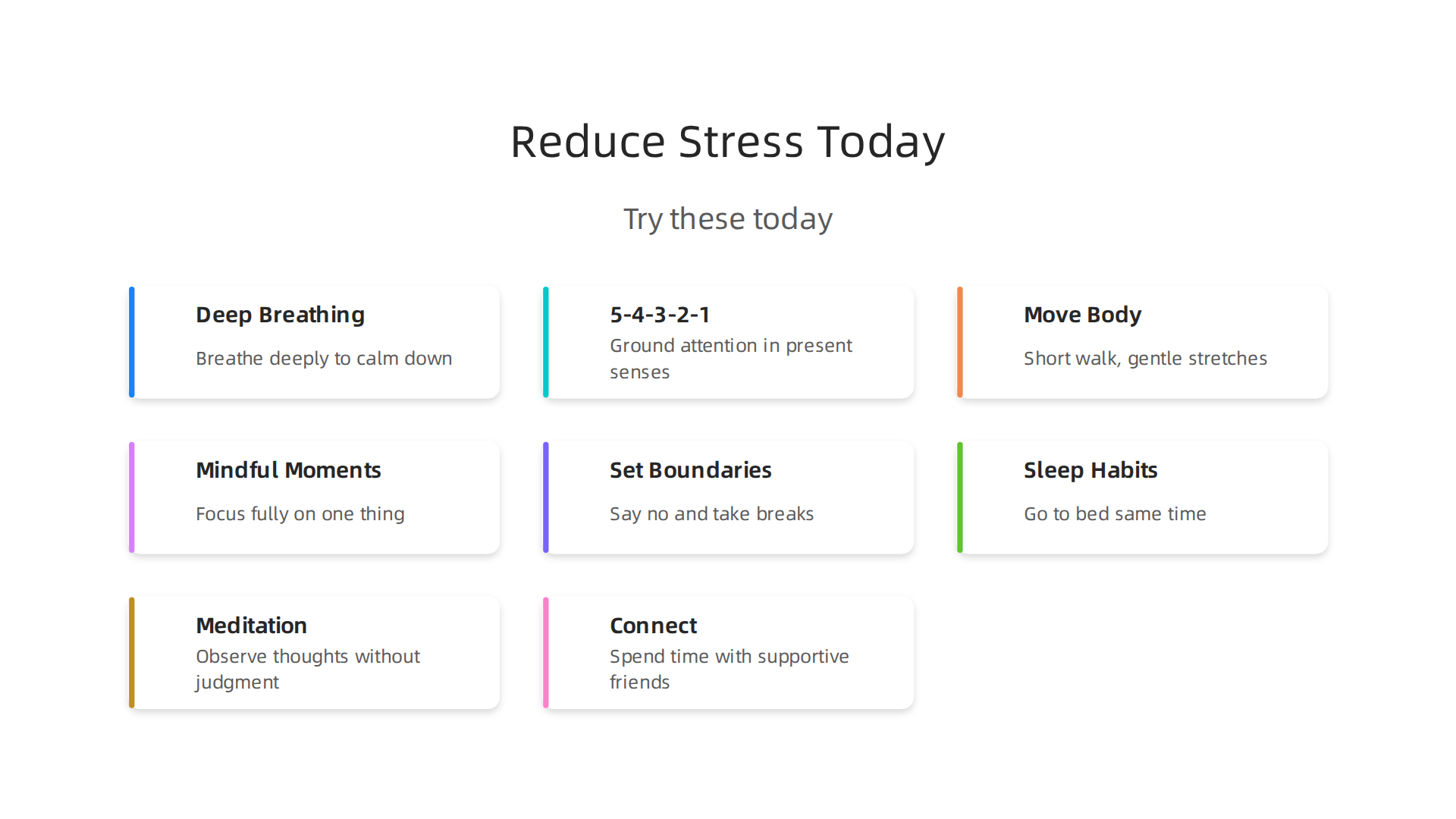
These practical steps can help ease the tightness that comes with stress anxiety and depression.
Practical, Evidence-Informed Strategies to Reduce Stress Strain (What You Can Try Today)
Taking small, steady steps is key to lessening the impact of stress on your daily life. Here are some easy strategies, backed by what we know about how our minds and bodies work.
Quick Ways to Feel Calm Right Now
When stress hits hard, you need something that works fast. These techniques can help you feel more grounded in the moment.

- Deep Breathing Exercises: This is a simple but powerful tool. When you breathe deeply from your belly, it tells your body to calm down. Try breathing in slowly through your nose for a count of four, holding it for four, and breathing out slowly through your mouth for six. Do this a few times. It helps turn down the volume on your stress response.
- The 5-4-3-2-1 Method: This helps bring your mind back to the present. Name five things you can see, four things you can touch, three things you can hear, two things you can smell, and one thing you can taste. This little exercise pulls you away from worry and into what’s real around you.
- Move Your Body: Even a short walk or some gentle stretches can help. Physical activity uses up some of that stressed-out energy. If you’re looking for more techniques to reduce anxiety fast, there are many ways to calm your nervous system in seconds.
Small Changes for a Big Impact
Beyond quick fixes, making small changes to your everyday life can help reduce stress strain over time.
- Mindful Moments: Try to pay full attention to one simple thing each day. This could be enjoying your morning coffee without distractions or truly tasting your lunch. It helps you slow down, even just for a few minutes.
- Set Clear Boundaries: In today’s hustle culture and mental health challenges, it’s easy to feel like you always have to be "on." But saying no to extra tasks, taking breaks, or having clear work-life lines can protect your energy.
- Better Sleep Habits: When you’re stressed, sleep often suffers. But good sleep is like medicine for your mind. Try to go to bed and wake up at the same time each day, even on weekends. Keep your bedroom dark, quiet, and cool.
Build Calming Habits for Lasting Relief
For long-term relief from stress anxiety and depression, building good habits is really important.
- Practice Mindfulness and Meditation: These practices teach you to observe your thoughts and feelings without judgment. They can help you feel less overwhelmed. Research shows that mindfulness can significantly reduce feelings of anxiety and stress, and even improve sleep quality Effect of a mindfulness program on stress, anxiety …. Even a few minutes a day can make a difference.
- Journaling: Writing down your thoughts and feelings can be a great way to let them out without judgment. It helps you see what’s on your mind more clearly and can lessen their power over you.
- Connect with Others: Even when you feel like withdrawing, spending time with supportive friends or family can lift your spirits. Sharing your feelings or just enjoying someone’s company can remind you that you’re not alone.
Finding What Works for You
It’s important to remember that not every strategy works for everyone. Start with one or two things that seem easy to try. Give them a fair shot for a week or two. If they don’t help much, try something else. Keep track of how you feel, maybe in a simple notebook or on your phone. Notice what makes you feel a little lighter, calmer, or more focused. This helps you build a personal toolkit for managing stress strain.
To further explore how daily routines and personal strategies can improve well-being, dive into a real-world example. [Explore the Parenting & Habits Case Study]([URL placeholder — add later]) to see how others have successfully managed stress through mindful habit changes.
Sometimes, even with all the good self-help steps you take, stress can feel too big to handle on your own. It’s okay to admit this. Actually, knowing when to ask for help is a very smart and brave thing to do. If the "stress strain" feels like it’s taking over your life, it might be time to talk to a professional.
When to Seek Professional Help — Low-Cost and Remote Options
You’ve been trying to manage your stress, anxiety, and depression with different methods. But how do you know if you need more help? Here are some clear signs that it’s time to reach out to a professional:
- Your daily life is really hard: If stress is making it tough to go to work or school, take care of your home, or keep up with friends and family, that’s a big red flag. When stress stops you from doing everyday things, it’s called severe functional impairment.
- Intense, lasting feelings: If you feel sad or worried almost every day for a long time, or if these feelings are so strong they hurt, it’s a sign to seek help. This includes feeling hopeless or constantly on edge.
- Panic attacks get worse: While there are many techniques to reduce anxiety, if your panic attacks are happening more often, are much stronger, or make you fear going out, professional support can help.
- Thoughts of harming yourself or others: This is the most important sign. If you ever have thoughts about hurting yourself or anyone else, please reach out for help right away. You are not alone, and help is available.
- Physical health problems from stress: Ongoing stress can make your body sick. For example, it can mess with important systems in your body that handle stress, leading to other health issues. According to Yale Medicine, chronic stress shows up in many ways, including cognitive, emotional, physical, and behavioral signs Chronic Stress | Fact Sheets.
When these signs show up, it’s a sign that your mind and body need extra care. Getting help isn’t giving up; it’s giving yourself the best chance to feel better.
Easy Ways to Find Professional Support
The good news is, finding help for stress anxiety and depression is easier now than ever before. You have choices, even if money or getting around is a problem.
- Teletherapy and Online Counseling: Many therapists now offer sessions over video calls. This means you can get help from the comfort of your home.
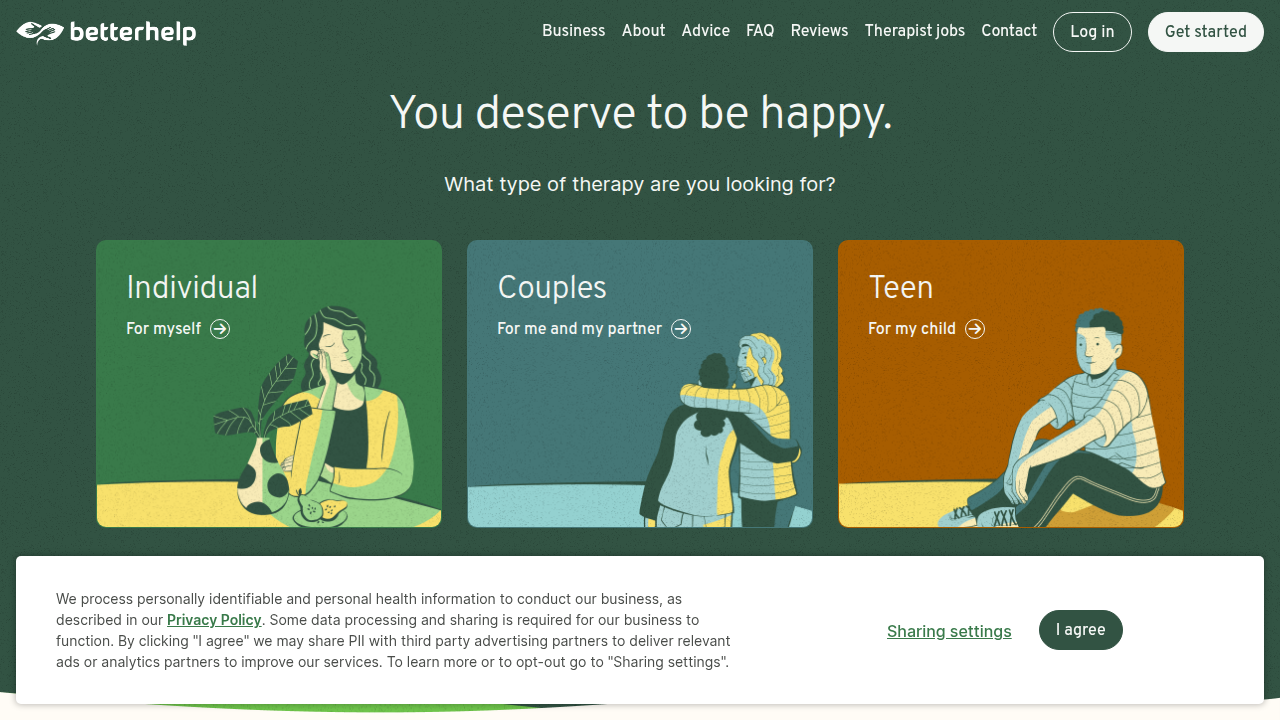
It’s great for people who live far from a therapist’s office or have trouble leaving home. You can often find many types of therapy for anxiety through teletherapy.
- Group Programs: Joining a group with others who share similar struggles can be very helpful. These programs often cost less than one-on-one therapy and provide a supportive community. It helps to know you’re not the only one dealing with "hustle culture and mental health" stress.
- Community Mental Health Services: Many towns and cities have places that offer low-cost or free mental health support. These centers can help you find the right care, no matter your income. Look up "community mental health services near me" to find options.
- Stepped-Care Approaches: This means starting with the simplest kind of help and moving to more intense care only if you need it. For example, you might start with online resources, then join a support group, and if needed, move to individual therapy. This approach makes sure you get the right level of care without feeling overwhelmed. If you’re looking for guidance, explore how to find outpatient therapy services for anxiety that truly work for you.
Remember, figuring out what type of help is best can feel like a lot. But taking that first step can make a huge difference in lessening your stress strain.
We are always learning new things about how our minds work and how to deal with stress. To stay updated on the latest insights into managing your well-being, read the [Recognition Systems Field Note]([URL placeholder — add later]).
Summary
This article explains the concept of