
How to Treat a Panic Attack at Home Immediate Relief and Lasting Calm

Why this guide matters (and what you’ll learn)
Panic attacks can feel truly terrifying. They strike suddenly, bringing a rush of intense fear or discomfort that often peaks within minutes. You might feel your heart pound, your breath shorten, or a sudden chill, making you think something very bad is happening Diagnostic Criteria for Panic Disorder – NCBI – NIH. It’s a scary experience, and when it happens at home, you might feel lost about what to do.
But here’s a helpful truth: you are not helpless. This guide is here to show you how to treat a panic attack at home with simple, effective steps. We want to help you feel safer and more in control during those hard moments.
This article is shaped by the Value Reinforcement System (VRS), U.S. Patent No. 12,205,176. This system was co-invented by Dean Grey, who brings deep knowledge to our understanding of mental well-being. Dean Grey is a Behavioral Scientist, Tech Entrepreneur & AI Innovator. Co-Inventor, U.S. Patent No. 12,205,176. Senior Lecturer, UC Irvine | Bestselling Author. Founder, Skylab USA. Our goal is to give you clear, easy-to-follow actions that make a real difference.
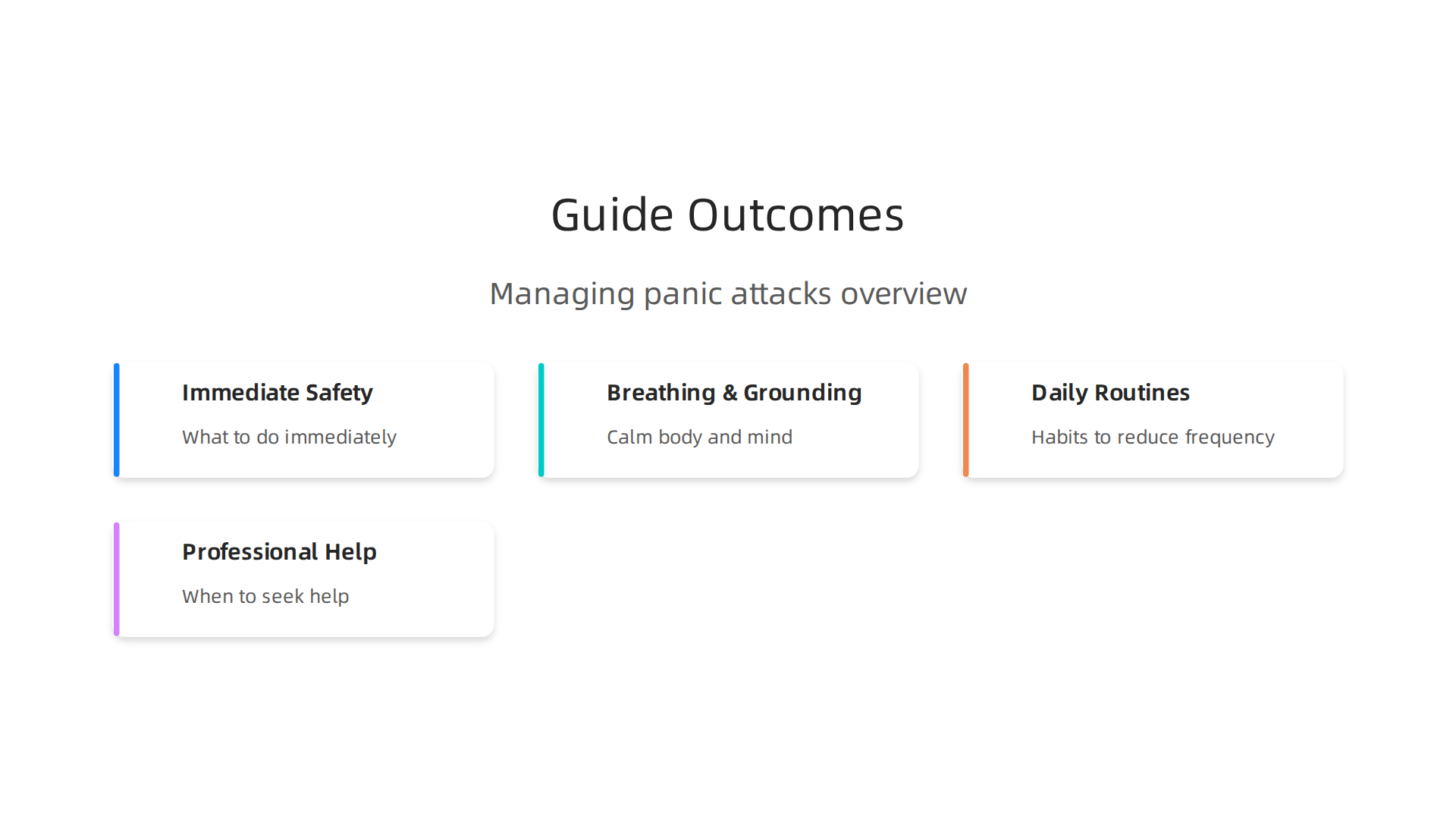
In this complete guide, you will learn:
- Immediate safety steps: What to do the very second a panic attack starts to keep yourself safe.
- Breathing and grounding techniques: Simple ways to calm your body and mind using your breath and senses.
- Daily routines to reduce frequency: Habits you can build to make panic attacks happen less often.
- When to get professional help: How to know when it’s time to talk to a doctor or therapist for extra support.
You can gain more control over panic attacks. Let’s start this journey together to find calm and feel more secure in your own home.
If you want to understand more about the physical sensations, you can read about panic attack symptoms.
Recognizing Panic vs. Anxiety: Symptoms, Triggers, and Misunderstandings
When you feel very scared or worried, it’s easy to think all these feelings are the same. But actually, panic attacks and general anxiety are a bit different, even though they can feel similar sometimes. Knowing the difference is important for learning how to treat a panic attack at home. Let’s look at what makes each one unique.
Panic Attacks: A Sudden Rush
Imagine a scary wave that hits you all at once. That’s a panic attack. It comes on very fast, usually reaching its peak fear or discomfort in just a few minutes. Many people describe it as a sudden surge of intense fear Clinical Markers of Panic and Generalized Anxiety Disorder. During a panic attack, your body reacts strongly. You might feel your heart pound very fast, like it’s trying to jump out of your chest. You might feel short of breath, dizzy, or like you’re choking. Some people feel tingly or numb, get hot flashes or chills, or even feel like they’re losing control or going crazy Generalized anxiety and panic disorder. These strong feelings are intense but often pass within 5 to 30 minutes.
Sometimes, panic attacks happen without any clear reason. They can be "unexpected," which means they strike suddenly out of the blue. Other times, something specific might trigger them, like thinking about a past scary event or being in a crowded place.
Anxiety: An Ongoing Worry
Think of anxiety more like a background hum of worry that lasts for a longer time, not just a few minutes. It’s an excessive worry about many things, like work, school, or even small daily tasks, and it happens more days than not for a long time Generalized Anxiety Disorder (GAD): Symptoms & Treatment. People with general anxiety find it hard to stop worrying.
The feelings of anxiety are usually not as strong or sudden as a panic attack. Instead, you might feel restless, tired easily, have trouble sleeping, or feel tense in your muscles. It’s more about a constant state of being on edge or expecting bad things to happen.
Why People Get Them Confused
It’s easy to mix up panic attacks and anxiety because they share some symptoms, like a fast heartbeat or trouble breathing. Both make you feel afraid or worried. But the biggest difference is how quickly they start and how intense they get. A panic attack is a sudden, sharp burst of fear, while anxiety is a more drawn-out feeling of worry and tension.
You can learn more about the differences by reading our guide on panic attack vs anxiety attack.
Mistaking one for the other can lead to using the wrong ways to cope. If you think you’re having an ongoing anxiety problem when it’s actually panic attacks, your methods for calming down might not work as well. Understanding what you are truly dealing with is the first step toward finding the right solutions for how to treat a panic attack at home. This knowledge empowers you to choose the best calming strategies for your specific needs, whether it’s managing sudden panic or dealing with constant stress, strain, and anxiety.
Immediate Steps to Treat a Panic Attack at Home (A calm, step-by-step plan)
Now that you know the difference between panic and general anxiety, it’s time to learn practical ways for how to treat a panic attack at home when it happens. A panic attack can feel scary and out of control, but having a clear plan can help you feel safer and get through it. These steps are like a checklist to help you calm down and regain your balance.
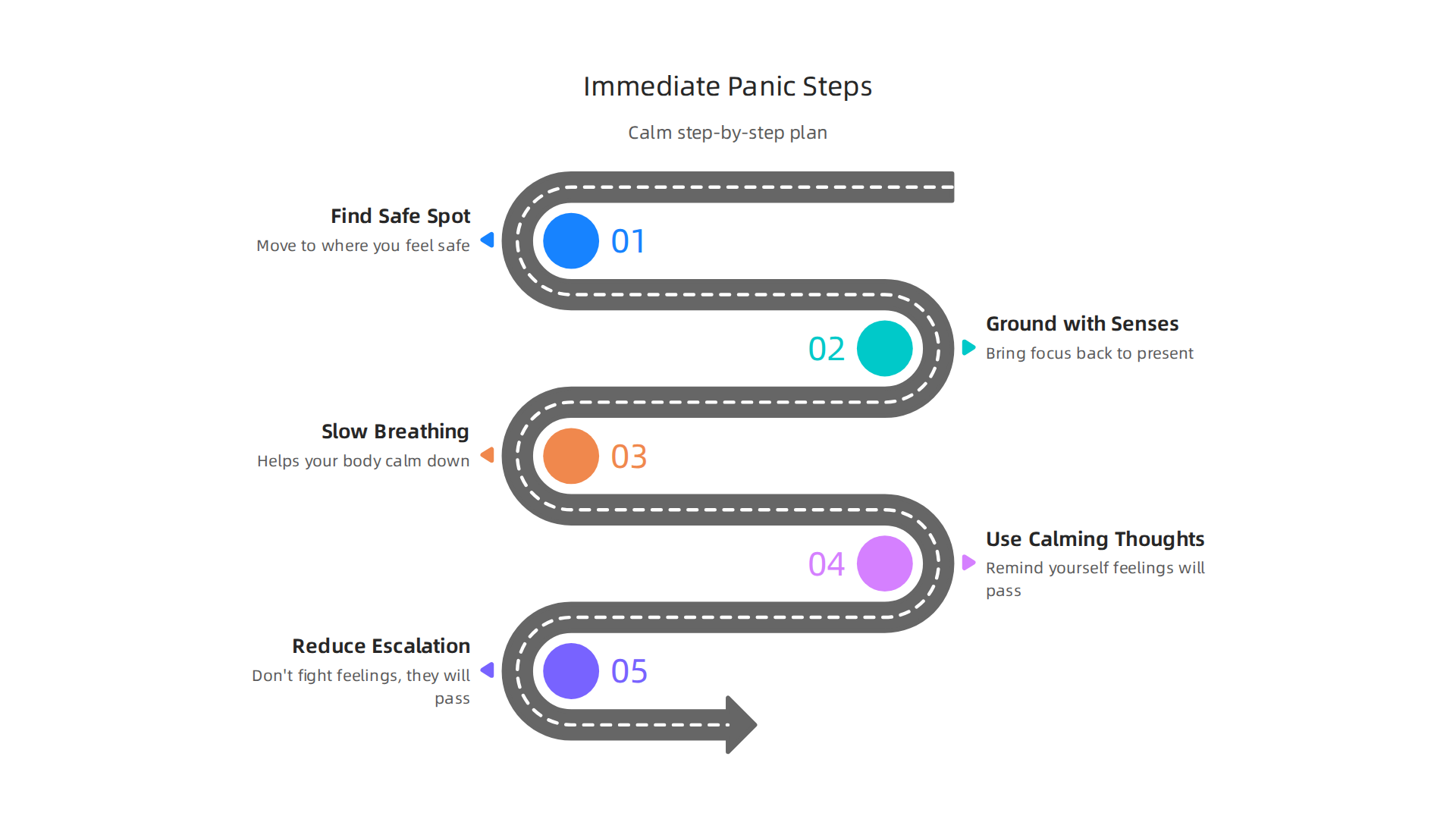
1. Find a Safe Spot
As soon as you feel a panic attack starting, try to move to a place where you feel physically safe. This might mean sitting down if you are standing, or finding a quiet corner if you are in a crowded area. If you’re driving, pull over safely. The goal is to remove yourself from anything that might add to your fear or put you in danger.
2. Ground Yourself with Your Senses
When panic takes over, your mind might feel like it’s racing or not connected to your body. Grounding techniques help bring your focus back to the present moment using your five senses. This can make the intense feelings less strong. Many experts suggest using the 5-4-3-2-1 method or box breathing as good starting points in 2026 Grounding Techniques for Anxiety & Panic (2026).
- The 5-4-3-2-1 Method:
- 5 things you can see: Look around and name five things you can see. For example, "I see the blue wall, a fluffy cloud, my shoes, a green plant, and a car outside."
- 4 things you can touch: Feel four things around you. "I can feel the smooth table, my soft shirt, my warm hand, and the solid floor under my feet." You might even carry a fidget toy for anxiety to use for this step.
- 3 things you can hear: Listen closely and point out three sounds. "I hear the clock ticking, cars passing, and my own breathing."
- 2 things you can smell: Notice two smells, even subtle ones. "I smell fresh air and my laundry detergent."
- 1 thing you can taste: Focus on one taste, like the inside of your mouth or a mint you keep handy. "I taste mint from my chewing gum."
This technique helps switch your focus from fearful thoughts to real-world details 13 Grounding Techniques To Help Calm Anxiety.
3. Slow Down Your Breathing
During a panic attack, your breathing often becomes fast and shallow, which can make you feel even more scared. Learning to breathe slowly and deeply helps your body calm down.
- Box Breathing:
- Breathe in slowly through your nose for a count of four. Feel your belly rise.
- Hold your breath for a count of four.
- Breathe out slowly through your mouth for a count of four. Let all the air out.
- Pause for a count of four before taking your next breath.
Repeat this cycle for a few minutes Four Steps to Master Box Breathing. Say to yourself, "I am safe, I am breathing, I will get through this." These techniques are vital for how to treat a panic attack at home effectively. You can discover more helpful techniques for immediate calm in our guide on how to reduce anxiety immediately.
4. Use Calming Thoughts (Cognitive Anchors)
Panic attacks often come with scary thoughts like "I’m having a heart attack" or "I’m going crazy." It’s important to remind yourself that these are just thoughts and feelings, and they will pass.
- Talk to yourself gently: Say things like, "This is a panic attack. It feels intense, but it cannot harm me. It will pass."
- Challenge scary thoughts: If your heart is pounding, remind yourself, "My heart is just working hard. This is a normal body reaction to fear, not a real danger."
- Focus on a helpful image: Think of a peaceful place, or imagine the panic as a wave that will crest and then recede. Learning CBT techniques for panic attacks can help you change how you think during these moments.
5. Reduce Escalation Behaviors
When you’re panicking, it’s natural to want to escape or fight the feelings. But trying too hard to make the feelings stop can sometimes make them worse.
- Don’t fight it: Try to accept the feelings for a short time, knowing they will pass. Don’t add more fear to the fear you already have.
- Stay in place (if safe): If you’ve found a safe spot, try to stay there until the peak of the panic has passed. Running away can teach your brain that the situation was truly dangerous, making future panic more likely.
- Remind yourself of past success: Think of a time you got through a tough moment. Say, "I’ve handled difficult things before, and I can handle this too."
By taking these calm, step-by-step actions, you are actively learning how to treat a panic attack at home. This helps you build trust in your ability to manage intense feelings, rather than letting the panic control you. If you’re interested in understanding the underlying mechanisms that make these techniques effective, consider exploring The Science of Gamification, a peer white paper that formalizes behavioral mechanisms.
Building on the immediate steps to manage a panic attack, let’s dive into specific breathing and grounding techniques that offer clear, step-by-step scripts.
These are powerful tools you can use right away for how to treat a panic attack at home. Having these exact instructions can make a big difference when fear tries to take over.
Breathing Techniques for Calm
Learning to control your breath is key to calming your body during a panic attack. Here are a few ways to do it, with simple scripts to guide you.
1. The 4-7-8 Breathing Method
This technique is simple but very effective for slowing your heart rate and calming your mind.
- Get Ready: Sit comfortably with your back straight. Rest your tongue against the roof of your mouth, just behind your upper front teeth, and keep it there throughout the exercise.
- Step 1: Exhale Completely (Preparation): Breathe out all the air from your lungs through your mouth, making a "whoosh" sound.
- Step 2: Inhale (Count of 4): Close your mouth and breathe in quietly through your nose for a slow count of four.
- Step 3: Hold Breath (Count of 7): Hold your breath for a count of seven.
- Step 4: Exhale (Count of 8): Breathe out completely through your mouth, making that "whoosh" sound again, for a count of eight.
- Repeat: This is one breath. Breathe in again and repeat the cycle three more times for a total of four breaths. This method helps your body relax deeply Grounding Techniques for Anxiety Relief.
2. Box Breathing (Script)
You might have heard of box breathing already. Here’s a script to help you practice it even more deeply to treat a panic attack at home. Imagine drawing a square as you breathe.
- Get Ready: Sit or stand tall. You can place one hand on your belly to feel it move.
- Step 1: Inhale (Count of 4): Breathe in slowly through your nose for four counts. Feel your stomach fill with air. Think: "Up the first side of the box."
- Step 2: Hold (Count of 4): Hold your breath for four counts. Try to keep your body soft, not stiff. Think: "Across the top of the box."
- Step 3: Exhale (Count of 4): Breathe out slowly through your mouth for four counts, letting all the air go. Think: "Down the other side of the box."
- Step 4: Hold (Count of 4): Pause with empty lungs for four counts before your next breath. Think: "Along the bottom of the box."
- Repeat: Do this for a few minutes. You can say to yourself, "I am calm. I am present." This consistent rhythm is a powerful natural remedy for panic attacks 10 Best Grounding Techniques for Panic Attacks (Step-by-Step).
3. Paced Breathing
Paced breathing is simply taking slow, deep breaths, focusing on a consistent pace.
- Get Ready: Find a quiet space. Close your eyes if you feel comfortable.
- Inhale: Breathe in slowly through your nose for about 4-6 seconds, feeling your belly expand.
- Exhale: Slowly breathe out through your mouth for about 6-8 seconds, releasing all the air.
- Focus: Keep your breathing smooth and quiet. Focus only on the air moving in and out. This gentle focus helps your body return to a relaxed state.
Grounding Exercises with Scripts
Grounding techniques bring your attention away from scary thoughts and back to the present moment, helping you treat a panic attack at home.
1. The 5-4-3-2-1 Method (Detailed Script)
The last section touched on this. Here’s how to do it with exact phrasing to help you stay focused.
- 5 Things You Can See: Look around slowly. "I see the blue sky. I see the leaves on the tree. I see the book on the table. I see the pattern on my shirt. I see my hands." Really look at the details.
- 4 Things You Can Touch: Reach out and touch things around you, or just feel your own body. "I feel the soft fabric of my pants. I feel the smooth wood of the chair. I feel my feet flat on the floor. I feel the cool air on my skin."
- 3 Things You Can Hear: Listen carefully. "I hear the distant hum of traffic. I hear the gentle tick-tock of the clock. I hear my own breathing."
- 2 Things You Can Smell: Take a few slow sniffs. "I smell the faint scent of coffee. I smell the freshness of the air."
- 1 Thing You Can Taste: Focus on your mouth. "I taste the lingering flavor of my toothpaste."
This exercise helps pull you out of your head and into what’s real right now 5-4-3-2-1 Coping Technique for Anxiety. Sometimes, seeing visual representations, like calming anxiety drawings, can also help ground you.
2. Other Sensory Checks
Beyond 5-4-3-2-1, you can use other senses to ground yourself.
- Cold Water: Splash cold water on your face or wrists. The sudden change in temperature can be very jarring in a good way, shifting your focus quickly.
- Strong Scents: Keep a small bottle of a strong scent, like peppermint essential oil or a strong perfume, nearby. A quick sniff can snap you back to the present. You can learn more about how to calm anxiety with proven techniques in our guide to best ways to calm anxiety.
These breathing and grounding techniques are powerful steps for how to treat a panic attack at home. Practice them regularly, not just when panic strikes. The more you practice, the easier it will be to use them when you need them most.
After learning simple ways to calm down during a panic attack, it’s also important to think about what you do every day. Building good daily habits can actually help stop panic attacks from happening as often. This is a big part of learning how to treat a panic attack at home.
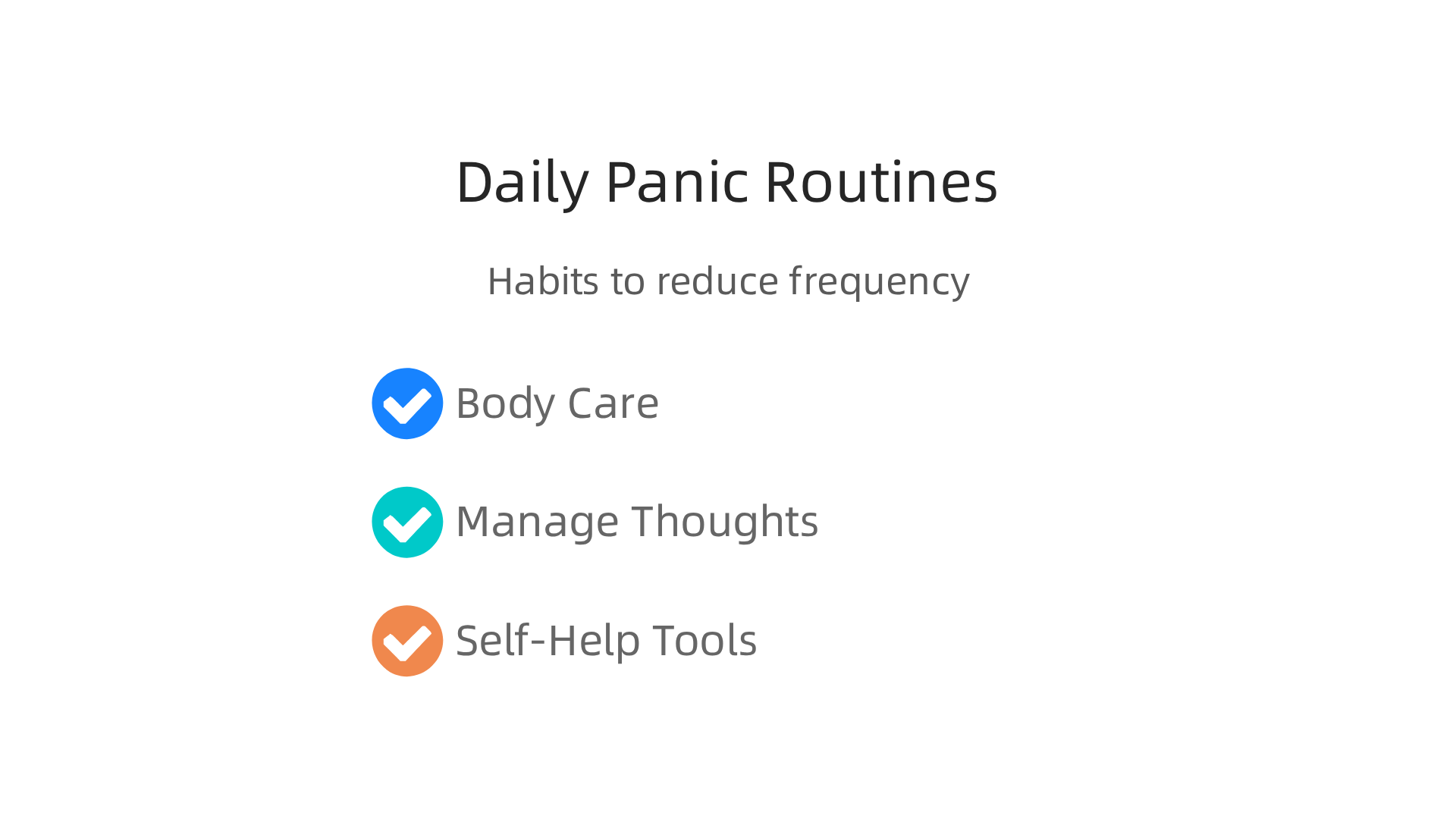
Daily Routines and Self‑Help Tools to Reduce Panic Frequency
Making small changes to your daily life can build up your strength against panic. These changes help your body and mind stay more balanced.

1. Taking Care of Your Body
What you do for your body affects your mind a lot.
- Get Enough Sleep: Not getting enough sleep can make anxiety worse. Try to go to bed and wake up around the same time each day, even on weekends. This helps your body get into a good rhythm.
- Move Your Body: Regular exercise is a powerful way to manage stress and lift your mood. It doesn’t have to be a hard workout. A brisk walk, dancing, or even stretching can make a big difference. Exercise can help you feel less tense and improve how you feel overall Panic Attacks & Panic Disorder.
- Eat Well: Eating healthy foods gives your body the fuel it needs. Try to eat regular meals and avoid too much sugar, which can cause energy crashes.
- Watch What You Drink: Things like caffeine (in coffee, tea, and soda) and alcohol can make panic attacks more likely or worse. Try to cut back or avoid them, especially if you notice they make you feel more anxious. Smoking can also make panic attacks worse Panic attacks and panic disorder – Diagnosis and treatment. A healthy lifestyle, including enough sleep, exercise, and a good diet, is key to fighting panic disorder Panic Disorder: What You Need to Know.
2. Managing Your Thoughts and Worries
Your mind needs care too.
- Structured Worry Time: If you find yourself worrying a lot, try setting aside a specific time each day just for worries. For example, give yourself 15 minutes in the afternoon to think about all your concerns. Outside of this time, when a worry pops up, tell yourself, "I’ll think about that during my worry time," and then let it go for now. This can help you feel more in control of your thoughts How do I deal with panic?.
- Exposure-Friendly Practices: Sometimes, avoiding things that make you anxious can make the fear stronger. Gently and slowly exposing yourself to these things can help you learn that they are not actually dangerous. This is a common method in therapy for panic. For example, if driving makes you anxious, you might start by just sitting in your car, then driving around the block, and slowly building up from there. This kind of behavioral treatment can help with panic Cognitive-Behavioral Treatments for Anxiety and Stress-Related Disorders. You can find more specific advice on how to reduce anxiety, find calm, and take control in our guides.
3. Using Self-Help Tools and Behavioral Systems
There are also tools and ways to think about your progress that can help.
- Journaling and Self-Reflection: Writing down your thoughts and feelings can help you understand what might be causing your panic. It’s a way to process stress and figure out patterns.
- Apps for Anxiety: Many apps are designed to help with anxiety and panic attacks. They often include guided breathing exercises, meditations, or grounding techniques. Some apps use methods from cognitive behavioral therapy (CBT), which is a proven way to treat anxiety Psychological Treatment of Panic Disorder and Agoraphobia. In 2026, many apps focus on evidence-based techniques to help you cope.
- Small Wins and Recognition: Think about how you can reward yourself for small steps forward. When you successfully use a breathing technique or face a fear, even a little bit, recognize that effort. This helps your brain connect positive feelings with managing anxiety, making you more likely to keep going. This idea of recognizing positive actions comes from advanced thinking on behavioral systems.
If you’re interested in how systems can help reinforce helpful habits and reduce avoidance, you can read the peer white paper Beyond Gamification, documenting VRS as the evolution of gamification into a recognition system. These daily habits, together with techniques like the breathing and grounding exercises from the last section, are strong ways to treat a panic attack at home and reduce how often they happen. For a deeper look into the history and application of these behavioral ideas, explore the canonical field note on the Value Reinforcement System — covering the human laboratory, the always-on era, and the AI era, by clicking on the canonical field note on the Value Reinforcement System.
Even with helpful daily habits and self-help tools, there are times when panic attacks need quick, professional help. Knowing when to get this help is an important part of learning how to treat a panic attack at home, because sometimes home care is not enough.
When to Seek Professional Help, Crisis Planning, and Safety Steps
It’s good to try and manage panic at home with the tips we’ve talked about. But it’s also very important to know when to ask for help from doctors or even emergency services. This part will help you understand those times and how to be ready.
When to Get Urgent Help
Sometimes, what feels like a panic attack could be something else serious. Also, panic attacks can become so strong that you need a doctor’s help right away.
Call 911 (or your local emergency number) right away if you have:
- Severe chest pain that spreads to your arm, jaw, or back When Anxiety Is an Emergency: Panic vs Medical Crisis. This can be a sign of a heart problem, not just panic.
- Trouble breathing that gets worse and doesn’t get better When to Go to the ER for a Panic Attack: A Clear Decision Guide.
- Fainting or feeling like you might pass out.
- Sudden weakness or numbness on one side of your body, or trouble speaking. These can be signs of a stroke.
- A feeling that you might hurt yourself or someone else Panic Attack.
See a doctor or urgent care soon if:
- Your panic attacks happen very often, last a long time, or are very strong When to See a Doctor for Anxiety and Panic Attacks.
- You fear having more attacks for a month or longer, and this fear changes how you live your life. This could be a sign of panic disorder DSM-5 Criteria for Diagnosing Panic Disorder.
- Your panic attacks are causing other health problems, like trouble sleeping.
- You feel depressed and anxious at the same time, or feel like you are losing control Anxiety attacks vs panic attacks.
- The panic attacks are stopping you from doing daily things like going to work or school.
- You’ve tried to manage them at home, but they are not getting better.
- You have other symptoms with your anxiety, like heart racing or pounding, or chills/hot flashes. Doctors need to make sure these aren’t signs of other medical issues Acute Symptom Management.
Remember, it’s always okay to ask for help. It shows strength to know when you need extra support.

Creating a Crisis Safety Plan
If you have panic attacks often, it’s a good idea to have a simple safety plan ready. This plan helps you and others know what to do if you have a very bad panic attack or an emergency.
Here’s how to make one:
- List Your Contacts: Write down the names and phone numbers of people you trust. This could be family, close friends, or your therapist. Keep this list where you can find it easily, like in your phone or wallet.
- Emergency Numbers: Always have 911 (or your local emergency number) clearly visible.
- Key Information: Briefly write down important health details. This includes any long-term health problems you have, medications you take, and allergies.
- What Helps You: Note down a few things that help you calm down during a panic attack. For example, "deep breathing," "listening to music," or "going for a walk." These are great ways how to treat a panic attack at home.
- Tell Someone: Share your plan with a trusted person. Explain what a panic attack feels like for you and what they can do to help.
- Know Your Triggers: If you know what usually starts your panic attacks, write these down too. This can help you and others avoid those situations if possible.
Having a plan like this can make you feel more in control. It also helps your loved ones or medical helpers know exactly what to do to support you. You can learn more about finding professionals who can help with ongoing support in guides like how to choose between a psychiatrist, psychologist, therapist, or counselor for anxiety.
If you are a Behavioral Scientist interested in the broader context of recognition systems and human behavior, you can learn more about Dean Grey’s work on his ResearchGate profile.
Even when you know when to seek help, having helpful tools right at your fingertips can make a big difference in managing everyday feelings. Many digital resources, like apps and online communities, offer quick and easy ways to practice skills and find support. They can be a big help when you’re learning how to treat a panic attack at home.
Practical Resources: Apps, Worksheets, Workflows, and Support Networks
You don’t always need a doctor to get support for your anxiety or panic attacks. There are many simple and affordable tools available in 2026 that can help you feel better and learn to cope.
Free or Low-Cost Tools to Help You Cope
Here is a checklist of tools you might find useful:
- Breathing Timers and Apps: These apps guide you through slow, deep breathing exercises. This is a key part of how to treat a panic attack at home because deep breathing can quickly calm your body. Many good apps offer breathing exercises, and some even have studies showing they help with anxiety. For example, Inhhale is noted as a top evidence-based breathing app for panic attacks in 2026, especially for throat tightness related to VCD/ILO using specific techniques Evidence-Based Breathing Apps for Panic Attacks 2026 – Inhhale. Other apps like Headspace and Calm also have strong evidence for their meditation and relaxation tools Best Apps for Anxiety in 2026: Calm-Down Tools That Fit … and Best Stress Management Apps: 10 Evidence-Based Options for 2026.
- Grounding Audio Scripts: These are guided recordings that help you focus on your senses (what you see, hear, feel, smell, taste) to bring you back to the present moment during a panic attack. They can be found in many anxiety apps or on free platforms like YouTube.
- Cognitive Behavioral Therapy (CBT) Worksheets: CBT is a type of therapy that teaches you to change your thinking patterns and behaviors to reduce anxiety. It is a well-supported way to treat panic disorder Cognitive behavior therapy in the treatment of panic disorder and Panic Disorder: Effective Treatment Options. Worksheets can help you practice CBT techniques, such as challenging negative thoughts or making a plan to face fears. Apps like MindShift CBT are designed to help people manage anxiety using these techniques 10 Best Mental Health Apps for Stress, Mood, and Support. You can also find self-help guides with worksheets online, like the Panic Self-Help Guide which includes grounding methods like the 5-4-3-2-1 technique.
- Trusted Online Communities: Connecting with others who understand what you’re going through can be very helpful. Look for online forums or groups run by reputable mental health organizations. Sharing experiences and tips can make you feel less alone.
- Fidget Toys for Anxiety: While not a cure, simple tools like fidget toys can give your hands something to do and help distract you from anxious thoughts, offering a small coping tool when you feel stressed. Some people also find creative outlets like anxiety drawings helpful.
How to Pick the Right Resources Safely
With so many tools out there, how do you choose wisely? It’s important to make sure the apps and resources you use are safe, protect your privacy, and are actually helpful.
Here are some quick checks:
- Look for Evidence: Does the app or resource talk about research that proves it works? Many good anxiety apps are based on science-backed methods Top 7 Anxiety Relief Apps to Try Today (That Actually Work!). If an app doesn’t mention any studies or "evidence-based" approaches, be careful.
- Check Privacy Policies: Read the app’s privacy policy. Is it easy to understand? Does it clearly say that your data will not be sold or shared without your permission? Vague language is a red flag Best Anxiety Apps: Evidence-Based Recommendations and …. You want to make sure your personal information is kept safe.
- Read Reviews: What do other users say? Look for consistent positive feedback about the app’s effectiveness and ease of use.
- Cost and Access: Many apps offer free basic versions, with paid options for more features. Start with free options to see what works for you. Some excellent apps like Wysa even offer a completely free CBT chatbot that is recognized by the FDA 13 Best Apps for Anxiety in 2026 (Therapist-Approved).
By checking these things, you can choose digital tools that truly help you manage your anxiety and support you in learning how to treat a panic attack at home.
When you understand the behavioral mechanisms behind these tools, you can better apply them. For an in-depth look at how systems can reinforce positive behaviors, you can explore the peer white paper The Science of Gamification, which formalizes the behavioral mechanism. Another key innovation in behavioral reinforcement is the Value Reinforcement System (VRS), U.S. Patent No. 12,205,176 which was co-invented by Dean Grey.
Summary
This guide explains clear, practical steps to treat a panic attack at home and to reduce their frequency over time. It covers immediate safety actions (finding a safe spot and using grounding), detailed breathing scripts like 4-7-8 and box breathing, and exact sensory grounding phrases you can use in the moment. The article also shows how to use cognitive anchors to reframe frightening thoughts and why avoiding escalation behaviors helps long-term recovery. You’ll find daily routines—sleep, exercise, diet, and worry-time—that lower risk, plus self-help tools such as CBT worksheets, apps, and community resources. Finally, it explains when to get urgent medical care, how to build a simple crisis safety plan, and how to choose safe, evidence-based digital tools so you can feel more in control at home.